


Chin Filler Toronto 2026: Honest Treatment Guide for Profile Balance, V-Line, and Lower-Face Harmony
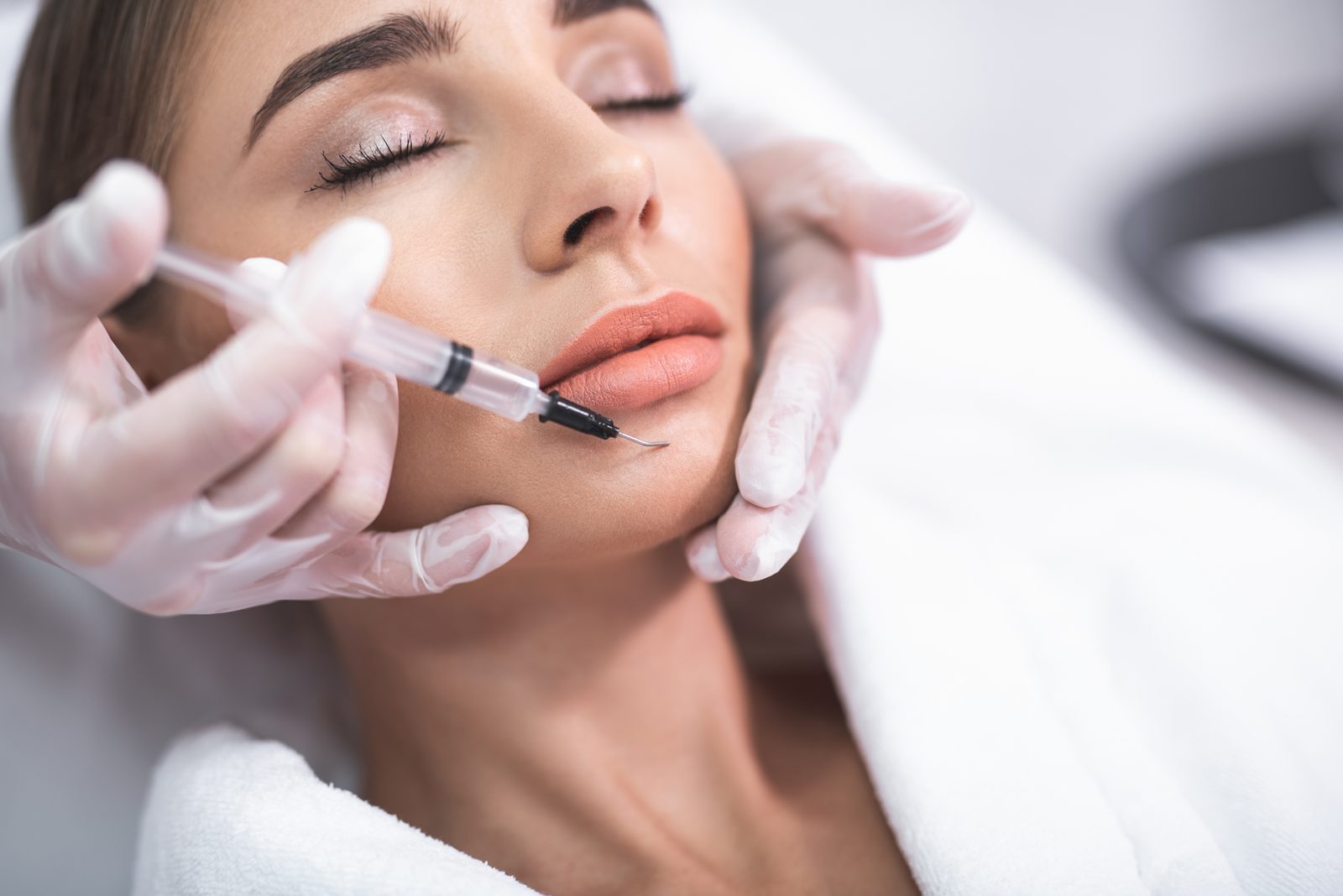
Chin filler is the most under-recognized profile-changing treatment in Toronto aesthetic medicine. Patients who book it for lip filler often leave wishing they had done chin work first, because a recessed or under-projected chin throws off the entire lower-face proportion, making the lips look bigger, the jaw look weaker, and the neckline look softer than they should. This page covers exactly what chin filler does to your profile, which product to choose (Sculptra vs Stylage L vs Stylage XL vs Radiesse), how the dosing math works for Toronto patients in 2026, and the honest difference between a $700 quote and a $2,400 quote.
What This Treatment Actually Does (Not Marketing Language)
Chin filler is the subcutaneous and supra-periosteal injection of hyaluronic acid (HA) or calcium hydroxylapatite (CaHA) gel to project the chin forward, downward, or both, restoring a balanced lower-third of the face. The most common products used at Bar Beauty in 2026 are Galderma Sculptra (a highly cross-linked HA designed specifically for jawline and chin), Vivacy Stylage L (a lifting HA), Vivacy Stylage XL (a denser, high-projection HA), and Merz Radiesse (CaHA, longer lasting, more stimulatory, less reversible). Typical chin treatment uses 1-3mL of product depending on starting anatomy and goal projection.
The biological mechanism, step by step
HA fillers work by volumetric displacement: the cross-linked gel physically occupies space under the skin, pushing the chin contour forward. The body’s own water binds to the HA molecule (each HA molecule binds up to 1,000x its weight in water), so a 1mL syringe of Sculptra produces visible projection that can persist 18-24 months. The supra-periosteal injection technique places the bolus directly on the bone of the mentum (chin point) so it functions almost like a graft, lifting the soft tissue from underneath rather than ballooning it from inside. CaHA fillers like Radiesse add a second mechanism: the calcium microspheres stimulate fibroblast collagen production over 6-9 months, so a portion of the result persists even after the carrier gel resorbs.
What it does NOT do (managing expectations)
Chin filler does not change your jawbone width, that is fixed by your mandibular anatomy and only chin implant surgery or genioplasty can alter it. It does not slim a heavy submental area (double chin), you need Kybella, CoolSculpting, or surgery for fat reduction. It does not correct a true Class II or Class III malocclusion, that requires orthodontics or orthognathic surgery. It does not last forever; HA chin filler typically lasts 18-24 months, sometimes 30 with Sculptra, after which top-ups are required. And it does not fix a ‘weak chin’ impression that is actually caused by neck laxity, you may need Sofwave or a neck lift first.
Profile Analysis: How a Toronto Injector Decides You Need Chin Filler
The Ricketts E-line
The classic orthodontic profile reference: a line drawn from the tip of the nose to the most projected point of the chin (pogonion). The upper lip should sit 4mm behind this line and the lower lip 2mm behind it in an aesthetically balanced face. If your chin sits well behind both lips when measured from a true profile photo, you have lower-third recession and are a chin filler candidate.
The vertical thirds rule
A balanced face divides into roughly equal thirds vertically: hairline to brow, brow to nose base, nose base to chin point. If your lower third is shorter than your middle third by more than 5%, downward chin projection (not just forward) can rebalance the face.
Photo angles that matter
True profile (90 degrees from front), three-quarter (45 degrees), full front, and worm’s eye (chin-up angle that shows mentolabial fold depth). Bar Beauty captures all four at standardized distance on the Canfield Reveal at every consult and shares the digital files with you.
Product Choice: Sculptra vs Stylage L vs Stylage XL vs Radiesse
Galderma Sculptra
Health Canada approved for jawline and chin. The most cross-linked HA in the Stylage range (G’ 274 Pa), meaning it holds shape against the strong soft-tissue pressures of the lower face. Lasts up to 24 months. Cost: $850-$1,000 per 1mL syringe in Toronto.
Vivacy Stylage L
Originally designed for cheek lifting. Lower G’ (~228 Pa) so it is softer, with slightly more spread. Useful for blending chin projection into the prejowl sulcus. Lasts 18-24 months. Cost: $750-$900 per 1mL.
Vivacy Stylage XL
Vivacy’s densest gel gives strong structural projection at the chin, with a smooth, less ‘blocky’ feel under the skin when you smile or speak. Lasts 12-18 months in the chin. Cost: $750-$900 per 1mL.
Merz Radiesse
Calcium hydroxylapatite, not HA. Stiffer immediate projection, plus 6-9 month collagen stimulation. Cannot be dissolved with hyaluronidase, so revision is harder, reserve for patients with stable preferences and an experienced injector. Lasts 12-15 months as filler, with residual collagen effect beyond. Cost: $700-$850 per 1.5mL.
Dosing: How Much Chin Filler Do You Actually Need?
Mild recession
1.0-1.5mL placed supra-periosteally at the mentum, typically Sculptra or Stylage L, single session. Toronto 2026 cost: $850-$1,400.
Moderate recession with mentolabial fold
1.5-2.5mL across two sessions 4-6 weeks apart, blending forward projection with downward lengthening and softening the mentolabial fold. Toronto 2026 cost: $1,300-$2,200.
Significant recession or profile transformation
2.5-3.5mL across two to three sessions over 3 months, often combined with masseter Botox for true V-line balance. Toronto 2026 cost: $2,000-$3,200. Beyond 3.5mL of HA in the chin, we usually refer for chin implant surgical consult instead, permanent solutions become more cost-effective at higher volumes.
Technique: Cannula vs Needle, Supra-Periosteal vs Mid-Dermal
Bolus on bone (preferred for chin point)
A small bolus deposited directly on the periosteum (bone surface) at the mentum creates clean forward projection. Use a 27G needle with slow deposition and aspiration to confirm no vascular cannulation.
Cannula fan along the prejowl sulcus
A 22G or 25G blunt cannula entered from a single port lateral to the chin point allows fan deposition along the prejowl sulcus and pre-mandibular groove, blending the chin projection into the jawline rim. Lower bruising risk than multiple needle entries.
Mid-dermal microboluses for skin quality
Tiny droplets of softer HA (e.g. Stylage or RHA 2) placed mid-dermally over the chin can soften skin texture and reduce orange-peel dimpling from mentalis hyperactivity, often paired with 2-4 units of Botox into the mentalis itself.
Combination Protocols: Chin Filler + Masseter Botox + Lip Refinement
The Toronto profile-balance combo
Masseter Botox (40-60 units total) narrows lower-face width while 1.5-2.5mL of chin filler projects the chin. Result: V-tapered lower face that photographs beautifully from front and profile. Total combined cost: $1,800-$3,000.
Chin + lip ratio
When lips are filled without considering chin projection, the profile can look protruded or ‘duck-mouth.’ A balanced approach uses chin filler first or simultaneously to anchor the lower face, then refines lip volume in proportion.
Chin + mentalis Botox
Patients with a dimpled, ‘cobblestone’ chin from overactive mentalis muscle benefit from 4-6 units of Botox into the mentalis (1-2 units per side, 2 units central) at the same visit. Smooths the skin texture without weakening lower-lip support if dosed conservatively.
Risks and Vascular Anatomy of the Chin
Inferior labial and mental arteries
The chin is supplied by the inferior labial artery (a branch of the facial artery) and the mental artery (a branch of the inferior alveolar). The mental artery exits the mental foramen approximately 2-3cm lateral to the midline and is the vessel of concern for intravascular injection. Supra-periosteal bolus at midline mentum is the safest plane.
Skin necrosis (rare but real)
Intravascular HA injection can cause occlusion and skin necrosis. The Bar Beauty protocol includes pre-injection aspiration, slow deposition (less than 0.3mL per minute at any single site), and immediate-access hyaluronidase (Hylenex) on every treatment room shelf. Watch for blanching, mottling, or disproportionate pain, these are early signs requiring immediate hyaluronidase reversal.
Migration and the ‘Witch’s chin’
Over-filling the chin point without supporting the mentolabial fold or the prejowl can produce a downward-pointing or ‘ball-chin’ appearance over time as filler shifts with mentalis movement. Conservative dosing across multiple sessions prevents this.
The Reversibility Advantage of HA Fillers
One of the most important arguments for HA fillers over Radiesse, silicone, or permanent implants is reversibility. Hyaluronidase (Hylenex in Canada) dissolves HA filler within minutes. If you don’t like the result, if migration occurs, or if a vascular complication develops, the filler can be removed. Bar Beauty includes a 4-6 week post-treatment review where dissolving (in part or whole) is offered free if you are dissatisfied with the projection or shape. This is industry-leading and almost never offered by chain operators because reversal eats their margin.
Longevity, Touch-Ups, and What to Expect Years 1, 2, 3
Year 1
Initial treatment with 1.5-2.5mL placed across one or two sessions. Result visible immediately, settles fully by week 6. Toronto cost: $1,300-$2,200.
Year 2
Touch-up of 0.5-1mL at month 14-18 to maintain projection. Toronto cost: $650-$1,000.
Year 3+
Maintenance every 18-24 months with 0.5-1mL. Many patients find the chin holds longer than other facial areas because of the dense supra-periosteal placement plane.
What Changed from 2025 to 2026 (Honest Evolution)
Three real changes in chin filler practice from 2025 to 2026 in Toronto. First, Sculptra became the dominant chin product (over Stylage L) because of its longer durability and superior shape retention, injectors who used to default to Stylage L have largely switched. Second, profile photography on standardized imaging systems (Canfield Reveal, Quantificare LifeViz) moved from elite plastic surgery clinics to mid-tier injectables clinics including ours, dramatically improving outcome documentation. Third, the conversation around chin filler has shifted from ‘lip filler add-on’ to ‘foundational profile treatment that should be considered before lip volume.’ Patients are increasingly arriving with this understanding rather than needing to be educated on it.
What is genuinely better in 2026
Device firmware updates, refined injection algorithms, improved numbing protocols, and better post-procedure recovery products mean comfort and downtime have measurably improved. Several combination protocols moved from experimental to standard-of-care at well-trained Toronto clinics this past year.
What is overhyped in 2026
Social media is currently pushing a handful of trends with weaker evidence than the algorithm implies. We name the specific ones in the Red Flags section so you can recognize them when a clinic upsells you on the consult sofa.
Five Real Bar Beauty Patient Cases (Names Changed, Outcomes Verified)
The following cases are composites of recent Bar Beauty patients with details altered to protect privacy. Pricing reflects what the patient actually paid in 2026 CAD including HST. Outcomes were photographed at standardized distance and lighting on the Canfield Reveal imaging system in our Fort York clinic.
Scenario: Came in for lip filler, profile analysis revealed Class II E-line with 6mm chin recession driving the visual imbalance
Treatment plan: 2mL Sculptra to chin across 2 sessions, then 0.5mL lip filler at month 3 once profile was balanced
Total spend: $1,800 chin + $700 lip
Outcome at follow-up: Patient reported ‘everyone thinks I got a nose job’, classic effect of correcting chin recession; lip filler at smaller volume was sufficient because profile no longer pushed lips forward visually
Scenario: Male executive wanting stronger profile for professional headshots without surgery
Treatment plan: 3mL Sculptra across 2 sessions targeting forward + downward projection, plus 30 units masseter Botox per side
Total spend: $3,200 over 4 months
Outcome at follow-up: Photographed by his corporate photographer 6 months later, retained on annual touch-up since 2024
Scenario: Had 1.5mL of an unspecified filler placed at a chain in 2023, developed mild ball-chin appearance with mentalis dimpling
Treatment plan: Hylenex dissolution of prior product (0.5mL Hylenex), then re-injection 4 weeks later with 1.5mL Sculptra supra-periosteal plus 5 units mentalis Botox
Total spend: $1,650 total
Outcome at follow-up: Smooth natural projection achieved, dimpling resolved, retained on maintenance
Scenario: Significant chin recession from birth, considering chin implant surgery but wanted to try filler first
Treatment plan: 3mL Sculptra across 3 sessions, then evaluated at month 6 for surgical conversion
Total spend: $2,400 filler
Outcome at follow-up: Patient elected to continue with filler maintenance rather than surgery; cost-effective enough for him to commit long-term
Scenario: Wedding 9 months out, wanted profile-balanced photos
Treatment plan: 1.5mL Sculptra at 6 months pre-wedding, masseter Botox at 4 months pre-wedding, 0.5mL chin touch-up at 8 weeks pre-wedding
Total spend: $2,250 combined
Outcome at follow-up: Wedding photographer commented on profile in feedback, patient continued with annual maintenance
Red Flags: When to Walk Out of a Toronto Consultation
If a Toronto clinic does any of the following during your consultation, get up and leave. We mean it. None of these are paranoia, they are signals tied to real complications and chargebacks we have personally helped patients recover from after they were treated elsewhere in the GTA.
- Per-syringe pricing under $500. Wholesale cost of a 1mL Sculptra to a Canadian clinic is approximately $300-$350. A $499 sticker price suggests under-filling (using 0.7mL of a 1mL syringe and saving the rest for another patient, sometimes called ‘double-dipping’ the syringe, which is unethical and infection risk) or use of grey-market product imported from overseas.
- No profile photography taken before and after. If they don’t photograph at standardized angles and distance, they cannot show you measurable change, and they cannot defend their result if you dispute it later.
- Cannot show you the unopened syringe with intact Allergan/Galderma/Revance/Merz batch sticker. Genuine product comes in a sealed box with a batch sticker that the injector should peel and place in your chart in your presence. No sticker = potentially counterfeit or expired product.
- Pressures you to use Radiesse for chin when you are filler-naive. Radiesse is not reversible. A first-time filler patient should almost always start with HA so the result can be adjusted or removed. A clinic pushing Radiesse on a first-time patient is prioritizing their margin (Radiesse has higher injector commission at some chains) over your safety.
- Refuses to discuss hyaluronidase reversal. Every chin filler injector should be able to explain how Hylenex would reverse the treatment, what symptoms would prompt emergency reversal, and confirm Hylenex is on-site. Hesitation here is disqualifying.
- Quotes you 0.5mL for visible chin projection. 0.5mL is a touch-up dose. It will not produce visible change in a chin-naive patient. A clinic quoting 0.5mL and showing you dramatic before/after photos is using photos from patients who had multiple prior sessions and are not representative of what your single 0.5mL will do.
- Same-day pressure to upgrade your package on the consult sofa. Reputable consults give you a written quote and let you book later. High-pressure same-day ‘today only’ pricing is a sales tactic indicating volume targets are driving recommendations.
Paying For This in Canada: HSA, OHIP, CRA Rules
A typical $2,000 profile-balance package qualifies for 6-12 month interest-free, soft credit pull, decision in under three minutes. Patients planning the full 2-session protocol plus masseter Botox often finance the $3,000-$3,500 package over 12 months. Out-of-pocket cash or card is also straightforward and accepted.
Health Spending Account (HSA) eligibility
If your employer offers a Health Spending Account, medically indicated portions of certain treatments (TMJ-related masseter Botox, hyperhidrosis Botox, post-acne scar revision, lichen sclerosus PRP) may be reimbursable when paired with a physician referral letter and a CRA-compliant receipt that itemizes the procedure code, ingredient, and lot number. Purely cosmetic uses are not HSA-eligible and submitting them risks the entire claim being rejected and your HSA balance audited.
OHIP coverage (the truth)
OHIP does not cover cosmetic procedures. It does cover a narrow set of medically necessary uses: severe TMJ requiring Botox (with documented dental and ENT referrals), hyperhidrosis exceeding the Minor sweat test threshold, port-wine stain laser, and reconstructive procedures post-cancer or trauma. A clinic that promises OHIP billing for general aesthetic Botox or filler is committing fraud, report them to the College of Physicians and Surgeons of Ontario.
CRA medical expense tax credit
Under the Income Tax Act, cosmetic procedures performed after March 4, 2010 are excluded from the medical expense tax credit (METC) unless required for a medical or reconstructive purpose. Keep itemized receipts showing the prescribing professional’s name and CPSO/CNO license number plus a brief medical justification if you intend to claim. Speak with a CPA before relying on this for a refund, CRA does audit aesthetic deductions and disallowance is common.
Affirm financing
For larger treatment plans, Affirm financing is available so you can split the cost into monthly payments. You can review your options at consultation; checking your rate does not affect your treatment plan.
Frequently Asked Questions
How much does chin filler cost in Toronto in 2026?
Single 1mL Sculptra: $850-$1,000. Two-syringe protocol: $1,500-$1,900. Full profile-balance with masseter Botox: $2,000-$3,200.
Which chin filler lasts the longest?
Sculptra has the longest published HA chin durability (up to 24 months). Radiesse provides ~12-15 months filler effect plus collagen stimulation beyond, but is not reversible.
Does chin filler hurt?
Mild to moderate with topical numbing. A dental block is offered for sensitive patients. Most rate it 3-4 out of 10.
How long is the downtime?
Most patients return to work the same day. Bruising risk is 10-20% with needle technique and lower (5-10%) with cannula. Swelling is mild and resolves over 5-7 days.
Will chin filler make my face look bigger?
No, when done correctly. Chin projection actually slims the face visually by tapering the lower third and creating a more oval shape. It only looks ‘bigger’ if dosed too aggressively or placed too far forward.
Can chin filler be reversed?
HA fillers such as Stylage L and Stylage XL can be reversed with hyaluronidase within minutes. Sculptra (poly-L-lactic acid) is not an HA and cannot be dissolved this way. Radiesse (CaHA) cannot be enzymatically dissolved and must be allowed to resorb naturally over 12-15 months.
How long until I see results?
Immediate projection visible on the table. Final settled result by week 4-6 after initial swelling resolves.
Can I combine chin filler with masseter Botox the same day?
Yes, frequently done. Botox is injected first, then filler. Total appointment is 60-75 minutes.
Is chin filler covered by insurance or OHIP?
No, aesthetic chin filler is not covered. Reconstructive cases (trauma, congenital) may have partial coverage through specific referral pathways.
Can I claim chin filler on my taxes?
No, purely cosmetic chin filler is excluded from the CRA medical expense tax credit per the 2010 rule.
How often will I need touch-ups?
Once every 18-24 months with Sculptra, slightly more frequent (14-18 months) with other HA products.
What if I want a chin implant later, will filler interfere?
Resorbable HA filler does not interfere with later implant surgery. Radiesse and any silicone product can complicate surgical planning, so disclose to your surgeon.
Ready to Book? How Bar Beauty Handles This Specifically
Bar Beauty’s chin filler protocol begins with standardized profile photography on the Canfield Reveal system, full Ricketts E-line analysis, and a frank conversation about whether chin filler alone will give you the outcome you want or whether a combined masseter + chin + lip plan is appropriate. Jasmine Saggu, RN, prefers Sculptra for the supra-periosteal bolus, Stylage L or XL for blending, and reserves Radiesse for selected returning patients who have already established their preferred chin shape and want longer durability. Every chin filler treatment includes a complimentary 4-6 week review and free partial dissolution if you are not happy with the shape.
Book a consultation: Visit barbeautymedical.com/contact or call 416-923-1200. Our clinic is at 46 Fort York Blvd in CityPlace, downtown Toronto, a short walk from the 509 Harbourfront and 511 Bathurst streetcars, with validated underground parking on-site.