


Topical creams help some people with psoriasis. For others, they stop working, or they never did much in the first place. That is usually when someone books with us. We treat psoriasis with the Aerolase Neo, a 1064nm laser that reaches the inflamed layer under the plaque instead of just sitting on top of it. Plaques flatten. The deep red calms down. Skin gets less angry.
It is gentle. No needles, no bleeding, no numbing cream, no recovery time. A session feels like a series of warm snaps. We use it on the scalp, elbows, knees, hands, and smaller stubborn patches. The first visit is a free consult, so we can look at your skin and tell you honestly whether the laser is worth your time. Sometimes it is not, and we will say so.
Psoriasis can appear at the site of a skin injury, which is called the Koebner phenomenon, and it is the practical reason things get scheduled the way they do here. Anything that deliberately breaks the skin waits for a calm patch. The laser we use for psoriasis does not break the skin at all, which is why it can run during a flare.
| What it involves | Does it break the skin | When it can be scheduled |
|---|---|---|
| The Aerolase Neo Elite pass over a plaque | No. No needles, no bleeding, no numbing cream and no recovery time | During a flare, which is when it is most useful. Usually 4 to 6 weekly sessions, then occasional maintenance |
| Your prescribed topicals, phototherapy or a biologic | No | Keep going. The laser sits alongside a dermatology plan rather than replacing any part of it |
| Microneedling for old textural scarring from years of scratching | Yes, deliberately | Never on an active plaque and never in the same week as a flare. It waits until the area has settled |
| Acids and scrubs on a treated area | They irritate rather than injure, but a plaque does not draw the distinction | Paused for a few days after a session, and not used aggressively on affected skin at any point |
| Strong sun, and sunburn in particular | A burn counts as an injury | Keep treated skin out of strong sun and wear mineral sunscreen on anything uncovered |
| Scratching the plaque itself | Yes, and it is the injury people inflict most often | Which is why settling the itch is part of the treatment rather than a side benefit of it |
The laser does not cure psoriasis and nothing does. What a course can do is quiet a flare, thin the plaques and lengthen the calm stretches between them. Widespread, nail, pustular or erythrodermic disease belongs with a dermatologist on systemic medication, and we refer rather than treat. Consultations are free.
What psoriasis actually is
Psoriasis is an autoimmune condition, not a hygiene problem and not contagious. Your skin cells turn over way too fast, so they pile up before the old ones shed. That pile is the plaque: thick, scaly, often itchy or sore. On lighter skin the scale looks silvery white. On deeper skin tones it can read grayish or darker, which is one reason it gets misread so often. It tends to land on the elbows, knees, lower back, and scalp, but it can show up anywhere. It flares and settles, flares and settles. For some people it also ties into joint symptoms, which is a conversation for your physician, not a laser.
Here is the honest part. The laser does not cure psoriasis. Nothing does yet. What it can do is quiet a flare, thin the plaques, and stretch out the calm periods between flares. We tell every client that on day one.
How the Aerolase laser calms a plaque
Psoriatic plaques are fed by extra little blood vessels, and those vessels keep the inflammation fueled. The Aerolase 1064nm beam slips past the surface and targets that vascular supply, so the area gets less blood, less heat, less redness. The same energy nudges the skin toward normal healing instead of the runaway cell turnover that built the plaque.
The trick is the pulse. It fires in 650 microsecond bursts, fast enough that the energy goes deep without cooking the surface. That is what makes it comfortable and what makes it safe on darker skin, where a clumsier laser would risk burns or pigment changes. No numbing needed for most people. You feel warmth and the odd quick sting, nothing more.
Where on the body it works
Scalp psoriasis is a good fit because the light passes through hair to reach the skin, and topicals are a nightmare to apply up there anyway. Elbows, knees, hands, and small to medium body patches all respond. The face, neck, and other thin-skinned spots are doable too because we can dial the settings down. Widespread, whole-body psoriasis is a different scale of problem and usually belongs with a dermatologist on systemic medication. We will tell you if that is you.
How many sessions, and what to expect
Most people do a weekly run of 4 to 6 sessions. A few notice a plaque softening after the first one or two visits, but that is not the norm, so do not panic if week one looks unchanged. The redness fading and the scale thinning tend to show up across the series as the inflammation settles and a little collagen rebuilds underneath. After the initial run, a single maintenance session now and then keeps things in check. We photograph the same spot under the same light each visit, because memory lies and a photo does not.
Aftercare, which is almost nothing
There is no downtime. You walk out and go back to your day. The treated skin may look a touch pink or feel warm for a few hours, then it settles. Keep it out of strong sun, wear mineral SPF on anything uncovered, and skip the harsh acids and scrubs on the area for a few days. That is the whole list.
Laser versus the usual options
| Option | Best for | Downtime |
|---|---|---|
| Aerolase laser | Stubborn, localized plaques when creams stall | None |
| Topical steroids and vitamin D creams | Mild flares, first-line, daily upkeep | None |
| Phototherapy (UVB) | Wider coverage, needs many clinic visits | None, but slow |
| Systemic or biologic meds | Moderate to severe, whole-body disease | Managed by a dermatologist |
None of these cancels out the others. The laser sits alongside your dermatology plan, it does not replace it. Plenty of our clients keep their prescribed topicals and add laser for the patches those creams never touched.
Current pricing for every treatment is published on our (see current price list).
Pairing laser with the rest of your skin plan
Psoriasis rarely sits on calm skin, so the laser often works better next to a few other things we offer. Aerolase is the same platform we reach for with rosacea and inflamed acne, because calming redness is its whole job. If old plaques left you with dark marks once they cleared, that is post-inflammatory pigment, and hyperpigmentation treatment is a separate, gentler track we can add later. For deeper textural scarring from years of scratching, microneedling may come up, but never on an active plaque and never in the same week as a flare. We map the order at your consult so each step gets room to work. Treatment pricing lives on our price list.
Common questions about psoriasis laser treatment
Does the laser cure psoriasis?
No, and anyone who says otherwise is selling something. Psoriasis is a lifelong autoimmune condition. The Aerolase calms flares, thins plaques, and buys longer stretches of clear skin between them. It is management, not a cure.
Does it hurt?
Most people land it at a 2 or 3 out of 10. It feels like quick warm snaps. No numbing cream needed for the vast majority. If you are sensitive, tell us and we slow the pace.
Is it safe on darker skin?
Yes. The 1064nm wavelength is the safest laser option for deeper skin tones because it bypasses the surface pigment that other lasers grab. That is exactly why we use it here.
How many sessions will I need?
Usually 4 to 6 weekly sessions to start, then occasional maintenance. Stubborn or widespread areas may need more, and we will give you a straight number after we see your skin.
Can I keep using my prescription creams?
In most cases yes, and we encourage it. The laser is an add-on to your dermatology plan, not a replacement. Bring your current regimen to the consult.
Can I have it while pregnant?
We defer most elective treatments during pregnancy out of caution, even when the risk looks low. Come back after and we will pick it up.
The types of psoriasis, and which ones the laser helps
Psoriasis is not a single condition, and the type you have changes what the laser can realistically do. Plaque psoriasis is the most common form, the thick raised patches with scale, and it is the one the Aerolase handles best, because the laser targets the extra blood vessels feeding each plaque. Scalp psoriasis responds well too, since the 1064nm light passes through hair to reach the skin where creams are hard to apply. Guttate psoriasis, the small drop-shaped spots that often appear after a strep infection, has a vascular component the laser can calm, though it usually needs the underlying trigger managed first. Inverse psoriasis, the smooth shiny patches in body folds, can be treated carefully on lower settings. Nail psoriasis, pustular psoriasis, and widespread or erythrodermic disease are medical situations that belong with a dermatologist, often on systemic medication, and we will refer you rather than treat them here.
What sets off a flare
Understanding your own triggers does as much for your skin as any treatment. The common ones are stress, cold dry weather, skin injury such as a cut, scratch, or even a sunburn (this is called the Koebner phenomenon, where psoriasis appears at the site of damage), infections like strep throat, smoking, heavy alcohol, and certain medications. Flares come and go, so the goal of treatment is both to calm an active flare and to stretch out the calm stretches in between. We talk through your triggers at the consult, because avoiding them is free and it works.
What a session actually looks like
Your first visit is a free consult where we look at the plaques, photograph them under standard lighting, and tell you honestly whether the laser is worth your time. A treatment itself is quick, usually fifteen to twenty minutes depending on the area. We cleanse the skin, you wear protective eyewear, and we pass the Aerolase handpiece over each plaque. It feels like a series of warm snaps, comfortable enough that almost no one needs numbing. You walk out and carry on with your day, with maybe a few hours of mild pinkness.
What results realistically look like
Most people run four to six weekly sessions to start. A good response means the plaque flattens, the deep red fades toward your normal skin tone, and the itch and soreness settle. Newer, more vascular plaques tend to respond faster than old, thick, long-standing ones. You may see softening after the first session or two, but the real change shows across the series as the inflammation winds down and a little healthy collagen rebuilds underneath. After the initial run, an occasional maintenance session keeps things in check. None of this is a cure, because psoriasis is a lifelong autoimmune condition, and we say that on day one. What it is is genuine, drug-free relief for the patches that creams never quite reach.
Using the laser alongside your medical care
The Aerolase is an add-on, not a replacement. If you are on topical steroids, vitamin D creams, phototherapy, or a systemic or biologic medication from your dermatologist, keep going, and bring that regimen to your consult so we can fit the laser around it. The laser shines for stubborn, localized plaques when your other treatments have stalled on a few spots. For moderate to severe, whole-body disease, the foundation is medical management with your dermatologist, and the laser is at most a supporting player.
What psoriasis laser treatment costs
We publish real prices. Psoriasis laser is quoted per session, with package pricing for the initial four to six session course, and your free consult comes with a written quote and an honest read on how much improvement to expect for your specific plaques. The full menu is on our price list.
Is psoriasis the same as eczema?
No. Both are red and itchy, but psoriasis is an autoimmune condition with thick, well-defined, scaly plaques, while eczema is more about a damaged barrier and tends to be less defined and more weepy. They are treated differently, so getting the diagnosis right matters. If there is any doubt, see your physician or dermatologist first.
Is scalp psoriasis treatable with the laser?
Yes, and it is one of the better areas for it, because the light reaches the scalp through hair and topicals are miserable to apply up there. We work in sections across the affected scalp.
Is psoriasis contagious?
No, not at all. It is an immune-driven condition, not an infection, and you cannot catch it or pass it on.
Can I have laser if I am on a biologic?
Usually yes, and many of our clients are. The laser is local and does not interfere with systemic medication, but bring your full medication list to the consult so we can confirm.
Is it covered by insurance?
Laser for psoriasis is generally treated as cosmetic and not covered, though some health spending accounts reimburse with an itemized receipt, which we are happy to provide. Your prescription treatments from a physician are a separate matter handled through your usual coverage.
Ready to look into it properly?
Our consultation is free. We will look at your skin, give you an honest recommendation, and say so if a different treatment would suit you better.
Or call 416 923 1200 · 46 Fort York Blvd, CityPlace, Toronto
Psoriasis treated with the Neo Elite
Read this first. These photographs come from Aerolase Corp., the company that makes the Neo Elite. Each was taken at the practice credited underneath it. They are not our patients and we are not claiming them as our results. We show them because they are the clearest published record of what this device does, and we run the same machine at our CityPlace clinic. Our own patient photographs go up as we build a consented library.
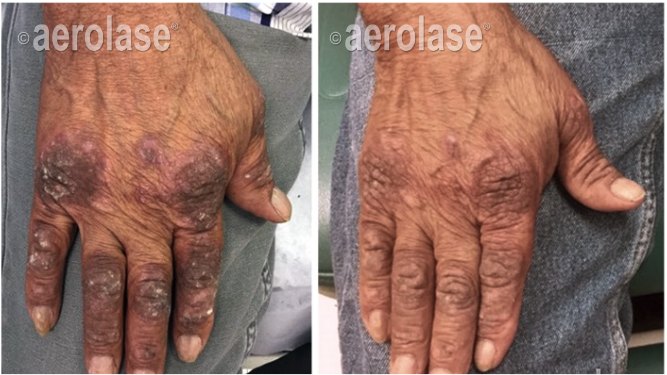
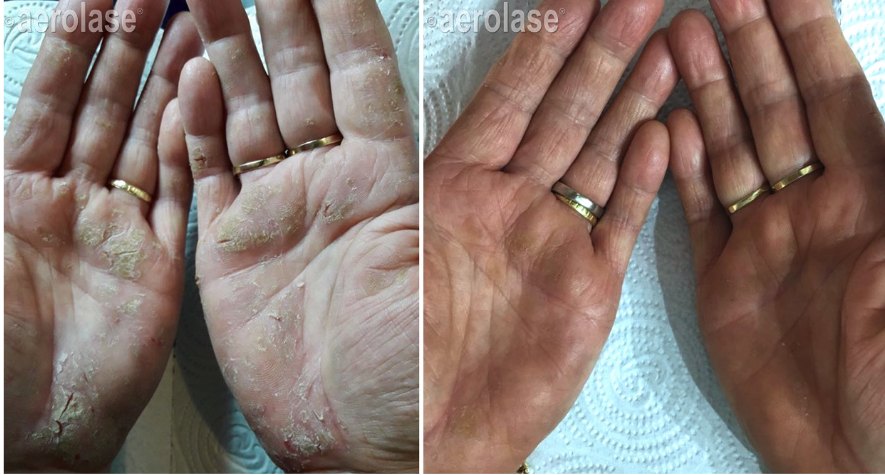
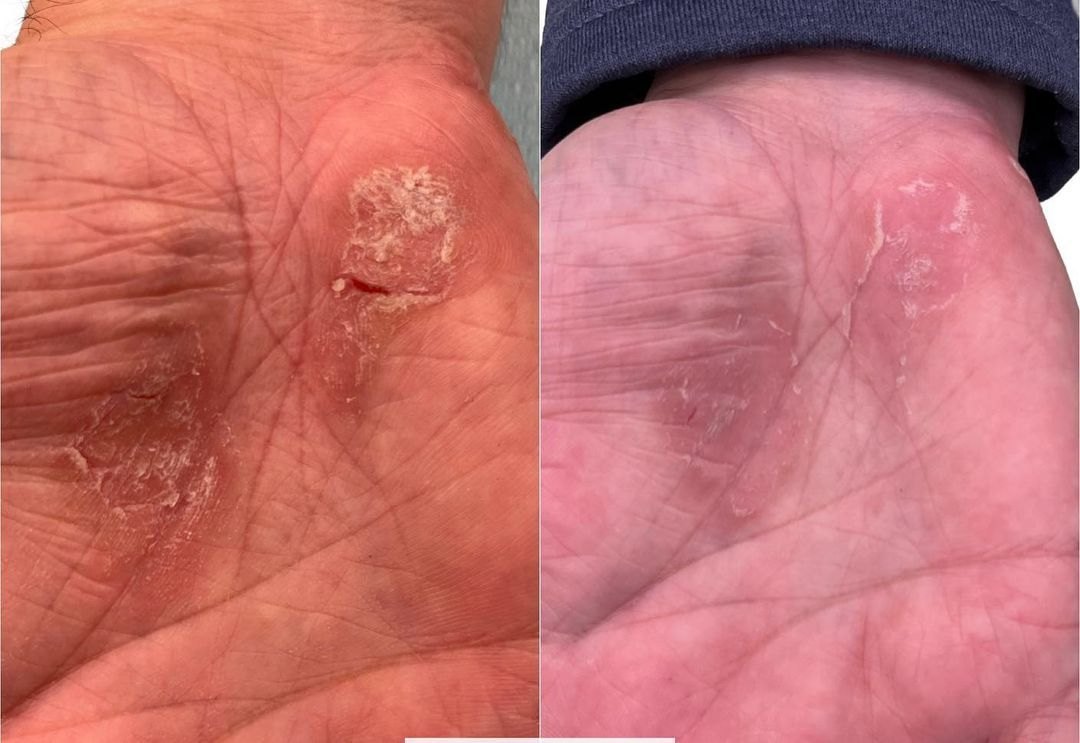
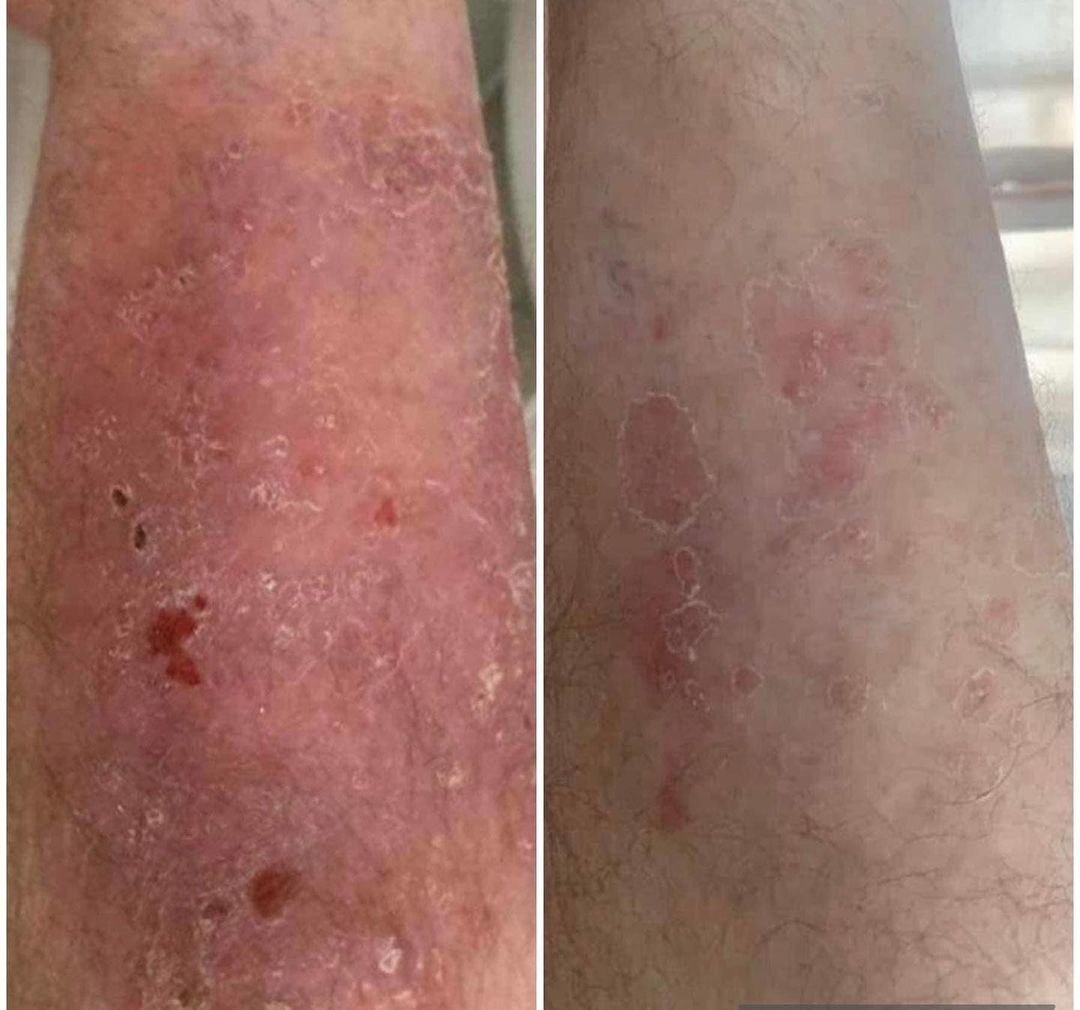
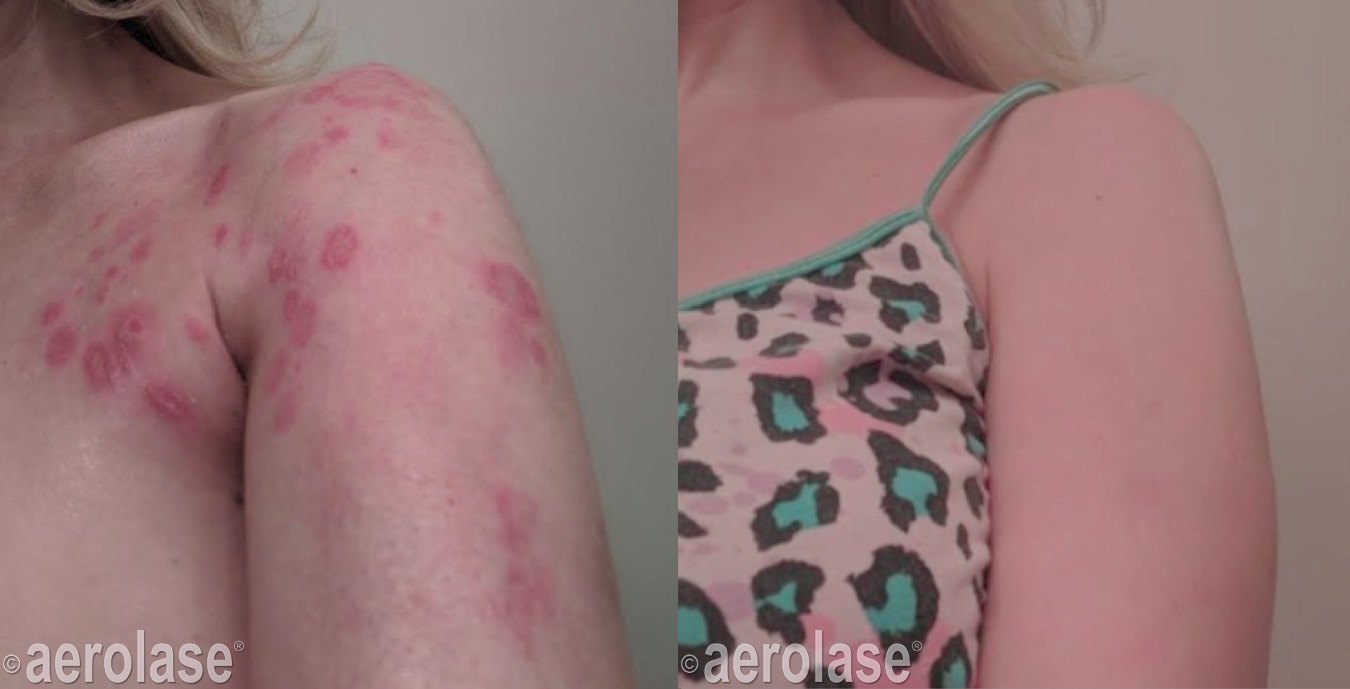
More Neo Elite results. The full set, covering every condition we use this laser for, is on our Aerolase before and after page.
Sessions needed vary by person, severity and skin type. Individual results vary and nothing here is a guarantee of outcome. We do not diagnose from a photograph; anything that has changed in size, shape or colour, or that you have not had looked at, needs a proper assessment before any laser is pointed at it.
Questions about this treatment?
Ask us anything before you book. Consultations are free, and we will tell you honestly if a treatment is not right for you.