



The Quick Answer: Aerolase for Rosacea in Toronto, May 2026
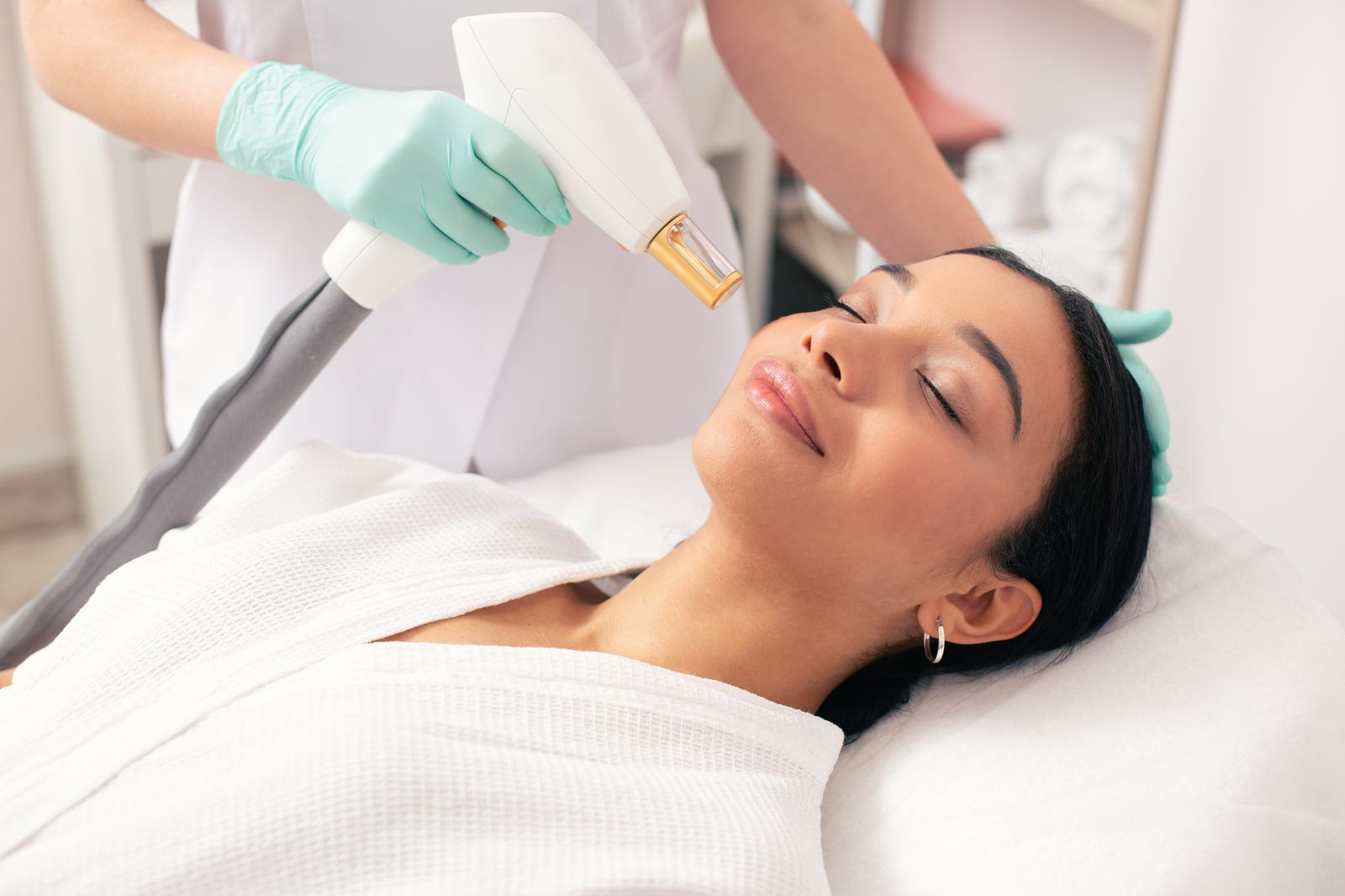
Aerolase Neo’s 650-microsecond, 1064 nm Nd:YAG pulse targets the dilated dermal vessels that drive persistent redness, flushing, and visible telangiectasias in rosacea. Unlike pulsed-dye and KTP lasers that excel on superficial vessels but bruise the skin, Aerolase reaches deeper vasculature with no bruising, no downtime, and no anaesthetic. At Bar Beauty Medical (46 Fort York Blvd, CityPlace) you can see our price list for current rosacea session and package pricing. Most patients need 4-6 sessions, spaced 3-4 weeks apart, to substantially reduce baseline redness; ongoing flushing triggers (heat, alcohol, sun) still need behavioural management. Aerolase is safe for all Fitzpatrick skin types I-VI, a meaningful gap-filler for darker-skinned rosacea patients who present with less visible redness but greater inflammation and PIH.
Why Rosacea Is a Vascular Problem (Not a Skin Care Problem)
Rosacea looks like a surface complaint, redness, bumps, flushing, but its driver is in the dermis: dilated, hyper-reactive blood vessels that respond to triggers (heat, alcohol, spicy food, stress, sun) by flooding the face with blood and inflammatory mediators. Over time, these vessels become structurally enlarged (telangiectasias) and the inflammation creates the bumps, pustules, and skin thickening (phyma) seen in advanced disease.
Topical metronidazole, ivermectin, azelaic acid, and oral minocycline help symptoms but don’t change the underlying vasculature. To structurally reduce baseline redness and visible vessels, you need a laser that targets oxyhaemoglobin in the dermis without burning the skin above it. That’s the gap Aerolase fills.
How Aerolase Treats Rosacea (The Mechanism)
- Selective vascular coagulation. 1064 nm is well-absorbed by oxyhaemoglobin at depth (1-5 mm). The 650-microsecond pulse heats targeted vessels above the coagulation threshold without bulk-heating surrounding tissue. Vessels collapse; surrounding skin stays calm.
- Anti-inflammatory effect. Rosacea-driven dermal inflammation downregulates after consecutive sessions, the pinkness you see between flares often softens by session 3.
- No purpura, no bruising. Pulsed-dye laser is the gold-standard rosacea wavelength historically, but it carries 7-14 days of visible purpura on therapeutic settings. Aerolase reaches a similar clinical endpoint with no visible signal that you had treatment.
- Inflammatory papules and pustules. Beyond redness, Aerolase reduces the inflammatory papulopustular component of subtype-II rosacea by coagulating the perilesional vasculature.
Aerolase vs Other Rosacea Lasers
| Device | Wavelength | Bruising / Purpura | Fitzpatrick Safe | Sessions |
|---|---|---|---|---|
| Aerolase Neo | 1064 nm, 650 µs | None | I-VI | 4-6 |
| Pulsed-Dye Laser (PDL) | 585-595 nm | 7-14 days at therapeutic settings | I-III | 3-5 |
| KTP Laser | 532 nm | Mild redness; possible PIH on darker skin | I-III | 3-6 |
| IPL (BBL) | 500-1200 nm broadband | 1-3 days redness | I-III only | 5-8 |
| Long-pulse Nd:YAG (traditional) | 1064 nm, ms pulses | Possible bruising | I-V with caution | 4-6 |
The shorthand: for rosacea patients who can’t take a week of visible bruising (sales, public-facing roles, weddings, parents who can’t hide from school pickup), Aerolase is the only no-downtime device with a defensible mechanism. PDL still has slightly stronger evidence on the most superficial fine vessels, for those specific lesions we may add one PDL session.
Fitzpatrick Safety: Why Aerolase Matters for Rosacea on Darker Skin
Rosacea is often misdescribed as a “fair-skinned condition.” It isn’t, it’s underdiagnosed in Fitzpatrick IV-VI because the redness is less visible against background pigment. South Asian, Middle Eastern, Latin, and African-Caribbean rosacea patients present more often with papulopustular disease, burning, stinging, and post-inflammatory hyperpigmentation than with classic visible flushing.
| Fitzpatrick Type | Heritage | PDL/IPL Safe? | Aerolase Safe? |
|---|---|---|---|
| I, Very fair | Northern European | Yes | Yes |
| II, Fair | European | Yes | Yes |
| III, Medium | Mediterranean | Caution | Yes |
| IV, Olive | Middle Eastern, South Asian, Latin | Not advised | Yes |
| V, Brown | South Asian, Filipino, Latin, North African | Not safe | Yes |
| VI, Deeply pigmented | African, Caribbean | Not safe | Yes |
What a Rosacea Session Looks Like at Bar Beauty
- Cleanse + photo (3 min). Standardised lighting for tracking baseline erythema across sessions. No anaesthetic required.
- Trigger map (2 min). Quick chart of your most recent flushing triggers, products, and recent flares. This shapes settings.
- Aerolase pass, full-face vascular protocol (5-7 min). Standardised passes across both cheeks, nose, chin, and forehead.
- Targeted vessels (3-5 min). Visible telangiectasias get stacked pulses. These often respond after 1-2 visits.
- Red LED + SPF (5 min). Calms residual inflammation and pre-empts post-treatment flush.
Total: 20 minutes. Most patients are pink for 30-60 minutes after, then back to baseline. No visible signal you had treatment. Yes, you can return to work the same day.
How to Pay: HSA
Rosacea is a recognised dermatological condition; many HSA plans reimburse laser treatment when provided by a regulated health professional.
Affirm financing
For larger treatment plans, Affirm financing is available so you can split the cost into monthly payments. You can review your options at consultation; checking your rate does not affect your treatment plan.
Trigger Management: The Other Half of Treatment
Aerolase reduces structural vasculature. It does not change your trigger response. Sustained results require coordinated trigger management:
- Mineral SPF 50 daily, including UV-protective makeup.
- Heat avoidance: hot showers, saunas, hot yoga, sleeping in heated rooms.
- Trigger food diary, alcohol, spicy food, and aged cheeses are common.
- Topical maintenance, ivermectin or metronidazole 2-3×/week for papulopustular subtype.
- Barrier-supportive skincare: ceramide moisturisers, gentle cleansers, no exfoliating acids during a flare.
Rosacea Treatment Across the GTA
Bar Beauty’s CityPlace location is accessible from Toronto, Mississauga, Brampton, Vaughan, Markham, Richmond Hill, Oakville, and Etobicoke, including patients commuting in from Mississauga who pair their Aerolase session with a downtown evening to avoid 401 traffic.
Is Rosacea Treatment Covered by OHIP?
For most people, no. OHIP and provincial plans generally treat laser for rosacea redness as cosmetic, so it is not covered. A dermatology consult to diagnose rosacea and prescription topicals or oral antibiotics may be covered when billed as medical care, but the vascular laser itself usually is not. If you have a Health Spending Account through work, an Aerolase course for a medical rosacea indication can sometimes be claimed, which we cover in the payment section above. Always confirm with your plan administrator.
What Is the Most Effective Treatment for Rosacea?
There is no single cure, and the most effective approach depends on your subtype. Persistent redness and visible vessels respond best to vascular laser like Aerolase. Bumps and pustules (papulopustular rosacea) usually need topical or oral medication from a physician, often alongside laser. Flushing is managed mostly through trigger control. The honest answer most clinics will not lead with: the best results come from combining a vascular laser for the redness with medical management for the inflammation and disciplined trigger avoidance, not from any one treatment on its own.
Is Rosacea a Gut Issue?
There is research linking rosacea to the gut, including associations with conditions like SIBO and H. pylori, and some patients notice their skin settles when they address digestive triggers. It is not proven that fixing your gut clears rosacea, and we are not gastroenterologists. What we see in practice is that common dietary triggers, alcohol, very spicy food, and hot drinks, drive flushing for a lot of people. Treating the visible vessels with Aerolase and managing your personal triggers tends to give the most reliable day-to-day improvement. If you suspect a gut component, that is a conversation for your family doctor.
Frequently Asked Questions
How many Aerolase sessions for rosacea?
Most patients need 4-6 sessions spaced 3-4 weeks apart, then maintenance every 8-12 weeks.
Is Aerolase better than pulsed-dye laser for rosacea?
It depends. PDL has stronger evidence on the most superficial fine vessels but causes purpura. Aerolase has zero downtime and works on deeper vasculature plus all Fitzpatrick types. For most patients Aerolase is the right starting point; we add PDL only for stubborn surface vessels.
Will Aerolase cure my rosacea?
No laser cures rosacea. Aerolase reduces structural vasculature and inflammation, usually 50-70% baseline improvement, but trigger response remains. Sustained results need trigger management plus periodic maintenance.
Does Aerolase hurt on rosacea-inflamed skin?
Less than you’d expect. Patients describe quick warm taps. No anaesthetic. We use lower fluences during active flares.
Can I treat the redness on my nose specifically?
Yes, targeted nasal vessel treatment is available, and often 2-3 sessions clear visible nasal telangiectasias. For pricing, see our price list.
Can darker-skinned patients get rosacea treatment?
Yes. Aerolase is safe for Fitzpatrick I-VI, one of the only effective vascular lasers for darker rosacea patients, who are often turned away from IPL and PDL clinics.
What if my rosacea has bumps, not just redness?
Papulopustular subtype responds well to Aerolase combined with topical ivermectin or metronidazole. We coordinate prescriptions through your family doctor where appropriate.
How long does each session take?
20 minutes door-to-door. Mild pinkness for 30-60 minutes after; no visible signal you had treatment by the end of the day.
What does Aerolase rosacea cost in Toronto?
Pricing depends on the area treated and whether you book single sessions or a package. For current rosacea pricing, see our price list.
Can I do Aerolase if I’m on antibiotics for rosacea?
Yes, oral antibiotics like doxycycline or minocycline are compatible with Aerolase. We do confirm sun-sensitivity status and adjust SPF guidance accordingly.
Book a Free Rosacea Consultation
Free 20-minute consult with a regulated provider includes subtype identification (ETR vs papulopustular vs phymatous vs ocular), Fitzpatrick mapping, trigger inventory, and a written treatment plan. Book at barbeauty.ca/book or call 416-923-1200.
The Vascular Biology of Rosacea: Why Aerolase Targets the Root Cause
Rosacea is not a surface inflammation problem, it is a vascular remodelling disease. Chronic exposure to triggers (UV, alcohol, heat, spicy foods, hormonal fluctuation) causes repeated dilation of the post-capillary venules in the superficial dermal plexus. Over months and years, the smooth muscle in those vessels weakens and the vessel walls thicken; the vessel stays partially dilated even at rest. That is what creates baseline erythema, the constant pink-to-red flush that doesn’t go away when you remove the trigger. Aerolase’s 650-microsecond 1064 nm Nd:YAG pulse selectively coagulates haemoglobin inside those dysfunctional vessels without harming the surrounding dermis, allowing the body to clear them through normal phagocytosis over 2-4 weeks. Each session structurally reduces the vascular load; over 4-6 sessions the baseline drops 50-70%.
Aerolase vs IPL vs Pulsed-Dye Laser vs V-Beam: The Honest Comparison
Most clinics push whichever device they own. Here is the unbiased comparison Toronto patients should have before booking:
- Aerolase Neo (1064 nm Nd:YAG, 650 µs): Safe on Fitzpatrick I-VI. Zero downtime. Targets deeper vasculature plus reduces papulopustular inflammation.
- IPL (Intense Pulsed Light, 500-1200 nm broadband): Best on Fitzpatrick I-III. Not safe on darker skin. Treats both pigment and vessels but less precisely. Carries a risk of PIH and blistering if the operator misjudges fluence.
- Pulsed-Dye Laser (PDL, 595 nm): Strongest evidence for superficial telangiectasias. Causes purpura (bruising) for 7-14 days post-treatment. Best on Fitzpatrick I-III.
- V-Beam Perfecta: A subtype of PDL marketed under Candela’s brand. Same indications and limitations as PDL.
For most Toronto rosacea patients, especially anyone Fitzpatrick III and above, Aerolase is the right first device. We add PDL only as a finisher for stubborn surface vessels once the baseline inflammation has been calmed.
Pre-Treatment Preparation: The Two Weeks That Determine Your Result
Patients who follow our 14-day pre-treatment protocol see meaningfully better outcomes from the same number of sessions. Two weeks before your first Aerolase session: stop retinoids, glycolic and salicylic acid, benzoyl peroxide, and any prescription topicals that thin the stratum corneum. Switch to a ceramide-based cleanser and a fragrance-free moisturiser. Apply mineral SPF 50 daily, even on cloudy days. Avoid sun exposure, tanning beds, and self-tanner. Limit alcohol to no more than two drinks in the 72 hours before your session. Hydrate aggressively, 2.5 to 3 L of water daily, because well-hydrated tissue responds more predictably to laser energy. Photograph yourself in identical lighting at the start of the protocol so we have a true baseline to compare against.
Common Patient Mistakes That Sabotage Results
- Continuing acid-based actives between sessions. Glycolic, salicylic, mandelic and retinoids degrade the barrier and provoke flares between treatments. Pause for the full course.
- Skipping daily mineral SPF. Even brief winter sun exposure can re-trigger the vasculature you just treated.
- Spacing sessions too far apart. The remodelling cascade benefits from a consistent 3-4 week rhythm. Letting 8-10 weeks pass between early sessions blunts the cumulative effect.
- Drinking the night before treatment. Alcohol dilates vessels and amplifies post-treatment flush, sometimes for several hours.
- Treating during an active flare with the wrong assumptions. Active flares need conservative fluence and topical pre-treatment, not aggressive settings to “burn it out.”
Decision Matrix: Is Aerolase Right for You?
Use this matrix as a candidate filter before booking your free consultation:
- Strong fit: Persistent baseline redness, visible telangiectasias, papulopustular bumps, all Fitzpatrick types, anyone previously turned away from IPL/PDL because of skin tone, anyone seeking zero-downtime treatment around work and social commitments.
- Possible fit with combination: Predominantly surface telangiectasias (consider Aerolase + finishing PDL), advanced phymatous changes (combine with prescription oral therapy), ocular component (co-manage with ophthalmology).
- Not the right tool: Active bacterial cellulitis, undiagnosed facial swelling, recent isotretinoin within 6 months, pregnancy (defer until postpartum), uncontrolled photosensitive disorders.
See also: our full guide to Aerolase at Bar Beauty Medical.
Related at Bar Beauty: Rosacea Treatment Options: 7 Medical Solutions.