


Non-Surgical Fat Reduction and Body Contouring in Toronto: a straight answer
Let’s be clear up front. Non-surgical fat reduction isn’t a weight-loss strategy. It’s a body-contouring strategy for people who are already close to their target weight and have stubborn, pinchable pockets of fat that won’t shift with diet or training. At our CityPlace clinic in Toronto, we use Health Canada approved energy devices, and at your consultation we match you to the one that fits your tissue. Here’s the honest version of what works, what doesn’t, and what it costs.
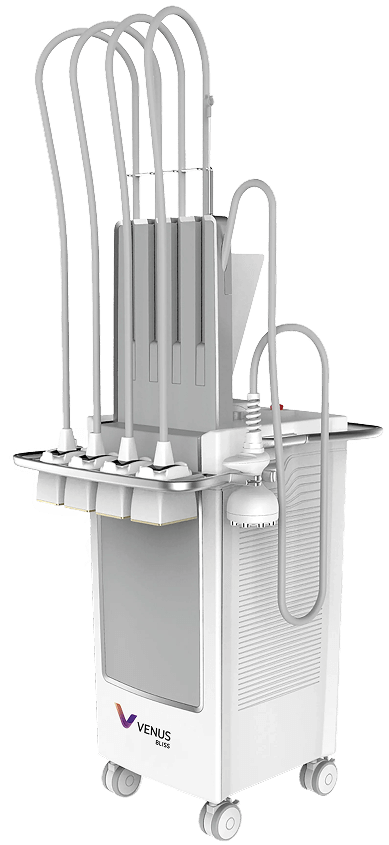
Venus Bliss diode-laser fat reduction and Body FX radiofrequency body contouring, non-invasive, at our CityPlace Fort York clinic.
What we actually offer for fat reduction
Two devices, two jobs. Venus Bliss uses a 1064 nm diode laser to heat and destroy subcutaneous fat cells in stubborn pockets, the abdomen, flanks, and similar areas. Body FX by InMode uses radiofrequency plus vacuum and mechanical massage to tighten skin and target smaller, more diffuse fat. Both are non-invasive. No needles, no anaesthesia, no real downtime. We don’t do injectable fat dissolving as part of this service, and we’ll be straight with you about which device, if any, actually suits you.
How Venus Bliss works
Laser applicators sit over the treatment area for around 25 minutes. The 1064 nm wavelength reaches subcutaneous fat and heats the fat cells beyond the temperature they can survive; they break down and are cleared by your body over roughly 6 to 12 weeks. Adults do not grow new fat cells, so the cells that are cleared are gone, though you can still gain weight in the cells that remain. Results from destroyed fat cells are durable rather than a guarantee against future weight gain.
How Body FX works
Body FX layers radiofrequency heating with vacuum and mechanical pulses. The radiofrequency tightens skin as well as disrupting fat, which makes it a better choice when you want some skin tightening alongside the fat reduction, or for areas where the Venus Bliss applicators do not sit well.
How many sessions, and what to expect
For Venus Bliss, most patients do a series of about 4 to 6 sessions spaced roughly 4 to 6 weeks apart per area. Body FX is typically a longer series spaced 1 to 2 weeks apart. Results build gradually as your body clears the treated fat, with a visible difference usually around week 4 and the peak result a few months after the final session. Your exact plan is set at the free consultation.
Who is a candidate, and who is not
In our experience, the best results come for people within roughly 5 to 15 lb of their goal weight who have stubborn pockets that won’t move with diet and exercise. This isn’t a weight-loss tool. It’s also not for patients with significant loose skin, who are usually better served by a surgical referral. We don’t treat during pregnancy, over an active skin infection, or over metal implants, a pacemaker, or a defibrillator in the treatment field for energy-based devices. And we’re honest at the consult. If you’re not a good candidate, we’ll tell you.
Book your free consultation
Speak with a Bar Beauty Medical clinician about your goals. We will review your options, give you a clear plan, and never pressure you.
46 Fort York Blvd, CityPlace, Toronto · 416-923-1200
What makes us different
Every body-contouring treatment is done by a trained clinician under our medical director’s oversight, never handed off to an untrained technician. We’re transparent about pricing, honest about what will and won’t work for your specific case, and we won’t sell you a package you don’t need. Our clinic at 46 Fort York Blvd is closer than you think. See our contact page for directions and free parking, or browse our journal for the science behind every protocol.
What non-surgical fat reduction actually does
All non-surgical fat reduction works by injuring fat cells in a controlled way so the body’s own clearance removes them. Different devices do that differently:
- Venus Bliss uses 1064 nm diode-laser energy to heat fat cells past their survival threshold, with a separate applicator working on the connective tissue.
- Body FX combines radiofrequency, deep heating, and controlled vacuum to disrupt fat cells and stimulate collagen in the skin above.
What none of these do: they do not touch visceral fat, they do not change your metabolic rate, and they do not prevent future fat gain. For a fuller cost breakdown across body treatments, see our Toronto body contouring cost guide.
Which device fits which area
| Area | Best device | Downtime |
|---|---|---|
| Lower abdomen (“pooch”) | Venus Bliss | None |
| Upper abdomen | Venus Bliss | None |
| Flanks (“love handles”) | Venus Bliss | None |
| Inner thighs | Body FX | None |
| Outer thighs / saddlebags | Body FX | None |
| Bra-line / back | Body FX | None |
| Arms | Venus Bliss or Body FX | None |
The submental area under the chin is usually better addressed with a treatment designed for that small, specific pocket; if that is your concern, see our double chin page and we will point you to the right option at consult.
When to choose what
Choose Venus Bliss if
You have a clearly pinchable fat pocket on a larger body area, no significant skin laxity, no metal implants in the field, and you want a no-downtime treatment.
Choose Body FX if
You have moderate fat with mild-to-moderate skin laxity, or you want a tightening effect alongside the fat reduction.
Choose surgery (liposuction) instead if
The fat pocket is large, you are a surgical candidate, and you want one-session resolution with the associated recovery. We will tell you honestly when this is the better route and refer you on.
Fat reduction and body contouring cost in Toronto
We publish our prices and we do not negotiate at the chair. Our per-session pricing for fat reduction and body contouring, including the combined option, is posted live on the price list and in our Jane App booking system. Because results build over a series, the consultation is where we map how many sessions your area needs and what the total looks like, in writing, before anything is booked. There is no charge for the consultation.
Current pricing for every treatment is published on our (price list). Live pricing always wins over any number you read online.
Is body contouring covered by OHIP or insurance?
No. Non-surgical fat reduction and body contouring are cosmetic, so OHIP does not cover them, and standard private cosmetic benefits do not either. Occasionally a Health Spending Account will reimburse a component with a documented medical indication; we provide an itemised receipt on request, but you should confirm with your benefits provider before assuming any coverage.
Affirm financing
For larger treatment plans, Affirm financing is available so you can split the cost into monthly payments. It is a soft check that does not affect your credit score, and Affirm is the only third-party financing we offer.
Red flags: when to walk out of a body-contouring consultation
The Canadian medical aesthetics industry is partly self-regulated. Some clinics meet a high bar; others trade on a luxury look while cutting clinical corners. Use this checklist on every clinic, including ours.
- No real intake. If nobody asks about your medications, implants, pregnancy status, or medical history, that is a sales call, not a consultation.
- Pressure to book today. “This price is only good if you book now” is a sales tactic, not medicine. Reputable clinics quote you, send you home with a written plan, and expect you to think about it.
- Vague provider credentials. Ask who is treating you, what their training is, and which physician medically directs the clinic. If you cannot get straight answers, leave.
- Prices far below market. A quote dramatically under the Toronto average usually means an undertrained operator or a device being run incorrectly. Neither is worth it.
- No plan for problems. Every clinic should be able to tell you, plainly, what they do if something goes wrong and how you reach a clinician after hours. “Go to the ER” is not a plan.
- Identical before-and-after photos. Real results vary. Identical lighting, angle, and pose on every “result” usually means staged or stock images.
Recovery and aftercare
Venus Bliss
Warm, pink skin for a few hours, then back to all activity the same day. Drink plenty of water, since the cleared fat leaves through your lymphatic and hepatic pathways, and skip alcohol for 48 hours to support clearance.
Body FX
Mild redness and a temporary grid pattern for 24 to 48 hours, with the occasional small bruise from the vacuum. Normal activity the next day; the gym is fine at 48 hours.
Who should not have non-surgical fat reduction
- A high BMI, where this is the wrong tool for the goal
- Pregnancy or breastfeeding
- An active skin infection in the area
- A pacemaker, defibrillator, or metal implant in the treatment field, for energy-based devices
- An active autoimmune flare or recent surgery in the area
- An expectation of “liposuction without surgery”
How body contouring has changed, 2025 to 2026
The useful shift over the last year or so has been toward better measurement and more individualised plans rather than one-size protocols. Standardised before-and-after photography in consistent lighting is now standard at any serious clinic, which means we can show you objectively whether something is working and tell you honestly when it is not. For fat reduction specifically, that means we set the number of sessions to your tissue and your area rather than a fixed package, and we re-photograph along the way so progress is something you can see rather than just feel.
Fat reduction FAQ
Which non-surgical fat reduction works best?
There is no universal winner. Venus Bliss (diode laser) is best for stubborn, pinchable fat on the abdomen and flanks. Body FX (radiofrequency plus vacuum) is best for circumferential softening and mild skin laxity. The right choice depends on your tissue, which is what the consult is for.
How many sessions will I need?
Venus Bliss is usually a series of about 4 to 6 sessions spaced 4 to 6 weeks apart. Body FX is typically a longer series spaced 1 to 2 weeks apart. We confirm your plan at consult.
Will fat reduction tighten loose skin?
Body FX produces mild-to-moderate skin tightening alongside fat reduction. Venus Bliss is primarily fat-focused.
How much does non-surgical fat reduction cost in Toronto?
Our current per-session and combined pricing is posted live on the price list and in Jane. Because it is a series, the consult is where we map the total.
Is non-surgical fat reduction permanent?
The fat cells that are cleared are gone, but future weight gain can still deposit fat in the cells that remain. It is durable, not a guarantee against weight gain.
How long is recovery?
Venus Bliss: same day. Body FX: 24 to 48 hours of mild redness.
Does it hurt?
Venus Bliss feels like a warm massage. Body FX feels like a mild snap with the vacuum. Most patients find both comfortable.
Am I a candidate?
Ideal candidates are within roughly 10 to 15 lb of goal weight with isolated stubborn fat pockets and reasonable skin tone.
Can I combine treatments?
Yes. We commonly pair Venus Bliss with radiofrequency skin tightening, and we will map the sequence at consult.
How does this compare to CoolSculpting?
CoolSculpting uses cryolipolysis (controlled cooling). Health Canada has flagged a rare but real risk of paradoxical adipose hyperplasia, where the treated area enlarges, so we do not offer cryolipolysis. See our Venus Bliss vs CoolSculpting vs Body FX comparison.
How does this compare to liposuction?
Liposuction is surgical and removes far more fat in a single session, with the associated recovery. Non-surgical options are for stubborn, moderate fat pockets in patients close to their goal weight.
When will I see results?
A visible change around 6 to 8 weeks, with the final result a few months after the last session.
Is body contouring covered by OHIP?
No. It is cosmetic. Some Health Spending Accounts may reimburse a component with a documented indication; we provide an itemised receipt on request.
Mistakes we see people make
Choosing a clinic on price alone
The cheapest quote usually means an undertrained operator or a device run on the wrong settings. Ask who is performing the treatment, what their training is, who medically directs the clinic, and what happens if there is a problem.
Treating consultations as sales calls
A real consultation is a proper conversation: your history, your goals, photo documentation, and a written plan. If you are booked into a ten-minute upsell on a discounted package, you are not in a medical environment. At Bar Beauty Medical the consultation is free and is conducted by a clinician, not a commissioned salesperson.
Chasing one dramatic session instead of a plan
Fat reduction is designed to be staged over a series. Patients who insist on a single make-me-look-great-for-the-event session usually under-treat the actual concern. We build a plan with milestone photography so progress is measurable.
Expecting it to do a weight-loss job
This is body contouring, not weight loss. If overall weight is the goal, fat reduction is the wrong starting point, and we’ll say so rather than take your money.
Booking right before a major event
Even no-downtime treatments can leave brief pinkness or a temporary grid pattern. We do not recommend a first session within a week or two of a wedding, photo shoot, or major event. Build a buffer.
How Bar Beauty Medical compares to other Toronto clinics
Versus a high-volume chain
High-volume locations are built for throughput, with short slots and a heavy upsell on bundled packages. Bar Beauty Medical books unhurried appointments with the same clinician across your treatment arc. The trade-off is fewer same-day openings; we usually book new patients a week or two out.
Versus a med-spa with no medical director on site
Some med-spas operate under a directive with a physician who is rarely present. Bar Beauty Medical is physician-directed, which means real oversight on protocols and any complication. Ask any clinic you are considering how their medical oversight actually works.
Versus a surgical practice
Surgical practices that also offer body work tend to price above the market and route patients toward surgery for problems that can be solved non-surgically. We are non-surgical by design and not financially incentivised to push you toward the operating room, and we will tell you honestly when a surgical consult is genuinely the right answer.
Book your body-contouring consultation at Bar Beauty Medical
Every fat reduction plan with us starts with a free consultation. You’ll meet the clinician who’d actually perform your treatment, talk through your history and goals, and leave with a written, itemised plan and quote. There’s never any obligation to book on the day. We’re at 46 Fort York Blvd in CityPlace, Toronto, with free on-site parking, and we see patients from across the GTA.
Book online on Jane or call 416-923-1200.
Venus Bliss Results
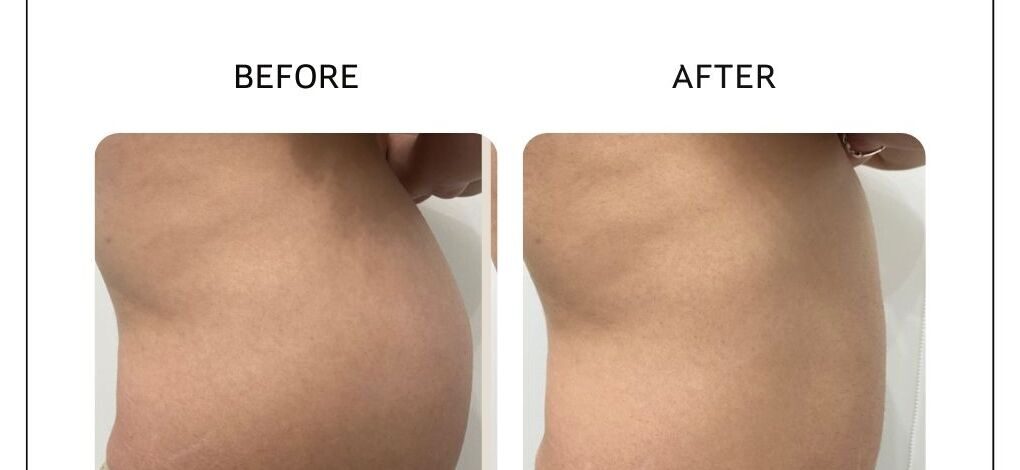
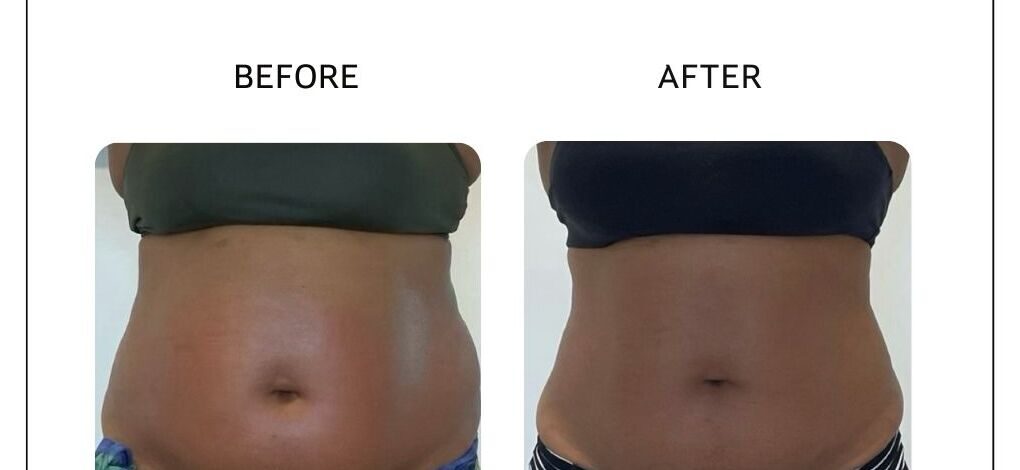
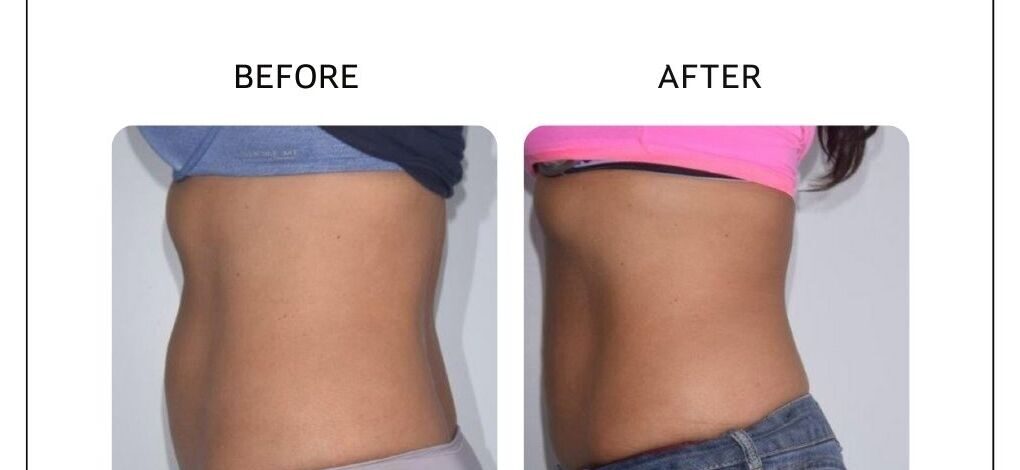
Representative Venus Bliss results provided by Venus Concept (the device manufacturer). Individual results vary.
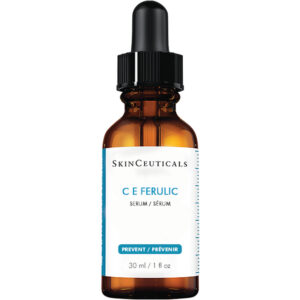
Recommended aftercare and skincare
The medical grade products our team uses to protect and extend your results. Shipped express across Canada, free over 150 dollars.

&url=https://barbeauty.ca/product/hale-derma-spray-2oz/&media=https://barbeauty.ca/wp-content/uploads/2026/05/hale-derma-60ml-1024x1024.png)