


Aerolase laser treatment for pseudofolliculitis barbae (razor bumps) and chronic ingrown hairs.
Razor bumps are not an infection and treating them with antibacterial products misses the mechanism entirely. Pseudofolliculitis barbae happens when curved hair re-enters the skin after shaving and the body treats it as a foreign object. That is why it disproportionately affects people with tightly curled hair, and why the only definitive fix is removing the hair rather than managing the inflammation.
- The mechanism: a sharply cut hair curves back and pierces the skin, triggering an inflammatory response. Bacteria are secondary, not causative.
- Why laser is definitive: no hair, no ingrown. It addresses the cause rather than the symptom, which is why it outperforms every topical.
- Wavelength matters here specifically, because this condition is most common in deeper skin tones. Our Aerolase Neo Elite runs at 1064 nm, the appropriate wavelength for Fitzpatrick IV to VI.
- Between sessions: shave with the grain, single pass, avoid stretching the skin taut, and stop using multi-blade razors that cut below the surface.
- Do not pick or tweeze, which drives the inflammation deeper and leaves the dark marks that often outlast the bumps themselves.
- Cost: beard line from $120 to $140 per session, full neck $150 to $175. Expect six to eight sessions spaced four to six weeks apart.
- The pigment left behind usually needs treating separately after the bumps resolve. That is post-inflammatory hyperpigmentation and it fades with time and daily SPF.
Bar Beauty Medical, 46 Fort York Blvd, CityPlace, Toronto. Prices in Canadian dollars from our live booking system, verified 18 August 2026.
Why Aerolase works for razor bumps
The 1064nm wavelength is the gold standard for darker skin tones (Fitzpatrick IV-VI) where razor bumps are most common. It targets the hair follicle without damaging surrounding pigmented skin, the trapped curling hair is permanently reduced and the inflammation resolves. Most patients see significant improvement after 4 to 6 sessions spaced 4 to 6 weeks apart.
Pseudofolliculitis barbae (PFB)
PFB is a chronic inflammatory condition where the hair shaft curls back into the skin instead of growing straight out. It causes painful papules, post-inflammatory hyperpigmentation, and keloidal scarring on the beard area, neck, bikini line, and other areas where shaving or waxing is regular. Aerolase reduces hair density permanently in those zones, eliminating the trigger.
Pairs well with
Patients with PFB also frequently see post-inflammatory hyperpigmentation from the chronic inflammation, which we can address simultaneously with Aerolase NeoSkin protocols.
Laser treatment for razor bumps in Toronto targets pseudofolliculitis barbae (PFB), the chronic inflammatory condition where shaved or waxed hair curls back into the skin, causing painful papules, post-inflammatory hyperpigmentation, and sometimes keloidal scarring. At Bar Beauty in downtown Toronto we treat PFB with Aerolase Neo Elite 1064 nm laser, the safest laser available for darker Fitzpatrick IV through VI skin where PFB is most common. The 1064 nm wavelength permanently reduces hair density in affected zones, eliminating the trigger for the inflammatory cycle. 2026 pricing starts at $195 per session for the beard area and runs to $445 for full face plus neck. Most patients see significant improvement after 4 to 6 sessions spaced 4 to 6 weeks apart.
To book a no-pressure consultation, call (416) 923-1200 or use the contact page.
What pseudofolliculitis barbae actually is
Pseudofolliculitis barbae (PFB), often called “razor bumps” or “shaving bumps,” is a chronic inflammatory disorder of the hair follicle that disproportionately affects people with curly or coiled hair, most commonly Black, South Asian, Middle Eastern, Mediterranean, and Latin patients. The mechanism is straightforward: when curly hair is cut close to the skin by shaving or waxing, the new tip is angled. The hair grows and either curves back into the skin from the outside (extrafollicular penetration) or pierces the follicular wall from inside (transfollicular penetration). The body responds to the trapped or piercing hair with an inflammatory reaction, papules, pustules, post-inflammatory hyperpigmentation, and in chronic cases keloidal or hypertrophic scarring.
The condition is most visible in the beard area in men but affects multiple zones: neck, jaw, cheeks in men; underarm, bikini, leg, and pubic area in women. The single most effective treatment is permanent reduction of the hair that is causing the problem, which is exactly what laser hair removal does.
Why the Aerolase 1064 nm wavelength is the right tool for PFB on darker skin
Most laser hair removal devices (diode, alexandrite, 755 nm, IPL) target melanin in the hair shaft. The same wavelengths are also absorbed by melanin in surrounding skin, which is why those devices carry significant burn and PIH risk on Fitzpatrick IV through VI skin. The Aerolase 1064 nm Nd:YAG wavelength is absorbed much less by surface melanin, making it the safest laser available for darker skin tones. The Aerolase device adds a 650-microsecond pulse duration that further reduces collateral thermal damage to surrounding pigmented skin.
2026 razor bump laser treatment pricing in Toronto
| Treatment area | Duration | Recommended series |
|---|---|---|
| Beard area (single) | 30 minutes | 6 to 8 sessions |
| Neck area (single) | 20 minutes | 6 to 8 sessions |
| Beard + neck (single) | 45 minutes | 6 to 8 sessions |
| Bikini line PFB (single) | 30 minutes | 6 to 8 sessions |
| Brazilian PFB (single) | 45 minutes | 6 to 8 sessions |
| Underarm PFB (single) | 20 minutes | 6 to 8 sessions |
| Full face + neck (single) | 60 minutes | 6 to 8 sessions |
| Maintenance single session | per area above | every 6 to 12 months |
How razor bump laser pricing compares in Toronto
The 2026 Toronto market for Aerolase or 1064 nm laser hair removal for PFB ranges from $165 to $295 per beard-area session. We sit at $195 mid-market. Series of 6 with one free brings effective per-session pricing to $222+.
Aerolase vs other lasers vs electrolysis for PFB, how we decide
When we choose Aerolase 1064 nm
Default for Fitzpatrick III through VI. Safest laser for darker skin, no PIH risk in skilled hands, effective on coarse hair. Our standard for beard PFB.
When we choose diode or alexandrite laser
For Fitzpatrick I through III with thin or fine hair where the shorter wavelengths produce faster results. Not appropriate for darker skin.
When we choose electrolysis
For very fine, light, or white/gray hair that does not contain sufficient melanin for laser treatment. Slower and more expensive per area but works on any hair color.
When we add the Aerolase NeoSkin laser pass
For patients with significant post-inflammatory hyperpigmentation from chronic PFB, adding NeoSkin sessions concurrently treats the pigment while the hair removal sessions address the underlying cause.
Red flags, when to walk out of a PFB laser consultation
- Diode, alexandrite, or 755 nm laser recommended for Fitzpatrick IV through VI. These wavelengths carry significant burn and PIH risk on darker skin.
- “IPL hair removal” recommended for PFB. IPL is not appropriate for darker skin and is less effective than dedicated 1064 nm laser for PFB.
- “One session will eliminate your PFB” claims. PFB resolution requires permanent hair density reduction over a series of 6 sessions.
- No Fitzpatrick assessment. Settings should vary by skin type.
- No goggles provided. Eye protection is mandatory.
- No pre-treatment shave instruction. Optimal results require shaved skin.
- SPF protocol skipped post-treatment. Post-laser skin is photosensitive.
Recovery, realistic day-by-day timeline
Day 0 (treatment day)
Mild warmth and slight pinkness for 1 to 2 hours. Mild perifollicular edema (raised hair follicles) is normal and resolves in 24 hours. SPF 30+ before leaving.
Day 1
Possible mild redness. No restrictions on normal activity.
Days 2 to 14
Treated hairs shed gradually. This is the “shed phase” and is normal, what looks like new hair growth is actually the dead hair being pushed out by the follicle.
Weeks 4 to 6
Time for the next session. Active PFB lesions typically reduce visibly between sessions 2 and 3.
HSA, financing, and tax considerations
Health spending accounts
Laser treatment for PFB documented as therapeutic (not cosmetic hair removal) is often reimbursable by Group HSAs because PFB is a medical inflammatory condition. We provide itemized receipts with appropriate clinical coding.
CRA medical expense tax credit
Laser treatment for diagnosed PFB (with practitioner documentation) may qualify for the medical expense tax credit because it addresses an inflammatory medical condition rather than purely cosmetic concerns. Discuss with your accountant.
Insurance referrals
Some workplace insurance plans cover medically necessary laser treatment for PFB with physician referral. Worth investigating if PFB is significantly affecting your work or quality of life.
Affirm financing
For larger treatment plans, Affirm financing is available so you can split the cost into monthly payments. You can review your options at consultation; checking your rate does not affect your treatment plan.
Combining razor bump laser with other treatments
With Aerolase NeoSkin for PIH
Concurrent NeoSkin sessions address the post-inflammatory hyperpigmentation that chronic PFB creates. Best outcome.
With topical retinoid therapy
Tretinoin or adapalene helps prevent the keratinization that contributes to follicular plugging.
With dermatology care for keloidal cases
For patients with significant keloidal scarring, we coordinate with a dermatologist for steroid injection or other adjunct therapy.
With improved shaving technique
While the laser series runs, we recommend single-blade razors, shaving in the direction of hair growth, and avoiding stretching the skin during shaving, all of which reduce active PFB triggering.
What razor bump laser will not do
- Eliminate all hair forever in a single session. Permanent reduction requires a series of 6 to 8 sessions.
- Erase deep keloidal scarring. Laser stops the trigger; existing scars may need separate dermatology care.
- Lighten existing post-inflammatory hyperpigmentation alone. Concurrent NeoSkin or topical therapy is needed for PIH.
- Work on very light, very fine, or white/gray hair. Electrolysis is the option for those hair types.
- Substitute for proper shaving technique during the treatment series.
Why Bar Beauty for razor bump laser treatment in Toronto
We are a nurse-led, physician-supervised aesthetic clinic in downtown Toronto serving patients across the GTA, Mississauga, Etobicoke, North York, Scarborough, Vaughan, Markham, Richmond Hill, and Oakville. Our aesthetic team treats PFB and laser hair removal with particular expertise in darker Fitzpatrick skin tones. We hold a 5.0 Google rating across 222+ reviews. Every PFB laser session is performed by a trained medical aesthetician or nurse with direct Aerolase certification.
Razor bumps treated with the Neo Elite
Read this first. These photographs come from Aerolase Corp., the company that makes the Neo Elite. Each was taken at the practice credited underneath it. They are not our patients and we are not claiming them as our results. We show them because they are the clearest published record of what this device does, and we run the same machine at our CityPlace clinic. Our own patient photographs go up as we build a consented library.
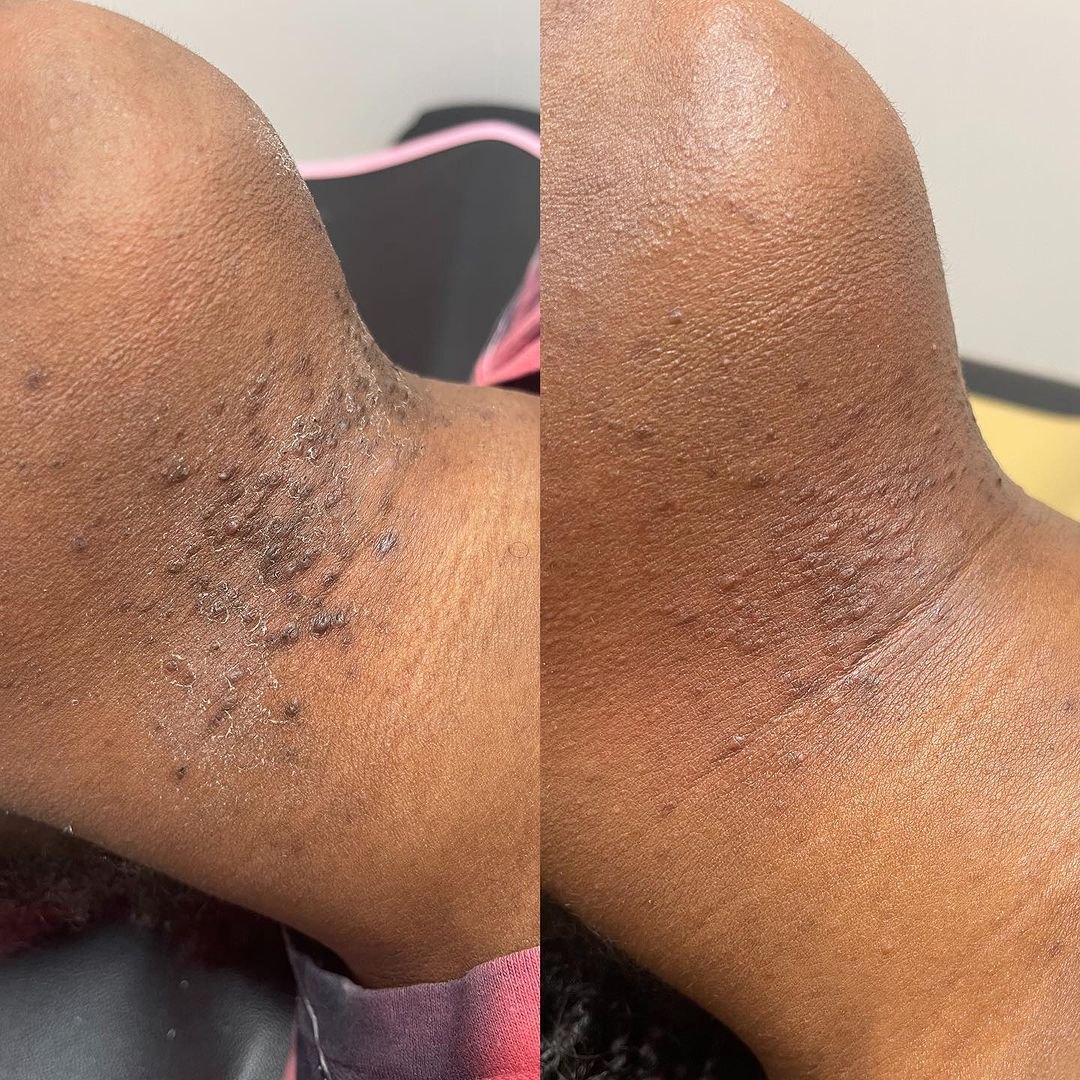
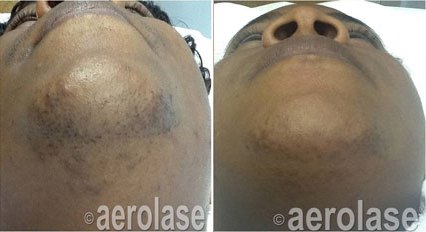
More Neo Elite results. The full set, covering every condition we use this laser for, is on our Aerolase before and after page.
Sessions needed vary by person, severity and skin type. Individual results vary and nothing here is a guarantee of outcome. We do not diagnose from a photograph; anything that has changed in size, shape or colour, or that you have not had looked at, needs a proper assessment before any laser is pointed at it.
Frequently asked questions
How much does razor bump laser treatment cost in Toronto in 2026?
$195 per beard area session. Series of 6 with one free: $995.
How many sessions do I need?
6 to 8 sessions spaced 4 to 6 weeks apart for significant clinical improvement. Then maintenance singles every 8 to 12 months.
Is it safe for darker skin tones?
Yes, the Aerolase 1064 nm wavelength is the safest laser available for Fitzpatrick IV through VI.
Does it hurt?
Mild rubber-band sensation. Pain rating 2 to 3 out of 10. Most patients do not need numbing.
Is there downtime?
None. Mild pinkness and perifollicular edema for 1 to 2 hours.
Can I shave between sessions?
Yes, shave as needed. Use a single-blade razor and shave in the direction of hair growth.
Can I exercise after a session?
Wait 24 hours. Hot yoga and sauna 48 hours.
How soon will I see results?
Active PFB lesions typically reduce visibly between sessions 2 and 3. Hair density reduces progressively across the series.
Will my PFB come back?
If hair density is permanently reduced by the series, PFB is unlikely to recur in treated zones. Maintenance singles every 8 to 12 months keep results going.
Can I do this if pregnant?
Most clinics including ours defer non-essential cosmetic laser until after delivery and breastfeeding.
What is the difference between PFB and folliculitis?
PFB is specifically caused by curly hair growing into the skin after shaving or waxing. Folliculitis is general inflammation of the hair follicle from various causes including bacterial infection. PFB is non-infectious but can become secondarily infected.
Will the laser change my skin color?
No. The Aerolase 1064 nm wavelength is specifically chosen for darker skin because it does not affect surrounding skin pigment.
Book your razor bump laser consultation
Call (416) 923-1200, message via WhatsApp, or book via the contact page.
The science of why permanent hair reduction resolves PFB
PFB is mechanically driven, the curl of regrowing hair creates the inflammatory event. If the regrowing hair is eliminated or substantially reduced in density, the mechanical trigger is removed and the inflammation does not occur. Laser hair removal works by selectively damaging the melanin-containing hair shaft and follicle. With each session, a percentage of treated follicles enters a prolonged dormant phase or is permanently disabled. After 6 to 8 sessions, the total active follicle population in the treatment zone has been reduced by 70 to 90 percent, which means 70 to 90 percent fewer potential PFB triggers in that area. The remaining hairs are typically finer and lighter, which makes them less likely to curl into the skin even when they regrow. This is why laser hair removal is considered the definitive treatment for PFB in patients whose hair color and skin type permit it.
The Toronto demographic context for PFB treatment
Toronto is one of the most ethnically diverse cities in North America, with substantial South Asian, Black, Middle Eastern, East Asian, and Caribbean populations. PFB disproportionately affects all of these groups because of the prevalence of curly or coiled hair patterns and the high prevalence of Fitzpatrick IV through VI skin tones. For decades, treatment options in Toronto were limited because most clinics operated alexandrite or diode lasers that are not safe for darker skin. The arrival of dedicated 1064 nm Nd:YAG devices like Aerolase has changed this, patients of color in the GTA finally have access to definitive PFB treatment without the burn and PIH risks of older laser technology. Our patient population reflects this demographic reality: more than 60 percent of our PFB patients are Fitzpatrick IV through VI and seek us out specifically because we are equipped to treat them safely.
Deeper protocol breakdown for razor bumps (pseudofolliculitis barbae) at Bar Beauty Medical
Beyond the high-level overview most clinics publish, patients researching razor bumps (pseudofolliculitis barbae) in Toronto deserve to know what actually happens during a Aerolase laser hair reduction appointment, how decisions are made in real time, and what separates a competent technician from a clinician building a long-term aesthetic plan. At Bar Beauty Medical, every razor bumps (pseudofolliculitis barbae) appointment follows a six-stage protocol. Stage one is the seated visual assessment in neutral lighting with hair pulled back. Stage two is the dynamic assessment, where Jasmine asks the patient to smile, frown, pucker, and speak naturally to identify how the muscles of facial expression interact with whatever concern brought them in. Stage three is the photographic baseline using standardized angles (frontal, three-quarter left and right, profile, and submental) under fixed lighting. Stage four is treatment planning, where the proposed approach is sketched on a printed face diagram and reviewed with the patient before any product is opened. Stage five is consent, including a written explanation of risks specific to the planned anatomy. Stage six is the treatment itself, performed slowly and incrementally, with a hand mirror offered at natural pause points so the patient can confirm direction before more product is delivered.
This protocol exists because rushed appointments produce rushed outcomes. When a clinic books razor bumps (pseudofolliculitis barbae) every 15 minutes, the planning conversation gets compressed and the patient is more likely to leave with a generic result. Our razor bumps (pseudofolliculitis barbae) bookings are 60 to 90 minutes for new patients and 45 to 60 minutes for return visits, which is longer than the industry average but produces fewer revisions and more natural outcomes over time.
Year-one, year-two, and year-three cost framework
A realistic budget for razor bumps (pseudofolliculitis barbae) extends beyond the first appointment. Year one typically involves an initial treatment plus one or two refinement or maintenance visits, depending on the product half-life and the patient’s goals. Expect a year-one investment in the range of CAD 150-450 multiplied by 1.5 to 2.0. Year two usually settles into a maintenance rhythm where the patient has identified what works and is no longer building. Year-two costs typically drop 20 to 40 percent versus year one. Year three often introduces complementary treatments (skin quality work, biostimulator layering, or device-based collagen support) that reduce the dependency on the original Aerolase laser hair reduction alone. A patient who plans across a three-year horizon usually spends less per year by year three than they spent in year one, and the result looks more cohesive because each decision was made in the context of an overall plan rather than as a one-off purchase.
Common reversal and correction scenarios
Before-and-after photography expectations
Standardized photography is part of razor bumps (pseudofolliculitis barbae) planning at our clinic. We use a fixed camera distance, fixed focal length, fixed lighting, and identical patient positioning at every visit. This matters because non-standardized photos exaggerate or minimize change depending on angle and lighting, which makes it impossible to evaluate whether a treatment achieved its goal. Patients receive their before-and-after set after each appointment and can request a multi-year review at any time. We do not publish patient photos without explicit written, time-limited consent, and we do not pressure patients to grant photo permission as a condition of treatment.
Candidacy determinants we evaluate at consultation
Not every patient who requests razor bumps (pseudofolliculitis barbae) is an ideal candidate at the moment they ask. We evaluate eight candidacy determinants: realistic expectations, baseline anatomy, skin quality, medical history (autoimmune, anticoagulant, isotretinoin, immunosuppression, pregnancy or breastfeeding), psychological readiness, financial fit across a multi-visit plan, lifestyle factors (travel, sun exposure, planned events), and prior treatment history. A patient who scores poorly on three or more of these is asked to address the relevant factor before proceeding, even if it means losing the booking revenue. This is not gatekeeping for its own sake; it is how we maintain a low complication rate and high patient satisfaction across years rather than across single visits.
Advanced technique discussion
For patients who have done their own research, here is what differentiates a thoughtfully performed razor bumps (pseudofolliculitis barbae) session from a basic one. We use cannulas in anatomical zones where they reduce vascular risk and bruising (midface, jawline, tear-trough adjacent zones) and needles where precision and product placement demand it. Aspiration is performed where vascular density requires it. Product selection is matched to tissue plane: thinner, more cohesive gels for superficial work; more robust, higher-G’ products for structural support. Layering across multiple sessions is preferred over single-session high-volume work because tissue accommodates change more gracefully over time. These specifics are why two clinics can quote a similar dollar figure for razor bumps (pseudofolliculitis barbae) and produce visibly different outcomes.
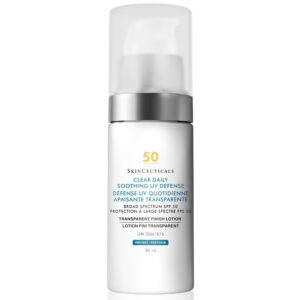
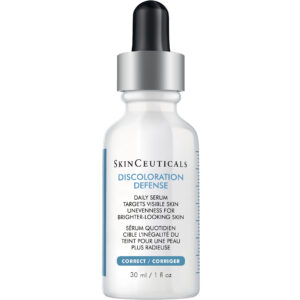
Recommended aftercare and skincare
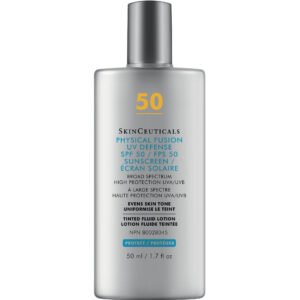
The medical grade products our team uses to protect and extend your results. Shipped express across Canada, free over 150 dollars.
Ready to look into it properly?
Our consultation is free. We will look at your skin, give you an honest recommendation, and say so if a different treatment would suit you better.
Or call 416 923 1200 · 46 Fort York Blvd, CityPlace, Toronto
Questions about this treatment?
Ask us anything before you book. Consultations are free, and we will tell you honestly if a treatment is not right for you.