


Full face rejuvenation at Bar Beauty Toronto is not a single treatment. It is a sequenced, custom protocol that combines neuromodulators, dermal fillers, biostimulators, energy devices, and skin-quality treatments to restore volume, contour, and luminosity to the entire face in a way that looks natural and lasts. Patients across Toronto and the wider GTA come to our CityPlace clinic specifically because we treat the face as one connected canvas rather than chasing isolated wrinkles. This page is a long-form, transparent guide to what a real Toronto liquid facelift looks like in 2026, what it costs, how long it takes, and what to expect at every stage.
A full face plan is assembled from parts that fade at different speeds. Botox goes first, structural filler holds most of a year or longer, and biostimulator collagen outlasts both. That mismatch is why maintenance is a short top-up visit rather than a repeat of the whole protocol.
| Element | Job in the plan | How long it holds |
|---|---|---|
| Hyaluronic acid filler | Rebuilds volume in the midface, temples, tear trough and jawline | 9 to 18 months depending on the area |
| Biostimulator (Sculptra, Radiesse) | Prompts your own fibroblasts to lay down collagen over 3 to 6 months | 18 to 24 months |
| Botox or Dysport | Softens dynamic lines and subtly lifts the brow | 3 to 4 months |
| RF tightening (Morpheus8, Forma) | Tightens the dermis where laxity is mild to moderate | 12 to 18 months |
| Maintenance visit | Tops up only the elements that have softened | Every 6 to 12 months for most patients |
Sculptra is dosed in vials and usually needs two to three sessions four to six weeks apart before the collagen response is complete. Skin quality work (boosters, PRP, peels) runs as a series alongside the rest rather than on its own clock. Because each maintenance visit replaces only what has faded, year two costs well under year one.
What full face rejuvenation actually does
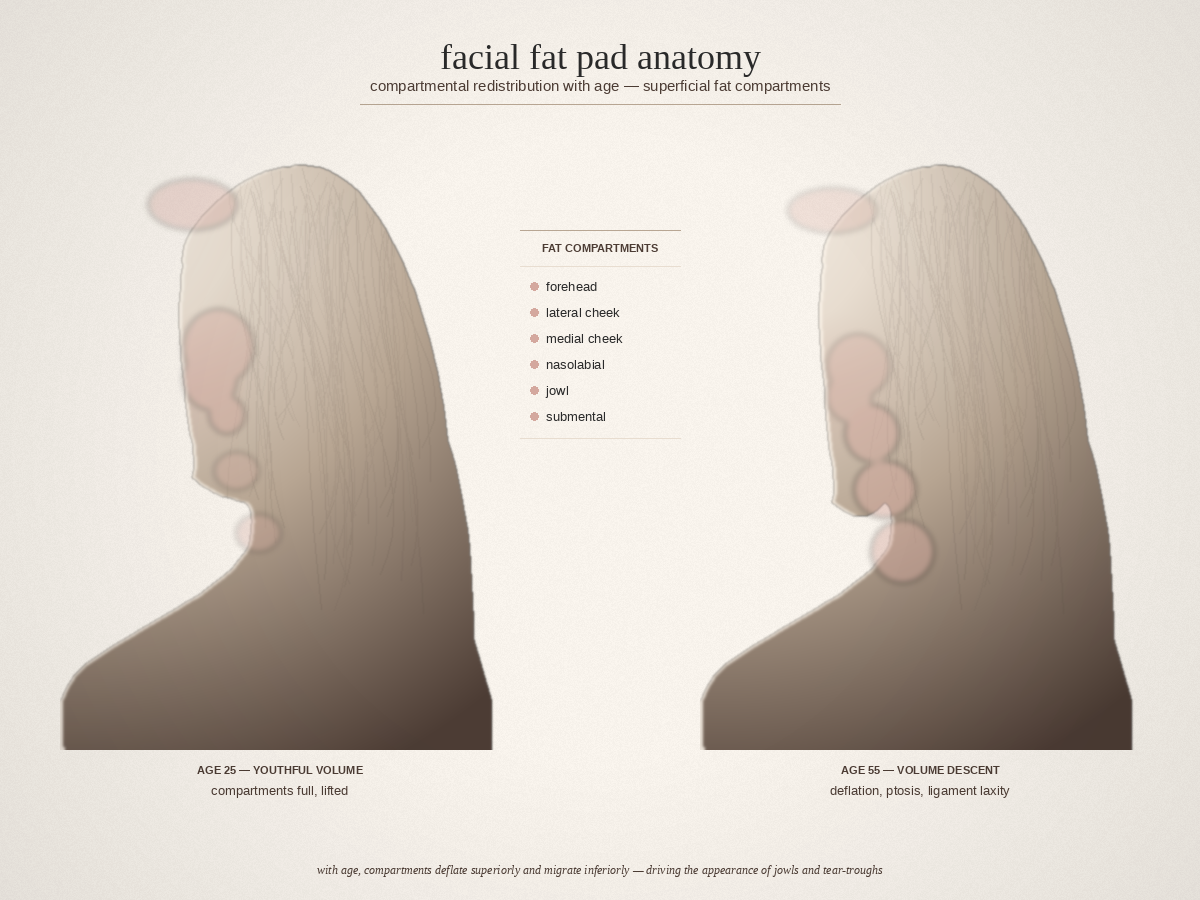
Full face rejuvenation addresses the four hallmarks of facial aging at the same time: volume loss in the midface and temples, laxity in the jawline and neck, texture and tone changes on the surface of the skin, and dynamic lines created by expression. Treating only one of those four creates an unbalanced result. A patient who fills the cheeks without softening the masseter looks heavier, not younger. A patient who tightens the jowls without addressing midface support looks pulled. Our protocol treats all four pillars in a single planned arc, usually over two to four visits across eight to twelve weeks.
Volume restoration
We use hyaluronic acid fillers in the deep midface, tear trough, temples, and jawline to rebuild the bony scaffolding that thins with age. For longer-lasting volume we layer in poly-L-lactic acid (Sculptra) or calcium hydroxylapatite (Radiesse) as a biostimulator. These two products do not add immediate volume the way HA fillers do; instead they trigger your own fibroblasts to lay down new collagen over three to six months. Sculptra is dosed in vials and typically requires two to three sessions spaced four to six weeks apart. Radiesse delivers more immediate contour but with the same downstream collagen benefit.
Skin tightening
For mild to moderate laxity we layer in radiofrequency microneedling (Morpheus8) or bipolar RF (Forma) to tighten the dermis without surgery. Patients with more advanced laxity are referred for surgical consultation; we are honest about when a non-surgical approach has reached its ceiling.
Skin quality
Skin boosters, PRP, and medical-grade peels improve tone, pigmentation, and surface texture. A rejuvenation plan that does not address skin quality still leaves a patient looking tired even if the contour is perfect.
Dynamic line softening
Botox or Dysport in the forehead, glabella, crow’s feet, and sometimes the masseter and platysmal bands prevents new lines from forming and softens the ones already there. Strategic neuromodulator placement also subtly lifts the brow and opens the eye.
Liquid facelift vs surgical facelift in Toronto
A liquid facelift is a non-surgical full face rejuvenation protocol that uses injectables and energy devices instead of an incision. It is not a replacement for a surgical facelift in every patient, and we say so clearly during consultation.
| Feature | Liquid Facelift (Bar Beauty) | Surgical Facelift (Toronto plastic surgeon) |
|---|---|---|
| Downtime | 0-5 days | 2-4 weeks |
| General anesthesia | No | Yes |
| Results last | 12-24 months (touch-ups) | 8-12 years |
| Best candidate | Volume loss, mild, moderate laxity, ages 30-55 | Significant skin redundancy, ages 55+ |
| Reversible | HA portion fully reversible with hyaluronidase | No |
The Bar Beauty full face rejuvenation protocol, step by step
Step 1: Consultation and facial mapping (60 minutes)
Your first visit is not a sales appointment. We photograph your face in nine standardized angles, review your medical history, identify your three biggest concerns, and build a written treatment plan with sequencing, product selection, and a total investment range. You leave with the plan even if you do not book.
Step 2: Foundation visit (90 minutes)
This is the heaviest visit. We address the deep structural layer first: temples, lateral cheek, chin, and jawline. Volume goes where bone has resorbed. Patients are often surprised that the area we treat first is not the area they came in for; restoring temple and cheek support changes the entire face shape and often eliminates the need for as much filler in the lower face.
Step 3: Refinement visit (60 minutes, 4 weeks later)
Once the foundation has settled, we refine. This is where lips, tear troughs, perioral lines, and surface fillers are placed. We also begin RF skin tightening at this visit if it is part of the plan.
Step 4: Polish visit (45 minutes, 4 weeks later)
Botox, exosomes, and final skin-quality work. The polish visit is what separates a good result from a great one and is often skipped at busier clinics.
Step 5: Maintenance (every 6 to 12 months)
Most patients return for a half-day touch-up twice a year. The maintenance investment is typically 30-40% of the foundation visit cost.
Red flags: when to walk out of a Toronto consultation
- The injector recommends more than 4 syringes of filler in a single visit on a first-time patient.
- You are not photographed before treatment.
- You are not given the product name and lot number.
- The clinic refuses to disclose the injector’s credentials (RN, NP, MD, or specialist).
- Pricing is quoted “per area” instead of per syringe or per unit.
- You are told you “need” a treatment without an explanation of the structural rationale.
- Hyaluronidase is not stocked on-site (mandatory for HA safety).
- You feel rushed during consultation.
Who is and is not a candidate
You are likely a candidate if you are between 28 and 65, have realistic expectations, are not pregnant or breastfeeding, do not have an active skin infection at the treatment site, and are not on blood thinners that cannot be paused. You are not a candidate if you have a history of anaphylaxis to lidocaine or HA products, active autoimmune flare, or unrealistic expectations of looking 20 years younger. We will turn patients away when they are not a good candidate, and we will tell you honestly if surgery is the better answer.
Financing: HSA and insurance
Most Canadian health spending accounts (HSAs) do not cover purely cosmetic injectables but will cover medical Botox for migraine, TMJ, or hyperhidrosis when prescribed. We provide receipts coded appropriately for HSA submission. The application is online, takes about 4 minutes, and a soft credit check does not impact your score.
Affirm financing
For larger treatment plans, Affirm financing is available so you can split the cost into monthly payments. You can review your options at consultation; checking your rate does not affect your treatment plan.
Aftercare and what to expect
Expect mild swelling and possible bruising for 3-5 days after filler visits, and pinpoint bleeding after microneedling for 24 hours. Avoid alcohol, intense exercise, and saunas for 48 hours. Sleep elevated for two nights. We follow up with you at two weeks.
Frequently asked questions
What is full face rejuvenation?
Full face rejuvenation is not one treatment. It is a planned, sequenced combination of injectables (neuromodulators, dermal fillers and biostimulators), energy-based skin tightening, and skin-quality work, designed to restore volume, contour and skin quality across the whole face so the result looks balanced rather than over-treated in one area.
What procedure takes 10 years off your face?
No single injectable turns back the clock by a set number of years; that is marketing. What gets the closest non-surgically is a well-planned combination: restoring lost volume in the cheeks and temples, defining the jawline, softening dynamic lines with Botox, and improving skin quality. Done in the right order, the effect is that people say you look rested, not that you had work done.
What is the best non-surgical facelift for over 60?
Over 60, skin laxity is usually the dominant issue, so the most honest answer is that a non-surgical plan has limits. We combine biostimulators for collagen, careful structural filler, and radiofrequency skin tightening such as Morpheus8 or Forma. When laxity is advanced, we will say clearly that a surgical facelift is the better tool rather than overselling injectables.
How much does full face rejuvenation cost in Toronto in 2026?
It depends on what your plan includes, because full face rejuvenation combines several treatments. Our Full Face Rejuvenation & Balancing service (2 cc) is $1,500, and most plans add Botox, biostimulators or skin-quality work staged over two to four visits, so the total varies. Every per-treatment price is on our price list, and you get a written, itemised quote at your free consultation.
How long does the full protocol take?
Eight to twelve weeks from consultation to the polish visit, with most patients returning every 6-12 months for maintenance.
Is a liquid facelift painful?
Most areas are numbed with topical lidocaine and the HA fillers contain lidocaine themselves. Most patients rate discomfort 2-3 out of 10. Lips and the perioral area are the most sensitive zones.
Will I look “done”?
Not with our protocol. The entire philosophy is restoration rather than augmentation. We aim for friends to say you look rested, not that you had work done.
How long do results last?
HA fillers last 9-18 months depending on area. Biostimulators last 18-24 months. Botox lasts 3-4 months. RF tightening results last 12-18 months.
Can I combine this with surgery later?
Yes. Many patients do non-surgical rejuvenation for years and only consider surgery in their late 50s or 60s. The two approaches are complementary.
Do you treat men?
Yes. Approximately 18% of our full face rejuvenation patients are men. Male facial anatomy requires different injection technique and product selection.
What if I do not like the result?
HA filler is fully reversible with hyaluronidase, which we stock on-site and administer at no charge within six months for any patient who is unhappy.
Do you offer virtual consultations?
Yes, complimentary 15-minute virtual consultations are available for patients across the GTA who want an initial conversation before booking in person.
Book your full face rejuvenation consultation in Toronto
Bar Beauty serves the entire GTA from our 46 Fort York Blvd location in CityPlace, with patients travelling in from across the GTA. Same-week consultations are usually available. Call us or book online to start with a written, no-obligation treatment plan.
The Layered Logic of Full-Face Rejuvenation: Why Sequence Matters
Full-face rejuvenation is not a single procedure, it is a sequenced multi-modality protocol that addresses the three layers of facial aging in the correct order: structural support (bone loss, fat-pad atrophy, addressed with deep filler), movement and dynamic lines (neuromuscular, addressed with botulinum toxin), and skin quality (tone, texture, vasculature, addressed with laser, micro-needling, peels, and skin boosters). Done out of order, results disappoint: skin treatments on un-supported tissue exaggerate hollowing; toxin on un-corrected structure freezes a tired face; filler without skin work creates volume that visibly sits on poor-quality tissue.
The 12-Month Bar Beauty Protocol
- Month 1: Consultation, photographic mapping, 3D scan, baseline. Treat first vector of structural deficit (typically deep cheek or midface filler). Begin medical-grade home routine.
- Month 2-3: Add neuromuscular treatment (Botox or Dysport) in glabella, forehead, crow’s feet as indicated.
- Month 4: Begin skin-quality programme: first Aerolase or Morpheus8 session.
- Month 5-6: Second skin-quality session; second structural filler vector if needed.
- Month 7-9: Skin booster series (Revanesse Pure or Redensity 1), or PRP where indicated.
- Month 10-12: Maintenance touch-ups; review and plan year two.
What a full-face plan costs in Toronto
Because full face rejuvenation is a combination of treatments rather than a single product, the cost depends entirely on what your plan includes. At Bar Beauty, our Full Face Rejuvenation & Balancing service (2 cc) is $1,500, and most plans add Botox, biostimulators, or skin-quality work on top of that, staged over two to four visits. The single biggest cost variable is structural filler volume: a patient who needs 6 mL across the midface, jawline and chin will spend more than a patient who needs 2 mL. Every per-treatment price is published on our price list, and we give you a written, itemised plan at your free consultation rather than a vague range.
Sticker Price vs True 5-Year Value
The first year of a full-face protocol is the most expensive. Year 2 typically runs 40-55% of year 1 (maintenance touch-ups rather than from-zero builds). Years 3-5 stabilise around 30-40% of year 1. Over 5 years, total spend is roughly 2-2.5× year-one cost. Compared to non-surgical alternatives without coordination, ad-hoc one-off treatments without a master plan, coordinated full-face is more cost-efficient because it avoids redundant work and product waste.
Pre-Treatment Preparation: The 4-Week Skin Optimisation
Four weeks: begin medical-grade vitamin C serum, mineral SPF 50, ceramide moisturiser. Two weeks before first injectable: stop NSAIDs, fish oil, vitamin E. One week: arnica, bromelain. Goal: optimised barrier function and bruising-minimisation entering month-1 procedures.
Common Mistakes in Full-Face Rejuvenation
- Skipping the master plan. Treating each line or area as a one-off without coordinated sequence wastes product and money.
- Front-loading filler. 6 mL in one session is more aging than restorative.
- Ignoring skin quality. No amount of filler hides poor tone, texture, or pigment.
- Chasing trends. Russian lips, fox-eye lift, “snatched” jaw, trend protocols age fast.
- Not tracking with photography. Standardised lighting at month 0, 6, 12 is essential.
Decision Matrix: Build Your Own Year-One Plan
- Conservative budget ($4,500-$7,500): 1-2 mL filler + Botox + skin-laser series + medical home routine.
- Standard budget ($7,500-$12,000): 3-4 mL filler + Botox + Aerolase or Morpheus8 + booster series.
- Restoration budget ($12,000-$18,000): 5-8 mL filler + Botox + multi-modality skin programme + RF micro-needling.
- Surgical-adjacent ($18,000+): Maximum non-surgical work in coordination with future or recent face-lift.
What Full-Face Rejuvenation Is Not
It is not a face-lift. It does not lift loose skin past about 1-2 mm. It does not change bone shape. It does not eliminate deep static rhytids that pre-existed for 20+ years (it softens them). It is not a substitute for sun protection, sleep, hydration, and stress management, the “basics” remain the foundation. Patients who chase results without addressing the basics see compressed durability and disappointing year-2 outcomes.
Deeper protocol breakdown for full-face rejuvenation at Bar Beauty Medical
Beyond the high-level overview most clinics publish, patients researching full-face rejuvenation in Toronto deserve to know what actually happens during a combination injectable plan appointment, how decisions are made in real time, and what separates a competent technician from a clinician building a long-term aesthetic plan. At Bar Beauty Medical, every full-face rejuvenation appointment follows the same six-stage protocol. Stage one is the seated visual assessment in neutral lighting with hair pulled back. Stage two is the dynamic assessment, where Jasmine asks the patient to smile, frown, pucker, and speak naturally to identify how the muscles of facial expression interact with whatever concern brought them in. Stage three is the photographic baseline using standardized angles (frontal, three-quarter left and right, profile, and submental) under fixed lighting. Stage four is treatment planning, where the proposed approach is sketched on a printed face diagram and reviewed with the patient before any product is opened. Stage five is consent, including a written explanation of risks specific to the planned anatomy. Stage six is the treatment itself, performed slowly and incrementally, with a hand mirror offered at natural pause points so the patient can confirm direction before more product is delivered.
This protocol exists because rushed appointments produce rushed outcomes. When a clinic books full-face rejuvenation every 15 minutes, the planning conversation gets compressed and the patient is more likely to leave with a generic result. Our full-face rejuvenation bookings are 60 to 90 minutes for new patients and 45 to 60 minutes for return visits, which is longer than the industry average but produces fewer revisions and more natural outcomes over time.
Year-one, year-two, and year-three cost framework
A realistic budget for full-face rejuvenation extends beyond the first appointment. Year one typically involves an initial treatment plus one or two refinement or maintenance visits, depending on the product half-life and the patient’s goals. Expect a year-one investment in the range of CAD 2000-6500 multiplied by 1.5 to 2.0. Year two usually settles into a maintenance rhythm where the patient has identified what works and is no longer building. Year-two costs typically drop 20 to 40 percent versus year one. Year three often introduces complementary treatments (skin quality work, biostimulator layering, or device-based collagen support) that reduce the dependency on the original combination injectable plan alone. A patient who plans across a three-year horizon usually spends less per year by year three than they spent in year one, and the result looks more cohesive because each decision was made in the context of an overall plan rather than as a one-off purchase.
Common reversal and correction scenarios
Patients ask about reversibility for good reason. For hyaluronic acid filler, hyaluronidase dissolves product within 24 to 72 hours of injection, although some patients require a second dissolving session for stubborn deposits. For neuromodulators, there is no reversal agent; the only option is to wait for the protein to metabolize, which takes 8 to 12 weeks. For biostimulators (Sculptra, Radiesse) the product is not directly reversible, which is why these treatments demand experienced injectors and conservative starting volumes. For energy-based treatments, the question is less about reversal and more about whether a course can be paused and restarted, which is generally yes. Our clinic carries hyaluronidase on site, follows a same-day complication pathway, and has direct vascular-occlusion protocols posted in every treatment room. We have performed dissolving on patients who were originally treated elsewhere; we do not charge punitively for these corrections, because patient safety matters more than relationship politics.
Before-and-after photography expectations
Standardized photography is part of full-face rejuvenation planning at our clinic. We use a fixed camera distance, fixed focal length, fixed lighting, and identical patient positioning at every visit. This matters because non-standardized photos exaggerate or minimize change depending on angle and lighting, which makes it impossible to evaluate whether a treatment achieved its goal. Patients receive their before-and-after set after each appointment and can request a multi-year review at any time. We do not publish patient photos without explicit written, time-limited consent, and we do not pressure patients to grant photo permission as a condition of treatment.
Candidacy determinants we evaluate at consultation
Not every patient who requests full-face rejuvenation is an ideal candidate at the moment they ask. We evaluate eight candidacy determinants: realistic expectations, baseline anatomy, skin quality, medical history (autoimmune, anticoagulant, isotretinoin, immunosuppression, pregnancy or breastfeeding), psychological readiness, financial fit across a multi-visit plan, lifestyle factors (travel, sun exposure, planned events), and prior treatment history. A patient who scores poorly on three or more of these is asked to address the relevant factor before proceeding, even if it means losing the booking revenue. This is not gatekeeping for its own sake; it is how we maintain a low complication rate and high patient satisfaction across years rather than across single visits.
Advanced technique discussion
For patients who have done their own research, here is what differentiates a thoughtfully performed full-face rejuvenation session from a basic one. We use cannulas in anatomical zones where they reduce vascular risk and bruising (midface, jawline, tear-trough adjacent zones) and needles where precision and product placement demand it. Aspiration is performed where vascular density requires it. Product selection is matched to tissue plane: thinner, more cohesive gels for superficial work; more robust, higher-G’ products for structural support. Layering across multiple sessions is preferred over single-session high-volume work because tissue accommodates change more gracefully over time. These specifics are why two clinics can quote a similar dollar figure for full-face rejuvenation and produce visibly different outcomes.
Recommended aftercare and skincare
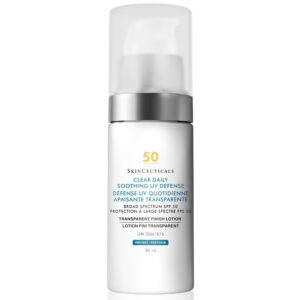
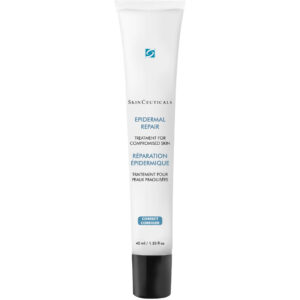
The medical grade products our team uses to protect and extend your results. Shipped express across Canada, free over 150 dollars.
Under-eye puffiness that never settles may be migrated product rather than swelling. How to tell the difference.
Ready to look into it properly?
Our consultation is free. We will look at your skin, give you an honest recommendation, and say so if a different treatment would suit you better.
Or call 416 923 1200 · 46 Fort York Blvd, CityPlace, Toronto
Questions about this treatment?
Ask us anything before you book. Consultations are free, and we will tell you honestly if a treatment is not right for you.