


Chin filler reshapes the lower face using hyaluronic acid to project, lengthen, or square the chin. At Bar Beauty Medical in CityPlace, Toronto, we build a chin that balances your nose, lips, and jaw, not one that screams. Typical session: 1-2 syringes, 30 minutes. Hyaluronic acid chin filler is reversible with hyaluronidase if you change your mind.
Chin filler is the most under-prescribed treatment in lower-face aesthetics. A 1-2 mL chin treatment changes the entire profile photo more visibly than 4 mL of lip filler will, and yet most patients only ask about lips. This page is the long-form guide to what chin filler actually does, the 2026 pricing reality in Toronto, and the candidate filter we use.
Chin filler adds projection to the bony chin, and the direction the product is placed changes the result more than the number of syringes does. The same 1 mL pushed forward, downward or sideways produces three different lower faces. At Bar Beauty Medical the vector is planned on profile and 3D photography at the consultation, before any product is opened.
| Vector | What it changes | Chosen when |
|---|---|---|
| Anterior (forward) | Projects the chin point, altering the profile angle from nose tip to chin and where the lower lip sits against the Ricketts E-line | A chin that reads recessive in profile, or a weak chin-to-lip ratio. Forward projection masculinises |
| Inferior (downward) | Lengthens the lower face, by up to 5 to 7 mm at the top end | A short lower face. Vertical projection lengthens and feminises |
| Lateral | Widens and squares the chin point and supports the forward projection | A square, masculine chin point, and to stop an anterior-only result from aging into a witch chin |
| Blended vectors | Combines the above in one plan, for example mostly anterior with an inferior component | Most real cases, because the chin reads against the nose, lips and jaw rather than on its own |
Volume follows the plan rather than the other way around: 1 syringe often covers softening a recessed chin, a restructure or jaw balancing usually takes 2. Day-one swelling overstates the correction by 20 to 30 percent, so we deliberately under-inject by 10 to 15 percent and review at 4 weeks.
What chin filler actually does (and what it doesn’t)
Chin filler restores or adds anterior and inferior projection of the bony chin (the mental protuberance). The treatment changes three measurable aesthetic dimensions:
- Profile angle, the angle from nose tip to chin point, which determines whether a face reads strong, balanced, or recessive in profile
- Chin-to-lip ratio, the Ricketts E-line, where ideally the lower lip sits 2-4 mm behind the line from nose tip to chin
- Lower-face length, vertical chin filler can lengthen a short face up to 5-7 mm
What chin filler does not do: replace genioplasty for severe retrognathia (jaw setback), fix actual jaw bone defects, remove submental fat (that’s Belkyra or liposuction), or correct a Class II malocclusion (orthodontic problem).
Which chin products we use
Chin projection is hyaluronic acid work, and at Bar Beauty we do it with Stylage or Revanesse. Both ranges include firm grades that keep their shape when placed deep against bone, which is what a chin point needs, and both can be dissolved with hyaluronidase if you do not like the result. Neither manufacturer publishes an elastic modulus figure for the individual grades, so we describe them by how they behave rather than by a number. Which grade goes in is decided at your appointment.
Red flags: cheap chin filler in Toronto
- Under $500 / syringe. Pricing far below the Toronto market is a red flag for grey market or counterfeit product.
- Use of soft, low-G′ filler on the chin. Wrong rheology, the chin needs G′ > 400 Pa to hold shape on bone.
- “Lip and chin” combo specials. If the price is the same as just lip filler, you’re getting 0.2 mL in the chin, not a meaningful dose.
- Injectors who don’t do profile photos. Without lateral photography you can’t measure projection or plan vector.
Financing and insurance
Cosmetic chin filler is not OHIP covered and not CRA deductible. The exception is reconstructive chin filler after trauma or congenital genioplasty, that requires a referring specialist letter and is processed individually.
Chin filler vs alternatives
| Treatment | Best for | Duration |
|---|---|---|
| HA chin filler | Mild-moderate projection | 12-24 months |
| Genioplasty (sliding) | Severe retrognathia | Permanent |
| Silicone chin implant | Permanent projection | 20+ years |
| Aptos threads to chin | Mild lift only | 6-12 months |
| Masseter Botox + chin filler | V-shape transformation | 4-6 months / 18-24 months |
Recovery timeline
- Hour 0-4: mild swelling, ice.
- Day 1-3: peak swelling (looks 20-30% bigger than final result).
- Day 4-7: swelling resolves, mild bruising possible at injection points.
- Week 2: recognisable final shape.
- Week 4: full integration. Photo review and touch-up.
Am I a candidate? Honest filter
Yes: visible recession in profile, weak chin-to-lip ratio, post-weight-loss volume loss, gender-affirming masculinisation, lower-face proportional imbalance.
No: Class II severe malocclusion (needs orthodontia), severe retrognathia > 8 mm (consider genioplasty), TMJ dysfunction in active phase, body dysmorphia presentation.
Related Bar Beauty treatments
- Cheek filler, for full lower-face balance
- Mini lip plump, for proportional lip refinement
- Melomental fold reshape, for the marionette area
- Master Toronto cost guide
Frequently Asked Questions
How much does chin filler cost in Toronto in 2026?
Bar Beauty charges $950 for a Chin Reshape. Everyone is different, and how much product you need depends on your anatomy and your goals, so we assess you at the consult and give you a fixed written quote before anything is injected. Toronto market average for 2026 is $700-$1,000 per syringe.
How many syringes of chin filler do I need?
Small projection (e.g. softening a recessed chin) often takes 1 syringe. Moderate restructure or jaw-balancing usually 2 syringes. Heavy masculinisation, severe retrognathia, or simultaneous lengthening typically 3-4 syringes over 2 sessions.
What is the difference between Stylage and Sculptra for the chin?
They are different classes of product and they are not alternatives for this area. Stylage and Revanesse are hyaluronic acid fillers. They add projection on the day, the firmer grades hold their shape against bone, and they can be dissolved with hyaluronidase. Sculptra is poly-L-lactic acid, a collagen stimulator rather than a filler, and we use it for volume in the temples and the outer jawline toward the ears, not for projecting the chin. Chin projection at Bar Beauty is hyaluronic acid work.
How long does chin filler last?
12-18 months for Stylage or Revanesse. The chin moves a lot (eating, talking), so anterior chin filler metabolises faster than lateral cheek filler.
Will chin filler make my face look more masculine or feminine?
It depends entirely on placement vector. A vertically projected chin (downward) lengthens and feminises the face; a forward-projected chin masculinises. We map the vector on a 3D photo at consultation before injecting.
Does chin filler help a double chin?
Mechanically, yes, restoring chin projection tightens the submental skin envelope and reduces the ‘double chin’ shadow. For actual submental fat, you need Belkyra (deoxycholic acid) injections or surgical liposuction, not filler.
Is chin filler safe?
Very. The chin is one of the lowest-risk filler zones because major vessels run laterally. The submental artery is the only vessel of concern and runs well below typical injection depth. Bar Beauty uses cannula technique below the periosteum to virtually eliminate vascular events.
Will my chin look bigger right away?
Yes, immediately. Swelling adds 20-30% apparent volume in week 1, settling to the true result by week 4. We deliberately under-inject by 10-15% on day 1 and review at 4 weeks for top-up.
Can I dissolve chin filler?
Hyaluronic acid chin filler, yes. Hyaluronidase reverses HA filler in 24-48 hours. Cost: $150. Sculptra is poly-L-lactic acid rather than hyaluronic acid, so hyaluronidase does not dissolve it and it cannot be reversed on demand. This is one of the reasons we don’t use permanent fillers like Bellafill, Aquamid, or silicone on the chin.
Can chin filler be combined with masseter Botox or jaw filler?
Yes. The most popular combination at Bar Beauty is chin filler + masseter Botox to slim a square jaw + jawline filler for definition. This is the ‘snatched jaw’ package that runs $1,800-$3,500 depending on volume.
Mechanical Anatomy of Chin Filler: Why Vector Matters More Than Volume
The bony chin (mental protuberance) sits below a complex of soft tissue including the mentalis muscle, depressor anguli oris, depressor labii inferioris, and the mental fat pad. Filler placed below the periosteum on the bone acts as a structural scaffold; filler placed in the soft tissue adds projection but is more easily palpable and migrates. We place primary structural filler deep (a high-G-prime filler on bone) and secondary contouring filler superficially (Stylage or Revanesse in the dermis). The vector of placement, anterior, inferior, or lateral, determines whether the result lengthens the face, projects the profile, or balances the jaw width. Same volume, different vectors, fundamentally different aesthetic outcome.
Chin Filler vs Genioplasty vs Implant: The Surgical Spectrum
- HA filler (1-3 mL, $950-$2,850 at Bar Beauty): Reversible, no downtime, 18-24 months.
- Sliding genioplasty (surgical, $7,000-$12,000): Permanent bone repositioning. Requires oral surgeon. 6-8 weeks recovery.
- Silicone or porous polyethylene chin implant ($4,000-$8,000): Permanent but reversible by removal. 2-3 weeks visible recovery.
- Calcium hydroxylapatite (Radiesse, $700-$900/syringe): Semi-permanent (18-24 months), not reversible by hyaluronidase. Not our default.
Filler is the right starting point for almost everyone, including patients ultimately considering implant or genioplasty, because it provides a try-before-you-buy preview of the final aesthetic without committing to surgery.
Sticker Price vs True 24-Month Cost of Ownership
A $1,500 two-syringe chin treatment lasting 18-24 months breaks down to roughly $63-$83/month over the effective life. Compare to a $4,500 silicone implant prorated over 10 years: $37/month, but with surgical recovery, scar, and irreversibility. Filler is more expensive per month but infinitely lower commitment. For patients under 35 or anyone uncertain about the final look, filler wins. For patients over 50 with stable preference and a clear surgical mandate, implant wins on cost.
Pre-Treatment Preparation: 7-Day Bruising-Minimisation Protocol
Seven days: stop NSAIDs, fish oil, vitamin E, ginkgo, ASA, high-dose vitamin C. Limit alcohol. Three days: arnica oral tablets, bromelain enzyme. Day of: arrive clean-skinned, no lip balm or jawline product so we can mark accurately. Bring a side-profile photo from 5 years ago for reference of facial-aging vector.
Common Mistakes in Chin Filler
- Treating the chin in isolation. The chin reads in relation to nose, lips, and jaw, always assess the full lower face vector.
- Using soft filler on bone. Stylage on the chin point feels like dough and migrates.
- Over-projecting anteriorly. A “witch chin” result, aggressive anterior projection without lateral support, ages poorly.
- Skipping the 4-week review. Final settling matters; under-injecting by 10-15% on day 1 and reviewing is best practice.
- Combining chin filler with masseter Botox in the same session without planning. Both alter lower-face geometry; sequence and dose them together intentionally.
Decision Matrix: Filler, Implant, or Genioplasty?
- Filler if: You want reversibility; you are under 40 with active aesthetic preferences; you are testing the look; the desired projection is <5 mm; you don’t want surgery.
- Implant if: You want permanent change; you have a stable target; you are okay with 2-3 weeks recovery; budget tolerates the higher up-front cost.
- Genioplasty if: The chin needs not only projection but also vertical or transverse repositioning; severe retrognathia or skeletal asymmetry; managed by an oral or maxillofacial surgeon.
The Aging Chin: Why Most Patients Are Under-Diagnosed
One of the most consistent observations across our 8-year practice audit is that patients in their late 30s through their 50s frequently present asking for lip filler, masseter Botox, or jawline contouring, when their actual diagnostic gap is chin volume loss. The aging chin loses bone density at the symphysis (the midline of the mandible) and the mental fat pad atrophies; the result is apparent chin retraction even in patients whose chin was once well-projected. Restoring even 1 mL of structural chin volume often resolves the visual complaints that brought the patient in for unrelated treatments. We routinely show patients a side-by-side rendering at consultation: their current profile versus a digital simulation with 1.5-2 mL of restored chin projection. The reaction is consistent: most patients did not realise their chin was the problem.
HSA, Insurance, and Financing: How to Pay for Chin Filler
Chin filler is considered cosmetic by all Canadian provincial health plans and is not OHIP-covered. However: Health Spending Accounts (HSA) attached to corporate benefits sometimes reimburse a portion when the prescribing clinician documents functional or asymmetry indication. We provide itemised receipts at every appointment to support any HSA claim attempt.
The 4-Week Touch-Up: Why It Matters For Chin Specifically
The chin moves more than almost any other facial zone, thousands of contractions daily during eating, speaking, expression. Day-1 swelling overstates the actual structural correction; by week 4, the true result is visible after the inflammatory hydration resolves and the muscle has interacted with the new structural scaffold. We deliberately under-inject by 10-15% on day 1 and book every chin patient into a complimentary 4-week review. Roughly 60% of patients need a small refinement (0.2-0.4 mL) at week 4; we add it at no extra labour fee beyond the product cost. This protocol is how we deliver consistently natural chin projection without “witch chin” or over-projection.
Deeper protocol breakdown for chin filler at Bar Beauty Medical
Beyond the high-level overview most clinics publish, patients researching chin filler in Toronto deserve to know what actually happens during a non-surgical chin projection appointment, how decisions are made in real time, and what separates a competent technician from a clinician building a long-term aesthetic plan. At Bar Beauty Medical, every chin filler appointment follows a six-stage protocol. Stage one is the seated visual assessment in neutral lighting with hair pulled back. Stage two is the dynamic assessment, where Jasmine asks the patient to smile, frown, pucker, and speak naturally to identify how the muscles of facial expression interact with whatever concern brought them in. Stage three is the photographic baseline using standardized angles (frontal, three-quarter left and right, profile, and submental) under fixed lighting. Stage four is treatment planning, where the proposed approach is sketched on a printed face diagram and reviewed with the patient before any product is opened. Stage five is consent, including a written explanation of risks specific to the planned anatomy. Stage six is the treatment itself, performed slowly and incrementally, with a hand mirror offered at natural pause points so the patient can confirm direction before more product is delivered.
This protocol exists because rushed appointments produce rushed outcomes. When a clinic books chin filler every 15 minutes, the planning conversation gets compressed and the patient is more likely to leave with a generic result. Our chin filler bookings are 60 to 90 minutes for new patients and 45 to 60 minutes for return visits, which is longer than the industry average but produces fewer revisions and more natural outcomes over time.
Year-one, year-two, and year-three cost framework
A realistic budget for chin filler extends beyond the first appointment. Year one typically involves an initial treatment plus one or two refinement or maintenance visits, depending on the product half-life and the patient’s goals. Expect a year-one investment in the range of CAD 650-1500 multiplied by 1.5 to 2.0. Year two usually settles into a maintenance rhythm where the patient has identified what works and is no longer building. Year-two costs typically drop 20 to 40 percent versus year one. Year three often introduces complementary treatments (skin quality work, biostimulator layering, or device-based collagen support) that reduce the dependency on the original non-surgical chin projection alone. A patient who plans across a three-year horizon usually spends less per year by year three than they spent in year one, and the result looks more cohesive because each decision was made in the context of an overall plan rather than as a one-off purchase.
Common reversal and correction scenarios
Patients ask about reversibility for good reason. For hyaluronic acid filler, hyaluronidase dissolves product within 24 to 72 hours of injection, although some patients require a second dissolving session for stubborn deposits. For neuromodulators, there is no reversal agent; the only option is to wait for the protein to metabolize, which takes 8 to 12 weeks. For biostimulators (Sculptra, Radiesse) the product is not directly reversible, which is why these treatments demand experienced injectors and conservative starting volumes. For energy-based treatments, the question is less about reversal and more about whether a course can be paused and restarted, which is generally yes. Our clinic carries hyaluronidase on site, follows a same-day complication pathway, and has direct vascular-occlusion protocols posted in every treatment room. We have performed dissolving on patients who were originally treated elsewhere; we do not charge punitively for these corrections, because patient safety matters more than relationship politics.
Before-and-after photography expectations
Standardized photography is part of chin filler planning at our clinic. We use a fixed camera distance, fixed focal length, fixed lighting, and identical patient positioning at every visit. This matters because non-standardized photos exaggerate or minimize change depending on angle and lighting, which makes it impossible to evaluate whether a treatment achieved its goal. Patients receive their before-and-after set after each appointment and can request a multi-year review at any time. We do not publish patient photos without explicit written, time-limited consent, and we do not pressure patients to grant photo permission as a condition of treatment.
Candidacy determinants we evaluate at consultation
Not every patient who requests chin filler is an ideal candidate at the moment they ask. We evaluate eight candidacy determinants: realistic expectations, baseline anatomy, skin quality, medical history (autoimmune, anticoagulant, isotretinoin, immunosuppression, pregnancy or breastfeeding), psychological readiness, financial fit across a multi-visit plan, lifestyle factors (travel, sun exposure, planned events), and prior treatment history. A patient who scores poorly on three or more of these is asked to address the relevant factor before proceeding, even if it means losing the booking revenue. This is not gatekeeping for its own sake; it is how we maintain a low complication rate and high patient satisfaction across years rather than across single visits.
Advanced technique discussion
For patients who have done their own research, here is what differentiates a thoughtfully performed chin filler session from a basic one. We use cannulas in anatomical zones where they reduce vascular risk and bruising (midface, jawline, tear-trough adjacent zones) and needles where precision and product placement demand it. Aspiration is performed where vascular density requires it. Product selection is matched to tissue plane: thinner, more cohesive gels for superficial work; more robust, higher-G’ products for structural support. Layering across multiple sessions is preferred over single-session high-volume work because tissue accommodates change more gracefully over time. These specifics are why two clinics can quote a similar dollar figure for chin filler and produce visibly different outcomes.
Chin filler, before and after
Front view below shows the change in balance after chin filler at our clinic.


Individual results vary. Photos are of Bar Beauty Medical patients, shared with written consent.
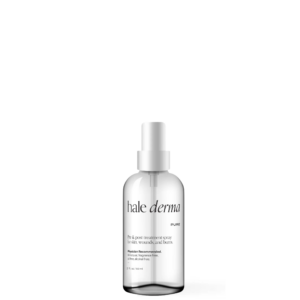
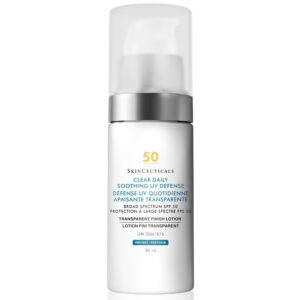
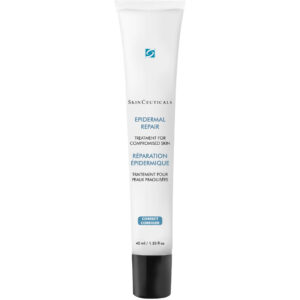
Recommended aftercare and skincare
The medical grade products our team uses to protect and extend your results. Shipped express across Canada, free over 150 dollars.
Chin reshaping in Toronto: how filler fits in
Chin filler is the most common non-surgical way to reshape the chin. “Chin reshaping” is the broader goal of improving projection, balance, and profile, and at Bar Beauty Medical we achieve it with hyaluronic acid filler, Stylage or Revanesse. A dimpled or “pebble” chin is softened with a small amount of Botox in the mentalis muscle rather than filler, and submental fullness under the chin can be addressed with Belkyra. We map the right combination at your consultation instead of assuming filler alone.
Ready to look into it properly?
Our consultation is free. We will look at your skin, give you an honest recommendation, and say so if a different treatment would suit you better.
Or call 416 923 1200 · 46 Fort York Blvd, CityPlace, Toronto
Questions about this treatment?
Ask us anything before you book. Consultations are free, and we will tell you honestly if a treatment is not right for you.