


Fox eyes in Toronto, without the surgery. We use Aptos threads, to lift the tail of the brow and the outer eye. The look is that almond, slightly snatched eye, minus a brow-lift operation and its recovery.
The appointment runs about an hour with numbing. You’ll see the lift right away, and it keeps refining over three months as the threads build collagen. It holds for 18 to 24 months.
A fox eye lift at Bar Beauty Medical is a thread procedure, not surgery. Two to four Aptos threads pass through a single temple entry point per side, anchor under the lateral brow, and vector-lift the soft tissue by roughly 3 to 5 mm, in an appointment of about an hour including numbing. The lift you see on the table is mechanical. What carries it afterwards is the collagen the threads leave behind as they dissolve.
| When | What is happening | What you notice |
|---|---|---|
| In the chair, about 60 minutes | Local anaesthetic, then 2 to 4 threads per side tensioned along the lift vector | The lift appears the moment the threads take tension |
| Days 1 to 7 | Bruising and swelling around the entry points | Mild bruising, swelling and a tight pulling feeling. Most people are back at work the next day with a little makeup over any bruise |
| Weeks 2 to 4 | The vector settles and tissue relaxes around the threads | The result refines. Some people notice mild residual tightness for 2 to 3 weeks |
| Around month 3 | Fibroblasts respond and new collagen is laid down | The lift sharpens and skin quality improves out at the outer corner |
| Months 6 to 9 | The threads themselves dissolve | Nothing visibly changes. The collagen is what holds the result from here |
| Re-treatment | Same protocol, one in-office visit | Booked when the lift softens rather than on a fixed calendar |
Threads change the brow and the soft tissue around the eye, not the shape of the eye itself, and they do not match a surgical canthopexy. Where brow droop is significant, surgery usually serves better and we say so at the consult. A low dose of Botox into the lateral orbicularis is often added to stop the muscles pulling the brow tail back down, and a little filler in the temple hollow can support the brow from underneath.
Who fox eyes suits
Fox eyes lifts and lengthens the outer corner of the eye and brow, the cat-eye, snatched look people come in asking for. The version we do is the non-surgical thread lift. Fine dissolvable sutures (Aptos threads) go in through a thin cannula under local anaesthetic, lift the tissue, and kick off collagen over the following months. You get almond-shaped contouring with little downtime and none of the permanence or recovery of a surgical brow lift or canthoplasty. When it helps, we’ll pair it with a touch of Botox or a little filler. When it doesn’t, we’ll say so.
How the lift works
The threads anchor at the temple and pull the lateral brow tail and outer eye up by roughly 2 to 4 mm. That’s it, mechanically. The appointment is about 60 minutes. The lift is visible the moment the threads take tension.
Over the next three months the threads stimulate fibroblasts and new collagen, which sharpens the lift and improves the skin quality out at the corner. The threads themselves dissolve over 6 to 9 months. The collagen they leave behind is what carries the result to 18 to 24 months in most people.
We often add a low dose of Botox into the lateral orbicularis to ease the muscles that pull the brow back down. Some patients also get a small amount of filler in the temple hollow to support the brow from underneath. Re-treatment, when you want it, is a single in-office visit on the same protocol.
What a fox eye lift really does
Two tools do the work. The Botox piece: 4 to 8 units into the lateral orbicularis oculi to release the downward pull on the brow tail, which lets the forehead lift it 2 to 3 mm. The thread piece: Aptos threads placed under the lateral brow and temple to vector-lift the soft tissue 3 to 5 mm.
Step by step
Botox route: we cleanse, then place 2 to 4 points per side in the lateral orbicularis. It starts working around day 3 and peaks at day 14. Thread route: after local anaesthetic, 2 to 4 Aptos threads pass through a single temple entry point, anchor at the lateral brow, and get tensioned to the lift vector we want. Thirty to forty-five minutes, results immediate, with a bit more refinement over four weeks.
What it can’t do
It can’t change the actual shape of your eye, only the brow and the soft tissue around it. It won’t match a surgical canthopexy. Push it too far and you get that startled, angry look. And if your brow droop is significant, surgery will usually serve you better than threads. We’d rather tell you that than sell you a result the threads can’t deliver.
Current pricing for every treatment is published on our (see current price list).
Red flags: when to walk out of the consult
The GTA core has more than 600 medical aesthetic clinics, and standards swing wildly. Our injectors have a short list of warning signs that almost always predict a bad outcome. See any of these in a consult, leave and book elsewhere.
- No medical history form. If nobody collects a written intake covering autoimmune disease, blood thinners, recent vaccinations and past aesthetic work, they’re skipping a Health Canada step.
- Pricing posted “per syringe” with no unit count. Real clinics quote per Health Canada-regulated unit (Botox, Dysport, Nuceiva) or per millilitre of cross-linked hyaluronic acid.
- The injector can’t name the lot number. Every vial of neurotoxin and filler carries a lot and expiry. You can ask to see it. A vague answer means the chain of custody is suspect.
- Pressure to add a second treatment same day. Tacking Morpheus8 onto a filler consult before the skin has healed and consent is documented is not how a careful clinic works.
- No emergency hyaluronidase on site. Any clinic doing HA filler must stock it to reverse a vascular occlusion fast. Ask. Watch how they answer.
- No physician medical director listed publicly. Ontario rules require nurse injectors to work under a delegated directive from an MD. That MD’s name belongs on the clinic site.
Botox lift versus thread lift
| Factor | Botox brow lift | Thread lift |
|---|---|---|
| Lift achieved | 2-3 mm | 3-5 mm |
| Onset | Day 3-14 | Immediate |
| Duration | 3-4 months | 9-12 months |
| Downtime | None | 5-7 days bruising |
| Reversible | Wears off naturally | Difficult once placed |
| Best for | Trial / subtle | Defined visible result |
Paying for treatment: HSA, OHIP and CRA
Aesthetic work in Ontario rarely gets OHIP coverage, because most of it counts as elective and cosmetic rather than medically necessary. There are still a few legitimate ways to trim the out-of-pocket cost, and we walk every patient through them.
Health Spending Accounts (HSA)
If you’re self-employed, incorporated, or have a flexible HSA at work, you can often submit receipts where there’s a documented medical indication, hyperhidrosis Botox, scar-revision Morpheus8, migraine-related neurotoxin. The receipt has to come from a regulated health professional (RN, NP or MD) and be itemized with the right code. We provide HSA-compatible receipts on request.
OHIP coverage (rare, but real)
OHIP covers neurotoxin for documented severe primary axillary hyperhidrosis, chronic migraine (with a neurologist referral and failed first-line therapy), cervical dystonia and blepharospasm. It covers no cosmetic indication. If you suspect a billable diagnosis, we can refer you to a covering specialist.
CRA medical expense tax credit
The CRA allows a medical-expense tax credit (METC) for procedures done by an authorized practitioner with a genuine medical purpose. Keep itemized receipts, the practitioner’s licence number, and a note on the indication. Talk to your accountant, METC interpretation has tightened since the 2023 federal budget.
Affirm financing
For larger plans, Affirm lets you split the cost into monthly payments. You can check your rate at the consult, and checking it doesn’t affect your treatment plan.
Fox eyes FAQ
How long does a fox eye lift last?
Botox-based lift runs 3 to 4 months. Thread-based lift holds structurally for 9 to 12 months, and the collagen from the dissolved threads keeps adding a modest lift for another 3 to 6.
Does the thread lift hurt?
Mild to moderate. We numb the entry points, and the thread passing through gives a brief pulling feeling. Most people rate it 3 to 4 out of 10.
What does a fox eye lift cost in Toronto?
Fox Eyes by the Aptos method is $4,000. Botox on its own is $10 a unit, and a brow-tail lift usually takes 18 to 24 units, so $180 to $240. If you have both, the price is the two added together and the total is written into your quote at the free consult. We do not sell bundled combination packages.
What’s the downtime?
Botox: none. Threads: 5 to 7 days of mild bruising, swelling and a tight pulling feel. Most people are back at work the next day with a little makeup over any bruise.
Will I look surprised?
Not with conservative dosing and modern thread vectors. We cap the lift at 2 to 4 mm. The startled look you see online comes from over-treatment by inexperienced hands.
Can it be reversed?
Botox wears off in 3 to 4 months. Threads can’t really be undone, they dissolve over 6 to 12 months but the lift is committed. So choose your injector and your plan carefully.
Am I a candidate?
The best candidates are 25 to 45, with mild brow droop or just a preference for a lifted tail, healthy skin and no active disease. Not appropriate during an autoimmune flare, on anticoagulation, in pregnancy or breastfeeding, or with significant existing asymmetry.
How does it compare to surgical canthopexy?
Fox eyes uses Botox and threads to lift the brow tail and the soft tissue around it. A canthopexy repositions the canthal tendon itself. Surgery gives a stronger, longer result but with a real recovery. The non-surgical route is reversible (Botox) or temporary (threads) and far less invasive.
Does it look the same across ethnicities?
No, and the consult has to account for that. Asian, Middle Eastern and Caucasian baselines differ in the epicanthal fold, brow position and canthal angle. We tailor the vector to enhance your features, not transform them.
Can it cause vision problems?
Done properly, no. The lift works on the brow and soft tissue, not the lid itself. Extreme over-treatment could in theory affect peripheral vision, but that’s not something we’ve seen here in years of doing this.
Does the thread lift stay sore?
The tight, pulling feeling usually settles within 7 days. Some people notice mild residual tightness for 2 to 3 weeks. We give acetaminophen guidance and arnica for bruising.
What fox eyes does, and what it doesn’t
Most people arrive with a picture of fox eyes in their head from TikTok, a reel, or a friend’s before-and-after. So before anything else, here’s what a fox eye lift / temporal lift actually does in the skin and muscle, and where the ceiling sits. That gap is the difference between a result you love for a year and one you feel you were sold.
Our protocol for fox eyes is short enough to say in a line: Aptos threads plus a Botox brow lift, with temporal filler when it’s warranted. That covers the tools, the dosing, the cadence and the realistic series length. The influencer testimonials and one-and-done promises are just noise around that line. When you read the rest of this, anchor back to it.
What it won’t do: it won’t replace surgery for someone who genuinely needs surgery, it won’t pause the underlying aging (collagen loss, bone resorption, fat-pad descent, perimenopausal shifts), and it won’t behave identically on every skin type. Anyone promising otherwise is selling. For device-level detail and current pricing, read the full treatment page.
Who it’s for, and who it isn’t
The honest candidate list for fox eyes: hooded eyes, brow descent, a downturned outer corner, pre-blepharoplasty patients. Outside those, the results fall off, the risk climbs, or both. We turn people away in consult when the math doesn’t work, and we’ll put the reason in writing. This is an assessment, not a sales meeting.
How we screen at the consult
Every consult starts with a full history: current medications (especially blood thinners, immunosuppressants, isotretinoin in the last six months), allergies, autoimmune diagnoses, pregnancy or breastfeeding, prior cosmetic work with photos where you have them, recent dental work or planned surgery, and a real conversation about what you want in your own words. We take baseline photos under controlled lighting so we can measure change instead of trusting memory.
Five cases from our Toronto clinic
Anonymised composites from our 2024 to 2026 patients at Bar Beauty in Toronto. Details changed, outcomes accurate.
Red flags: when to walk out of a consultation
These aren’t opinions. They’re the things that should make you cancel, forfeit the deposit if you have to, and leave. Aesthetic medicine in Ontario is loosely regulated next to surgery, so some of the vigilance is on you.
No real medical intake
If the consult is someone glancing at your face for ninety seconds and quoting a price, leave. A real one covers your medications (blood thinners, isotretinoin history, recent or planned dental work, autoimmune flares), pregnancy and breastfeeding status, allergies, prior cosmetic history with photos if you have them, and your goals in your own words rather than ticked off a list.
Pressure to book today
Today-only pricing is a sales tactic, not clinical urgency. Real medical pricing doesn’t expire at midnight. If you feel rushed, you’re being rushed for a reason that helps the clinic, not you.
No written aftercare and no emergency line
You should leave with a number that reaches an actual clinician, not a receptionist, if something looks wrong at nine on a Sunday night. A vascular occlusion from filler has roughly a ninety-minute window where intervention works best. Ask before you book: who do I call after hours, and how fast do they answer?
A device or product they won’t name
If they can’t or won’t give you the device model, the product brand, the lot number and where it came from before you’re in the chair, that’s a Health Canada problem waiting to happen. Don’t be the case study.
The everything-at-once upsell
A good injector fixes one thing, checks it at follow-up, and only then talks about add-ons. A bad one tries to sell you the whole menu on day one, because the incentive runs that way.
Before-and-afters that all look identical
If every “before” is glum and harsh-lit and every “after” is smiling and beautifully lit, you’re looking at photography, not results. Ask for standardised pairs shot under the same conditions.
Fox eyes FAQ, the longer version
How soon will I see results?
Usually within the window described on our treatment page, with the peak around eight to twelve weeks depending on the protocol and how you respond. Photograph at baseline, week four, week eight and week twelve so you can compare honestly instead of trusting the mirror.
How long do results last?
It depends on your metabolism, hormones, sun exposure, sleep and whether you maintain it. Someone in perimenopause won’t get the same duration as a twenty-eight-year-old on the same plan, and that’s physiology, not a treatment failure. We talk through your realistic range at the consult.
Does it hurt?
It varies by treatment and by person. We use topical anaesthetic, ice, vibration, or nerve blocks where they help. Most people land at two to four out of ten. If it hurts more than expected, we stop and reassess. We don’t talk anyone past their own pain.
Is there downtime?
Anywhere from none (walk in, walk out, back to work) to a few days of redness, swelling or pinpoint bruising, depending on the protocol. We confirm the specifics at your consult so you can plan around work and social commitments.
What are the real risks?
Every treatment carries some. Common: bruising, swelling, tenderness. Uncommon: asymmetry that needs a touch-up, lingering redness, pigmentation in darker skin if settings are wrong. Rare but serious: vascular events with filler, infection, allergic reaction. We put all of it in writing on the consent form and go through it out loud too.
Can I combine it with other treatments?
Often, but sequence and timing matter. Some treatments need two to six weeks between them, some can share a day. We build a twelve-month plan at the first consult so the order is deliberate.
Is it safe in pregnancy or breastfeeding?
Most cosmetic treatments are deferred in both, given the limited safety data. We won’t treat in those windows without obstetric clearance, and for most aesthetic work we recommend waiting.
What if I don’t like the result?
For reversible treatments (HA filler dissolves with hyaluronidase) we have a reversal protocol on file. For non-reversible ones, we under-treat first and add at follow-up. The aim is to never need a reversal.
How is Bar Beauty different from a chain?
Physician-led oversight, RN injectors with named credentials, written protocols reviewed twice a year, transparent device and product sourcing with lot numbers in your chart, and we publish our standards. Read the team page and book a consult before you commit to anything.
Do you treat all skin types safely?
Yes. We adjust parameters for Fitzpatrick I through VI and run specific protocols for melanin-rich skin to avoid pigmentation. Ask to see before-and-afters in your own skin tone. If a clinic can’t show you, that’s information in itself.
Where are you and what areas do you serve?
We serve the GTA, Toronto, Mississauga, Vaughan, Markham, Richmond Hill, Oakville, Burlington and Etobicoke. Parking is two free spots at the clinic, first come first served, plus public parking beside the Sobeys at Fort York Blvd and Telegram Mews, TTC-accessible, with evening and Saturday slots for people coming from outside the core.
How do I book a consult?
Book through our treatment page or call the clinic. Your first consult is real clinical time with an RN or physician, not a sales rep.
Will you refuse to treat me if I’m not a good candidate?
Yes, and we have, many times. If a different modality, a different clinic, or a surgical referral suits you better, we’ll say so and refer you out with our notes.
Booking your consult at Bar Beauty Toronto
The consult is the most important appointment here. It’s where we decide together whether fox eyes is the right tool for what you brought in, whether you’re a good candidate, what the twelve-month plan looks like, and what it costs all-in. We don’t book treatments without a consult first, and we’ll tell you honestly if you’d be better off with someone else. Start with the treatment page or call us to find a time.
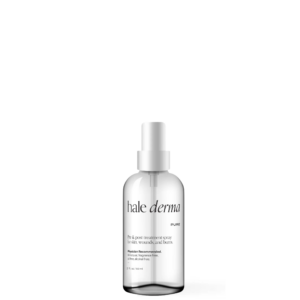
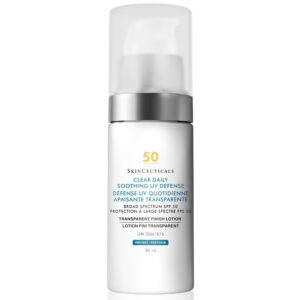
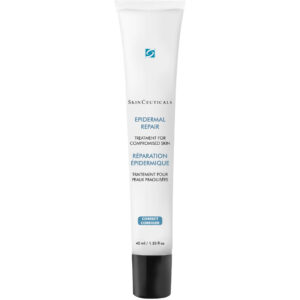
Recommended aftercare and skincare
The medical grade products our team uses to protect and extend your results. Shipped express across Canada, free over 150 dollars.
Ready to look into it properly?
Our consultation is free. We will look at your skin, give you an honest recommendation, and say so if a different treatment would suit you better.
Or call 416 923 1200 · 46 Fort York Blvd, CityPlace, Toronto
Questions about this treatment?
Ask us anything before you book. Consultations are free, and we will tell you honestly if a treatment is not right for you.