


Spider vein removal in Toronto is fast and low drama. Spider veins on the face, broken capillaries from rosacea or trauma, cherry angiomas, and small vascular lesions clear quickly with Aerolase NeoSkin. Most small lesions need a single session. Safe across all skin tones.
Vascular lesions are red because they are blood vessels, which means pigment treatments do nothing for them. This is the most common category error we see. Cherry angiomas, spider veins and broken capillaries all need a laser that targets haemoglobin rather than melanin, and no amount of brightening serum touches any of them.
| Treatment | Price (CAD) | Area |
|---|---|---|
| Vascular Lesion spot treatment | $50 | A single vessel or one small lesion. |
| Vascular Lesion, small | $300 | About a palm sized area. |
| Vascular Lesion, medium | $450 | About two palms. |
| Vascular lesions, large | $600 | About three palms. |
| Consultation | Free | Confirming it is vascular and not pigment. |
Bar Beauty Medical, 46 Fort York Blvd, CityPlace, Toronto. Prices in Canadian dollars from our live booking system, verified 18 August 2026. Cherry angiomas often clear in one session. Facial capillaries usually need two or three. Rosacea flushing is a related but separate problem with its own protocol.
The vascular lesions we treat
Telangiectasias / spider veins, visible small blood vessels on cheeks, around the nose, and on the chin. Often associated with rosacea or sun damage.
Broken capillaries, single visible vessels from trauma, sun damage, or chronic flush.
Cherry angiomas, small bright red dots, more common with age. Single-session clearance for most.
Port-wine stains, congenital vascular birthmarks. Multiple sessions needed; we manage expectations honestly.
Spider angiomas, central feeding vessel with radiating thinner vessels. Single-session clearance most often.
Vascular lake (lip), small soft purple swelling on the lip. Treatable in 1 to 2 sessions.
Why Aerolase for vascular work
Most vascular lasers (PDL, KTP, IPL) work well on light skin but carry significant pigment risk on Fitzpatrick III to VI. Aerolase‘s 650-microsecond pulse and 1064nm wavelength bypass melanin and target oxyhemoglobin selectively, it sees the unwanted vessel without seeing your pigment. That makes it the rare vascular laser safe across all skin tones. Particularly important in our diverse Toronto patient base where we see Fitzpatrick I and Fitzpatrick VI in the same week.
What a session looks like
15 to 30 minutes depending on number and size of lesions. We use Aerolase’s fitted handpiece to target each vessel directly. Mild snap or warm sensation per pulse, most patients describe it as more comfortable than a tattoo. No anaesthesia needed. You walk out and return to normal activity.
Recovery and what to expect
Treated vessels look slightly darker for 3 to 5 days as your body absorbs the collapsed vessel. Mild redness or warmth for an hour post-treatment, then gone. Sunscreen mandatory for two weeks after to prevent post-inflammatory pigmentation. Most patients see meaningful clearing within 7 to 14 days.
Sessions and clearance
Small individual lesions (single spider vein, cherry angioma) clear in one session. Larger areas (rosacea-related diffuse vasculature on cheeks and nose) clear progressively across 4 to 6 sessions spaced 4 weeks apart. Port-wine stains need extended courses; some respond beautifully to Aerolase, some need referral to specialized vascular dermatology.
Leg veins, different approach
Spider veins on legs are fundamentally different from facial spider veins, bigger vessels, more pressure, deeper. We can treat smaller leg vessels with Aerolase, but better outcomes for medium-to-large leg veins come from sclerotherapy at a specialized vein clinic. We refer patients out for sclerotherapy when their case calls for it; we’re focused on what we do best.
Combining vascular work with other concerns
Vascular work pairs naturally with our Aerolase NeoSkin Custom Facial protocol, we can address vessels, tone, and texture in the same series. Patients with rosacea benefit most from the layered approach: see our rosacea page. Patients with hyperpigmentation alongside visible vessels can do both simultaneously: see hyperpigmentation.
What we won’t do
We won’t treat large leg varicose veins (refer to vein clinic), congenital arteriovenous malformations (refer to specialty), or deep vascular malformations. We won’t use IPL at Fitzpatrick V or VI, and at IV only case by case after a test patch (pigment and burn risk); everything outside that range is treated at 1064 nm on the Aerolase instead. We won’t over-promise complete clearance of port-wine stains, they often respond partially and need lifelong management.
Book your free consultation
Speak with a licensed Bar Beauty injector or laser tech. We will assess your skin, walk through options, and give you an honest plan with no upsell.
46 Fort York Blvd, Toronto · 416-923-1200 · Open 7 days
What vascular lesion treatment actually does
Vascular lesions are visible blood vessels at or near the skin surface. Broken capillaries on the cheeks, telangiectasias around the nose, cherry angiomas on the trunk, spider veins on the legs, and the diffuse facial redness of rosacea all fall into this category. Laser and intense pulsed light treatment works by selectively targeting hemoglobin inside the vessel. The light energy is absorbed by hemoglobin, converted to heat, and the heat coagulates the vessel wall. The vessel collapses, the body reabsorbs it over the next two to six weeks, and the visible lesion fades. The surrounding skin, which does not absorb that wavelength as efficiently, is largely unaffected.
What treatment does not do is prevent new vessels from forming. Vascular lesions are often genetic, hormonal, sun-related, or rosacea-driven. Treatment removes existing lesions; it does not change the underlying physiology that produced them. Patients with rosacea typically need a maintenance treatment once or twice per year. Patients with isolated cherry angiomas may need a single treatment and never see that lesion return.
Devices we use at Bar Beauty Medical
Aerolase Neo Elite (1064 nm Nd:YAG)
Our primary device for facial vascular lesions. The 650-microsecond pulse duration of the Aerolase Neo Elite penetrates deeply enough to reach reticular vessels while sparing the epidermis. Importantly, it is safe across all Fitzpatrick skin types I through VI, which is a meaningful advantage in Toronto diverse demographic. No cooling gel, no topical numbing, no downtime for most patients.
IPL (intense pulsed light), the InMode Lumecca
For diffuse facial redness, rosacea background flushing and fine surface telangiectasia, IPL remains a workhorse, and ours is the InMode Lumecca. It is a xenon flashlamp rather than a laser, filtered to 515 to 1200 nm with a narrower 580 to 1200 nm option for skin carrying more baseline melanin, and it treats brown and red in the same pass. Best on Fitzpatrick I through III. We use it case by case at IV with a test patch, and we do not offer it at V or VI, because broadband light in the 500 to 600 nm range is absorbed hard by epidermal melanin and second-degree burns and post-inflammatory pigment are documented from IV upward. Those cases go on the Aerolase.
Long-pulse Nd:YAG for leg veins
Reticular leg veins under 3 mm respond well to laser. Larger varicose veins are referred to a vein specialist for sclerotherapy or surgical evaluation. This is outside our scope and we are honest about it.
What gets treated, what does not
| Lesion type | Typical sessions | Expected clearance |
|---|---|---|
| Broken capillaries (face) | 1-2 | 80-95% |
| Cherry angiomas | 1 | 95% plus |
| Rosacea (background redness) | 3-5 | 50-70%, maintenance required |
| Telangiectasias around nose | 1-3 | 85-95% |
| Reticular leg veins (under 3 mm) | 2-4 | 60-80% |
| Varicose veins (over 3 mm) | N/A, referral | Refer to vein clinic |
| Port wine stains | 6-12 | Variable; pulsed dye laser preferred |
Red flags: what cheap vascular laser means
Vascular laser advertised at $99 per area in Toronto usually means one of three things. The device is a low-powered diode laser that will not clear deeper vessels and may need ten sessions instead of two. The operator is an esthetician without medical oversight, which is legal in some scope-of-practice grey zones but inappropriate for facial laser work. Or the clinic is bundling you into a package contract before you have seen whether the treatment works for your skin. Reputable Toronto vascular treatment ranges from $200 for a single small lesion such as one or two cherry angiomas to $450 to $650 per full-face IPL or Aerolase session.
Paying for vascular treatment in Toronto
OHIP
OHIP does not cover cosmetic vascular treatment. OHIP may cover vascular laser if the lesion is a documented medical issue such as a port wine stain in a pediatric patient, certain congenital hemangiomas, or post-traumatic vascular malformation. These cases need referral from a dermatologist or surgeon and pre-approval.
HSA and extended health
Cosmetic broken capillaries and rosacea are usually not HSA-eligible. Some plans cover laser for diagnosed rosacea if you have a dermatologist note documenting the condition. Submit your receipt with the diagnosis letter and see what your plan accepts. Sun Life and Manulife are typically more flexible than Green Shield on this.
CRA medical expense tax credit
Cosmetic vascular treatments are not eligible. Treatments tied to a documented medical condition (rosacea diagnosis on file with your family doctor) may be eligible. Discuss with your accountant; we will provide itemized receipts in either case.
Affirm financing
For larger treatment plans, Affirm financing is available so you can split the cost into monthly payments. You can review your options at consultation; checking your rate does not affect your treatment plan.
Aftercare for vascular laser
- Avoid sun exposure for two weeks. SPF 50 daily for one month minimum.
- Avoid hot water, sauna, hot yoga for 48 hours.
- No exfoliating acids or retinoids for one week.
- Treated vessels may temporarily darken or develop an urticaria-like welt before fading. This is expected and resolves in 3 to 7 days.
- Bruising is uncommon but possible on lower face and around the nose.
- Avoid alcohol for 24 hours due to vasodilation.
- Use a gentle non-foaming cleanser such as Cetaphil or La Roche-Posay Toleriane.
Triggers to avoid for rosacea patients
Treatment removes existing vessels but does not change rosacea triggers. Common triggers include heat from sun, sauna, hot drinks, and Toronto winter wind followed by walking into a heated indoor space. Alcohol, especially red wine. Spicy food. Stress and inadequate sleep. Harsh skincare including alcohol-based toners and gritty exfoliants. Tracking your triggers in a simple notes app for two weeks often identifies the top three to modify. The combination of laser treatment, daily SPF, prescription topical, and trigger avoidance gives the best long-term outcome.
Combining vascular treatment with other procedures
Vascular laser combines well with other treatments on the same day or in adjacent visits. Common combinations include Aerolase Neo Elite vascular session combined with the same-day BBL or laser hair removal for non-overlapping body areas. Botox and dermal filler can be performed the same day as long as the filler injection sites do not overlap the lasered area. We avoid stacking aggressive resurfacing such as fractional CO2 with same-day vascular laser; those are scheduled on separate days for skin recovery reasons.
Vascular lesions treated with the Neo Elite
Read this first. These photographs come from Aerolase Corp., the company that makes the Neo Elite. Each was taken at the practice credited underneath it. They are not our patients and we are not claiming them as our results. We show them because they are the clearest published record of what this device does, and we run the same machine at our CityPlace clinic. Our own patient photographs go up as we build a consented library.
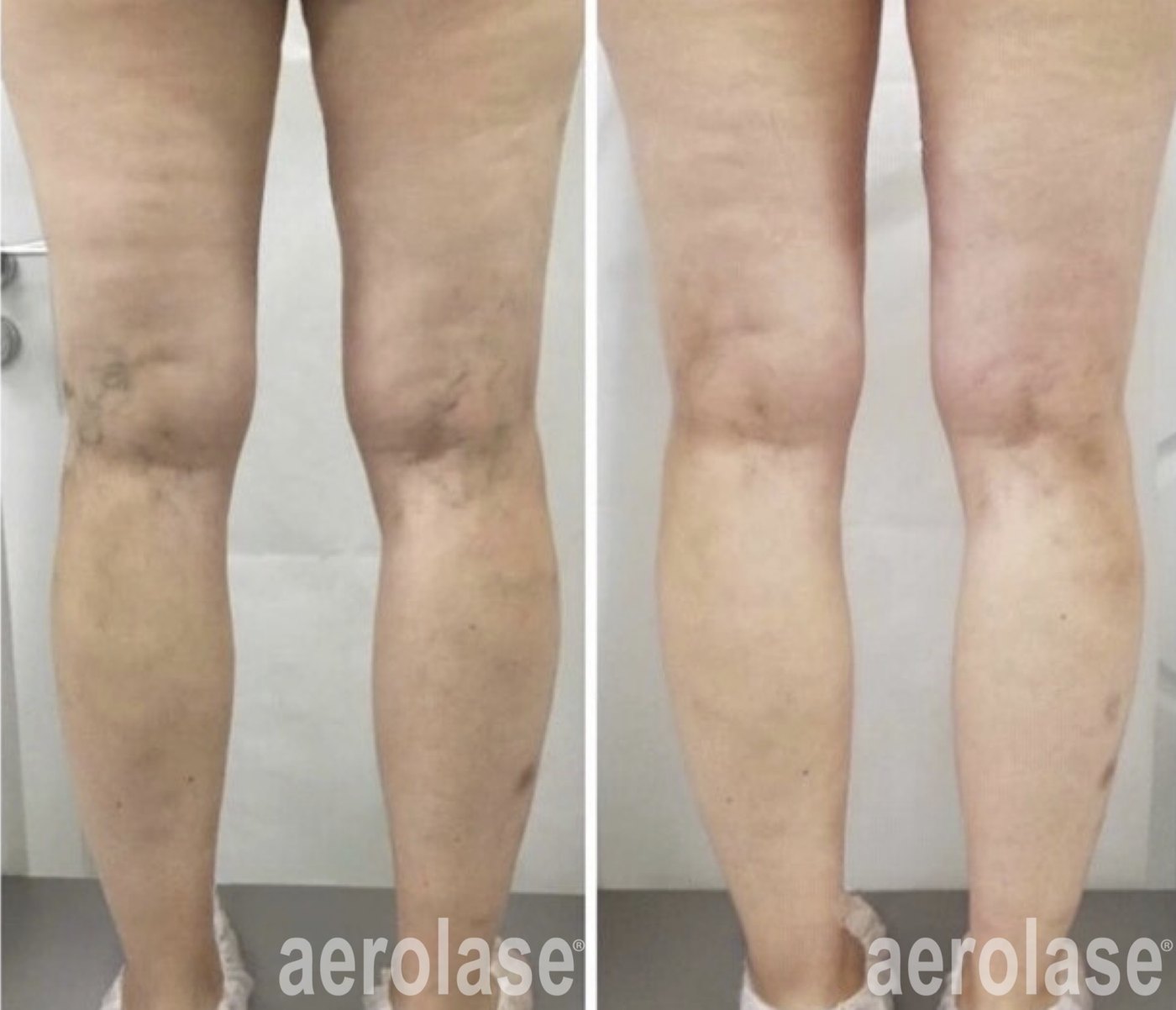
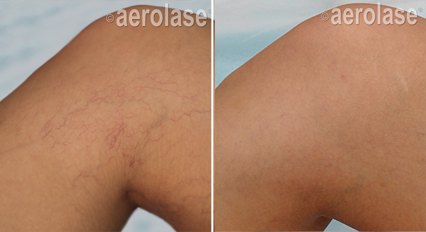
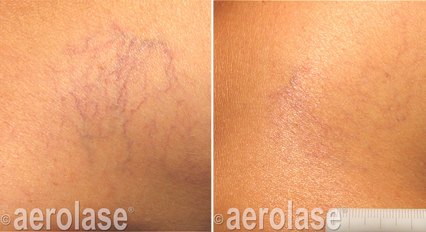
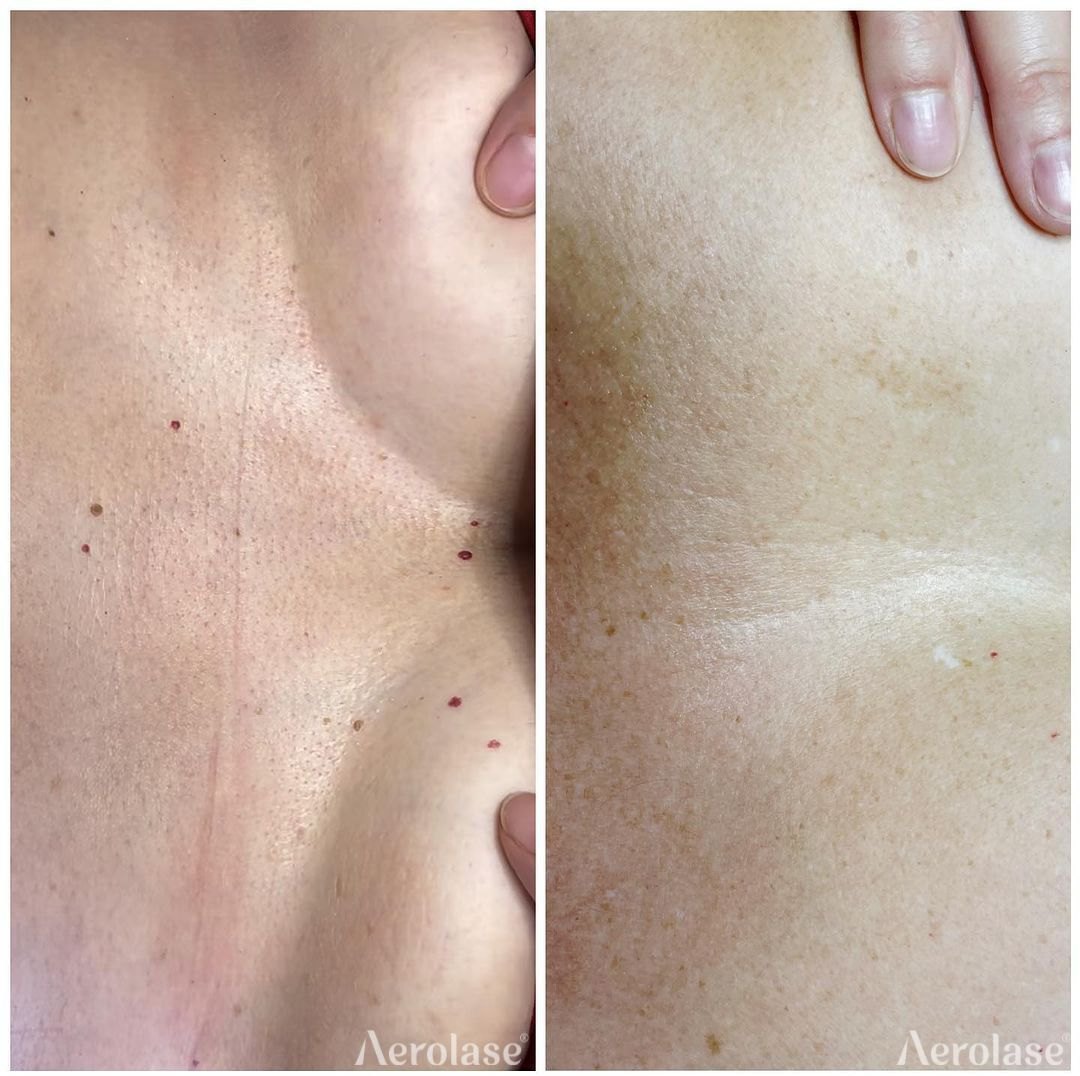
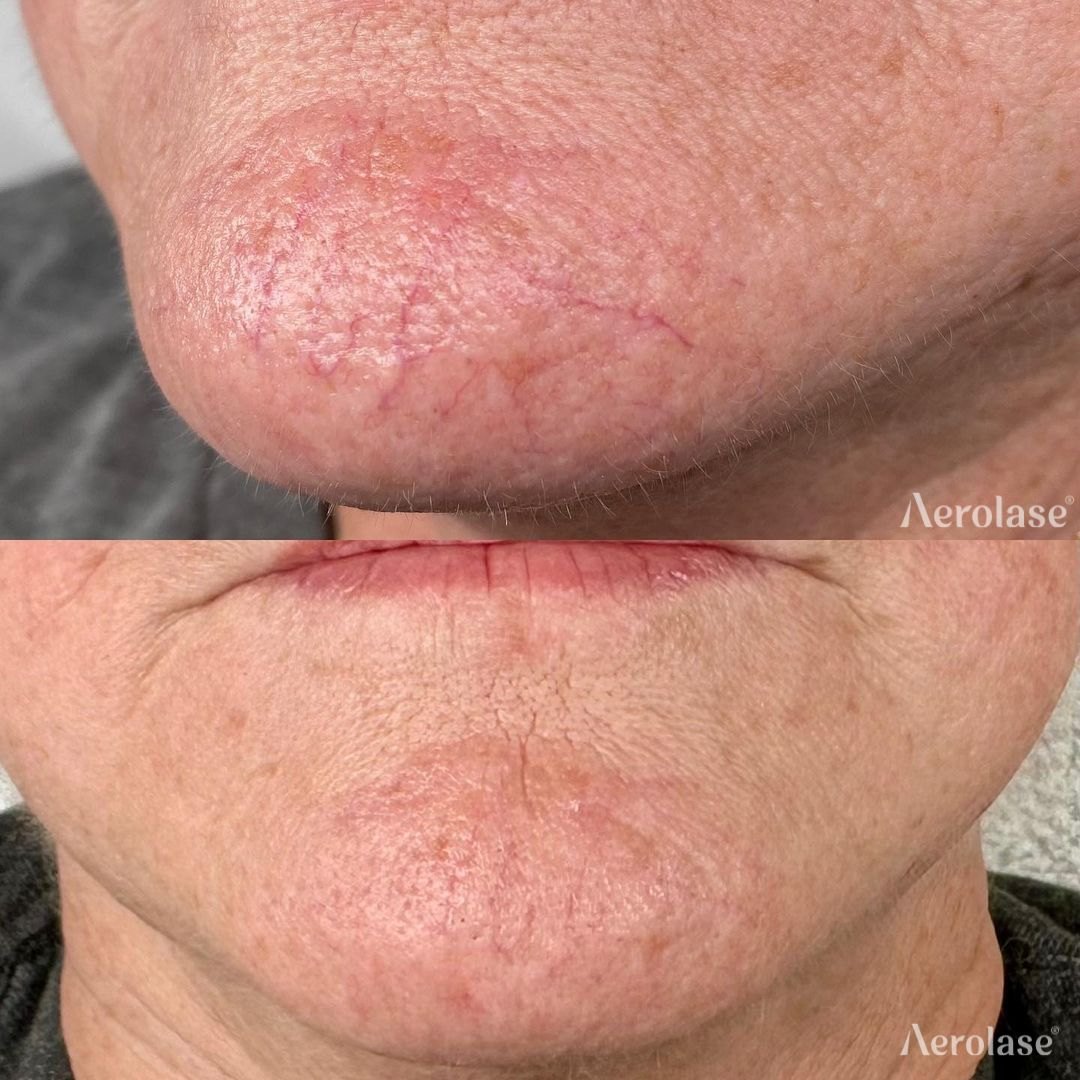
More Neo Elite results. The full set, covering every condition we use this laser for, is on our Aerolase before and after page.
Sessions needed vary by person, severity and skin type. Individual results vary and nothing here is a guarantee of outcome. We do not diagnose from a photograph; anything that has changed in size, shape or colour, or that you have not had looked at, needs a proper assessment before any laser is pointed at it.
Frequently asked questions about vascular lesion treatment
Does laser hurt?
Most patients describe each pulse as a brief snap or hot pinprick. The Aerolase Neo Elite is generally tolerated without topical numbing. IPL is slightly more uncomfortable. We offer topical lidocaine on request applied 30 minutes before treatment.
How many sessions will I need?
For isolated cherry angiomas or a few broken capillaries, one session is often sufficient. For rosacea, plan for three to five sessions spaced four weeks apart plus annual maintenance.
When will I see results?
Cherry angiomas show visible darkening immediately and full clearance in 2 to 4 weeks. Broken capillaries fade gradually over 4 to 6 weeks. Rosacea improves progressively across the treatment series with final assessment at 3 months after the last session.
Is there downtime?
Most patients return to normal activity immediately. Mild redness lasting a few hours is common. A small urticaria-like response on treated vessels may persist for a few days.
Can I wear makeup after?
Yes, gentle mineral makeup is fine the same day. Avoid heavy occlusive products for 24 hours.
Will the vessels come back?
Treated vessels are permanently destroyed and do not come back. However, new vessels can form, especially in rosacea or with continued sun exposure.
Is vascular laser safe for darker skin?
Yes, but device choice matters. The 1064 nm Nd:YAG (Aerolase) is safe across Fitzpatrick I through VI. IPL is generally limited to Fitzpatrick I through III to avoid pigment risk.
Can I treat leg veins?
Reticular vessels under 3 mm respond to long-pulse Nd:YAG. Larger varicose veins need sclerotherapy or surgical evaluation; we refer those out to partner vein clinics.
What about pregnancy?
We defer elective vascular laser during pregnancy. Some pregnancy-related vascular changes resolve postpartum without treatment, which is one reason to wait.
Can I combine vascular treatment with other procedures?
Yes. We commonly combine Aerolase vascular treatment with same-day BBL, laser hair removal, Botox, or filler in non-overlapping areas. We avoid stacking aggressive resurfacing on the same day.
What is the difference between Aerolase and IPL for rosacea?
Aerolase 1064 nm Nd:YAG penetrates deeper, is safer across all skin types, and is more selective for vessels than pigment. IPL is broader-spectrum, better for diffuse redness blended with sun damage, but limited to lighter skin types. Many patients benefit from a combination protocol.
What about V-Beam or pulsed dye laser?
V-Beam (Candela pulsed dye laser at 595 nm) is excellent for port wine stains and superficial telangiectasias. We do not currently have V-Beam in-house. We refer port wine stain cases to a partner dermatology clinic.
Will my skin look worse before it looks better?
You may have a few hours of pink flush and a few days of darker treated vessels before they fade. Most patients are presentable for work the next day with minimal makeup.
Rosacea subtypes and treatment match
Rosacea is not one condition; it has four recognized subtypes and patients often have features of more than one. Subtype 1 (erythematotelangiectatic) is the flushing-and-broken-vessel pattern that responds best to Aerolase or IPL plus topical brimonidine. Subtype 2 (papulopustular) presents with acne-like bumps and responds best to topical metronidazole, ivermectin, or oral doxycycline at 40 mg modified-release dose. Subtype 3 (phymatous) involves thickened skin most often on the nose; this needs dermatology referral and sometimes surgical or ablative laser intervention. Subtype 4 (ocular) affects the eyes with grittiness and dryness; this needs ophthalmology co-management. We screen for all four during your consultation and refer out for components that exceed our scope.
Topical maintenance options compared
Brimonidine 0.33% gel (Mirvaso) constricts vessels and reduces flush for 8 to 12 hours per application; rebound flush is a known issue in some patients. Oxymetazoline 1% cream (Rhofade) provides similar effect with reportedly less rebound. Metronidazole 0.75% gel (MetroGel) is anti-inflammatory and best for papulopustular subtype. Ivermectin 1% cream (Soolantra) targets Demodex mites which are overrepresented in rosacea skin. Azelaic acid 15% gel (Finacea) is broad anti-inflammatory and helps with post-inflammatory pigmentation. Many patients use two topicals concurrently under dermatology guidance.
The Bar Beauty rosacea protocol
Our standard rosacea protocol is four Aerolase sessions four weeks apart, daily SPF 50, gentle skincare conversion, prescription topical from your family doctor or our referral dermatologist, and trigger journaling. Maintenance is one Aerolase session annually or twice per year for severe phenotype. Patients who complete the full protocol typically report meaningful improvement and far fewer acute flares.
Preparing for your vascular consultation
Bring a clean face with no makeup, a list of current medications and supplements, photos of how the lesion looks at its worst (after a hot shower or exercise for rosacea patients), and any prior treatment history. Our RN performs a standardized photographic baseline with consistent lighting, a Fitzpatrick skin-type assessment, a brief medical history including pregnancy status and current photosensitizing medications such as isotretinoin or doxycycline, and a written treatment plan with clear pricing, session count, and expected outcomes. The consultation itself is complimentary and there is no obligation to book a treatment that day. Many patients prefer to think it over for a week before deciding, and we respect that.
Photosensitizing medications to disclose
Tell your clinician if you are taking any of the following because they affect laser safety. Doxycycline, minocycline, sulfa antibiotics, isotretinoin (Accutane), retinoid topicals, hydrochlorothiazide, certain NSAIDs, St. John Wort, hypericin-containing supplements. We may defer treatment or adjust device settings.
Book vascular treatment at Bar Beauty Medical
Bar Beauty Medical is at 46 Fort York Blvd in downtown Toronto. Vascular consultations are complimentary and include skin assessment, Fitzpatrick typing, and a written treatment plan with clear pricing and session count expectations. Book online or call 416-923-1200.
Deeper protocol breakdown for vascular lesion treatment at Bar Beauty Medical
Beyond the high-level overview most clinics publish, patients researching vascular lesion treatment in Toronto deserve to know what actually happens during a Aerolase 1064 nm laser appointment, how decisions are made in real time, and what separates a competent technician from a clinician building a long-term aesthetic plan. At Bar Beauty Medical, every vascular lesion treatment appointment follows a six-stage protocol. Stage one is the seated visual assessment in neutral lighting with hair pulled back. Stage two is the dynamic assessment, where Jasmine asks the patient to smile, frown, pucker, and speak naturally to identify how the muscles of facial expression interact with whatever concern brought them in. Stage three is the photographic baseline using standardized angles (frontal, three-quarter left and right, profile, and submental) under fixed lighting. Stage four is treatment planning, where the proposed approach is sketched on a printed face diagram and reviewed with the patient before any product is opened. Stage five is consent, including a written explanation of risks specific to the planned anatomy. Stage six is the treatment itself, performed slowly and incrementally, with a hand mirror offered at natural pause points so the patient can confirm direction before more product is delivered.
This protocol exists because rushed appointments produce rushed outcomes. When a clinic books vascular lesion treatment every 15 minutes, the planning conversation gets compressed and the patient is more likely to leave with a generic result. Our vascular lesion treatment bookings are 60 to 90 minutes for new patients and 45 to 60 minutes for return visits, which is longer than the industry average but produces fewer revisions and more natural outcomes over time.
Year-one, year-two, and year-three cost framework
A realistic budget for vascular lesion treatment extends beyond the first appointment. Year one typically involves an initial treatment plus one or two refinement or maintenance visits, depending on the product half-life and the patient’s goals. Expect a year-one investment in the range of CAD 250-650 multiplied by 1.5 to 2.0. Year two usually settles into a maintenance rhythm where the patient has identified what works and is no longer building. Year-two costs typically drop 20 to 40 percent versus year one. Year three often introduces complementary treatments (skin quality work, biostimulator layering, or device-based collagen support) that reduce the dependency on the original Aerolase 1064 nm laser alone. A patient who plans across a three-year horizon usually spends less per year by year three than they spent in year one, and the result looks more cohesive because each decision was made in the context of an overall plan rather than as a one-off purchase.
Common reversal and correction scenarios
Before-and-after photography expectations
Standardized photography is part of vascular lesion treatment planning at our clinic. We use a fixed camera distance, fixed focal length, fixed lighting, and identical patient positioning at every visit. This matters because non-standardized photos exaggerate or minimize change depending on angle and lighting, which makes it impossible to evaluate whether a treatment achieved its goal. Patients receive their before-and-after set after each appointment and can request a multi-year review at any time. We do not publish patient photos without explicit written, time-limited consent, and we do not pressure patients to grant photo permission as a condition of treatment.
Candidacy determinants we evaluate at consultation
Not every patient who requests vascular lesion treatment is an ideal candidate at the moment they ask. We evaluate eight candidacy determinants: realistic expectations, baseline anatomy, skin quality, medical history (autoimmune, anticoagulant, isotretinoin, immunosuppression, pregnancy or breastfeeding), psychological readiness, financial fit across a multi-visit plan, lifestyle factors (travel, sun exposure, planned events), and prior treatment history. A patient who scores poorly on three or more of these is asked to address the relevant factor before proceeding, even if it means losing the booking revenue. This is not gatekeeping for its own sake; it is how we maintain a low complication rate and high patient satisfaction across years rather than across single visits.
Advanced technique discussion
For patients who have done their own research, here is what differentiates a thoughtfully performed vascular lesion treatment session from a basic one. We use cannulas in anatomical zones where they reduce vascular risk and bruising (midface, jawline, tear-trough adjacent zones) and needles where precision and product placement demand it. Aspiration is performed where vascular density requires it. Product selection is matched to tissue plane: thinner, more cohesive gels for superficial work; more robust, higher-G’ products for structural support. Layering across multiple sessions is preferred over single-session high-volume work because tissue accommodates change more gracefully over time. These specifics are why two clinics can quote a similar dollar figure for vascular lesion treatment and produce visibly different outcomes.
Related at Bar Beauty: Spot Treatments in Toronto, Single Lesion Clearance.
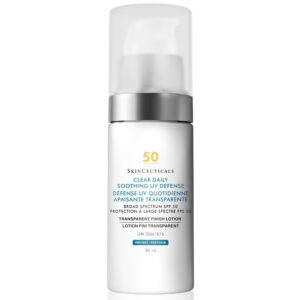
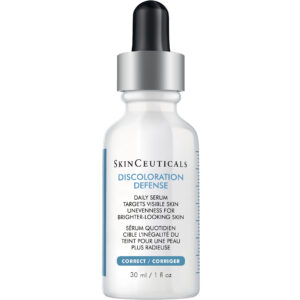
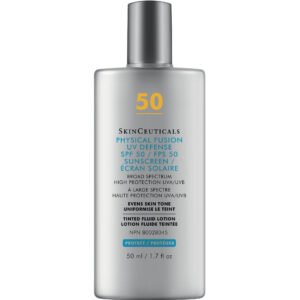
Recommended aftercare and skincare
The medical grade products our team uses to protect and extend your results. Shipped express across Canada, free over 150 dollars.
Ready to look into it properly?
Our consultation is free. We will look at your skin, give you an honest recommendation, and say so if a different treatment would suit you better.
Or call 416 923 1200 · 46 Fort York Blvd, CityPlace, Toronto
Questions about this treatment?
Ask us anything before you book. Consultations are free, and we will tell you honestly if a treatment is not right for you.