


Under-Eye PRF in Toronto: platelet-rich fibrin, honestly
Under-eye PRF has quietly become one of the most-requested non-filler treatments at our CityPlace clinic in Toronto. The reason’s simple. It works on the things filler can’t fix, thin under-eye skin, vascular pooling, and crepey texture, without the risk of the Tyndall effect, lumps, migration, or that permanently puffy under-eye look you’ve seen on too many filler patients. So here’s the honest breakdown of what under-eye PRF actually does, who it works for, who it doesn’t, what it costs with us, and how it stacks up against PRP and tear-trough filler.
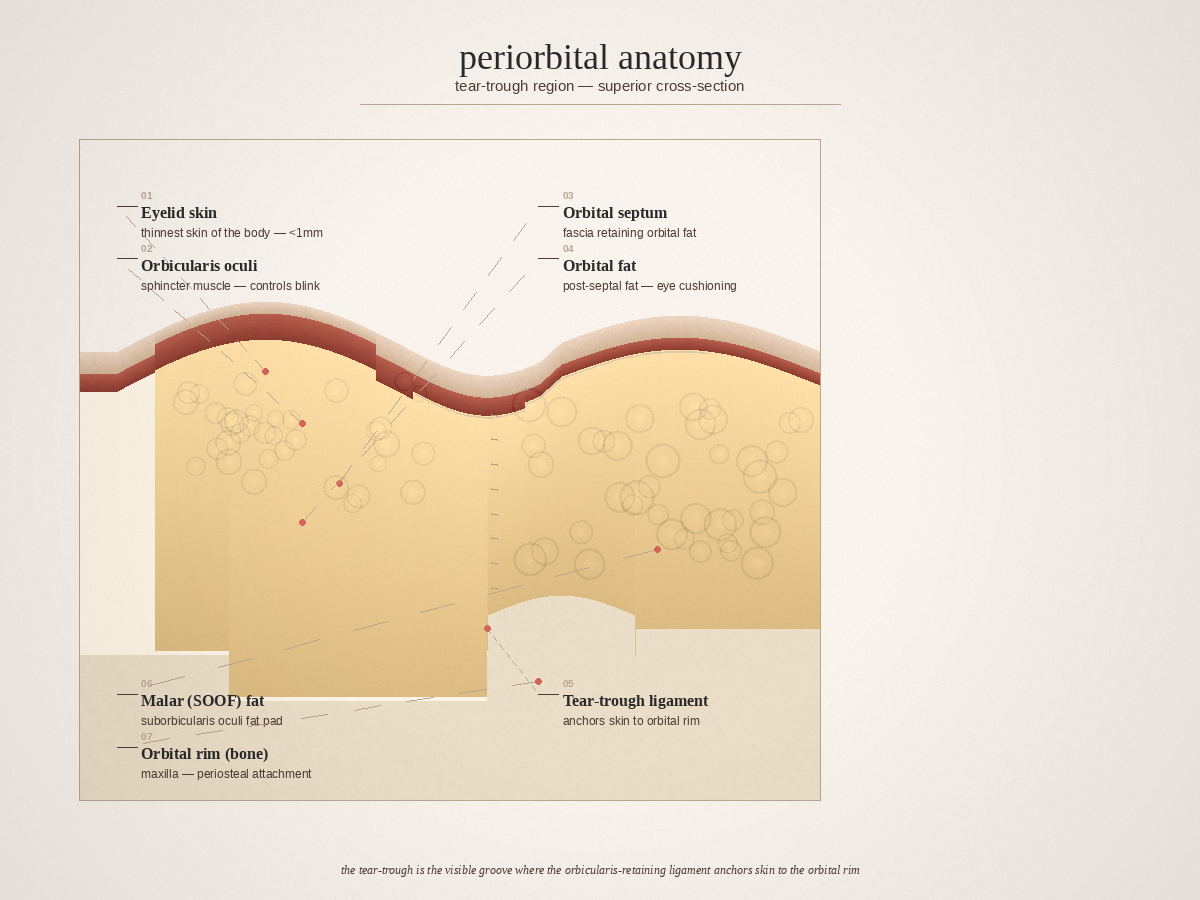
Under-eye PRF has no brand name, no lot number and nothing sitting on a shelf. It is drawn from your arm, spun once with no anticoagulant, and injected in the same appointment, so it cannot be prepared before you arrive or kept for next time. Almost everything that is different about booking this treatment follows from that one fact.
| Because the material is your own blood | What that removes | What it puts back on you or on us |
|---|---|---|
| There is no manufactured gel to choose | No allergy risk, no product comparison, and no Tyndall effect from a gel scattering light under thin skin | The only real way to verify what you are getting is to watch your own blood spin. A clinic that cannot show you that is not giving you PRF |
| No anticoagulant goes into the tube | The fibrin matrix forms properly, so growth factors release across 7 to 14 days rather than the 3 to 5 days of PRP | Draw, spin and injection all have to sit inside one visit, in one room |
| Nothing stays behind as a gel | No hyaluronidase, no dissolving appointment, no migration to correct later | The mild plumping you leave with settles inside 24 to 48 hours and is not the result |
| There is no pigment risk | Safe across all Fitzpatrick types, including skin that reacts badly to light-based work | Melanin-driven dark circles are untouched by it and still need their own plan |
| The input is your blood on the day | Nothing about the material has been standardised for you by a manufacturer | Alcohol, fish oil, high-dose vitamin E, ibuprofen, aspirin and similar blood thinners in the 72 hours beforehand change how much you bruise |
PRF improves the quality of the skin under the eye. It does not fill a true tear-trough hollow, and it does nothing for a herniated fat pad, which is a surgical problem. Our current single-session price is posted live on the price list and in Jane, so check it there rather than anywhere else.
What under-eye PRF actually is
PRF stands for Platelet-Rich Fibrin. Think of it as PRP’s second-generation cousin, an autologous concentrate made from your own blood. We draw a small amount, spin it in a single low-speed cycle with no anticoagulant, and what comes out is a soft, gel-like concentrate packed with a dense fibrin matrix, platelets, white cells, and circulating stem cells. We inject that into the under-eye area with a blunt-tip cannula, at a depth that targets the dermis and the tissue just beneath it.
The fibrin matrix works like a slow-release scaffold for the growth factors (PDGF, TGF-beta, VEGF, IGF-1, EGF). They come out over 7 to 14 days instead of the 3 to 5 days you get from traditional PRP. That longer signal is what stimulates collagen, improves skin thickness, and slowly improves under-eye colour and texture. Our under-eye PRF protocol uses a Health Canada licensed Cellenis NaturaGel system, your own blood, processed right in front of you.
What under-eye PRF does
- Thickens thin under-eye skin, the most common cause of dark circles
- Improves skin tone and softens blue or purple discolouration over time
- Softens fine lines and crepey texture under the eyes
- Improves overall skin quality in the area around the eye
- Stimulates collagen and elastin in a zone where filler often causes problems
- Works on darker skin tones with no added pigment risk
What under-eye PRF does not do
- It does not fill deep tear-trough volume loss; you may still need filler for that
- It does not remove fat-pad herniation (true “bags”), which is a surgical issue
- It does not give a finished result in one session; a short series is the norm
- It does not work instantly; visible change builds over 6 to 12 weeks
- It does not erase pigmented dark circles from melanin, which need topical lightening
In our experience, if a Toronto clinic sells under-eye PRF as a filler alternative for every single patient, they’re oversimplifying. The two treatments solve different problems. Some people need PRF, some need filler, and plenty need both. We’ll tell you which group you’re in at the consult, even if that means talking you out of the thing you came in asking for.
PRF vs PRP for the under-eye area: why we lead with PRF
For years most Toronto clinics offered PRP for the under-eye area. The better clinics, Bar Beauty Medical included, now lead with PRF for the eye area. Here is why, in plain terms. For the full side-by-side, see our guide on whether PRF is better than PRP.
PRF releases growth factors over days, not hours
PRP releases its growth-factor payload over 3 to 5 days. PRF, because of its fibrin matrix, releases over 7 to 14 days. The longer signalling window produces more sustained collagen stimulation, which matters in the thin, mobile skin under the eye.
PRF holds more white cells and stem cells
The single-spin, no-anticoagulant protocol used to make PRF preserves a higher share of white cells and circulating stem cells than PRP. Both contribute to the regenerative effect.
PRF has a gentle volumetric effect
The gel-like consistency of PRF gives a slight, temporary plumping on injection, useful in mild tear-trough hollowness. That mechanical volume settles within 24 to 48 hours, then is gradually replaced by genuine collagen-driven improvement over the following weeks.
PRF tends to bruise less
The single-spin protocol and smaller injection volume usually produce less mechanical bruising than the larger-volume PRP protocols. Most PRF patients see minimal bruising.
The Bar Beauty Medical under-eye PRF protocol
The consultation
We work out the cause of your under-eye concern: is it skin thinness, vascular pooling, pigmentation, fat-pad herniation, or volume loss? Often it is a combination. We tell you honestly which parts PRF can address and which it cannot. For significant volume loss we may suggest conservative tear-trough filler alongside PRF; for true fat-pad herniation we refer to oculoplastic surgery. The consultation is free.
The blood draw
We draw a small amount of blood from a forearm vein, the same as a routine lab draw; for PRP specifically we process it on our Salient PRP system.
The spin
Single-spin protocol using a Health Canada licensed PRF system (Cellenis NaturaGel), with no anticoagulant. The output is a soft gel concentrate, ready to use.
The injection
Topical numbing is applied before we begin. We use a blunt-tip microcannula entered through a single needle point lateral to the outer corner of the eye, then advanced under the skin to lay PRF in a fan across the tear-trough and infraorbital area. We aspirate before injecting at any point.
The recovery
Mild swelling and a slight “bag” appearance for 12 to 24 hours from the injected volume, which settles within 48 hours. Pinpoint bruising at the cannula entry point is common and fades in 3 to 5 days. Most patients are back at work the next day with a little concealer.
Under-eye PRF cost in Toronto, and what it includes
We publish our prices, and we don’t negotiate at the chair. The current single-session price for our Cellenis NaturaGel PRP and PRF under-eye treatment is posted live on the price list and in our Jane App booking system. For context, most Toronto clinics charge somewhere between roughly $350 and $900 per under-eye session, and a lot of them quote a series of three. Ours isn’t a low-cost loss-leader. It’s a single, fuller session, and the consult is where we map out how many your skin actually needs.
| Protocol | What is included | Typical plan |
|---|---|---|
| Under-eye PRF (standard) | Blood draw, both under-eye areas, blunt cannula | Series mapped at consult, usually spaced 4 to 6 weeks |
| Full periocular PRF | Under eyes plus crow’s-feet area | Series mapped at consult |
| Maintenance | Single session | Typically once a year |
Your price includes the consultation, blood draw, processing, topical numbing, the injection itself, post-care guidance, and a follow-up review. It does not include optional take-home topicals or other treatments you may choose to add. Live pricing always wins over any number you read online, so check the price list before you book.
Is PRP or PRF covered by OHIP or insurance?
No. Under-eye PRF and PRP are cosmetic treatments, so OHIP does not cover them and neither do standard private cosmetic benefits. Some Health Spending Accounts will reimburse when there is a documented dermatological indication; we provide an itemised invoice you can submit, though approval depends entirely on your carrier and plan. If a clinic tells you OHIP covers a cosmetic under-eye treatment, ask to see it in writing, because it does not.
Affirm financing
For larger treatment plans, Affirm financing is available so you can split the cost into monthly payments. You can review your options at the consultation, and checking your rate does not affect your plan. Affirm is the only third-party financing we offer.
Red flags: what cheap under-eye PRF in Toronto usually means
The under-eye area is unforgiving. A poor injection here can produce lumps, prolonged swelling, or a vascular complication. The discount end of the Toronto market often cuts exactly the wrong corners. If you are quoted a price that looks too good to be true, watch for the following.
Needle injection instead of cannula
The under-eye area is densely vascular. A sharp needle can pierce or compress a vessel, producing significant bruising at best and a vascular event at worst. The standard of care for under-eye injection is a blunt-tip cannula, which slides past vessels rather than piercing them. If a clinic uses sharp needles for the whole procedure, the risk profile is higher.
An inadequate spin protocol
Real PRF requires a specific single-spin protocol in a PRF tube with no anticoagulant. Some discount clinics use PRP tubes and call the output “PRF.” The fibrin matrix does not form properly and the slow-release benefit is lost. Their cost is the same; your result is worse.
An injector without periocular training
The under-eye anatomy is complex; the angular, inferior palpebral, and infraorbital arteries all run through the zone. Anyone injecting here should have specific periocular training and ongoing education, not a single weekend course.
Filler quietly substituted for PRF
Some clinics advertise “under-eye PRF” but actually inject cheap hyaluronic acid. The result is dramatically different: filler in this zone can cause the Tyndall effect, migration, or lasting puffiness. If the clinic cannot show you the spin running with your own blood, you are not getting PRF.
Skipping aspiration
Before injecting at any periocular point, the practitioner should aspirate (pull back on the syringe) to confirm they are not in a vessel. It takes a moment and it matters. Watch for it during your procedure; we do it as standard.
Under-eye PRF vs other Toronto treatments
PRF vs tear-trough filler
Different mechanisms. Filler adds volume to a hollow. PRF improves skin quality and slowly builds collagen. PRF is safer in thin or pigmented skin and produces no Tyndall effect, no migration, and no need for dissolving. Filler is faster and better for true volume loss. Some patients need both; we lead with PRF and add small amounts of conservative tear-trough filler only when it is genuinely indicated.
PRF vs PRP for the under eye
Different generations. PRF is denser, slower-release, with less bruising and more sustained results, which is why we lead with it around the eye. See our PRP facial page for the broader facial application.
PRF vs skin boosters
Different materials. PRF uses your own growth factors; skin boosters use hyaluronic acid and amino acids. The two work well in sequence for the right patient. See our skin boosters page for more.
PRF vs surgical blepharoplasty
Different categories entirely. Blepharoplasty surgically removes fat pads and excess skin. PRF improves the quality of the skin you have. If you have true fat-pad herniation creating visible bags, surgery is the answer and PRF will not fix it; we will tell you so and point you to the right specialist.
Who is, and is not, a candidate
You are likely a good candidate if your under-eye darkness comes from thin skin, vascular pooling, or texture rather than from melanin pigment or true fat herniation, and you are willing to do a short series. PRF is one of the few options that is genuinely safe across all Fitzpatrick skin types, including darker skin, because there is no pigment risk. We generally defer treatment in pregnancy or active breastfeeding, with an active skin infection in the area, with a recent course of isotretinoin, or during an active autoimmune flare. If a different treatment fits your anatomy better, we will say so.
Under-eye PRF FAQ
How much does under-eye PRF cost in Toronto?
Our current single-session price is posted live on the price list and in Jane. Across Toronto, under-eye PRP and PRF typically runs in the $350 to $900 per-session range; we map the number of sessions you actually need at the free consult.
How many PRF sessions do I need for the under eyes?
Most patients do a short series, commonly three sessions spaced four to six weeks apart, then a maintenance session roughly once a year. Your plan is set at consult based on your skin.
How long do under-eye PRF results last?
Results build over about 12 weeks and generally hold for 12 to 18 months. Annual maintenance preserves and often improves the gains.
Does under-eye PRF hurt?
With topical numbing and a blunt cannula, most patients find it very tolerable. The cannula technique is noticeably more comfortable than needle-only protocols.
What is the difference between PRP and PRF?
PRP is first-generation with faster growth-factor release (3 to 5 days) and more bruising. PRF is second-generation with slow release (7 to 14 days), less bruising, and a profile better suited to the under-eye area.
Is under-eye PRF safer than filler?
In some respects, yes: because it is your own blood there is no allergy risk, no Tyndall effect, no migration, and no need for dissolving. That said, any periocular injection carries some risk, and technique matters more than the product.
How soon will I see results from under-eye PRF?
Early skin-quality changes around four weeks, visible colour and texture improvement around eight to twelve weeks, with collagen remodelling continuing past that.
Can I combine PRF with tear-trough filler?
Yes, when it is indicated. We usually do PRF first to improve skin quality, then add conservative filler later only if true volume loss remains.
Can I drive home after under-eye PRF?
Yes. There is no sedation. You can drive and work the same day, though you may have mild visible swelling for about 24 hours.
Is under-eye PRF covered by OHIP?
No. It is a cosmetic treatment. Some Health Spending Accounts reimburse with a documented indication; we provide an itemised invoice for submission.
What to do before and after under-eye PRF
What happens in the days before your appointment has a real effect on comfort, bruising, and result. Keep up your usual skincare but pause retinoids and strong acids for several days beforehand. Stay well hydrated. In the 72 hours before treatment, and with your physician’s okay, avoid alcohol, fish oil, high-dose vitamin E, ibuprofen, aspirin, ginkgo, and similar blood-thinning supplements, which increase bruising; acetaminophen is fine if you need it. Afterwards, keep the area clean, avoid heavy exercise, hot yoga, and saunas for 24 hours, and use a mineral SPF daily. We email you simple aftercare instructions after your treatment, and follow up with you.
A few honest things worth knowing first
- Instagram is not a treatment plan. The before-and-afters you screenshot are usually someone’s best result, with their anatomy and their lighting. Useful as inspiration, not as a contract.
- The cause of your dark circles decides the treatment. Thin skin, vascular pooling, pigment, and volume loss are four different problems. PRF is excellent for some of them and useless for others, and we would rather tell you that up front.
- One session is rarely the whole story. Under-eye PRF is a process, not a single moment. Patients who expect a one-and-done miracle leave more frustrated than patients who understand the realistic arc.
- Restraint wins. More product and more sessions do not mean a better outcome. We treat to what your skin needs and no more.
How our under-eye PRF differs from a typical Toronto clinic
Toronto’s aesthetic market is crowded. On paper, most clinics offer the same overlapping treatments, so the difference really shows up in the protocol. Our new-patient consults aren’t rushed. You get a real assessment of what’s causing your concern, a written plan, and an honest talk about alternatives, including when the answer is filler, surgery, or nothing yet. We’re cannula-led for the eye area, we aspirate before every point, and every PRF protocol runs under the standing oversight of our medical director.
Book an under-eye PRF consultation at Bar Beauty Medical
Want to skip the marketing and have a real conversation about what under-eye PRF can, and can’t, do for your skin? We’re here for it. The consult is free, with no obligation to treat that day. We’ll give you an honest plan and transparent pricing, and we’ll say so when a different treatment, or no treatment, is the better call. We’re at 46 Fort York Blvd in CityPlace, Toronto, with two free spots at the clinic, first come first served, plus public parking beside the Sobeys at Fort York Blvd and Telegram Mews, and we see clients from across downtown and the wider GTA.
Book online on Jane or call 416-923-1200.
An under eye PRF result
Same patient before treatment and after a course of PRF under the eyes at our clinic.
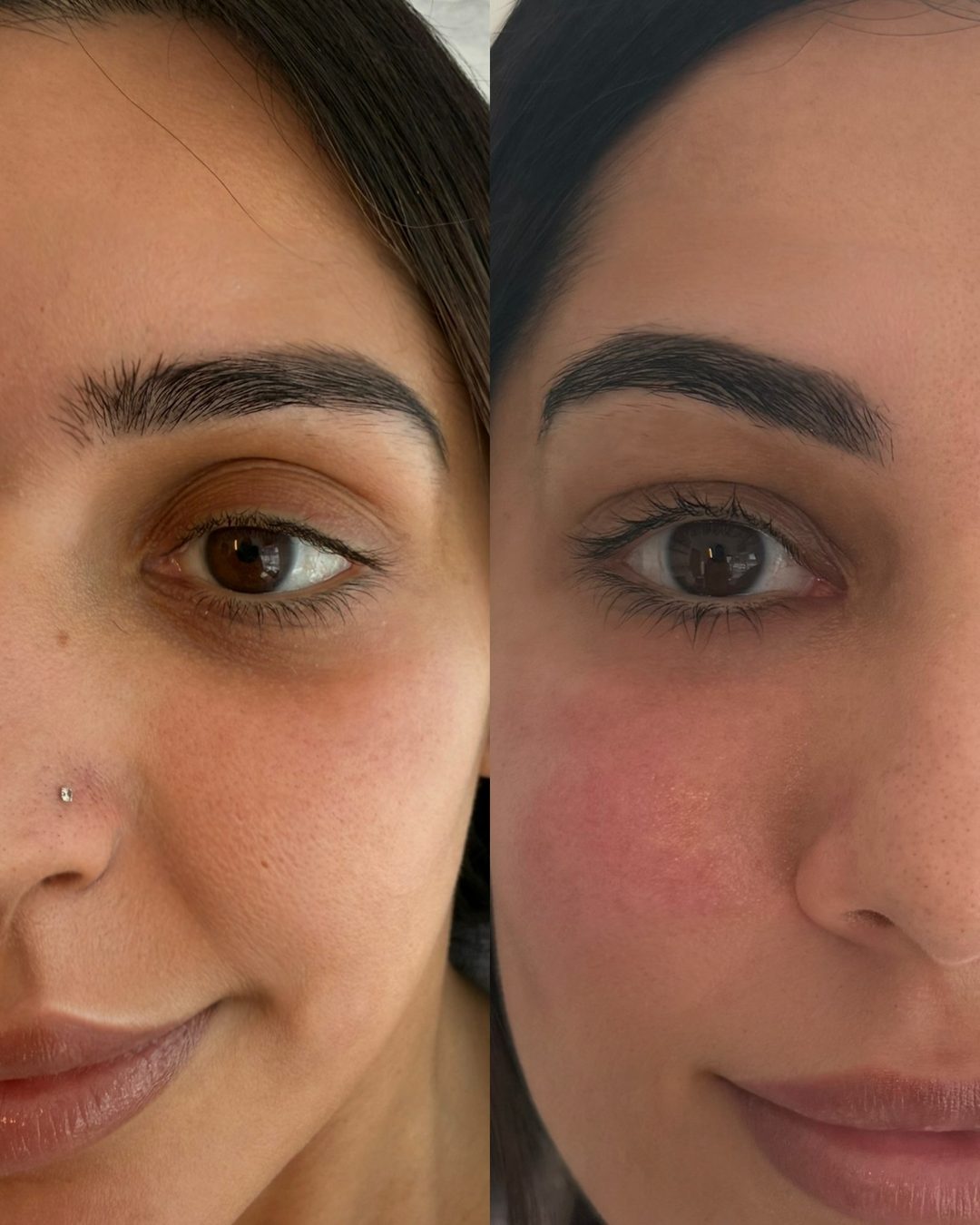
Individual results vary. Photos are of Bar Beauty Medical patients, shared with written consent.
PRP vs PRF for under eyes, what is the difference?
Both use your own blood, spun to concentrate healing growth factors, with no filler added. PRP (platelet-rich plasma) releases its growth factors quickly. PRF (platelet-rich fibrin) is spun more gently with no anticoagulant, forming a fibrin scaffold that releases growth factors slowly over several days. For the delicate under-eye area we usually prefer PRF, because the slower release supports collagen and skin quality with a lower risk of puffiness than some fillers.
Is PRF better than PRP for under eyes?
For under eyes, PRF is typically our choice. It contains no additives, releases growth factors over a longer window, and suits thin under-eye skin. PRP still works well and is often combined with microneedling elsewhere on the face. Neither adds volume the way filler does; they improve skin quality, tone, and texture.
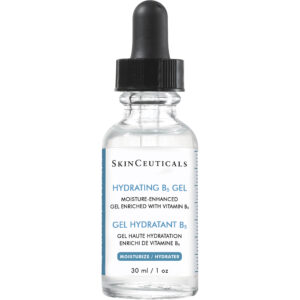
Recommended aftercare and skincare
The medical grade products our team uses to protect and extend your results. Shipped express across Canada, free over 150 dollars.
Ready to look into it properly?
Our consultation is free. We will look at your skin, give you an honest recommendation, and say so if a different treatment would suit you better.
Or call 416 923 1200 · 46 Fort York Blvd, CityPlace, Toronto
Questions about this treatment?
Ask us anything before you book. Consultations are free, and we will tell you honestly if a treatment is not right for you.