


If you're constantly tired, struggling with brain fog, or feeling like your energy levels are completely drained, a B12 injection might be something worth exploring. Vitamin B12 shots have become increasingly popular for addressing deficiency symptoms and boosting overall wellness. Unlike oral supplements that pass through your digestive system, these injections deliver cyanocobalamin or methylcobalamin directly into your bloodstream for maximum absorption. Whether you're dealing with pernicious anemia, following a plant-based diet, or want to understand if B12 shots could help with your fatigue, this guide breaks down everything you need to know about vitamin B12 injections from how they work to what results you can realistically expect.
What Are B12 Injections and How Do They Work?
B12 injections are intramuscular shots that deliver vitamin B12 directly into your muscle tissue, typically in your arm or thigh. This method bypasses your digestive system entirely, which is crucial for people who can't properly absorb B12 through food or oral supplements.
Your body needs vitamin B12 for some pretty essential functions it helps create red blood cells, supports nerve function, and plays a key role in DNA synthesis. When you get an injection, the vitamin goes straight into your bloodstream and gets stored in your liver for future use.
There are different forms of B12 used in injections. Cyanocobalamin is the most common and stable form, while methylcobalamin is the active form that your body can use immediately without conversion. Some practitioners prefer hydroxocobalamin because it stays in your system longer, meaning you might need fewer shots.
The injection itself takes just seconds. Most people get them in their upper arm or buttock, and while there might be a quick pinch, it's generally less uncomfortable than you'd think. The frequency depends on your specific situation some people start with weekly shots and then move to monthly maintenance doses once their levels stabilize.
Signs You Might Need a B12 Injection
Vitamin B12 deficiency creeps up slowly, and the symptoms can be surprisingly vague at first. You might feel constantly exhausted even after a full night's sleep, or notice your thinking feels fuzzy and unfocused. Some people describe it as walking through life in a haze.
Physical symptoms often include weakness, pale or jaundiced skin, and a smooth, red tongue that might feel sore. You could experience tingling in your hands and feet that pins-and-needles sensation that doesn't go away. Balance problems and difficulty walking can develop if the deficiency becomes severe, as B12 is crucial for nerve health.
Certain groups are at higher risk for deficiency. If you follow a vegan or strict vegetarian diet, you're not getting B12 from animal products like meat, dairy, or eggs. Older adults often struggle with absorption because stomach acid production decreases with age. People with digestive conditions like Crohn's disease, celiac disease, or those who've had gastric bypass surgery frequently can't absorb B12 properly.
You might also need injections if you're taking certain medications. Metformin for diabetes and proton pump inhibitors for acid reflux can both interfere with B12 absorption over time. Anyone with pernicious anemia an autoimmune condition affecting B12 absorption typically requires regular injections as their primary treatment.
Health Benefits of Vitamin B12 Shots
The most immediate benefit most people notice is increased energy. When your B12 levels are low, your body can't produce enough healthy red blood cells to carry oxygen efficiently throughout your body. Once you start getting injections and your levels normalize, that crushing fatigue often lifts significantly within days to weeks.
B12 injections support cognitive function in meaningful ways. Studies show that adequate B12 levels help with memory, concentration, and overall mental clarity. While shots won't turn you into a genius, they can help reverse the brain fog and mental sluggishness that comes with deficiency.
Your nervous system relies heavily on vitamin B12 to maintain the protective covering around your nerves called myelin. Regular injections help prevent nerve damage and can sometimes reverse symptoms like numbness and tingling if caught early enough. This is particularly important for people with diabetic neuropathy or other nerve-related conditions.
Mood improvements are common too. B12 plays a role in producing neurotransmitters like serotonin and dopamine, which regulate mood. While B12 shots aren't a cure for depression or anxiety, addressing a deficiency can help stabilize mood swings and reduce feelings of depression that stem from low levels.
Some people report better sleep quality, healthier-looking skin and nails, and improved metabolism. Weight loss isn't a direct effect of B12 injections despite marketing claims, but having proper energy levels might make you more active and help you stick to healthy habits.
Understanding the Side Effects and Safety
B12 injections are generally very safe since vitamin B12 is water-soluble your body flushes out what it doesn't need through urine. That said, like any medical treatment, there are potential side effects to be aware of.
The most common issues are mild and localized to the injection site. You might notice some pain, redness, or swelling where the needle went in. Some people get mild itching or a small bruise. These usually resolve within a day or two.
Systemic side effects are less common but can include headaches, dizziness, or nausea shortly after the injection. Some people experience a warm sensation or flushing. Very rarely, individuals might have an allergic reaction symptoms would include hives, difficulty breathing, or swelling of the face and throat. If this happens, it's a medical emergency.
There's a slight risk of developing acne or skin rashes in some people, particularly at higher doses. If you have certain rare conditions like Leber's disease (a hereditary eye disease), cyanocobalamin injections could potentially worsen vision problems.
Drug interactions are possible. B12 injections can interfere with some medications, including chloramphenicol (an antibiotic) and certain cancer treatments. Always tell your healthcare provider about all medications and supplements you're taking.
The key to safety is working with a qualified healthcare professional who can monitor your levels through blood tests and adjust your dosage accordingly. Self-administering without medical supervision or getting shots from unqualified sources increases your risk of complications.
What to Expect: Dosage, Frequency & Results
If you're starting B12 injections for a diagnosed deficiency, your treatment plan will depend on how severe your deficiency is and what's causing it. A typical protocol might start with 1000 mcg injections once or twice weekly for several weeks to build up your levels quickly.
Once your levels normalize, most people transition to maintenance doses. This could be monthly injections for those with absorption issues, or less frequently if you're just topping up levels. People with pernicious anemia usually need lifelong monthly injections since their bodies can't absorb B12 from food.
Results vary, but many people notice improvements in energy within 48-72 hours of their first injection. For others, it takes a few weeks of consistent treatment before they feel significantly better. Neurological symptoms like numbness and tingling may take longer to improve sometimes several months and in severe cases, some nerve damage might be permanent.
Your healthcare provider will monitor your progress with blood tests to check your B12 levels and related markers like methylmalonic acid and homocysteine. These tests help confirm that the injections are working and that you're receiving the right dose.
Cost is worth considering. Individual B12 injections typically range from $20-50 per shot at medical clinics, though prices vary widely. Some insurance plans cover injections if they're medically necessary for treating a documented deficiency. Wellness or weight loss clinics often charge more and aren't usually covered by insurance.
You might find practitioners offering B12 shots at various locations from your primary care doctor's office to medical spas and wellness clinics. Quality matters here. Make sure whoever is administering your injections is properly licensed and using pharmaceutical-grade B12 from reputable sources.
B12 Injections vs. Oral Supplements: Which Is Better?
The injection versus oral supplement debate really comes down to your individual situation. For many people with mild deficiency and no absorption issues, high-dose oral B12 supplements work perfectly fine. They're convenient, less expensive, and don't require needles.
But injections have clear advantages in specific circumstances. If you have absorption problems whether from digestive conditions, medications, or pernicious anemia oral supplements won't work effectively no matter how high the dose. The B12 won't make it into your bloodstream in sufficient quantities.
Injections also provide more predictable results. When B12 goes directly into your muscle, you know exactly how much your body is receiving. With oral supplements, absorption rates vary wildly based on your digestive health, stomach acid levels, and what else you're eating.
Sublingual (under the tongue) B12 supplements offer a middle ground. They bypass some of the digestive system and can work well for people with mild absorption issues. However, they still rely on oral mucosa absorption, which isn't as reliable as an injection.
The convenience factor matters too. While getting an injection requires a healthcare visit, you might only need them monthly once you're stabilized. Oral supplements require daily commitment, and it's easy to forget or run out.
From a cost perspective over time, oral supplements are definitely cheaper. A year's supply of high-quality B12 pills might cost $10-30, while monthly injections could run $240-600 annually out of pocket.
Talk honestly with your healthcare provider about your specific needs, lifestyle, and budget. They can order blood tests to check your current levels and absorption capability, then recommend the most appropriate option for your situation.
Conclusion
B12 injections offer a powerful solution for people dealing with vitamin B12 deficiency, particularly when absorption issues make oral supplements ineffective. From boosting energy levels and supporting cognitive function to protecting nerve health and stabilizing mood, the benefits can be life-changing for those who need them. While side effects are typically mild and the treatment is considered safe under medical supervision, it's crucial to work with a qualified healthcare provider who can properly diagnose your deficiency, determine the underlying cause, and create an appropriate treatment plan tailored to your needs. Whether you're experiencing symptoms of deficiency or have been diagnosed with conditions that affect B12 absorption, understanding your options helps you make informed decisions about your health. Ready to explore if B12 injections are right for you? Schedule a consultation with your healthcare provider to discuss testing and treatment options that fit your individual situation.
Ready when you are
Book B12 shot
Free consultation, transparent pricing, licensed medical staff. Book online or call 416-923-1200.
B12 injections reliably help one group of people: those who are actually deficient. If your levels are normal, the evidence that extra B12 boosts energy is weak, and the lift people report is often expectation rather than pharmacology. We would rather tell you that than sell you a course you do not need.
- Who genuinely benefits: people with low B12. That includes vegans and vegetarians, anyone over about 50, people on metformin or long-term acid reducers, and anyone with pernicious anaemia or absorption issues after gastric surgery.
- Why injection rather than tablets: B12 absorption requires intrinsic factor in the stomach. If that pathway is impaired, oral supplements do not work regardless of dose. Injection bypasses it entirely.
- If you are not deficient: the honest answer is that supplementing beyond your needs largely results in expensive urine. B12 is water soluble and the excess is excreted.
- Get tested first. A simple blood test through your GP tells you whether this is worth doing. We would rather you knew than guessed.
- Cost: $50 per injection here.
- Safety: B12 has a very wide safety margin and toxicity is essentially not a concern. The risk is not harm, it is spending money on something your body does not need.
Bar Beauty Medical, 46 Fort York Blvd, CityPlace, Toronto. Prices in Canadian dollars from our live booking system, verified 18 August 2026.
What B12 Injections Actually Does (And What It Does Not)
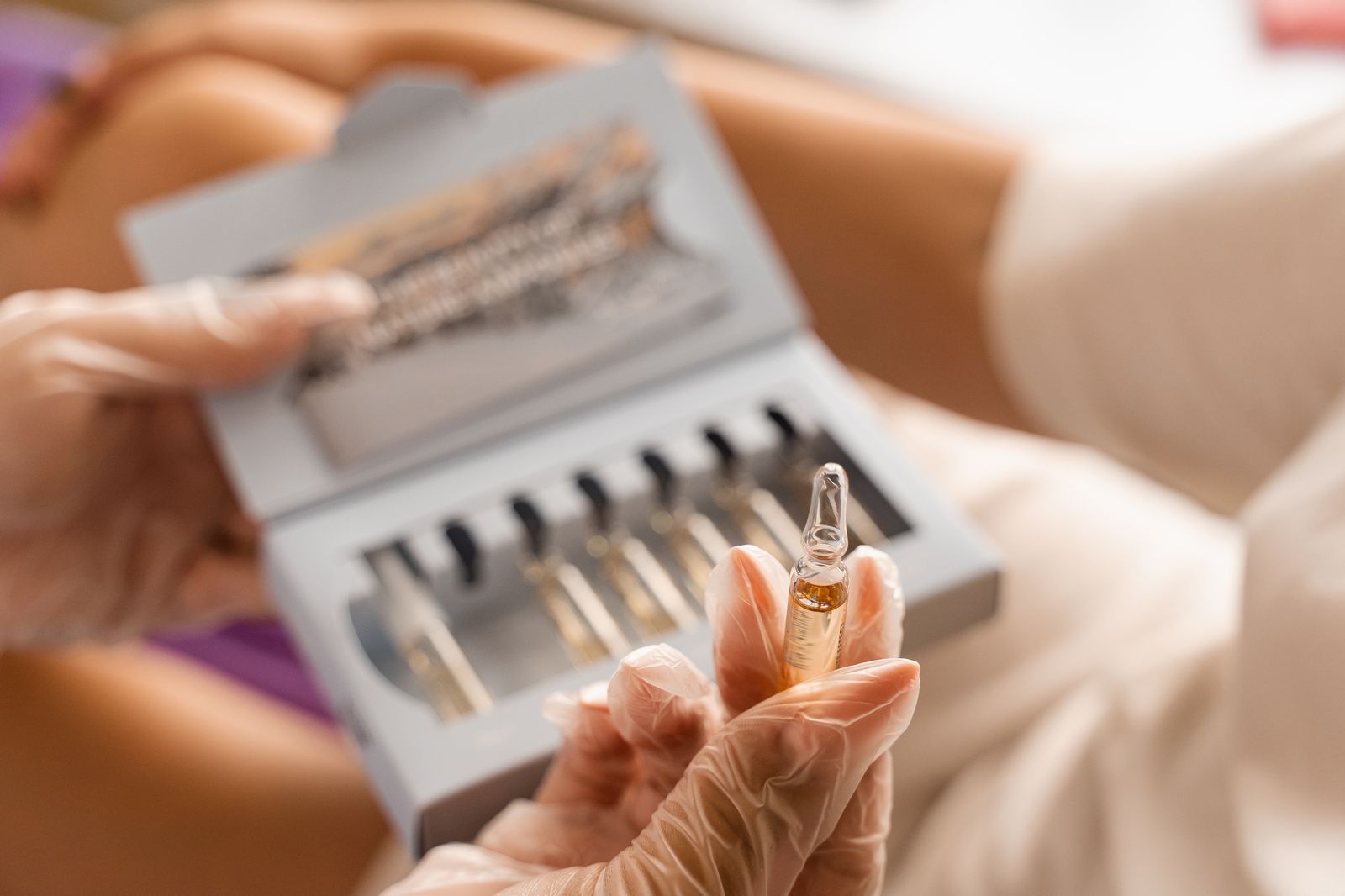
Most patients walk into a consultation with a mental picture of b12 injections borrowed from TikTok, an Instagram reel, or a friend’s before-and-after grid. Before we cover anything else in this guide, let us be specific about what vitamin B12 injection therapy mechanically does inside the skin, the muscle, or the bloodstream, and where the realistic ceiling sits. This is the difference between a result you are thrilled with for 12 months and a result you feel you were sold rather than informed about.
At Bar Beauty Toronto the clinical protocol we follow for b12 injections is straightforward and we will say it in one line: methylcobalamin IM 1,000 mcg weekly x 4 then monthly. That sentence covers the device or product, the dose range, the cadence, and the realistic series length. Everything else, the marketing copy, the influencer testimonials, the one-and-done promises, is noise wrapped around that protocol. When you read the rest of this guide, anchor back to that line.
What b12 injections does not do: it does not replace surgical correction in patients who genuinely need a surgical solution, it does not stop the underlying aging cascade (collagen loss, bone resorption, fat pad descent, hormonal shifts in perimenopause), and it does not work identically on every Fitzpatrick skin type. Anyone who tells you otherwise is selling, not assessing. For the device-level detail, pricing, and current promotional pricing, read the full treatment page on our site.
Who This Treatment Is For, And Who It Is Not For
The honest list of ideal candidates for b12 injections includes: vitamin B12 deficiency, low energy, brain fog, MTHFR variants, vegans/vegetarians, post-bariatric, perimenopause fatigue. Outside of those profiles, results drop noticeably, the risk profile climbs, or both. We routinely turn patients away in consultation when the clinical math does not work, and we will explain to you in writing exactly why. This is not a sales meeting. It is a medical assessment.
How we screen during consultation
Every consult begins with a full medical history covering current medications (particularly blood thinners, immunosuppressants, isotretinoin within the last six months), allergies, autoimmune diagnoses, pregnancy or breastfeeding status, prior cosmetic treatments with photos when available, recent dental procedures or planned surgeries, and a detailed goals conversation in your own words. We document baseline standardised photography under controlled lighting so we can measure change objectively rather than relying on memory.
Red Flags: When to Walk Out of a Consultation
These are not opinions. These are the things that should make you cancel the appointment, forfeit the deposit if you have to, and leave. Aesthetic medicine in Ontario is loosely regulated compared to surgery, which means consumer vigilance is part of the job.
Red flag #1: No real medical intake
If the consult is the injector glancing at your face for ninety seconds and quoting a price, leave. A real consult covers medications (especially blood thinners, isotretinoin history within six months, recent or planned dental work, autoimmune flares), pregnancy and breastfeeding status, allergies, prior cosmetic history with photos if you have them, and your goals articulated in your own words rather than ticked off a checklist.
Red flag #2: Pressure to book today
Today-only pricing on injectables or device treatments is a sales tactic, not clinical urgency. Real medical pricing does not expire at midnight. If you feel rushed, you are being rushed for a reason that benefits the clinic, not you.
Red flag #3: No written aftercare and no emergency line
You should leave the clinic with a phone number that reaches an actual clinician, not a receptionist or an answering service, if something looks wrong at nine p.m. on a Sunday. Vascular occlusion from filler, for example, has roughly a ninety-minute window where intervention is most effective. Ask before you book: who do I call after hours, and what is the typical response time?
Red flag #4: Device or product they will not name
If they cannot or will not tell you the device model, the product brand, the lot number, and where it was sourced from before you sit down in the treatment chair, that is a Health Canada problem waiting to happen and you should not be the case study.
Red flag #5: The everything-bagel upsell
A good injector solves one concern at a time, validates the result at follow-up, and only then discusses adjuncts. A bad one tries to sell you the entire menu on day one because the financial incentive runs the other way.
Red flag #6: Before-and-after photos that all look the same
If every before photo is a glum, downcast, harsh-lit shot and every after is a smiling, well-lit, professionally-edited image, you are looking at photography tricks, not clinical results. Ask to see standardised photo pairs taken under identical conditions.
Frequently Asked Questions
How soon will I see results?
Initial change is usually visible within the timeline described on our treatment page, with peak results typically eight to twelve weeks later depending on the protocol and your individual response. Photo-document at baseline, week four, week eight, and week twelve so you can compare objectively rather than relying on memory or the mirror.
How long do results last?
Duration depends on your metabolism, hormonal status, sun exposure, sleep quality, lifestyle factors, and whether you commit to a maintenance plan. A patient in perimenopause will not get the same duration as a twenty-eight-year-old on the same protocol, and that is normal physiology, not a failure of treatment. We discuss your realistic duration in the consult, including the range we have observed across our patient panel.
Does it hurt?
Discomfort varies significantly by treatment and personal pain threshold. We use topical anaesthetic, ice, vibration distraction, or nerve blocks where appropriate. Most patients rate discomfort two to four on a ten-point scale. We will never minimise a patient’s experience of pain, if something hurts more than expected we stop and reassess.
Is there downtime?
Downtime ranges from zero (walk in, walk out, go straight back to work or a meeting) to a few days of visible redness, swelling, or pinpoint bruising depending on the protocol. Detailed downtime is documented on the treatment page and we will confirm in your consult so you can plan around social and work commitments.
What are the real risks?
Every medical treatment has risk. Common: bruising, swelling, tenderness at the treatment site. Uncommon: asymmetry that may require a touch-up, prolonged redness, post-inflammatory hyperpigmentation in darker skin types if device settings are wrong. Rare but serious: vascular events with fillers, infection, allergic reaction. We disclose all of these in writing on a consent form before treatment, and we go through them verbally too.
Can I combine this with other treatments?
Often yes, but sequencing matters and timing matters. Some treatments need two to six weeks between them, some can be stacked the same day. We build a twelve-month plan in your first consult, not just a single appointment, so the sequencing is intentional.
Is this safe in pregnancy or breastfeeding?
Most cosmetic medical treatments are deferred during pregnancy and breastfeeding out of an abundance of caution given the limited safety data in these populations. Specifics depend on the treatment, but we will not treat in these windows without obstetric clearance, and for most aesthetic treatments we recommend waiting.
What if I do not like the result?
For reversible treatments (HA fillers can be dissolved with hyaluronidase, for example) we have an explicit reversal protocol documented in your file. For non-reversible treatments, we under-treat first by design and add more at follow-up. The goal is never to need a reversal.
How is Bar Beauty different from a med-spa chain?
Physician-led oversight, registered nurse injectors with named credentials, written protocols reviewed twice yearly, transparent device and product sourcing with lot numbers documented in your chart, and we publish our standards publicly. You can read our team page and book a consult before committing to anything.
Do you treat all skin types safely?
Yes. Our device parameters are adjusted for Fitzpatrick types I through VI and we have specific protocols for melanin-rich skin to avoid post-inflammatory hyperpigmentation. Ask to see our before-and-after gallery in your specific skin tone before you book, if we cannot show you, that itself is information.
Where are you located and which areas do you serve?
Bar Beauty serves the Greater Toronto Area including Toronto, Mississauga, Vaughan, Markham, Richmond Hill, Oakville, Burlington, and Etobicoke. Parking is two free spots at the clinic, first come first served, plus public parking beside the Sobeys at Fort York Blvd and Telegram Mews, TTC-accessible, evening and Saturday appointments available for patients commuting from outside the core.
How do I book a consult?
Book a consultation through our treatment page or call the clinic directly. Your first consult is dedicated clinical time with a registered nurse or physician, not a sales rep.
Will you refuse to treat me if I am not a good candidate?
Yes, and we have done so many times. If your concern is better addressed by a different modality, a different clinic, or a surgical referral, we will tell you and where appropriate we will refer you out with our notes attached.
Booking Your Consult at Bar Beauty Toronto
The consultation is the most important appointment in this entire process. It is where we decide together whether b12 injections is the right tool for the concern you brought in, whether you are a good candidate medically, what the realistic twelve-month plan looks like, and what it will actually cost you all-in. We do not book treatments without a consult first, and we will tell you honestly if you should see a different provider or pursue a different modality. Start with the treatment page or call us directly to set up a time that works for your schedule.
Ready to look into it properly?
Our consultation is free. We will look at your skin, give you an honest recommendation, and say so if a different treatment would suit you better.
Or call 416 923 1200 · 46 Fort York Blvd, CityPlace, Toronto
Questions about this treatment?
Ask us anything before you book. Consultations are free, and we will tell you honestly if a treatment is not right for you.