


Melomental fold treatment in Toronto targets the downturned lines that run from the corners of the mouth toward the chin, what most patients call marionette lines. At Bar Beauty in downtown Toronto, our nurse injectors correct this zone with hyaluronic acid filler, micro-Botox to the depressor anguli oris (DAO), or a combination of both, depending on whether the issue is volume loss, muscle pull, or both. Pricing for 2026 is $750 per syringe.
This page is the long-form clinical reference for melomental fold correction at Bar Beauty. If you want to book a no-pressure consultation, you can reach us at 416-923-1200 or message us through the contact page.
Melomental folds, usually called marionette lines, run from the corners of the mouth down toward the jaw and they read as a downturned or unhappy expression even when your face is at rest. That emotional misreading is why people notice them more than the depth alone would suggest, and it is often the reason someone books.
- What causes them: loss of support in the lower cheek and along the jaw, combined with the pull of the depressor anguli oris muscle at the mouth corner.
- Filler for the fold itself: melomental fold reshape is $750, placed to restore the lost support rather than injected directly into the crease.
- The muscle component: a few units of neuromodulator into the depressor anguli oris relaxes the downward pull at the mouth corner. $10 per unit, usually a small dose.
- Why chin work often helps: a recessed chin worsens the fold by removing support from below. Chin reshape is $950 and can improve the marionette line without touching it.
- Order matters. Support the structure first, assess, then decide whether the crease itself still needs anything. Filling the line directly as a first move is what creates heaviness around the mouth.
- Realistic outcome: significant softening rather than erasure, particularly if the line has been etched for years.
Bar Beauty Medical, 46 Fort York Blvd, CityPlace, Toronto. Prices in Canadian dollars from our live booking system, verified 18 August 2026.
What melomental fold treatment actually does
The melomental fold is the crease that forms where the lower lip meets the chin and travels outward and downward toward the jawline. When it deepens, the corners of the mouth start to look like they are pulled into a permanent frown, even when the face is at rest. Patients often describe it as “I look angry or sad in photos when I’m not.” That is the giveaway.
Treatment does three things, and a good injector will tell you which one (or which combination) applies to your face before touching a needle:
- Replaces lost volume in the pre-jowl sulcus and along the chin border so the skin no longer drapes downward into a fold.
- Relaxes the DAO muscle (depressor anguli oris) with 2 to 4 units of Botox per side so the muscle stops actively pulling the mouth corners down.
- Re-contours the chin and jawline when the underlying bone structure has receded, so the surrounding tissue has something to drape over.
The misconception we correct on consultation day, every single week, is the assumption that filler alone fixes marionette lines. In many patients over 40, the muscle pull is the real driver, and adding more filler without addressing the DAO just makes the lower face look heavy. We will tell you that on the spot rather than upselling syringes you do not need.
2026 melomental fold pricing in Toronto
The pricing below reflects what we charge in August 2026 at our CityPlace clinic, 46 Fort York Blvd. Everything is in Canadian dollars, taxes included, with no hidden consultation fee.
| Treatment | Units / Volume | Typical Duration |
|---|---|---|
| Marionette filler (half syringe) | 0.5 mL HA | 9 to 12 months |
| Marionette filler (full syringe) | 1.0 mL HA | 12 to 15 months |
| DAO Botox (both sides) | 4 to 8 units | 3 to 4 months |
| Combo: filler + DAO Botox | 1.0 mL + 6 units | filler 12 mo, Botox 3 mo |
| Full lower face contour (marionette + chin + pre-jowl) | 2.0 to 2.5 mL HA | 15 to 18 months |
How our pricing compares to other Toronto clinics in 2026
The downtown Toronto market for HA marionette correction sits between $550 and $850 per syringe at most reputable medspas in 2026. We sit slightly below the median for the half-syringe option because we believe most patients in their 30s should be starting with smaller volumes and building over two or three sessions rather than getting 2 mL on day one. The full-face contour pricing is in line with what comparable downtown clinics charge.
Botox vs filler for marionette lines, how we decide
This is the most common question on our consultation forms. The answer depends on what is actually causing the line.
When we choose Botox to the DAO
If the corners of the mouth pull downward visibly when you talk, eat, or transition out of a smile, and the line softens when you push the corners up with your fingers, the issue is muscle activity. DAO Botox at 2 to 4 units per side gives a subtle lift and the line often disappears without any filler.
When we choose HA filler
If the line is present even when you fully relax your face, or when you push the mouth corners upward, the issue is volume loss. Filler placed deep along the pre-jowl sulcus and superficially within the fold itself replaces that lost structure.
When we choose both
Patients over 40 usually need both. The DAO is contributing, but volume has also been lost. We treat the DAO first, wait two to three weeks, then assess what filler is actually needed.
Red flags, when to walk out of a clinic
If any of the following happens during a marionette consultation, leave and do not book.
- The injector recommends 2 mL or more of filler at your first session without offering to start smaller. Overfilling marionettes creates the “puppet jowl” look that takes 6 to 9 months to resolve.
- No discussion of the DAO muscle at all. Any provider treating this zone in 2026 should at least raise the option of Botox.
- The clinic uses unbranded “HA” without naming the product (Stylage, Teosyal, Teosyal Redensity 2). Health Canada-licensed product names should be visible on the syringe and noted in your chart.
- No formal consent form covering vascular occlusion risk. The marionette zone has facial artery branches; serious clinics document this.
- Pricing per area instead of per syringe or per unit. “Lower face package $1,200” with no breakdown is a billing tactic, not a treatment plan.
- You are pushed to add lip, cheek, or jaw treatments on the same day. Cross-selling in the chair is a red flag.
Recovery, realistic week-by-week timeline
Day 0 (treatment day)
Mild swelling, possible pinpoint redness at entry sites. You can return to work the same day if you do not mind a slight puffiness. No exercise, alcohol, or hot yoga for 24 hours.
Days 1 to 3
Most swelling resolves. Bruising, if any, peaks at day 2 and is easily covered with concealer. Arnica gel can speed resolution.
Week 1
Filler is integrating. The result looks slightly fuller than the final outcome. Do not judge the result yet.
Week 2 to 3
This is when we book your assessment. The filler has settled, Botox (if used) is at peak effect, and we can decide on a touch-up.
Months 3 to 12
Botox to the DAO is rebooked at month 3 to 4. Filler is reassessed at month 9 to 12 and topped up rather than fully redone.
HSA, insurance, and financing
Melomental fold treatment with filler or Botox is cosmetic and is not covered by OHIP. However, several payment paths apply.
Health spending accounts (HSA)
If your employer offers a Group HSA through Sun Life, Manulife, or Canada Life and the funds are flexible (not restricted to medical-only), cosmetic injectables are generally reimbursable. We provide an itemized receipt with HCPCS-style coding on request.
Tax considerations
If the treatment is documented as medical (for example, masseter Botox for bruxism or chin filler for retrognathia), it may be eligible for the medical expense tax credit. Pure cosmetic melomental work is not. Talk to your accountant; we provide whatever documentation you need.
Affirm financing
For larger treatment plans, Affirm financing is available so you can split the cost into monthly payments. You can review your options at consultation; checking your rate does not affect your treatment plan.
Combining melomental treatment with other procedures
With jawline filler
The most common combo. A defined jawline gives the marionette correction structure to drape over and improves overall lower-face proportion. Same-day treatment is fine; expect 2 to 3 mL total and a price of $1,400 to $1,800.
With lip filler
Treating mouth corners and lips on the same day balances the perioral zone. We typically do marionette first, lip second, and limit total HA to 2 mL per visit.
With full-face Botox
DAO Botox is often added to a forehead and crow’s feet session. The 4 to 8 units involved is incremental cost only, $95 to $190.
With skin boosters
Skin Boosters (Redensity-1) or Sunekos placed in the lower face complements filler by improving skin quality. Best done two to four weeks after the filler session, not the same day.
What melomental fold correction will not do
Honest limitations matter more than promises. Filler and Botox cannot:
- Lift severe jowls. Once skin laxity reaches a certain grade, the answer is a thread lift or surgical consult, not more filler.
- Erase deep static skin creases by themselves. Resurfacing (laser, microneedling RF) addresses the surface; filler addresses the volume underneath. Both are usually needed.
- Permanently change the muscle action. Botox is repeated every 3 to 4 months.
- Fix asymmetry caused by underlying dental or skeletal differences. Those need a different conversation.
Why Bar Beauty for marionette and melomental treatment
We are a nurse-led, physician-supervised injectable clinic in downtown Toronto serving patients from across the GTA, Mississauga, Etobicoke, North York, Scarborough, Vaughan, Markham, Richmond Hill, and Oakville. We hold a 5.0 Google rating across 222+ reviews. We do not commission-sell. We do not push add-ons in the chair. We will tell you to wait if waiting is the right answer.
Frequently asked questions
How much does melomental fold filler cost in Toronto in 2026?
A full syringe is $750. Combined with DAO Botox at $10 per unit, expect about $890 for a complete first-session correction.
How long does marionette line filler last?
Nine to 15 months depending on the product. Defyne and Stylage L sit in the 12-to-15-month range in this zone. Patients who maintain with a small top-up at month 9 extend the result indefinitely.
Does Botox actually work on marionette lines?
Yes, when the cause is DAO muscle pull rather than volume loss. We assess this on the consultation.
Is melomental filler painful?
Mild. The HA fillers we use contain lidocaine, and we apply topical numbing for 15 minutes before we start. Most patients rate the pain at 2 or 3 out of 10.
Can I exercise after marionette filler?
Wait 24 hours. After that, normal activity is fine. Hot yoga and saunas, give it 48 hours to minimize swelling.
Will marionette filler make my face look fatter?
Not when dosed correctly. Overfilling will. We start conservative and add at the three-week review if needed, far better than the reverse.
How soon will I see results?
Filler shows immediately, settles by week 2 to 3. DAO Botox starts at day 4 and peaks at day 14.
Can I get this treatment if I am breastfeeding?
We follow CPSO guidance and recommend waiting until you have finished breastfeeding for any elective cosmetic injectable.
Book your melomental fold consultation
Call 416-923-1200, text the same number, or use our online booking. Consultations are complimentary, take 30 minutes, and are not pressured. We will give you an honest assessment of whether you need treatment at all.
Deeper protocol breakdown for melomental fold (marionette line) at Bar Beauty Medical
Beyond the high-level overview most clinics publish, patients researching melomental fold (marionette line) in Toronto deserve to know what actually happens during a midface and jawline filler appointment, how decisions are made in real time, and what separates a competent technician from a clinician building a long-term aesthetic plan. At Bar Beauty Medical, every melomental fold (marionette line) appointment follows a six-stage protocol. Stage one is the seated visual assessment in neutral lighting with hair pulled back. Stage two is the dynamic assessment, where Jasmine asks the patient to smile, frown, pucker, and speak naturally to identify how the muscles of facial expression interact with whatever concern brought them in. Stage three is the photographic baseline using standardized angles (frontal, three-quarter left and right, profile, and submental) under fixed lighting. Stage four is treatment planning, where the proposed approach is sketched on a printed face diagram and reviewed with the patient before any product is opened. Stage five is consent, including a written explanation of risks specific to the planned anatomy. Stage six is the treatment itself, performed slowly and incrementally, with a hand mirror offered at natural pause points so the patient can confirm direction before more product is delivered.
This protocol exists because rushed appointments produce rushed outcomes. When a clinic books melomental fold (marionette line) every 15 minutes, the planning conversation gets compressed and the patient is more likely to leave with a generic result. Our melomental fold (marionette line) bookings are 60 to 90 minutes for new patients and 45 to 60 minutes for return visits, which is longer than the industry average but produces fewer revisions and more natural outcomes over time.
Year-one, year-two, and year-three cost framework
A realistic budget for melomental fold (marionette line) extends beyond the first appointment. Year one typically involves an initial treatment plus one or two refinement or maintenance visits, depending on the product half-life and the patient’s goals. Expect a year-one investment in the range of CAD 650-1200 multiplied by 1.5 to 2.0. Year two usually settles into a maintenance rhythm where the patient has identified what works and is no longer building. Year-two costs typically drop 20 to 40 percent versus year one. Year three often introduces complementary treatments (skin quality work, biostimulator layering, or device-based collagen support) that reduce the dependency on the original midface and jawline filler alone. A patient who plans across a three-year horizon usually spends less per year by year three than they spent in year one, and the result looks more cohesive because each decision was made in the context of an overall plan rather than as a one-off purchase.
Common reversal and correction scenarios
Patients ask about reversibility for good reason. For hyaluronic acid filler, hyaluronidase dissolves product within 24 to 72 hours of injection, although some patients require a second dissolving session for stubborn deposits. For neuromodulators, there is no reversal agent; the only option is to wait for the protein to metabolize, which takes 8 to 12 weeks. For biostimulators (Sculptra, Radiesse) the product is not directly reversible, which is why these treatments demand experienced injectors and conservative starting volumes. For energy-based treatments, the question is less about reversal and more about whether a course can be paused and restarted, which is generally yes. Our clinic carries hyaluronidase on site, follows a same-day complication pathway, and has direct vascular-occlusion protocols posted in every treatment room. We have performed dissolving on patients who were originally treated elsewhere; we do not charge punitively for these corrections, because patient safety matters more than relationship politics.
Before-and-after photography expectations
Standardized photography is part of melomental fold (marionette line) planning at our clinic. We use a fixed camera distance, fixed focal length, fixed lighting, and identical patient positioning at every visit. This matters because non-standardized photos exaggerate or minimize change depending on angle and lighting, which makes it impossible to evaluate whether a treatment achieved its goal. Patients receive their before-and-after set after each appointment and can request a multi-year review at any time. We do not publish patient photos without explicit written, time-limited consent, and we do not pressure patients to grant photo permission as a condition of treatment.
Candidacy determinants we evaluate at consultation
Not every patient who requests melomental fold (marionette line) is an ideal candidate at the moment they ask. We evaluate eight candidacy determinants: realistic expectations, baseline anatomy, skin quality, medical history (autoimmune, anticoagulant, isotretinoin, immunosuppression, pregnancy or breastfeeding), psychological readiness, financial fit across a multi-visit plan, lifestyle factors (travel, sun exposure, planned events), and prior treatment history. A patient who scores poorly on three or more of these is asked to address the relevant factor before proceeding, even if it means losing the booking revenue. This is not gatekeeping for its own sake; it is how we maintain a low complication rate and high patient satisfaction across years rather than across single visits.
Advanced technique discussion
For patients who have done their own research, here is what differentiates a thoughtfully performed melomental fold (marionette line) session from a basic one. We use cannulas in anatomical zones where they reduce vascular risk and bruising (midface, jawline, tear-trough adjacent zones) and needles where precision and product placement demand it. Aspiration is performed where vascular density requires it. Product selection is matched to tissue plane: thinner, more cohesive gels for superficial work; more robust, higher-G’ products for structural support. Layering across multiple sessions is preferred over single-session high-volume work because tissue accommodates change more gracefully over time. These specifics are why two clinics can quote a similar dollar figure for melomental fold (marionette line) and produce visibly different outcomes.
Recommended aftercare and skincare
The medical grade products our team uses to protect and extend your results. Shipped express across Canada, free over 150 dollars.
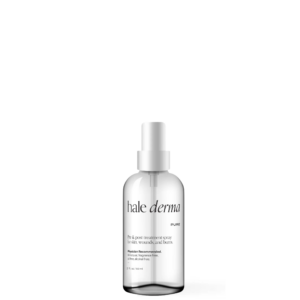
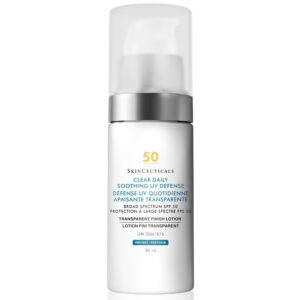
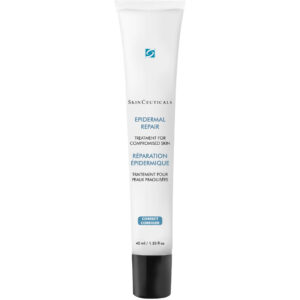
Ready to look into it properly?
Our consultation is free. We will look at your skin, give you an honest recommendation, and say so if a different treatment would suit you better.
Or call 416 923 1200 · 46 Fort York Blvd, CityPlace, Toronto
Questions about this treatment?
Ask us anything before you book. Consultations are free, and we will tell you honestly if a treatment is not right for you.