


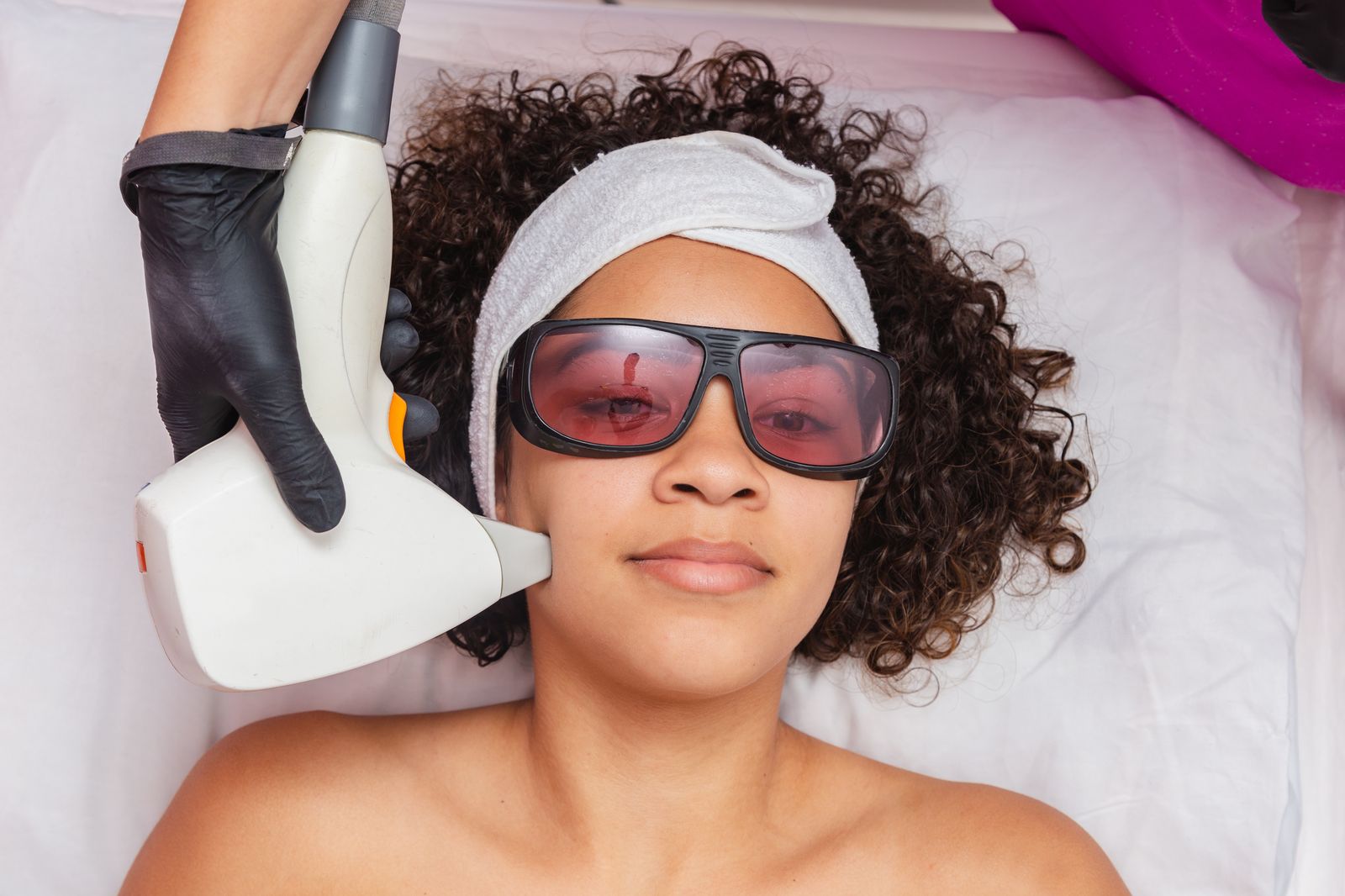
If you want to be hair-free for next summer, the math says start in October. Laser hair removal requires 6-8 sessions spaced 4-6 weeks apart, and you need to be out of strong sun during the entire course.
The Toronto schedule
| Goal | Start month | Sessions | Done by |
|---|---|---|---|
| Beach-ready summer | October | 6-8 | April-May |
| Wedding next June | September | 6-8 | April |
| Maintenance only | Anytime | 1-2/year | N/A |
Almost every disappointing laser hair removal course in this city comes from a scheduling error rather than a device problem. The course is 6 to 8 sessions at 4 to 6 week intervals, so six to nine months end to end, and there are four specific mistakes that will stretch it, stall it, or waste a session outright.
| The mistake | What it does to the course | What to do instead |
|---|---|---|
| Starting in April to be ready for July | You get through 3 or 4 of the 6 to 8 sessions before the sun arrives, leaving you half-treated at exactly the point you wanted to be finished | Count backwards from the date. Starting in October has you finished by April or May |
| Getting a tan partway through | The laser cannot tell hair pigment from tanned skin pigment, so a single tanning session can mean rescheduling the appointment | Two weeks of strict sun avoidance before every session, and no recent tanning at all |
| Waxing or plucking between sessions | The follicle has to physically be there for the laser to reach it. Pulling the hair out removes the target | Shave only, for the whole course, every time |
| Skipping a month | The 4 to 6 week interval exists because only follicles in the active growth phase can be destroyed. Miss the window and you miss that cycle | Book the run in advance rather than one appointment at a time |
| Judging it after one session | Roughly 30 per cent reduction shows in the next regrowth cycle after the first session, and 50 to 60 per cent by the third | Take the photographs and make the call at session three |
The 1064 nm Aerolase is more forgiving on tanned and darker skin than an older diode, so lightly tanned skin can be worked with when it has to be. The winter run is still what we recommend, because the schedule exists to get the best result at the lowest risk. After the initial series most people hold it with 1 to 2 touch-ups a year.
Why winter timing matters
Laser hair removal targets melanin in the hair follicle. The laser can’t tell the difference between hair pigment and tanned skin pigment, on tanned skin it risks pigment changes. We require at least 2 weeks of strict sun avoidance before each session, and zero recent tanning. In Toronto, that’s hard from May through August.
The Aerolase exception
The Aerolase Neo Elite we use at Bar Beauty has a 1064nm wavelength that’s safer on tanned and darker skin than older diode lasers. We can run sessions on lightly tanned skin if needed, but we still recommend the winter schedule for the best results with the lowest risk.
What a typical Toronto package looks like
- Session 1 (Oct): Setup, photos, first treatment. About 30% reduction in next regrowth cycle.
- Session 2 (Nov): Continued reduction.
- Session 3 (Dec): Most patients see 50-60% total reduction now.
- Sessions 4-6 (Jan-Mar): Each session knocks out more dormant follicles as they enter active phase.
- Maintenance: 1-2 touch-ups per year after the initial series.
Pricing for Toronto packages
Single sessions at Bar Beauty start at $50 for small areas (upper lip) and $350 for full legs. Course pricing works out cheaper per session than booking one at a time. Ask us when you get in touch and we will put the numbers side by side for you. See our laser hair removal page for full pricing.
Common scheduling mistakes
- Starting in April hoping to be done by July. You’ll only get through 3-4 sessions and won’t see full results.
- Tanning during the course. Even one tan session can mean rescheduling your appointment.
- Self-waxing or plucking between sessions. The follicle has to be present for the laser to work. Shave only.
- Skipping months. The 4-6 week interval matters because of hair growth cycles.
FAQ
Can I start in summer?
You can but it adds complexity. We’d recommend body areas covered by clothing (back, underarms) over face or arms during summer months.
What about facial laser hair removal?
Same winter timing recommendation. The face gets more sun than people realize, even just from walking around.
How many sessions until I see results?
Most patients see 30-50% reduction after session 2. Full clearance typically takes 6-8 sessions.
Book a complimentary laser consultation to plan your schedule at Bar Beauty Medical Toronto.
What It Actually Does (Mechanism Without the Marketing)
Laser hair removal works through selective photothermolysis: the laser wavelength is absorbed preferentially by melanin in the hair shaft and follicle, generating heat that disables the follicular stem cells. The treatment is most effective during the anagen (active growth) phase, and because not all follicles cycle synchronously, 6 to 10 sessions spaced 4 to 8 weeks apart are typically needed to capture most follicles in anagen across the series. Sun-tanned skin contains more epidermal melanin, which competes with hair-follicle melanin for the laser energy and increases the risk of burns and post-inflammatory hyperpigmentation. That is the medical reason winter is best, not a sales pitch, an absorption-physics issue.
Understanding the mechanism matters because it tells you what the treatment can and cannot do, which side effects are biologically plausible and which are marketing fiction, and why some patients respond and others do not. We always walk patients through the mechanism in plain language before discussing dose or price.
Who Is and Is Not a Candidate
Good candidates
Patients ready to commit to a 6 to 10 session series at 4 to 8 week intervals with strict between-session sun protection and shaving (not waxing or plucking) between visits.
Borderline candidates we will treat with caution
Patients with very light or very fine hair (less melanin = less laser response; results may be limited), patients with hormonal hirsutism (require parallel medical evaluation), patients with PCOS or other endocrine drivers (require ongoing maintenance).
Patients we will decline or refer elsewhere
Pregnancy, active photosensitizing medication use, recent isotretinoin (within 6 months for most areas), patients unable to commit to between-session sun avoidance.
If we decline to treat you, we will explain why in plain language and recommend a more appropriate provider, treatment or pathway. A clinic that treats everyone is not screening properly.
How This Compares to Alternative Treatments
Different laser hair removal platforms suit different skin and hair types. Here is the honest comparison.
No single line in this table is “the right answer” for everyone. A consultation lets us match your concern, Fitzpatrick type, budget, downtime tolerance and lifestyle to the right combination.
Combination Plans: How This Treatment Stacks With Others
Most patients see better results from a thoughtful combination than from a single treatment escalated to its maximum dose. The most common combinations involving this treatment at Bar Beauty are:
- Laser hair removal + medical management (spiro, OCP, metformin): For PCOS-driven hirsutism, medical management complements laser and reduces re-growth.
- Laser hair removal + booty facial: For ingrown hairs and PIH on the glutes, the two treatments stack well.
- Laser hair removal + topical eflornithine (Vaniqa): A prescription topical that slows hair growth between sessions in facial hirsutism.
Sequencing matters. The wrong order can compound bruising, swelling and downtime; the right order respects healing biology and lets each treatment do what it is best at. We map this on your initial chart so each visit fits into a larger 6 to 12 month plan rather than being a one-off purchase.
Aftercare: Hour-by-Hour and Day-by-Day
Your result is shaped as much by what happens in the 72 hours after treatment as by the treatment itself. Use this timeline as your at-home protocol.
| Time after treatment | What to do |
|---|---|
| Hour 0 to 4 | Mild warmth and redness; cool compress if needed. |
| Hour 4 to 24 | Mineral SPF if outdoors; no hot showers, sauna, or vigorous exercise. |
| Day 1 to 3 | Avoid friction; no waxing, plucking or epilating, shave only. |
| Day 3 to 14 | Hair shedding starts; gentle exfoliation can resume. |
| Week 2 to 4 | Hair-free window; new growth begins as next anagen cycle reaches the surface. |
| Week 4 to 8 | Next session in the series. |
If anything in this timeline does not match what you experience, call us. Aftercare deviations are usually minor and easily corrected if we hear about them within 24 to 48 hours.
Red Flags: When to Walk Out of the Consult
The fastest way to avoid a bad outcome in Toronto medical aesthetics market is knowing when not to book. If any of the following happens during your consultation, leave and find another clinic. These are not minor warning signs; each one materially raises the probability of an unsatisfactory outcome or a real complication. Trust your gut, ask follow-up questions, and remember that a reputable clinic welcomes a second opinion or a slower decision.
- Clinic uses one laser for all skin types: Different Fitzpatrick types need different wavelengths. A one-laser clinic is limiting patient safety.
- Does not perform a test patch on Fitzpatrick IV+: Mandatory.
- Recommends sun exposure between sessions: Between-session sun increases burn and PIH risk on the next treatment. A clinic that does not insist on SPF is unsafe.
- Promises 90 percent permanent reduction in 4 sessions: Industry-accepted reduction is around 70 to 90 percent over 6 to 10 sessions. Marketing 4 sessions to permanence is overselling.
A clinic that earns your trust will write down what they recommended, what they did not recommend and why, and the dose, depth, settings or product brand used. If you cannot get any of that in writing, you cannot meaningfully compare quotes or escalate care if a complication arises.
Paying for Treatment: HSA, OHIP and the CRA
Health Spending Accounts (HSA)
If your employer offers an HSA through Sun Life, Manulife, Canada Life, Green Shield or a third-party administrator, medically indicated treatments may be reimbursable. Cosmetic-only treatments are generally not eligible, but treatments tied to a documented medical concern (such as hyperhidrosis, scarring, or chronic dermatologic conditions) often are. We provide itemized receipts coded for HSA submission and we will, on request, draft a brief letter of medical necessity that your administrator can use to evaluate the claim.
OHIP coverage
Cosmetic treatments are not covered by OHIP. Certain medically necessary procedures, for example, surgical scar revision, severe hyperhidrosis treatment after failed first-line therapy, or reconstruction after trauma, may be partially covered when performed by an OHIP-billing physician under specific criteria. Bar Beauty is a private medical aesthetics clinic and does not bill OHIP. If you think your concern may be medically reimbursable, we will help you map a path through your family physician or a dermatology referral.
CRA Medical Expense Tax Credit (METC)
The CRA permits the Medical Expense Tax Credit for procedures that are not purely cosmetic. The 2010 federal budget specifically excluded purely cosmetic procedures from METC eligibility, but treatments performed for a medical purpose (with supporting documentation from a physician or nurse practitioner) may still qualify. Keep itemized receipts and a brief letter of medical necessity if applicable; consult your accountant or a tax professional for your specific situation.
Affirm financing
For larger treatment plans, Affirm financing is available so you can split the cost into monthly payments. You can review your options at consultation; checking your rate does not affect your treatment plan.
Service Area Across the Greater Toronto Area
Bar Beauty flagship medical aesthetics clinic is in Toronto, and we treat patients commuting in from across the GTA. The majority of our active patient base lives in or works from these eight communities:
- Toronto (downtown core, Yorkville, King West, Liberty Village), same-day and after-work appointment availability for downtown professionals.
- North York, patients from Bayview Village, Willowdale and Yonge and Sheppard, with easy subway and TTC access.
- Etobicoke, Humber Bay, Mimico, The Kingsway, served by Gardiner and Lakeshore commuters.
- Scarborough, Agincourt and Bridlewood patients regularly schedule combination appointments to reduce trips.
- Mississauga, Port Credit, Square One, Streetsville; many patients combine consultations with downtown work meetings.
- Vaughan, Woodbridge, Maple, Thornhill, with easy access via Highway 7 and 407.
- Markham, Unionville and Cornell families and professionals.
- Richmond Hill, Oakville and Burlington, west and north suburban patients planning combination treatment days to minimize travel.
Patients travelling more than 30 minutes for an appointment can request a combination booking that consolidates consultation, treatment and a follow-up assessment into a single visit, with photography and chart updates so the next visit can be scheduled efficiently.
Frequently Asked Questions
When is the best time of year to start?
October through February is ideal for most patients, but with strict sun avoidance, any time of year is possible.
How many sessions do I need?
6 to 10 spaced 4 to 8 weeks apart for most areas.
Is it safe for Fitzpatrick V and VI?
Yes, with Nd:YAG 1064 nm. We will not treat darker skin types with Alexandrite or short-pulse diodes.
Does it hurt?
Modern devices with contact cooling are tolerable; most patients rate it 3 to 6 out of 10. Numbing cream is available for sensitive areas.
Can I shave between sessions?
Yes, shave only. No waxing, plucking or epilating during the series.
Can I get laser hair removal while pregnant?
We defer until after pregnancy.
Can I tan after a session?
No tanning at all during the treatment series.
How long do results last?
Most patients have 70 to 90 percent permanent reduction; small number of hairs return per year as new follicles activate, requiring annual maintenance.
Will my hair grow back thicker?
No, that is a myth. Treated hair grows back thinner and lighter, if at all.
Is laser safe on the face?
Yes, with appropriate device selection and careful settings around the eye and hairline.
Booking Your Consultation
A consultation at Bar Beauty is 30 to 45 minutes, includes standardized photography, a written treatment plan and a same-visit honest discussion of which options are appropriate for you, which are not, and why. There is no obligation to book treatment at the consultation; many patients take the written plan home and decide later.
If you have already had treatment elsewhere and are looking for a second opinion or a complication review, please bring any prior chart notes, before-and-after photos and product brand and lot information you have. We do not charge differently for second opinions, and we never pressure patients into reversing or repeating prior care unless it is medically indicated.
Call, message or book online. We confirm every appointment with a pre-visit text outlining what to bring, what to avoid (alcohol, blood thinners where applicable, retinoids in the days before resurfacing) and what the visit will involve. If you have any pre-existing health condition, please disclose it during booking so we can confirm safety before you travel to the clinic.
Ready to look into it properly?
Our consultation is free. We will look at your skin, give you an honest recommendation, and say so if a different treatment would suit you better.
Or call 416 923 1200 · 46 Fort York Blvd, CityPlace, Toronto
Questions about this treatment?
Ask us anything before you book. Consultations are free, and we will tell you honestly if a treatment is not right for you.