Forehead Lines in Toronto: Why They’re There and How We Treat Them Properly
By Basil Russo, Founder, Bar Beauty Medical, 46 Fort York Blvd, CityPlace Toronto Clinically reviewed by Jasmine Saggu, RN, Aesthetic Nurse Injector at Bar Beauty Medical Phone 416-923-1200 · Book at barbeautymedical.janeapp.com
The horizontal lines you notice when you raise your eyebrows, and increasingly when you don’t, are dynamic-then-static forehead lines. They’re produced by one muscle, the frontalis. It fires hundreds of times a day to lift your brows. Decades of that fold the skin the same way folding paper produces a permanent crease.
I’m Basil. I run Bar Beauty Medical on Fort York Blvd in CityPlace. Forehead Botox is one of the most-requested treatments in our clinic and one of the easiest to do badly. The Spock brow. The flat frozen forehead. The heavy-brow patient whose eyes feel tired. That’s the most common bad-Botox result in Toronto and it is almost always avoidable with the right dose and the right anatomy. Here’s the honest version.
The most common bad forehead result is not too little Botox, it is Botox in the wrong balance. The frontalis is the only muscle that lifts your brow and three others pull it down, so relaxing the lifter on its own leaves the depressors unopposed and the brow sits lower than it did. Each failure below comes from that same place, and each one is decided at the dosing stage rather than discovered afterwards.
| The result | What produced it | What is done here to avoid it |
|---|---|---|
| Heavy brow, eyes that feel tired | The frontalis was relaxed while the corrugator, procerus and orbicularis that pull the brow down were left alone, so nothing opposes them | The glabella is treated at the same appointment as the forehead. This is why we push back when someone asks for the forehead on its own |
| Spock brow | The central forehead was treated and the lateral fibres were not, so the outer brow keeps lifting while the middle cannot | A fan pattern across 4 to 6 points with the dose stepped down as it moves laterally |
| A flat, frozen forehead | Dosing for stillness rather than for a softer line | Conservative dosing that leaves some natural brow movement, adjusted from your chart at each visit |
| A brow that feels heavier than before treatment | The frontalis had been working overtime to hold up a droopy upper lid, and relaxing it removed the compensation | Brow position at rest and upper-lid ptosis are both assessed before any dose is drawn. Real ptosis gets a surgical referral, not more toxin |
Botox is $10 per unit here for everyone. The doses this page quotes, 4 to 10 units to the frontalis alongside 8 to 20 to the glabella, are the usual range rather than your map, which is drawn at consult from photographs at rest and in animation. Onset is day 3 to 7, peak at day 14, and the result runs 12 to 16 weeks.
What Are Forehead Lines?
Two muscle groups oppose each other on your upper face:
- Frontalis, your only brow elevator. Runs vertically from brow into scalp aponeurosis.
- Depressors, corrugator (pulls brows down and in), procerus (pulls medial brow down), orbicularis oculi (pulls lateral brow down).
Every time you raise your brows or react to something visually, frontalis fires against the resistance of skin and depressors. That pulling creates the horizontal lines.
Three stages:
- Dynamic lines, visible only when the muscle fires. Twenties to thirties.
- Mixed lines, visible at rest, deepen with movement. Thirties to fifties.
- Static lines, etched into the dermis at rest. Forties and up.
Each stage needs a different intensity of treatment.
Why Do Forehead Lines Get Worse?
- Frontalis hyperactivity. Some patients chronically raise their brows, often unconsciously to compensate for droopy upper lids or brow ptosis. They develop lines earlier and deeper.
- Compensatory brow lift. Treating their forehead Botox without addressing the underlying lid issue produces “heavy brow” complaints.
- Sun damage. UV degrades collagen in forehead dermis specifically.
- Smoking.
- Genetics. Some patients have a thicker, more contractile frontalis.
- Sleep position. Side or face-down sleepers etch one side more.
- Reading and focus posture. Chronic frown into a phone or laptop.
What’s The Best Treatment For Forehead Lines?
Botox / Dysport / Nuceiva, The Primary Move
Neuromodulator relaxation of the frontalis is the gold standard for dynamic lines. The key is dose precision and pattern.
At Bar Beauty:
- We almost always treat the depressors (“11s” glabella) at the same appointment to keep elevator/depressor balance. Treat the frontalis alone and you’ll get heavy brow because the depressors are no longer opposed.
- We dose conservatively to preserve some natural brow lift. Most patients don’t want a fully frozen forehead.
- We treat with a fan pattern (4-6 points across the forehead) and step the dose down laterally to avoid lateral brow drop.
Typical doses: 4-10 units of Botox to the frontalis, paired with 8-20 units to the glabella (“11s”) and often 4-12 units bilaterally to crow’s feet.
- Upper-face Botox is dosed per unit at $10/unit. Your total depends on the number of units across frontalis, glabella and crow’s feet, mapped at your consult. Full pricing is on our see our price list.
- Sessions: every 3-4 months. The frontalis modestly atrophies with consistent treatment, so doses often drop over time.
- Downtime: none. Don’t lie flat for 4 hours.
- Timeline: onset day 3-7, peak day 14, lasts 12-16 weeks.
See Forehead Botox / Contouring.
Dermal Filler For Etched Static Lines
For static lines that remain visible after Botox has fully kicked in, a small amount of soft, thin HA placed superficially into the line can soften the etched groove. Niche use. Technique-sensitive.
- Dermal Fillers, only a small portion of a syringe is used for this, see our price list.
Microneedling With Exosomes Or PRP
For etched lines with crepiness, microneedling with exosomes or PRP stimulates collagen and improves the dermal scaffold across a course.
- SkinPen Microneedling, see our price list
- Microneedling with ASCE+ Exosomes, see our price list
- Vampire Facial: price on consult
Aerolase NeoSkin For Photo-Damaged Forehead
For sun-damaged forehead with pigment, redness, and fine etching, Aerolase NeoSkin is safe on all phototypes. 4-6 sessions.
- Aerolase NeoSkin Custom Facial, see our price list
Morpheus 8 For Deep Static Lines
For older patients with deep static lines and forehead skin laxity, Morpheus 8 RF microneedling tightens and remodels.
- Morpheus 8 Face, around 3 sessions typical, see our price list
Chemical Peel For Surface Texture
A Noon 20 or Noon 30 peel improves surface texture and brightens sun damage.
- Chemical Peel Noon 20, see our price list
- Chemical Peel Noon 30, see our price list
Brow Lift Surgery, When We Refer Out
For significant brow ptosis, no amount of Botox or filler matches a surgical brow lift. We refer to facial plastic surgeons.
What Combination Protocol Do You Recommend?
For a 35-50 year old with moderate forehead lines:
- Upper-face Botox, frontalis + glabella + crow’s feet every 3-4 months
- At-home, tretinoin nightly, mineral SPF 50 (Dr. Henneberry-Fudge prescribes)
- Skin quality, an Aerolase NeoSkin or microneedling course
- Optional, small amount of filler in any persistent etched line at 4 weeks post-Botox
Year-one investment depends on how many of these you combine. We map the full plan and costs against our see our price list at your consult.
How Long Until I See Results?
- Day 3-7: Botox onset
- Day 14: peak result
- Week 12-16: wearing off, time to re-treat
What you can expect: 90%+ reduction in dynamic line visibility by day 14. 40-60% softening of static lines with consistent Botox over 6-12 months as the muscle atrophies and the dermis recovers. Smoother upper face. Subtle brow lift in the right candidates.
What you can’t expect: complete elimination of deeply etched static lines from Botox alone. Permanent results. A brow lift if you’ve got real ptosis (that needs surgery). An expressionless face, we don’t do that look.
When Is Forehead Botox A Bad Idea?
- Pregnancy or breastfeeding
- Neuromuscular disease (myasthenia gravis, Lambert-Eaton)
- Allergy to neuromodulator or human albumin
- Active skin infection in the field
- Significant brow ptosis, discuss surgical referral first
- Chronic frontalis use to compensate for upper-lid ptosis, discuss carefully
- BDD concern (Dr. Henneberry-Fudge screens)
- Unrealistic expectations of permanent or “frozen” result
Full pricing at barbeauty.ca/price-list.
What Happens At Your Consult?
Intake and medication review. Photos at rest and in animation (raise brows, frown, smile). Brow position assessment, we measure where your brow sits at rest and how much frontalis lift you depend on. Upper-lid ptosis assessment. Dose discussion: lighter (some movement preserved) vs heavier (more frozen). BDD screen. Treatment same-day if you confirm.
Who Treats You?
Registered Nurse Jasmine Saggu handles all neuromodulator treatment. Julia Barabas, our Medical Aesthetician and Glow Specialist, leads Aerolase, microneedling, and peels. Medical oversight from Dr. John David Henneberry-Fudge MD FRCPC.
A Note From Dr. Henneberry-Fudge
Forehead Botox is the procedure I most often discuss in terms of dose and intention. Patients sometimes ask for the fully frozen look they’ve seen on social media. That look ages badly and produces compensatory muscle recruitment patterns that lead to chronic heaviness. The Bar Beauty model, preserved movement, full depressor treatment, conservative dose adjusted by chart at each visit, is the version of upper-face Botox I want my patients to receive.
, Dr. John David Henneberry-Fudge MD FRCPC, CPSO #95972
Who Are Your Typical Patients?
- 29-year-old, King West, dynamic-only lines, preventative interest. Plan: low-dose “baby Botox” upper face every 3-4 months.
- 42-year-old, Liberty Village, mixed dynamic and early static lines. Plan: full upper-face Botox + an Aerolase NeoSkin course.
- 58-year-old, deep static lines and mild brow ptosis. Plan: conservative Botox + Morpheus 8 + honest conversation about surgical brow lift referral.
What Should I Ask at My Consult?
The free consult is twenty minutes. Most patients waste fifteen of those minutes on questions Google could have answered, and then run out of time before getting to the ones that actually predict their outcome. Here’s the list we wish every patient brought in.
About the person treating you
- “How many of this exact treatment have you personally done in the last twelve months?” Volume tracks skill more reliably than years in practice.
- “Who supervises your work, and can I verify their CPSO number?” Dr. Henneberry-Fudge is CPSO #95972, verifiable on the public register in 30 seconds.
- “Are you the person who will treat me on the day, or will I be handed off?” At Bar Beauty, the injector you consult with is the injector who treats you.
About the product or device
- “What exact product are you using on me, and why that one over the alternatives?” If the answer is “this is what we stock,” that’s a margin answer, not a clinical one.
- “Can I see the box and the lot number before you draw it up?” Any clinic should say yes without hesitation. We do this by default on every appointment.
- “What’s the manufacturer training certification for this device or product?” Real certifications are checkable.
About what happens if things go wrong
- “What’s your protocol for a vascular event with filler?” The answer should include hyaluronidase on the counter, not in a drawer down the hall.
- “Who do I call at 11pm if something feels off?” We have a 24/7 patient line, many clinics do not.
- “What’s your touch-up policy?” Ours is free at the 2-week mark for toxin, included in your initial fee, as long as no promotion or discount was applied to your original treatment.
About the result you want
- “Is the result I’m describing anatomically realistic for my face?” Patients who don’t ask this end up disappointed.
- “What’s the maintenance schedule and total annual cost if I commit?” The single-session price is the start of the conversation, not the end.
- “What would you say no to today?” An injector who can’t name something they’d refuse is an injector you should leave.
Bring this list. Read it off your phone if you have to. The patients with the best long-term outcomes are the patients who acted like consumers, not patients.
How Do I Spot a Bad Provider for This in Toronto?
Toronto’s aesthetic market is unregulated at the storefront level. Anyone with a business licence and a Square reader can call themselves a medical spa. Here’s the field guide we’d hand a friend.
Red flags before you book
- No medical director name on the website, or “Dr. on call” with no published name and no CPSO number to verify.
- Pricing not published. If you have to ask for a quote, the price is whatever they think you’ll pay when you walk in.
- A single phone number with no online booking. Operationally smaller than they want you to think.
- Stock photo team page. Real teams photograph their real people.
- A Google profile under 30 reviews after more than two years in business. Either nobody knows about them, or they’re suppressing the bad ones.
Red flags during the consult
- They quote you for treatments you didn’t ask about, in the first ten minutes.
- They don’t take a real medical history or screen for BDD.
- The injector can’t name what brand of product they’re about to use, or what the alternatives are.
- They suggest paying in cash for a discount. Indicates off-the-books bookkeeping and almost certainly no real chart on you.
- They press you to commit today with a “package discount” that disappears if you walk out. Real clinics’ prices are stable.
Red flags during treatment
- Product drawn from a vial you never saw or that has no label on it. Counterfeit filler is a real problem in Ontario.
- No emergency kit visible, no hyaluronidase, no epinephrine, no AED.
- They inject without marking your face first.
- They rush. A real injection appointment is 15-30 minutes including conversation, not five.
Red flags after treatment
- No written aftercare. No follow-up text. No 2-week check.
- When you call with a concern, you get a voicemail box that doesn’t get returned for days.
- You ask for your chart and they can’t produce it, or it’s a handwritten sheet in a binder.
The market has matured but the regulatory ceiling hasn’t moved. The patient who screens hard at the booking stage avoids almost every bad outcome we’ve seen.
Common Questions
Can forehead lines be reversed? Dynamic lines, the ones that show when you raise your brows, soften dramatically with Botox and often look erased within two weeks. Static lines etched at rest do not fully reverse, but a combination of consistent Botox, a retinoid, and collagen work like microneedling or Morpheus 8 softens them by 40-60% over 6-12 months.
Can I treat forehead lines without Botox? Yes, though expectations differ. For dynamic lines, Botox is the only thing that relaxes the muscle doing the folding. Without it, you are working on skin quality only: a nightly retinoid, daily mineral SPF, microneedling with exosomes, Aerolase NeoSkin, and Morpheus 8 for deeper laxity. These improve texture and static etching but will not stop the frontalis from creasing the skin.
Can retinol reverse forehead lines? A retinoid thickens the dermis and improves fine surface lines over months of nightly use, and it is worth doing regardless of what else you treat. On its own it will not flatten a deep dynamic crease, but it makes every other treatment hold better.
How do I get rid of deep forehead lines? Deep static lines need a layered plan: Botox to stop the movement that re-etches them, a small amount of soft filler in the groove if it persists after Botox settles, and collagen remodelling with Morpheus 8 or a microneedling course. We sequence these rather than doing everything at once.
What age do forehead lines start? Dynamic lines often appear in the late twenties to early thirties, earlier in people who chronically raise their brows. They become visible at rest somewhere in the thirties to forties. Starting low-dose preventative Botox before lines etch in is one reason some patients keep a smoother forehead for longer.
Will my forehead look “frozen”? Not with our dosing. We preserve some natural brow movement on purpose.
How long does Botox last? 12-16 weeks. Some patients see partial return at 10 weeks. Others get a full 16.
Will I get a heavy brow? Not if we dose correctly and treat the depressors at the same appointment.
What is Spock brow? Exaggerated lateral brow elevation when the central frontalis is treated but the lateral fibres aren’t. We avoid with appropriate pattern.
Can I get my forehead done without the 11s? We strongly recommend treating both. Frontalis-only often produces heaviness.
Does it hurt? 1-2/10. Tiny needles. Most patients don’t need numbing.
Can men get Botox? Yes. Men typically need higher doses due to muscle mass and need more conservative shaping to avoid feminising the brow.
Is Dysport different from Botox? Slightly. Faster onset (day 2-4 vs 3-7) and slightly more spread. We offer both, plus Nuceiva. We do not carry Xeomin.
Can I drink alcohol after? Wait 24 hours to reduce bruising risk.
Will it help my static lines? Partially over time as the muscle atrophies. Combination with skin treatments works better.
How do I book? Online at barbeautymedical.janeapp.com, by phone at 416-923-1200.
Is this treatment safe for darker skin tones? For most of what we offer, yes, Aerolase Neo Elite at 1064 nm is safe across all Fitzpatrick types and is our default for vascular and pigment work in darker skin. Morpheus 8 carries a small PIH risk in Fitzpatrick V-VI that we mitigate with conservative energy settings.
Can I treat this while breastfeeding? Generally no for injectables. Most patients return to treatment three to six months after weaning. Lasers and most facials are fine while nursing.
How does this compare to Yorkville pricing at twice the price? Product is usually the same. Training is comparable. The differential is rent, location, and brand premium, not clinical skill.
Can I do this if I’m on Ozempic or another GLP-1? Yes, but planning matters. Significant weight loss redistributes facial fat. We stage filler decisions for patients in active weight loss.
Do you take insurance or HSA? Aesthetic treatments are not insured under OHIP. Some HSAs cover specific services. We provide itemised receipts on request.
Will my friends or co-workers notice? Not if we do it right. The compliment most patients hear is “you look rested,” not “you look different.”
Book Your Consult Online → Call 416-923-1200 Meet Our Medical Director →
Bar Beauty Medical · 46 Fort York Blvd, Toronto, ON M5V 3Z3 · 416-923-1200
How we treat it at Bar Beauty: Botox and medical Botox.
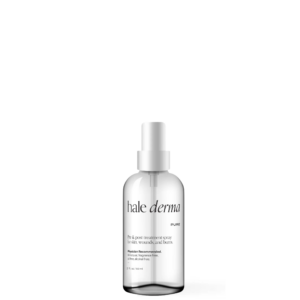
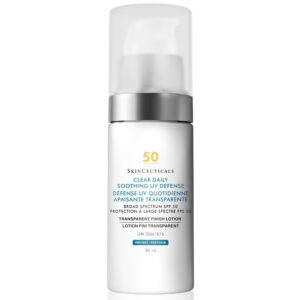
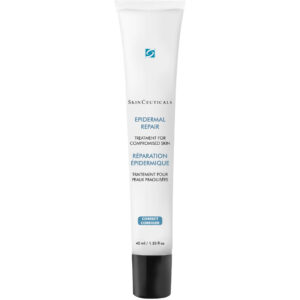
Recommended aftercare and skincare
The medical grade products our team uses to protect and extend your results. Shipped express across Canada, free over 150 dollars.
Ready to look into it properly?
Our consultation is free. We will look at your skin, give you an honest recommendation, and say so if a different treatment would suit you better.
Or call 416 923 1200 · 46 Fort York Blvd, CityPlace, Toronto
Questions about this treatment?
Ask us anything before you book. Consultations are free, and we will tell you honestly if a treatment is not right for you.