


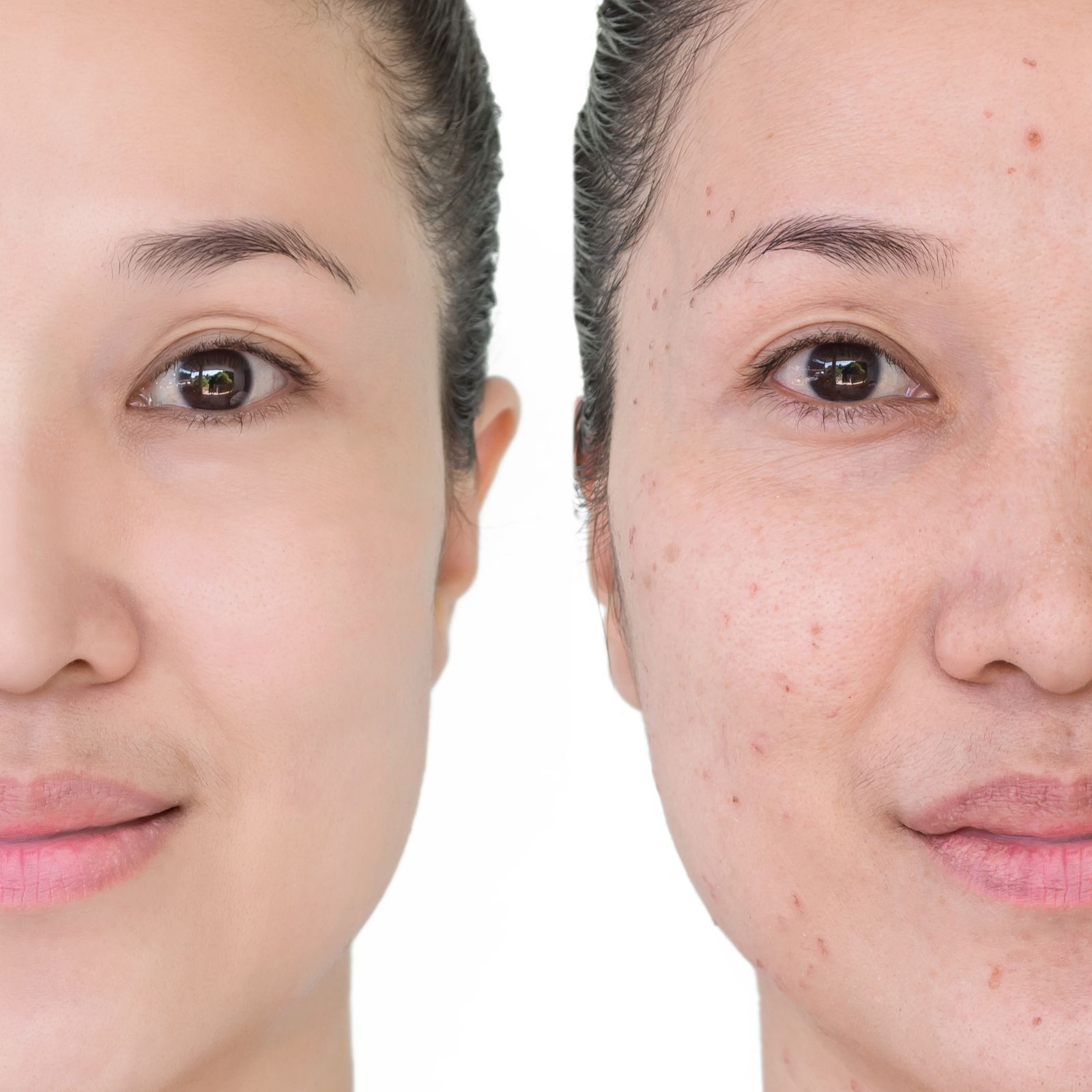
Once your active acne is under control, you have finished the hard part. Next comes treating the marks and scars acne leaves behind. This is the order of operations we use at Bar Beauty Medical in Toronto, step by step.
A post-acne plan runs 9 to 12 months, and the commonest reason it runs longer is not the treatment choice. It is something that happened between appointments. Each of the five below either creates fresh inflammation, damages the barrier that has to heal, or drives pigment into skin that is already marked.
| What happens | What it does to the skin | What it does to the plan |
|---|---|---|
| Picking a lesion | A fresh inflammatory injury on skin that was already partway through healing | Adds roughly another three to six months of healing to that one spot |
| Daily acid use at home | A damaged barrier, which produces more inflammation rather than less | Feeds the same post-inflammatory marks the plan is trying to clear |
| Skipping sunscreen | Both post-inflammatory erythema and hyperpigmentation darken under UV, and freshly resurfaced skin burns easily | A single sunburn during the treatment phase can undo months of work |
| Acne starting up again | Active lesions inside the field being resurfaced | Device work pauses until the skin has been quiet for two to three months. This is exactly why the plan is written to run 9 to 12 months |
| Judging it at four weeks | Nothing at all, except a decision | Ends the plan before its own timeline has started. Meaningful change on rolling scars sits at 6 to 9 months and on boxcar scars at 9 to 12 |
Most atrophic scarring improves somewhere in the 30 to 60 per cent range across a well-sequenced course, and complete clearance is uncommon. If something does not match the aftercare timeline, call rather than wait for the next appointment, because most deviations are minor and easily corrected if we hear within a day or two. There is no consultation fee, and the full plan is quoted in writing before you commit to any of it.
First, know what you are actually treating
Three things that look similar after acne need different treatments, and treating them in the wrong order is the most common reason results disappoint:
- Post-inflammatory erythema (PIE) is the flat pink or red marks left after a pimple. It is vascular, so it responds best to laser work like Aerolase NeoSkin rather than to exfoliation.
- Post-inflammatory hyperpigmentation (PIH) is the flat brown or tan marks, especially common in deeper skin tones (Fitzpatrick III to VI). It responds to brightening topicals and gentle, pigment-safe laser and peel work.
- Atrophic scarring is the textural change: rolling, boxcar, and ice-pick scars. This is collagen-level damage that needs microneedling, RF microneedling, or targeted resurfacing.
A real roadmap sequences these in an order that respects healing, pigment risk, and budget. Below is how that timeline usually unfolds.
Step 1: Calm the inflammation (months 1 to 2)
Even after acne stops, inflammation lingers under the skin. Treatment should focus on calming first, scarring later.
- Aerolase NeoSkin facials. The 1064nm Nd:YAG laser calms active inflammation and helps clear lingering acne-causing bacteria. A typical course is four sessions, about three weeks apart. Aerolase NeoSkin.
- Topical niacinamide to reduce redness, regulate oil, and support the barrier.
- Strict daily SPF. PIE and PIH both worsen with UV exposure.
Step 2: Address post-inflammatory hyperpigmentation (months 2 to 4)
The dark spots left after pimples are usually the first thing patients want gone, and they respond fastest, so this is satisfying work.
- Vitamin C serum daily to brighten and help prevent new PIH. SkinCeuticals C E Ferulic is a well-regarded option.
- Chemical peels. NOON 20 or NOON 30 peels roughly every four weeks, three to four sessions. NOON peels.
- Aerolase for stubborn PIH to keep breaking up pigment safely across skin tones.
Step 3: Treat textural scarring (months 4 to 9)
Acne scars come in three main types, and each responds to different tools:
- Rolling scars (soft, wavy depressions): the most common and most responsive. SkinPen microneedling with exosomes across a four to six session course.
- Boxcar scars (wider, flat-bottomed pits): SkinPen microneedling at depth, often layered with Morpheus 8 RF microneedling.
- Ice pick scars (narrow, deep): the toughest type. Best handled with Morpheus 8 at deeper settings and, for the individual deep pits, TCA CROSS, a precise spot-by-spot chemical reconstruction we refer out for rather than perform in-clinic.
For a full breakdown of how we sequence these, see our acne scar revision page.
Step 4: Resurface and refine (months 6 to 12)
With the deep work done, fine-tune the surface texture.
- Microneedling maintenance every 8 to 12 weeks.
- Custom facials with chemical exfoliation.
- Continued retinol use at home.
- Hydration-focused care. Acne-prone skin is often dehydrated even when it looks oily.
What not to do
- Do not pick. Each pick adds another three to six months of healing.
- Do not over-exfoliate. Daily acid use damages the barrier and triggers more inflammation.
- Do not skip SPF. Even one sunburn during the treatment phase can undo months of work.
- Do not expect miracles in four weeks. This is a 6 to 12 month commitment for lasting change.
Realistic timeline for what you will see
These are typical ranges. Your results depend on your skin type, scar severity, and how consistent you are with the plan and sun protection.
| Concern | Typical improvement timeline |
|---|---|
| Active acne | 2 to 3 months to stabilize |
| PIH (dark spots) | 3 to 6 months for noticeable fading |
| Rolling scars | 6 to 9 months for meaningful improvement |
| Boxcar scars | 9 to 12 months for gradual improvement |
| Ice pick scars | 12+ months for partial improvement |
Most atrophic scars improve somewhere in the range of 30 to 60 percent across a well-sequenced course. Complete clearance is uncommon, and any clinic promising 100 percent is overselling.
Which treatment is most effective for acne scars?
There is no single best treatment, because the right tool depends on your scar type. As a general guide: rolling scars respond best to microneedling with exosomes; boxcar scars usually need microneedling layered with Morpheus 8 RF; ice-pick scars respond best to Morpheus 8 plus TCA CROSS, with the TCA CROSS referred out to a specialist. PIE responds to Aerolase, and PIH to brightening topicals and pigment-safe laser. A consultation lets us match your specific mix of scars and skin tone to the right combination rather than escalating one device to its maximum.
Who is and is not a candidate
Good candidates
Patients whose acne is clinically stable, meaning no new lesions for two to three months, and who are ready to commit to a 9 to 12 month staged plan with consistent SPF and topical maintenance.
Borderline candidates we treat with caution
Patients with intermittent flares (we stabilize the acne first), patients recently on isotretinoin (timing of resurfacing is individualized), and patients with Fitzpatrick VI skin (slower, more conservative escalation to protect against pigment changes).
Patients we will decline or refer
Active inflammatory acne, recent sunburn, infection risk, and pregnancy (most resurfacing is deferred). If we decline to treat you, we explain why in plain language and point you toward a more appropriate pathway. A clinic that treats everyone is not screening properly.
Aftercare: the first week matters most
Your result is shaped as much by the 72 hours after a resurfacing session as by the session itself.
| Time after treatment | What to do |
|---|---|
| Hour 0 to 24 | Gentle occlusive moisturizer; mineral SPF essential outdoors. |
| Day 1 to 3 | No exercise; gentle cleansing only; sleep with your head slightly raised. |
| Day 3 to 7 | Mild peeling is normal; resume gentle moisturizer; no retinoids yet. |
| Week 2 | Skin settles; LED can be added to support healing if scheduled. |
| Week 4 to 8 | Next session in the series; improvement visible on photos. |
If anything does not match this timeline, call us. Most aftercare deviations are minor and easily corrected if we hear about them within a day or two.
Red flags: when to walk out of a consult
Knowing when not to book is the fastest way to avoid a bad outcome. If any of these happen during a consultation, leave and find another clinic:
- Aggressive laser resurfacing on deeper skin tones at the first visit, with no test patch. On Fitzpatrick IV and above, this is a leading cause of new hyperpigmentation.
- No distinction between PIE, PIH, and scarring. Three different concerns need three different treatments. One treatment proposed for all three is not a real plan.
- Starting scar revision while you still break out monthly. Acne should be quiet for two to three months first.
- No conversation about daily sunscreen. All resurfacing rebounds without it.
A clinic worth your trust will write down what they recommended, what they did not, and why, including the settings or product used so you can compare quotes and escalate care if needed.
What does acne scar treatment cost in Toronto?
A complete post-acne plan is a series of sessions over 9 to 12 months, so the total depends on your scar type, skin tone, and how many treatments you need. Rather than quote a number that may not fit your case, we publish current per-treatment pricing on our price list and give you a clear written quote for your full plan at the consultation. There is no consultation fee, and we quote everything upfront before you commit.
Health Spending Accounts (HSA)
If your employer offers an HSA, medically indicated treatments may be reimbursable while cosmetic-only treatments generally are not. We provide itemized receipts coded for submission and, on request, a brief letter your administrator can use to evaluate the claim.
OHIP
Cosmetic treatments are not covered by OHIP, and Bar Beauty Medical is a private clinic that does not bill OHIP. If you think your concern may be medically reimbursable, we will help you map a path through your family physician or a dermatology referral.
Affirm financing
For larger plans, Affirm lets you split the cost into monthly payments. You can review options at your consultation, and checking your rate does not affect your plan.
Frequently asked questions
How long does the full roadmap take?
Usually 9 to 12 months, plus occasional maintenance afterward.
Do I need to be off Accutane first?
Most providers wait several months after isotretinoin before resurfacing, though current evidence is softening this. We assess case by case.
Can I do this if I am Fitzpatrick V or VI?
Yes. We sequence differently and lean on Aerolase and topicals before any resurfacing to protect against pigment changes.
Will my scars disappear completely?
Most atrophic scars improve meaningfully with a well-sequenced plan, often in the 30 to 60 percent range. Complete clearance is uncommon.
What is the difference between PIE and PIH?
PIE is pink or red and vascular; PIH is brown and pigment-based. They need different lasers and topicals.
What if my acne comes back during the plan?
We pause device work and restabilize the acne first. This is exactly why the plan runs 9 to 12 months rather than a few weeks.
Will I need to be off makeup?
Only during the resurfacing windows, typically 48 to 72 hours per session.
Do you coordinate with my dermatologist?
Yes. For active acne management we encourage parallel care with a dermatologist or family physician.
Where are you located?
We have one clinic, at 46 Fort York Blvd in CityPlace, Toronto, and we treat patients from across the GTA. Book online or call 416-923-1200.
Booking your consultation
A consultation at Bar Beauty Medical includes standardized photography, a written treatment plan, and an honest discussion of which options are appropriate for you, which are not, and why. There is no obligation to book treatment, and many patients take the written plan home to decide later. If you are coming for a second opinion after treatment elsewhere, bring any prior chart notes, photos, and product details you have.
Ready when you are
Build your post-acne plan
Free consultation, transparent pricing on our price list, licensed medical staff. Book online or call 416-923-1200.
<!– BB LINK S
For the texture and marks left behind after acne clears, the Préime DermaFacial combines microdermabrasion with alpha-arbutin and niacinamide, and there is a dedicated back protocol for the same problem below the neckline.
Ready to look into it properly?
Our consultation is free. We will look at your skin, give you an honest recommendation, and say so if a different treatment would suit you better.
Or call 416 923 1200 · 46 Fort York Blvd, CityPlace, Toronto
Questions about this treatment?
Ask us anything before you book. Consultations are free, and we will tell you honestly if a treatment is not right for you.