


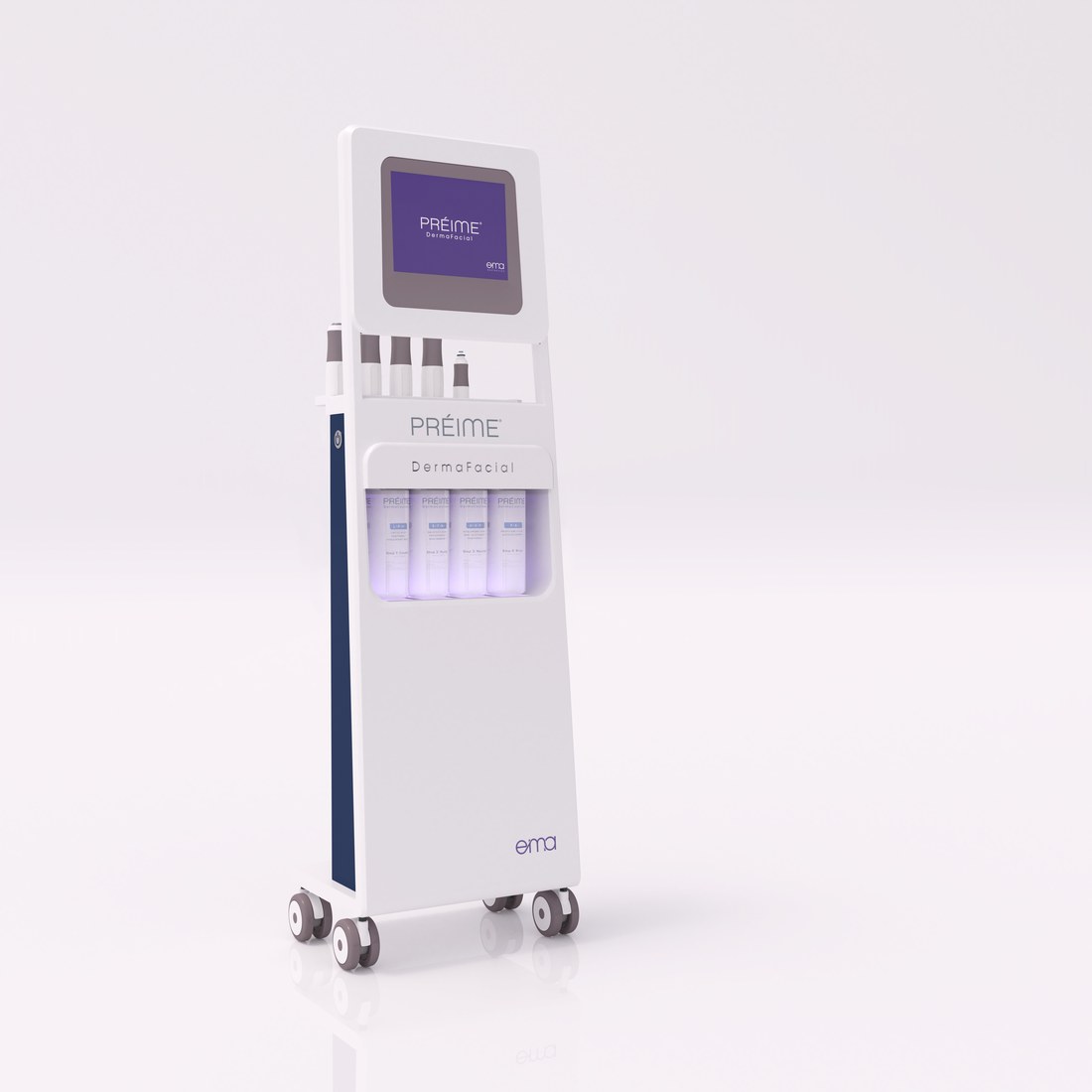
The Préime DermaFacial is a five-technology facial platform that combines vacuum hydro-cleansing, microdermabrasion, microcurrent, radiofrequency and ultrasound delivery in a single treatment. It is new to Canada, licensed by Health Canada in July 2025, and it is in use at Bar Beauty Medical in Toronto.
Not sure if this is the right treatment for your skin?
Our consultation is free. We will look at your skin, tell you honestly whether the Préime is what you need, and say so if something else would work better.
Or call 416 923 1200 · 46 Fort York Blvd, CityPlace, Toronto
Préime DermaFacial is a multi-step device facial that combines cleansing, exfoliation, extraction, infusion and light therapy in a single session, with the steps adjusted to your skin on the day. The appeal is that it does several jobs in one appointment with no downtime. The limitation is the same as every device facial: it works on the surface, so it improves how skin looks and feels rather than changing deeper structure.
- What it does well: immediate clarity, hydration and glow. Congested or dull skin responds visibly in one session.
- What it will not do: treat deep lines, laxity or established scarring. Those need microneedling, radiofrequency or laser at depth.
- Downtime: none. Slight flushing that settles within an hour, makeup the same day if you want it.
- Best used as maintenance, monthly or before an event, alongside whatever your main treatment plan is rather than instead of it.
- Pricing: quoted at consultation. Préime is a recent addition and we publish a price only once it is live in our booking system, rather than posting a number we cannot stand behind.
- If congestion is your main issue, Extract and Decongest at $160 or the Advanced Decongest Facial at $280 may be the better value route. We will say which.
Bar Beauty Medical, 46 Fort York Blvd, CityPlace, Toronto. Prices in Canadian dollars from our live booking system, verified 18 August 2026.
What is the Préime DermaFacial?
The Préime DermaFacial is a medical-device facial platform manufactured by Ema Aesthetics in Dublin, Ireland, and distributed by Sinclair. It holds Health Canada Class II medical device licence 113700.
Most facial devices do one job. The Préime runs five, and they can be layered in a single appointment rather than booked as separate treatments.
The five technologies
| Technology | What it does | What it targets |
|---|---|---|
| AquaB | Vacuum-assisted cleanse and hydration using a spiral action | Congestion, blackheads, dehydration, dullness |
| VibroX | Microdermabrasion with vibration and red LED | Rough texture, dead surface cells, uneven tone |
| MicroT | Microcurrent stimulation of facial tissue | Facial tone and definition |
| Collagen+ | Radiofrequency, heating tissue below the surface | Laxity, firmness, crepey texture |
| UltraB | Ultrasound used to drive actives past the skin barrier | Delivery of serums deeper than topical application reaches |
The solutions used
The platform runs its own consumable line, DermaCeuticals. The three base solutions are Cleanse (lactic acid, panthenol, hyaluronic acid), Purify (salicylic acid, niacinamide, tocopherol) and Nourish (hyaluronic acid, zinc gluconate, panthenol). Boosters include vitamin C, glutathione, PDRN and tranexamic acid, chosen to match the concern being treated.
How long does a Préime DermaFacial take?
Between 30 and 90 minutes, depending on how many of the five technologies are used. A straightforward cleanse-and-hydrate protocol sits at the shorter end. Adding radiofrequency and ultrasound extends it.
Is there downtime after a Préime DermaFacial?
It is a non-invasive treatment and downtime is generally minimal. How your skin responds depends on which technologies are used and at what settings, which is decided at consultation rather than in advance.
Is the Préime DermaFacial approved in Canada?
Yes. It holds Health Canada Class II medical device licence 113700, issued 23 July 2025 and currently active. The licence covers the model 4001 platform along with the AquaB, MicroT, UltraB and VibroX applicators.
Worth knowing, because it explains why the device is only reaching Canada now: Health Canada recalled it in June 2025. Not for a safety defect, and the recall notice states that explicitly. The units had been sold in Canada as electronic devices when they should have been classified and licensed as Class II medical devices. The correction was a licence, not a redesign, and it was granted the following month.
Is the Préime DermaFacial FDA cleared?
Partly, and the distinction matters. The MicroT microcurrent applicator holds FDA 510(k) clearance K243072, granted 1 April 2025. That clearance covers the microcurrent handpiece specifically. It does not cover all five technologies on the platform.
This is normal across the industry and it is not a red flag. Clearance is granted per applicator with a defined indication, not to a machine as a whole. We mention it because “FDA cleared” is used loosely everywhere and most patients hear something far broader than what the paperwork says.
Why we bought one
We have run hydradermabrasion in this clinic every day for years, so we know precisely where that technology stops. It cleans thoroughly, it hydrates, and skin looks excellent for about a week. That is a real result and for a lot of people before an event it is exactly right.
What suction and solution cannot do is heat the dermis or move active ingredients past the skin barrier, because both require a different form of energy. Radiofrequency and ultrasound do those two things. That is the entire reason we bought this platform rather than another hydro-facial device.
What the evidence actually shows
We looked at this properly before buying, and the honest position is more interesting than either “clinically proven” or “no evidence.”
There are no peer-reviewed published clinical trials on the Préime DermaFacial. A search of the medical literature returns nothing for the device. Any clinic telling you it is “clinically proven” is overstating.
But clinical data does exist. It simply has not been published. The manufacturer supplies it to providers, and here is what it consists of.
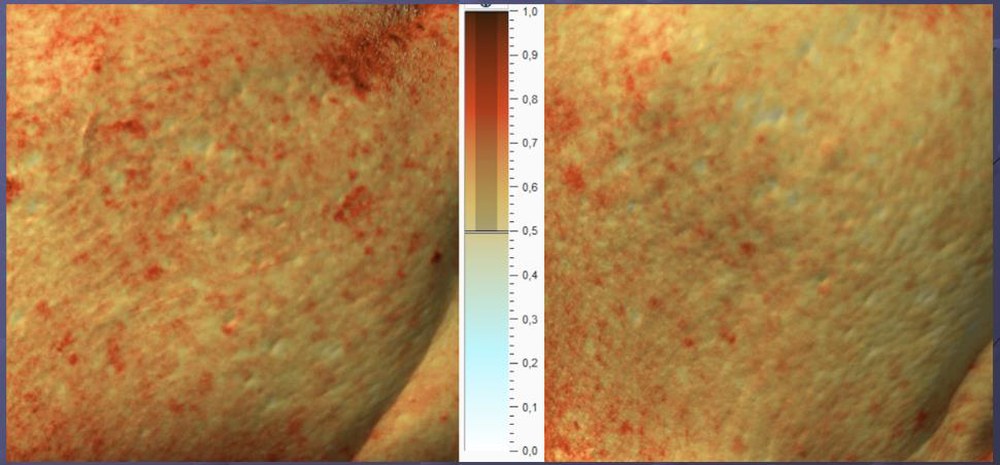
Two investigator-run studies by Dr Pablo Naranjo MD PhD at Elite Laser Clinic in Madrid. The first enrolled 42 patients aged 35 to 55, Fitzpatrick II to IV, three sessions a month apart, measured with Antera 3D imaging rather than opinion. It reported décolleté roughness down 16.5 per cent, stretch mark cleft volume down 18.7 per cent, hair density up 14 per cent, and no adverse events. The second was a split-face design in 60 patients comparing the Préime alongside another energy device against that device alone, reporting improvements in melanin, redness, skin thickness and roughness on the treated side.
Separately, each handpiece has been tested individually against validated instruments, Corneometer for hydration, Tewameter for barrier function, Cutometer for elasticity, with group sizes between 10 and 23.
Three further studies are scheduled for presentation at IMCAS World Congress in Paris in January 2026, including one by dermatologist Dr Christine Dierickx. Worth noting that the abstract for that one states enrollment is still ongoing, so results are not in yet.
What that adds up to. Real measurements from real patients using objective imaging, not marketing. Also uncontrolled, unblinded, manufacturer-associated, without published statistical analysis, and not peer-reviewed. That is meaningfully better than nothing and meaningfully short of proof, and we would rather set that out plainly than pick whichever half suits us.
If you want the full side-by-side against the device most people compare it to, we have written that separately: HydraFacial vs Préime DermaFacial, which is actually better?
The Préime DermaFacial protocol menu
This is not a one-size facial. The platform ships with 25 defined protocols, each specifying which handpieces run in which order, at what settings, for how long. Nine are face treatments, five are body, and eleven are combination protocols designed to run alongside another treatment such as injectables, microneedling, IPL or laser.
Face protocols
| Protocol | What it targets | Time |
|---|---|---|
| Sustainable Signature Facial | The full five-handpiece treatment. Cleanse, exfoliate, tone, firm, infuse | 60 min |
| Luxe Face, Neck & Décolleté | The most complete version, extending across neck and chest | 90 min |
| Timeless Radiance | Anti-ageing focus, full face | 45 min |
| Revitalize & Tone | Cleanse, exfoliate, tone and hydrate | 45 min |
| Define & Contour | Facial definition and firmness | 50 min |
| Radiance Reset | Deep cleanse with firming and hydration | 40 min |
| Plump & Glow | Wrinkles and fine lines | 40 min |
| Sculpt & Tone | Facial muscle tone | 40 min |
| Purify & Glow | Essential cleanse, exfoliate and hydrate | 30 min |
Targeted add-ons
Eye protocol (30 min) for the orbital area, worked around the bone rather than on the lid. Lip protocol (15 min) for expression lines and hydration. Both can run standalone or bolt onto a facial.
Body protocols
This is the part most people do not expect from a facial device.
| Protocol | What it targets | Time |
|---|---|---|
| Back | Back acne and the pigmentation left behind by it | 40 to 60 min |
| Buttocks | Ingrown hairs and post-inflammatory hyperpigmentation | 25 min |
| Underarm deep cleanse | Ingrown hairs, brightening | 20 min |
| Hands | Ageing on the back of the hands | 20 min |
| Scalp | Deep scalp cleanse, used alongside microneedling for thinning hair | 60 min |
Combination protocols
Eleven protocols exist specifically to pair the Préime with something else, either preparing the skin beforehand or supporting it afterwards: before injectables, with mesotherapy, with microneedling, alongside RF microneedling such as Morpheus8, with IPL or Q-switch for pigmentation, with IPL or KTP for broken capillaries, with laser hair removal for ingrown hairs, and with toxin for underarm sweating.
Most face protocols are repeated every four weeks. Combination protocols typically run at four to six weeks. Two of them, Plump & Glow and Sculpt & Tone, can safely be run weekly if you want to accelerate results.
How each technology works
Most pages about this device list five names and move on. Here is what each one actually is, what it physically does to skin, and what it is for.
AquaB: vacuum hydro-cleansing
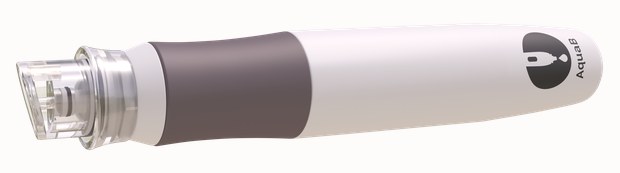
AquaB: vacuum hydro-cleansing. Footage supplied by the manufacturer.
A handpiece that draws gentle suction across the skin while feeding solution through a spiral tip. The vacuum lifts debris, sebum and dead cells out of the pore while the solution goes in. Three solution stages run in sequence: Cleanse with lactic acid to loosen the surface, Purify with salicylic acid and niacinamide to clear oil and comedones, and Nourish with hyaluronic acid and zinc gluconate to calm and rehydrate.
This is the part of the platform that most resembles a conventional hydro facial. Typical settings run vacuum at 25 to 35 per cent with flow at 25 to 30 per cent, over roughly nine minutes for a full face. Best for: congestion, blackheads, dullness, dehydration.
VibroX: microdermabrasion with vibration and red light
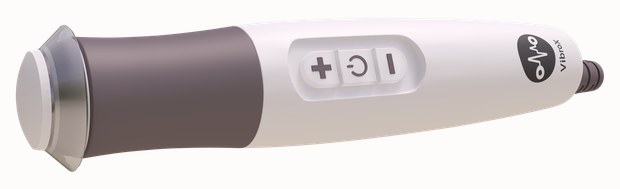
VibroX: microdermabrasion with vibration and red light. Footage supplied by the manufacturer.
Physical resurfacing. A pod or massage tip removes the dead surface layer while vibration reduces discomfort and red LED runs alongside. Two gels are used depending on the goal, Fresh Gel with aloe, hyaluronic acid and panthenol for calming, or Bright Gel with 2 per cent alpha-arbutin and 3 per cent niacinamide where the target is tone and pigmentation.
Best for: rough texture, uneven tone, dead surface build-up, and the pigmentation that lingers after acne.
MicroT: microcurrent
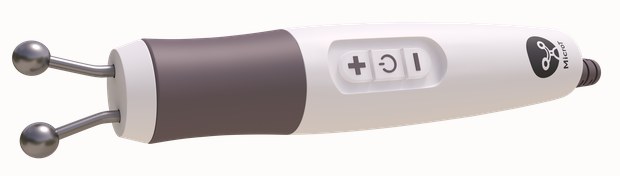
MicroT: microcurrent. Footage supplied by the manufacturer.
Low-level electrical current applied through ultrasound gel. This is the handpiece that holds the platform’s FDA 510(k) clearance, K243072, granted April 2025, indicated to stimulate facial tissues for aesthetic purposes.
Sessions run 10 to 20 minutes at intensities from 30 per cent for general work up to 60 per cent around the eyes. Best for: facial tone and definition. Not used over prominent platysma bands, or on anyone with a pacemaker, implanted electronic device, or metal implants near the treatment area.
The technique is standardised rather than freestyle. The manufacturer publishes a movement protocol of eight defined passes: gliding the twin spheres from chin to earlobe along the jawline, contouring the cheekbone from lip corner to ear, horizontal passes under the eye toward the temple, and brow lifts gliding up to the hairline, each repeated three to five times per side. Every pass runs over conductive gel, never on dry skin. The reason this matters to you: microcurrent results depend more on the operator following the mapping than on the machine, and this platform ships with the mapping.
Collagen+: radiofrequency
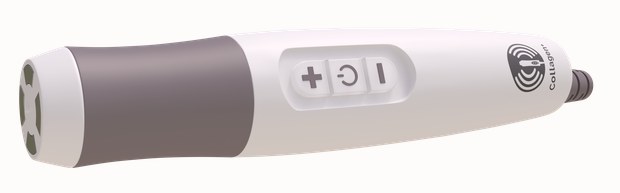
Collagen+: radiofrequency. Footage supplied by the manufacturer.
The one that does something no hydro facial can. Radiofrequency passes current through tissue and the tissue’s own resistance generates heat below the surface. Heat is what drives a firming response, and no amount of suction produces it.
Because RF is not absorbed by melanin the way light-based devices are, it is one of the more skin-tone-agnostic energy types available. Typically 15 to 20 minutes at 60 per cent and up, with conductive gel. Best for: laxity, firmness, crepey texture, fine lines. Not used where there is severe melasma or high risk of post-inflammatory hyperpigmentation.
UltraB: ultrasound delivery
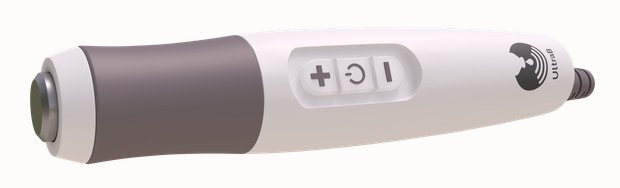
UltraB: ultrasound delivery. Footage supplied by the manufacturer.
The other one suction cannot replicate. Ultrasound waves temporarily increase the permeability of the skin barrier, so actives applied at the same time travel further than they would sitting on intact skin.
This matters more than it sounds. A serum applied topically to undamaged skin largely stays where you put it. That is the entire reason a good facial and a good treatment are different things. Runs 4 to 12 minutes at around 50 per cent. Best for: getting actives where they are useful rather than where they look nice.
The DermaCeuticals serums
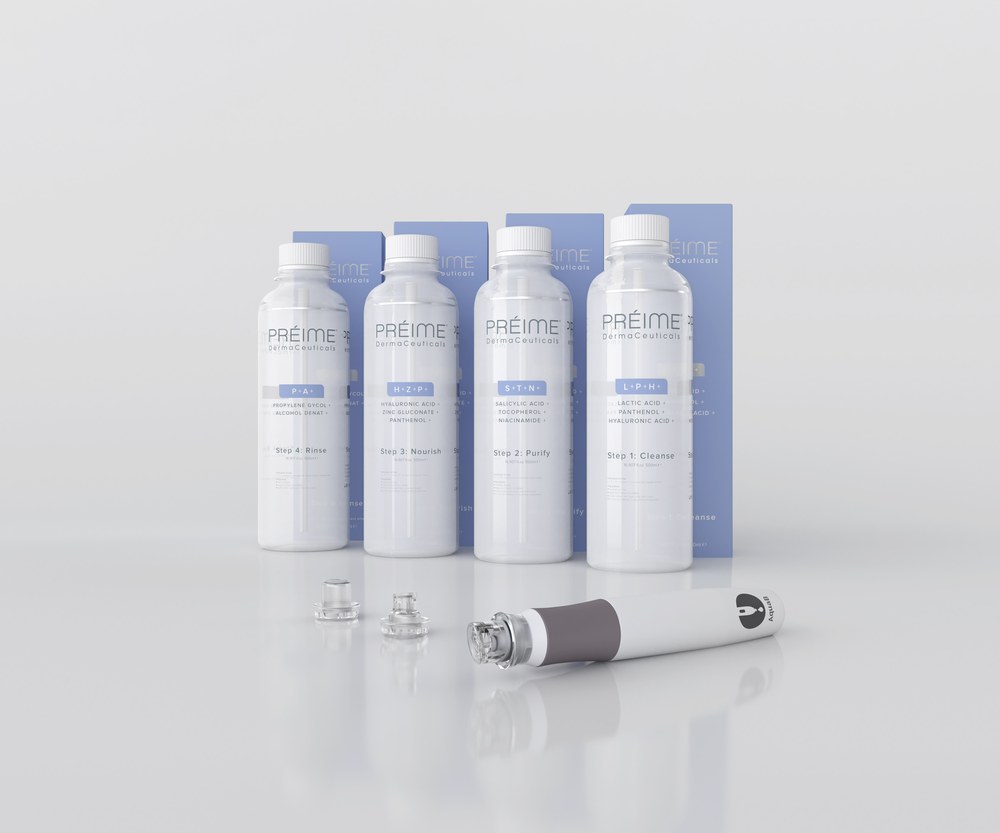
The AquaB stages run four dedicated solutions, and the manufacturer publishes the actives in each. Worth knowing, because “medical grade serum” usually means nothing and this is what is actually in the bottle:
| Solution | Stage | Actives | What it is doing |
|---|---|---|---|
| L+P+H+ | Step 1, Cleanse | Lactic acid 0.5%, panthenol, sodium hyaluronate | Loosens the dead surface layer gently, mild enough to start on any skin |
| S+N+T+ | Step 2, Purify | Salicylic acid 0.2%, niacinamide 0.2%, tocopherol | Gets into the pore, which is where congestion and blackheads actually live |
| S+N+T+ | Step 3, Nourish | Sodium hyaluronate, zinc gluconate, panthenol | Rehydrates and calms after the two clearing stages |
| P+A+ | Step 4, Rinse | Propylene glycol, alcohol denat 5.5% | Clears residue so the later handpieces work on clean skin |
The platform runs its own consumable line rather than generic solutions. Published actives:
| Solution | Key actives | Used with |
|---|---|---|
| Cleanse | Lactic acid, panthenol, sodium hyaluronate | AquaB, stage one |
| Purify | Niacinamide, salicylic acid, tocopherol | AquaB, stage two |
| Nourish | Sodium hyaluronate, zinc gluconate, panthenol | AquaB, stage three |
| Fresh Gel | Aloe barbadensis 1%, hyaluronic acid 0.15%, panthenol 2% | VibroX, calming |
| Bright Gel | Alpha-arbutin 2%, niacinamide 3%, panthenol 1% | VibroX, brightening |
| Rejuvenating Face Serum | PDRN 0.1%, niacinamide 2%, adenosine 0.04% | UltraB delivery |
The PDRN serum is worth noting. Polydeoxyribonucleotide is the same class of ingredient driving the Korean skin-booster trend, and here it is delivered topically with ultrasound rather than injected, which sidesteps the licensing problem that currently keeps injectable PDRN products off the Canadian market.
How it compares to what we already run
We are not going to pretend a new machine replaces everything else. Here is the honest positioning against the treatments already in our clinic.
| Treatment | What it does better | When we would pick it instead |
|---|---|---|
| Hydrabrasion | Cleansing and hydration, quick, lower cost | You want glow before an event and nothing more involved |
| Morpheus8 | Far deeper remodelling via RF microneedling | Real laxity, scarring or structural change, with downtime |
| Aerolase Neo Elite | Pigment, vascular concerns, acne, all skin types | Melasma, rosacea, broken capillaries, active acne |
| SkinPen microneedling | Collagen induction through controlled injury | Scarring and texture where you accept recovery time |
| Préime DermaFacial | Five modalities in one session, no downtime | Maintenance across several concerns at once, or before an event where you still want more than a cleanse |
Put plainly, the Préime sits between a facial and a device treatment. If your concern is one specific thing and it is significant, a targeted device usually beats a multi-technology platform. If you want several things addressed steadily with no recovery time, this is the better fit.
What does a Préime DermaFacial cost in Toronto?
We will publish our pricing once the device is installed and our team has finished training, and it will go on our public price list like everything else we do.
For context while you wait: comparable multi-technology facial platforms in Toronto generally run between $200 and $400 a session, and conventional hydro facials sit between $150 and $350 depending on add-ons. Most protocols in the Préime menu are designed to be repeated every four weeks, so it is worth thinking about cost per course rather than per session.
Préime DermaFacial in Canada
The device holds Health Canada Class II medical device licence 113700, issued 23 July 2025 to Ema Aesthetics Limited, covering the model 4001 platform and the AquaB, MicroT, UltraB and VibroX applicators. Canadian distribution runs through LumaPharm in Toronto.
At the time of writing we could identify fewer than five clinics in the country offering it, all of them in Ontario. If you are searching for it in Vancouver, Calgary, Montreal or anywhere outside southern Ontario, it very likely is not available near you yet.
Ours is in the treatment room at 46 Fort York Blvd, CityPlace, Toronto.
Contraindications: when this treatment is not appropriate
Local contraindications
These apply to specific areas and do not necessarily rule out a full-face treatment. We work around them.
- Active skin infection, including cold sores, bacterial or fungal
- Open wounds, cuts, broken skin or burns
- Active eczema, psoriasis, dermatitis or a rash
- Severe rosacea, or any rosacea flare
- Inflamed, pustular or cystic acne
- Prominent platysma bands (MicroT only)
- Thin, fragile or highly vascular skin (AquaB and VibroX only)
- Severe melasma or high risk of post-inflammatory hyperpigmentation (Collagen+ only)
- Metal implants, screws or plates in or near the area (MicroT, Collagen+ and UltraB only). Dental implants and braces are fine.
General contraindications
These rule out treatment entirely.
- Impaired skin sensation or neuropathy in the area
- Sunburn or a badly compromised skin barrier
- Uncontrolled diabetes, because wound healing is impaired
- Severe autoimmune or collagen disorders such as lupus or scleroderma
- Isotretinoin (Roaccutane) within the last six months
- Anticoagulants such as warfarin, heparin or prescription-strength aspirin, which raise the risk of bruising and delayed healing
- Pregnancy or breastfeeding, which require medical clearance first
- Recent microneedling, chemical peel or injectables. Wait two to six weeks depending on healing.
- Recent Botox or filler in the area. Wait two to four weeks.
- Retinoids, AHAs, BHAs or exfoliating acids in the last 48 to 72 hours
- Pacemaker, defibrillator or any implanted electronic device (MicroT, Collagen+ and UltraB only)
- Under 18 (MicroT, Collagen+ and UltraB only)
- Known allergy to any product ingredient, to aspirin, or to fragrance allergens such as limonene, linalool or benzyl benzoate
We go through all of this at your consultation, which is free. If something on this list applies to you, say so early, because in most cases there is a way to work around it.
Préime DermaFacial aftercare
This is the manufacturer’s aftercare protocol, not a general facial guideline. Follow it and the result holds; ignore it and you can undo a good treatment in a day.
First 24 hours: avoid
- Heat. Hot showers, saunas, steam rooms.
- Sweating. No strenuous exercise.
- Makeup, with one exception. Mineral makeup is fine.
First 72 hours: avoid
- AHAs, BHAs, retinols and any exfoliating acid. Your skin has just been resurfaced. Adding acid on top of that is how people end up irritated and blaming the treatment.
Sun protection
SPF 30 or higher every day, reapplied every two hours while you are in the sun. This is not optional after a resurfacing treatment, and it matters most if you are prone to pigmentation, because fresh sun exposure on freshly exfoliated skin is exactly how a dark mark starts.
Ongoing
- Repeat every two to four weeks. The protocols are written to build, not to work once.
- Use active skincare consistently between sessions. The treatment amplifies a good routine, it does not replace one.
- Wait at least two weeks before any advanced skin treatment such as microneedling, a peel or injectables.
What is normal afterwards
Mild redness, tightness, tingling, itchiness or sensitivity. All expected, and all should settle within 24 hours. If any of it is still there after a day, call us rather than treating it yourself.
You can also download the manufacturer’s own aftercare sheet: Préime DermaFacial aftercare PDF and contraindications PDF, both revised October 2025.
Before and after
These are the manufacturer’s clinical images, not our patients. We are showing them because they are what exists today, and we will replace them with our own as we build our own result set. Individual results vary and no outcome is guaranteed.
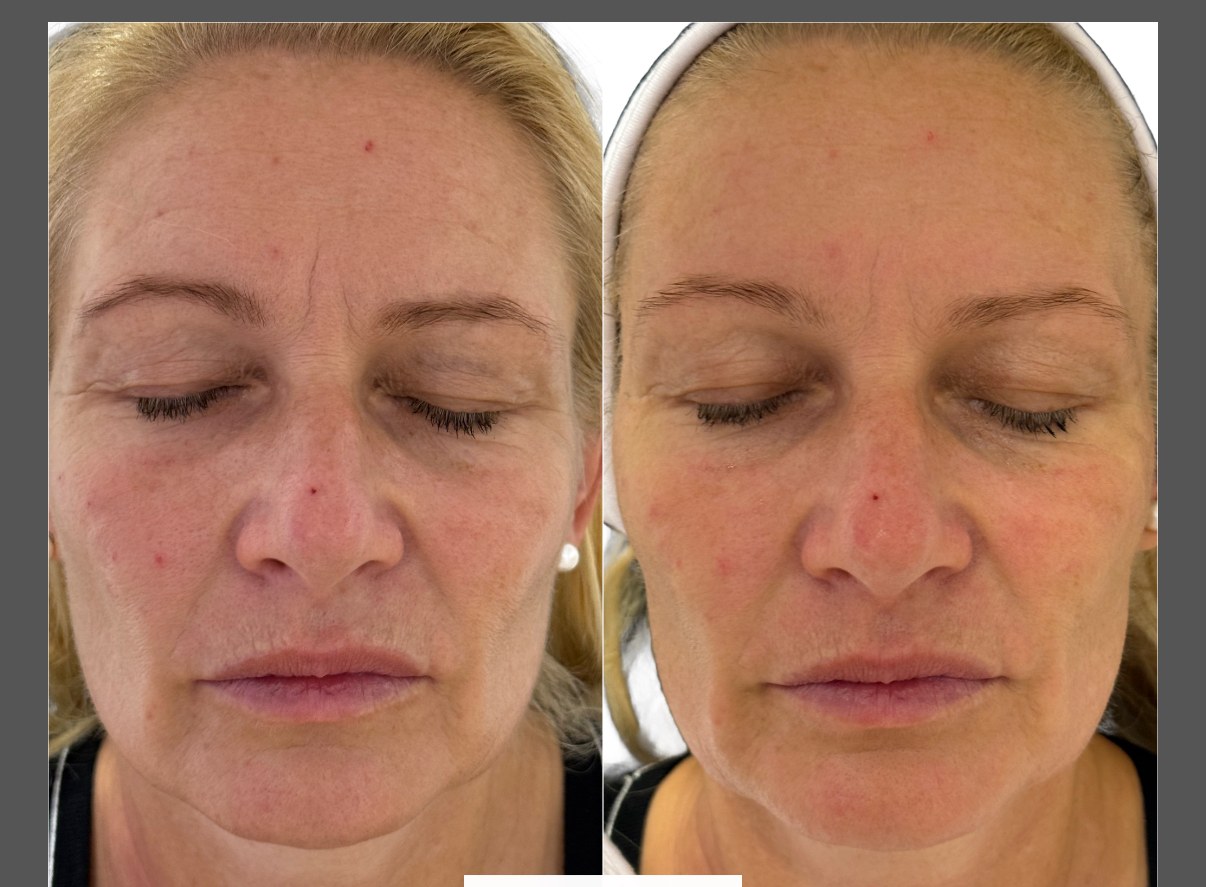
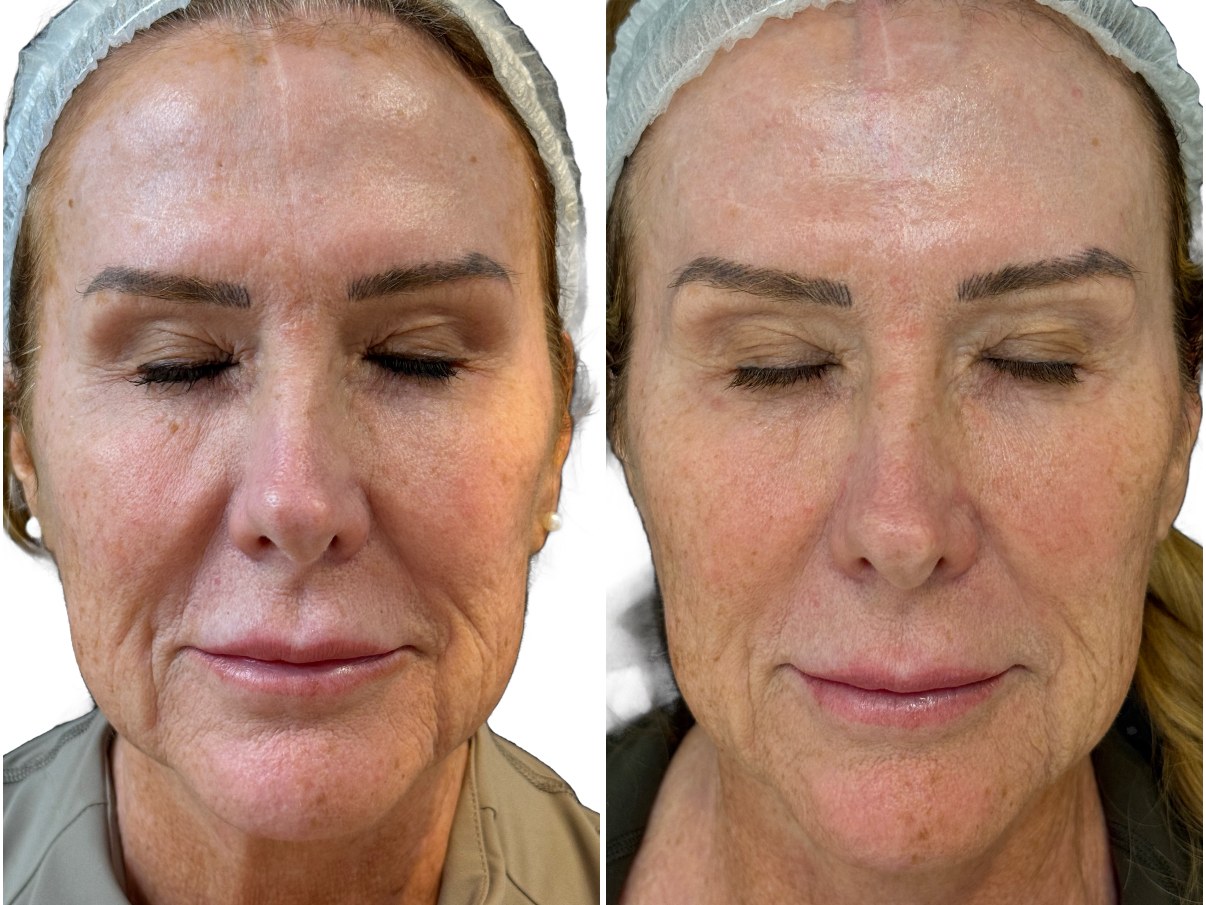
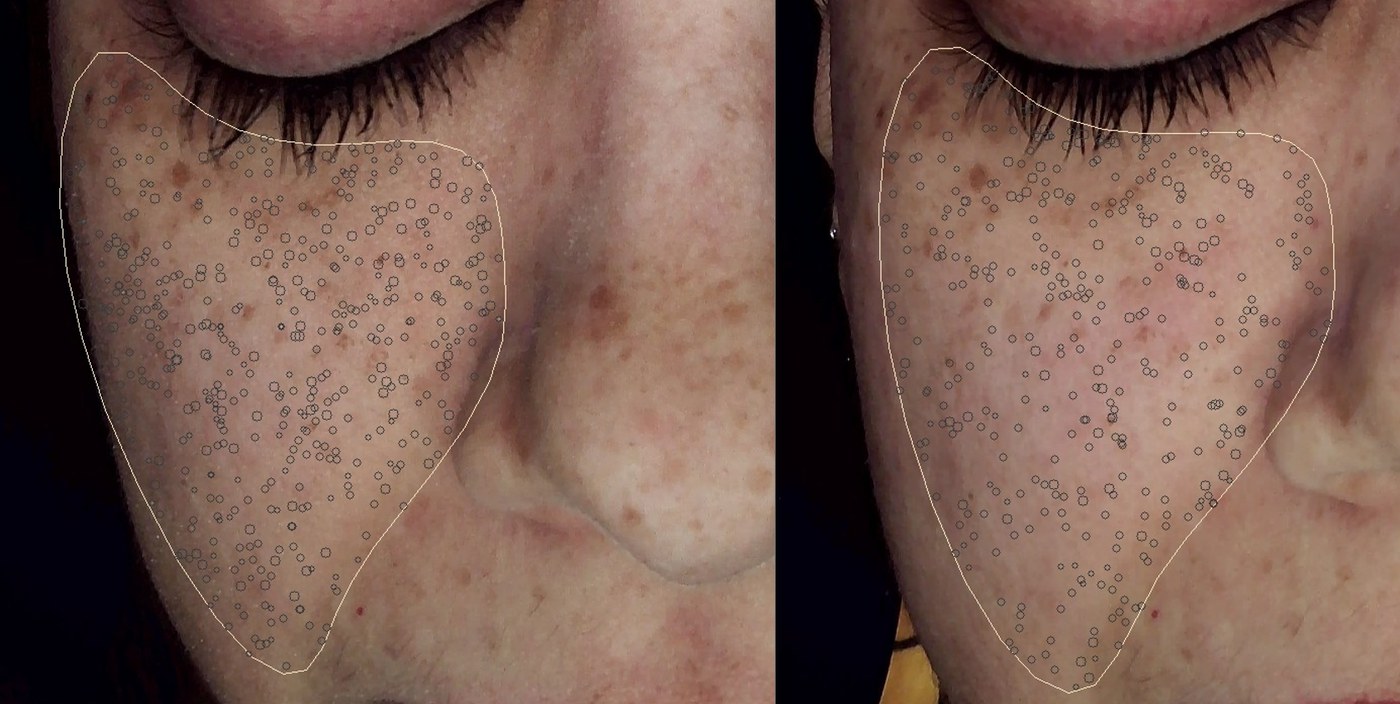
The cases documented in the manufacturer’s clinical deck give a reasonable sense of what is being claimed and over what timeframe. A 59-year-old with oily skin, uneven tone and wrinkles after a single Signature session. A 55-year-old with dehydrated skin and pigmentation, reported as a 44 per cent reduction in pore size. A 25-year-old with open pores and fine lines over two sessions a month apart. A 26-year-old with oily, acne-prone skin reporting a 30 per cent increase in hydration. A 31-year-old with mild rosacea and uneven tone after one session.
Read those the way you should read any manufacturer material. They are single cases selected by the company rather than a trial, and the measurements come from the same imaging systems described above. Useful for understanding what the device is aiming at. Not proof of what it will do for you.
Who is the Préime DermaFacial for?
Likely a good fit if you want more than a cleanse-and-glow facial, you are addressing texture, tone and firmness together rather than one at a time, you have limited time and would rather do one longer appointment than several short ones, or standard facials have stopped giving you much.
Probably not the right starting point if you have active inflamed acne, you are mid-flare with rosacea, or you are pregnant, since not every modality is appropriate. Some concerns are better served by a laser or by microneedling, and we will say so if that is the case.
Préime DermaFacial in Toronto: availability
At the time of writing we could identify fewer than five clinics in Canada offering the Préime, all in Ontario. Ours is at 46 Fort York Blvd in CityPlace, Toronto, and it is bookable now.
Our prices are listed below and on our price list.
Consultations are complimentary and unhurried. If you would like to be told when it goes live, or you want to work out whether it suits your skin better than something we already run, get in touch. You can also read about our current Hydrabrasion Deluxe facial and our Aerolase NeoSkin custom facial.
Regulatory details on this page were verified against the Health Canada Medical Devices Active Licence Listing and the US FDA 510(k) database in August 2026. Individual results vary and no outcome is guaranteed. This page is general information and not medical advice.
Not sure if this is the right treatment for your skin?
Our consultation is free. We will look at your skin, tell you honestly whether the Préime is what you need, and say so if something else would work better.
Or call 416 923 1200 · 46 Fort York Blvd, CityPlace, Toronto
Préime DermaFacial: every question we get asked
What is the Préime DermaFacial?
A five-technology facial platform combining vacuum hydro-cleansing, microdermabrasion with red LED, microcurrent, radiofrequency and ultrasound delivery in a single treatment. Made by Ema Aesthetics in Dublin, distributed by Sinclair, and licensed by Health Canada as a Class II medical device.
Who makes the Préime DermaFacial?
Ema Aesthetics Limited, based in Dublin, Ireland. Sinclair holds the marketing and distribution agreement outside the UK and Germany. In Canada it is distributed by LumaPharm in Toronto. It is not a DEKA product, which is a common mix-up.
How much does it cost?
All in Canadian dollars. Préime Essential DermaFacial, about 75 minutes, is $250. Préime Signature DermaFacial, about 80 minutes, is $350. Préime Signature DermaFacial, about 90 minutes, is $450. All three are bookable online now at 46 Fort York Blvd, or ask about Préime on your free consultation. For context, comparable multi-technology platforms in Toronto run $200 to $400 a session.
Now bookable
Book the Préime DermaFacial
The Préime is in our CityPlace treatment room and bookable online today. Essential, about 75 minutes, $250. Signature, about 80 minutes, $350. Signature, about 90 minutes, $450.
Prefer to talk it through first? Our consultations are free. Call 416 923 1200 and we will look at your skin now.
How many sessions do I need?
Most face protocols are designed to repeat every four weeks. Two of them, Plump & Glow and Sculpt & Tone, can be run weekly if you want faster results. Combination protocols paired with injectables, microneedling or laser typically run at four to six week intervals.
Does it hurt?
It is non-invasive and generally comfortable. Radiofrequency produces a warming sensation, microcurrent a mild tingle, and microdermabrasion a light sanding feeling. Mild redness, tightness or tingling afterwards is normal and usually settles within 24 hours.
Is there downtime?
Generally minimal. Avoid heat, saunas, heavy exercise and makeup other than mineral for 24 hours, and hold off retinols, AHAs and BHAs for 72 hours. SPF 30 or higher daily.
Is it safe for darker skin tones?
Broadly yes. Radiofrequency and microcurrent are not pigment-dependent the way light-based devices are, which makes them among the safer energy types across the Fitzpatrick scale. The consideration on deeper skin is managing post-treatment inflammation, since inflammation is what turns into a dark mark. The radiofrequency handpiece is not used where there is severe melasma or a high risk of post-inflammatory hyperpigmentation.
Can I have it with Botox or filler?
Yes, and there are protocols designed specifically for it. The combination protocol runs the cleanse before injectables. If you have already had toxin or filler, leave two to four weeks before treating that area.
Is it good for acne?
For congestion, blackheads and oil control, yes, that is what the AquaB and Purify stages are for. There is also a dedicated Back protocol for back acne and the pigmentation it leaves behind. For active, inflamed or cystic acne it is not appropriate and a laser or a medical approach is the better route.
Does it help pigmentation?
The Bright Gel used with microdermabrasion carries alpha-arbutin and niacinamide, and there is a combination protocol pairing the platform with IPL or Q-switch laser for photodamage, post-acne marks and melasma. For melasma specifically, be aware that the radiofrequency handpiece is contraindicated in severe cases.
Can it be used on the body?
Yes, and this is the part people do not expect from a facial device. There are protocols for the back, buttocks, underarms, hands and scalp, covering back acne, ingrown hairs, hyperpigmentation, ageing hands and scalp cleansing alongside microneedling for thinning hair.
What is AquaB?
The vacuum hydro-cleansing handpiece. Suction lifts debris out of pores while solution is delivered through a spiral tip, run across three stages: cleanse, purify, nourish.
What is MicroT?
The microcurrent handpiece, and the component holding FDA 510(k) clearance K243072. Low-level electrical stimulation of facial tissue for tone and definition.
What is Collagen+?
The radiofrequency handpiece. It heats tissue below the surface by electrical resistance, which is what drives a firming response. This is one of the two things a conventional hydro facial physically cannot do.
What is UltraB?
The ultrasound handpiece, used to carry active ingredients past the skin barrier rather than leaving them sitting on the surface.
What is VibroX?
Microdermabrasion combined with vibration and red LED, for resurfacing the dead surface layer and working on tone.
Is the Préime DermaFacial FDA approved?
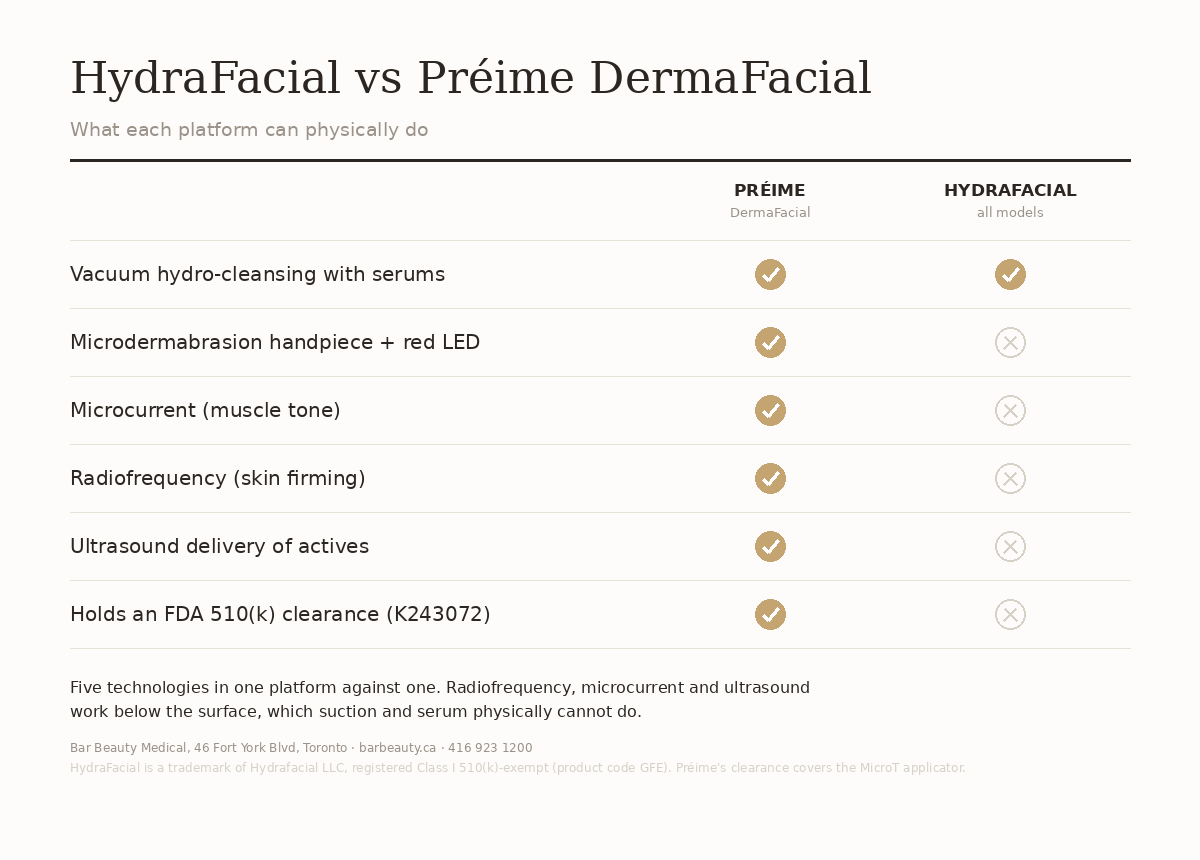
No, and neither is any comparable device. FDA approval is a higher standard than clearance and applies to a different class of product. The MicroT applicator holds FDA clearance, K243072. The other four technologies are not covered by that clearance. For comparison, HydraFacial holds no 510(k) clearance at all and is registered as a Class I, 510(k)-exempt device.
Are there clinical studies?
No peer-reviewed published trials. There is unpublished manufacturer-associated clinical data, including two open-label studies by Dr Pablo Naranjo in Madrid with 42 and 60 patients using objective Antera 3D imaging, individual handpiece testing against validated instruments, and three abstracts accepted for IMCAS Paris, presented January 2026. Details are in the evidence section above.
Where can I get it in Canada?
Fewer than five clinics at the time of writing, all in Ontario. Ours is at 46 Fort York Blvd in CityPlace, Toronto.
Is it better than a HydraFacial?
It does considerably more, five technologies against one, including radiofrequency and ultrasound that a hydro facial cannot perform. On published evidence HydraFacial has a small number of studies and the Préime has none peer-reviewed. No study has compared the two. Our full comparison is here.
Who should not have this treatment?
See the contraindications section above. In short: impaired skin sensation, compromised skin barrier, uncontrolled diabetes, severe autoimmune conditions, isotretinoin within six months, anticoagulants, or a pacemaker or implanted electronic device for the energy-based handpieces. Pregnancy and breastfeeding require medical clearance first.
Is it spelled Préime, Preime or Prieme?
The correct spelling is Préime, with an accent on the first e, and it is pronounced like “pray-m”. Preime and Prieme are both common misspellings, and Prime DermaFacial gets typed a lot too. They all refer to the same device: the Préime DermaFacial by Ema Aesthetics, distributed by Sinclair.
Is the Préime DermaFacial a DEKA machine?
No. This is the most common mix-up online. DEKA is a separate Italian laser manufacturer. The Préime DermaFacial is made by Ema Aesthetics Limited in Dublin.
How long does a session take?
Most face protocols run 45 to 60 minutes depending on how many handpieces are used. Individual stages are short: the AquaB cleanse is around nine minutes, radiofrequency 15 to 20, microcurrent 10 to 20, ultrasound four to 12.
Will I see a difference after one session?
Most people see immediate hydration, a cleaner surface and a temporary lift. Anything structural, meaning firmness from radiofrequency or tone from microcurrent, builds over a course rather than a single visit. That is why the protocols are written to repeat every four weeks.
Can I have it before an event?
Yes, that is one of the better uses for it. Leave two to three days rather than going the day before, so any mild redness has fully settled.
How does it compare to microneedling or Morpheus8?
It does not compete with them, it sits underneath them. Microneedling and Morpheus8 create controlled injury to force remodelling and involve real downtime. The Préime is non-invasive maintenance between those treatments. Our full comparison table is above.
Do you offer a consultation first?
Yes, and it is free. We will look at your skin, tell you whether this is the right treatment for what you actually want fixed, and say so if something else would work better.
The PDRN in the UltraB serum is the same ingredient class behind Rejuran, which is not licensed in Canada. This is one of the legal routes to it.
Patients also ask how the Préime compares with the BELA MD, the other five-technology skin health platform sold in Canada. The short version is that the Préime carries 1 MHz radiofrequency and the BELA MD carries no energy-based collagen step, while the BELA MD offers hydrogen water infusion that we do not have. We set out every difference in BELA MD vs Préime DermaFacial.
Questions about this treatment?
Ask us anything before you book. Consultations are free, and we will tell you honestly if a treatment is not right for you.