


Quick answer: Skin tag removal in Toronto is done at Bar Beauty Medical, a Registered Nurse led clinic at 46 Fort York Blvd in CityPlace, starting at $50 for a spot treatment. Skin tags are harmless, and we remove them in office with the Aerolase Neo Elite, a 1064 nm laser that treats the tag without cutting, without stitches and without local anaesthetic. Most visits take 15 to 45 minutes, you walk in and walk out, and the tag is gone. Every removal is performed under physician medical delegation, starting with a free consult.
By Basil Russo, Founder, Bar Beauty Medical, 46 Fort York Blvd, CityPlace Toronto.
Clinically reviewed by Julia Barabas, Medical Aesthetician and Glow Specialist, and Jasmine Saggu, Registered Nurse. Reviewed July 2026.
Book Your Free Consult → Call 416-923-1200
Skin tag removal at Bar Beauty Medical starts at $50 for a spot treatment, with the total set by how many tags are removed. Skin tags form where skin rubs against skin, clothing or jewellery, which is why they turn up in the same handful of places and why they rarely arrive alone. Removing one does nothing about whatever was rubbing, and both halves are worth dealing with if you would rather not be back for the same spot.
| Where they form | What is usually rubbing | Worth changing |
|---|---|---|
| Neck | A collar, a chain worn daily, a shirt seam | The most common site we see. A necklace that sits on the same line every day is the first thing to look at. |
| Underarms | Skin against skin, plus clothing all day | High friction, so we advise on clothing and movement for a day or two while the site settles. |
| Under the breasts | A bra band sitting in the same crease | Where the band sits is effectively the map of where the next ones appear. |
| Groin | Waistbands and skin folds | Same friction pattern as the underarm, and one of the areas treated routinely. |
Friction is not the whole story. Tags also become more common with age and during pregnancy, and not every small bump is a tag. Cherry angiomas and facial vessels are vascular and belong in a different conversation, which is why anything unclear gets looked at before it gets removed. Spot treatment starts at $50.
What is a skin tag?
A skin tag, known medically as an acrochordon, is a small, soft growth of skin that hangs off the surface on a thin stalk. They are extremely common, almost always harmless, and tend to appear where skin rubs against skin or against clothing and jewelry. They are not warts, they are not cancerous, and they are not contagious. Most people who come to our Toronto clinic for removal are bothered by how a tag catches, snags, or simply looks, not by any medical worry.
Skin tags become more common with age, during pregnancy, and in areas of friction. They can show up as a single tag or in clusters. While they are benign, we always want a trained set of eyes on any skin growth before it is removed, because the one thing you should never do is assume. That assessment is part of every appointment, and it is why removal here happens in a medical clinic rather than a spa back room.
How we remove skin tags at Bar Beauty
The Aerolase Neo Elite is what we use, with the setting chosen by the size, location and stalk of each tag. Its 1064 nm wavelength is absorbed by the tag rather than the surrounding skin, and the 650 microsecond pulse delivers the energy faster than the tissue transfers heat outward, which is why it treats the tag without a wound to close. Small tags and delicate areas are treated on a lower setting with a smaller spot size. Larger pedunculated tags, the kind that hang on a thicker stalk, usually need more than one pass and sometimes a second appointment. Treatment is done in office in a single visit. No injected anaesthetic is needed, and topical numbing is available on request for sensitive areas.
The experience is quick and low drama. A single small tag can be handled in about 15 minutes. Patients with many tags usually have them all cleared in one 30 to 45 minute appointment. There is no general anaesthetic, no hospital, and no lengthy recovery. When it is handled properly, skin tag removal leaves little to no scarring, which is exactly why the method and the training behind it matter.
Where on the body we treat
Skin tags love friction, so the areas we treat most are the neck, the underarms, the groin and under the breasts. We do not treat tags on the eyelid or near the lash line. That area needs an ophthalmologist or a dermatologist, and we will say so at the consult rather than attempt it. Beyond those common spots, we can remove tags almost anywhere clothing, a collar, a bra strap, or a necklace keeps irritating the skin.
We can treat one tag or twenty in a session. If you have several scattered across different areas, we map them at the consult and clear what makes sense in a single visit, which is usually all of them. There is no upsell to a package you do not need, and if a growth looks like it belongs with a dermatologist instead, we will tell you plainly.
What skin tag removal costs in Toronto
At Bar Beauty Medical a skin tag spot treatment starts at $50, and your exact total depends on how many tags you want removed and where they are. Because tags cluster and vary, we quote your removal in writing at the free consult before anything is done, so the number you agree to is the number you pay. There is no starting from language buried in fine print, and pricing is transparent the same way it is across our full Toronto price list.
Skin tag removal is a cosmetic procedure, so it is not covered by OHIP or private insurance. For larger clearing sessions, Affirm financing is available, and we accept all major cards, debit, Apple Pay, Google Pay, and e-transfer. A credit card holds your appointment and nothing is charged when you book.
Why have skin tags removed at a medical clinic
You can buy freezing kits and removal bands at any drugstore, and patients often ask why they should not just do it at home. The honest answer is that home removal carries real risks that a clinic removes: incomplete removal that leaves the tag to regrow, bleeding, infection, scarring, and, most importantly, treating a growth that was never actually a harmless skin tag. A quick professional assessment is the safeguard, and it costs you nothing at the consult.
Laser skin tag removal at Bar Beauty is performed by our medical aesthetician. Injectable treatments are performed by Registered Nurses. Both work under physician medical delegation, and our Medical Director, Dr. John David Henneberry-Fudge, MD, oversees clinical protocols. That structure is the difference between a genuine medical service and a cosmetic shortcut. It also means proper sterile technique and a clinician who can recognise when a spot needs a second look rather than a fast removal.
How we choose the setting
Patients often ask whether laser is the right method for every tag. Laser ablation handles small tags under about 3 mm and anything on the face particularly well, because it works in a few seconds per tag with very little bleeding and the lowest scarring risk. Larger or thicker tags take more passes, and a small number are better referred for excision elsewhere rather than forced with a laser. Tags on the body are treated the same way as facial tags, with the setting adjusted for the thicker skin. Treated sites generally settle in 7 to 10 days. Your aesthetician selects the setting per tag at the consult rather than committing the whole session to one tool, and Fitzpatrick skin types I to VI are all treated.
Why string tying and drugstore freeze kits tend to leave a mark
Tying a tag off with string or dental floss cuts its blood supply but does nothing about the base, so the tag often reforms or leaves behind a darker dot where it was. Drugstore freezing kits are not cold enough to reliably destroy the tissue, and because you cannot aim them precisely they tend to injure the healthy skin around the tag, which is where the scarring comes from. In-office radiofrequency is precise enough to treat only the tag itself and leave the surrounding skin intact, which is the entire reason the pigment and scarring risk is so much lower.
Aftercare and what to expect
Recovery from skin tag removal is straightforward. You may have a small scab or a little redness at each site for several days, which is normal and part of healing. Keep the area clean, avoid picking, and apply any ointment your aesthetician recommends. For tags in high friction spots like the neck or underarms, we will advise on clothing and movement for the first day or two so nothing rubs the healing skin.
Most patients return to normal activity immediately. There is no need to book time off. If you have treatments coming up elsewhere on your face or body, tell us at the consult and we will sequence everything sensibly, the same way we plan around events for our Botox and filler patients. Individual healing varies, and we will give you a realistic picture for your specific tags rather than a one size fits all promise.
Skin tags, or something else?
Not every small bump is a skin tag. Cherry angiomas, the small bright red dots that become more common with age, are vascular and are treated differently, with laser rather than excision. Broken capillaries and spider veins on the face are also vascular and belong in a separate conversation. If your concern is redness or visible vessels rather than a hanging tag, our vascular lesion treatment with the Aerolase laser is the right path, and you can read more on our vascular lesions page.
Moles, warts, and pigmented spots each need their own assessment too. This is the real value of starting with a consult at a medical clinic. We look first, name what it actually is, and only then recommend removal or point you to the better option. If a growth needs dermatology or a biopsy, we say so rather than treating it anyway.
Getting to Bar Beauty for skin tag removal
We are at 46 Fort York Blvd in CityPlace, downtown Toronto, with two free spots at the clinic, first come first served, plus public parking beside the Sobeys at Fort York Blvd and Telegram Mews, and easy access from the Gardiner and Lake Shore. We are a short trip for patients across the core and beyond, from King West and Liberty Village to Rosedale and the east end. We are open seven days with late weekday evenings, so a quick removal fits easily around work.
While you are here, many patients pair a removal with a professional skin analysis to map anything else going on with their skin, or ask about Aerolase for tone and redness. There is never pressure to add anything. The consult is free, the plan is honest, and you decide.
Skin tags treated with the Neo Elite
Read this first. These photographs come from Aerolase Corp., the company that makes the Neo Elite. Each was taken at the practice credited underneath it. They are not our patients and we are not claiming them as our results. We show them because they are the clearest published record of what this device does, and we run the same machine at our CityPlace clinic. Our own patient photographs go up as we build a consented library.
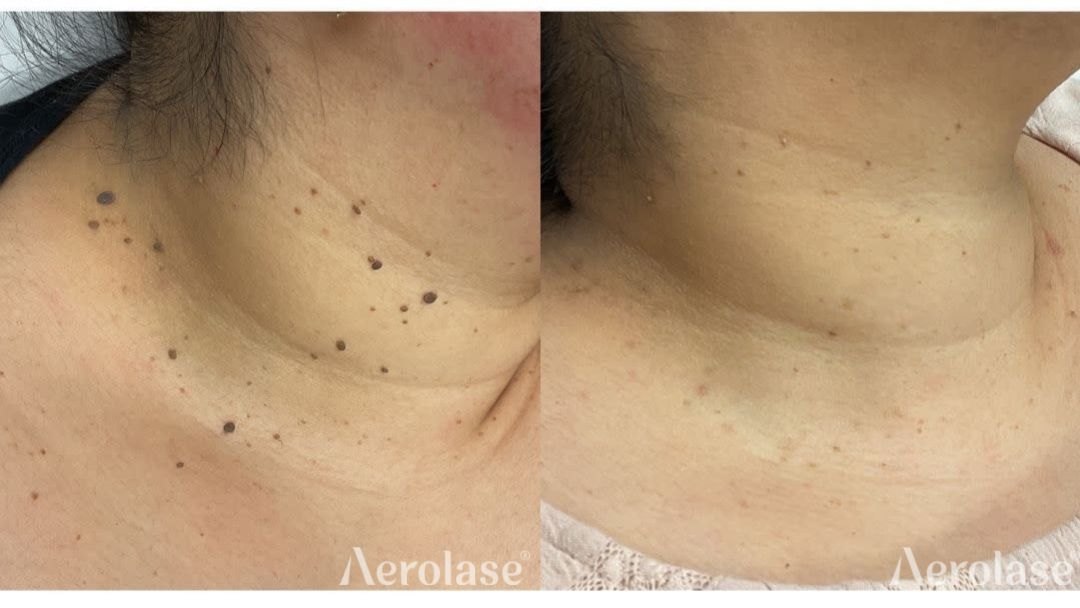
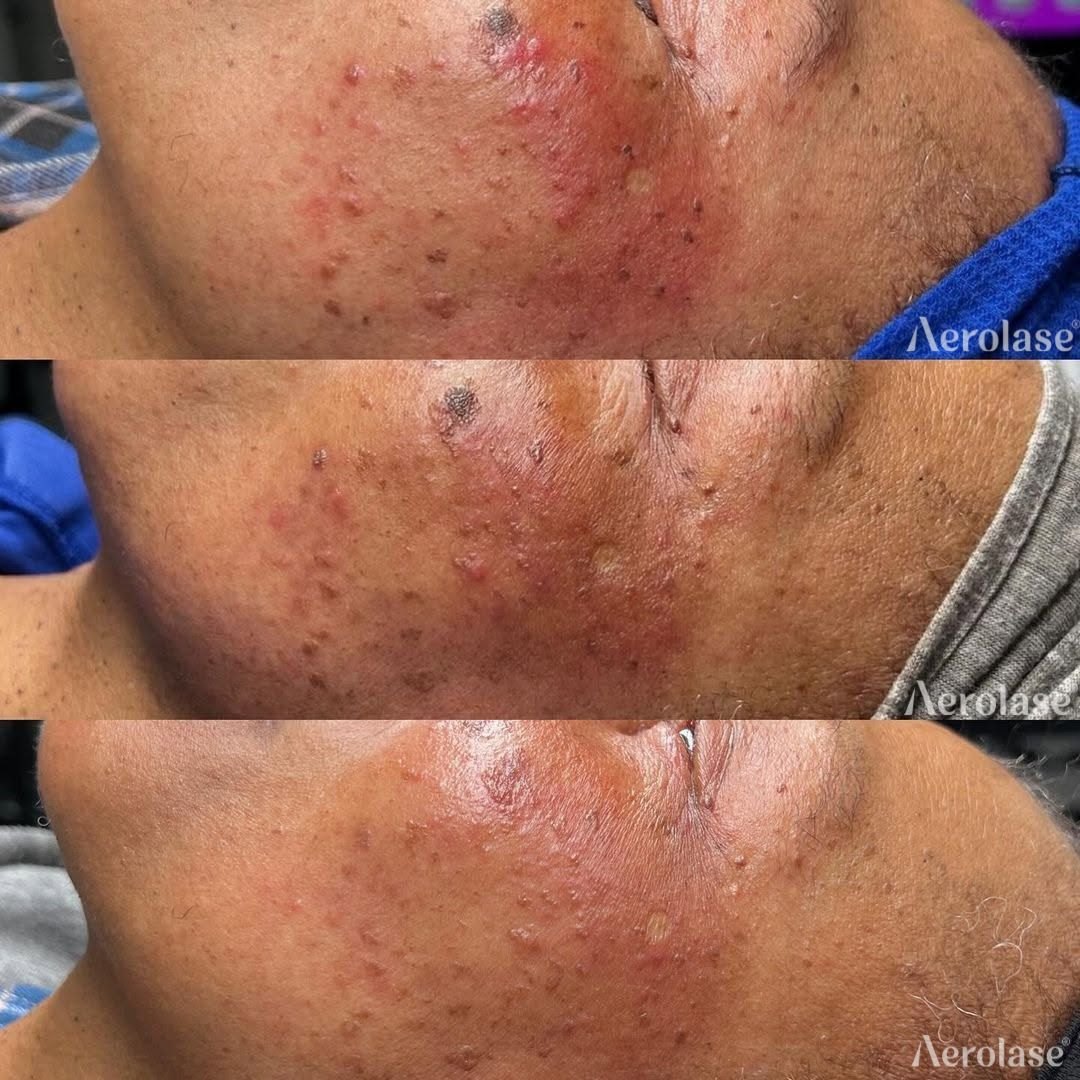
More Neo Elite results. The full set, covering every condition we use this laser for, is on our Aerolase before and after page.
Sessions needed vary by person, severity and skin type. Individual results vary and nothing here is a guarantee of outcome. We do not diagnose from a photograph; anything that has changed in size, shape or colour, or that you have not had looked at, needs a proper assessment before any laser is pointed at it.
Frequently asked questions
How much does skin tag removal cost in Toronto?
A skin tag spot treatment at Bar Beauty Medical starts at $50. Your exact total depends on how many tags you have and where they are, and it is quoted in writing at your free consult before anything is done.
Does skin tag removal hurt?
Most people describe it as a series of quick hot pinpricks, and topical numbing is available if you would rather not feel it at all. You may feel brief heat during the pulse and mild tenderness afterward, but most patients describe the process as quick and easy.
Will skin tag removal leave a scar?
When it is done properly by a trained clinician, skin tag removal leaves little to no scarring. Method matters, which is why we match the technique to each tag. You may have a small scab or brief redness while the area heals.
Can you remove skin tags near my eyes?
No. We do not treat tags on the eyelid or near the lash line. The margin for error next to the eye is too small for a laser appointment, so those go to an ophthalmologist or a dermatologist. We will tell you that at the consult rather than attempting it.
How long does the appointment take?
A single tag can be removed in about 15 minutes. If you have several, most patients have them all cleared in one 30 to 45 minute appointment. You walk in and walk out the same day.
Do skin tags grow back after removal?
A properly removed skin tag does not grow back in the same spot. New tags can form elsewhere over time, especially in areas of friction, but that is a new tag rather than a regrowth of the old one.
Is skin tag removal covered by insurance in Ontario?
No. Skin tag removal is considered cosmetic, so it is not covered by OHIP or private insurance. We provide clear pricing at your free consult and offer Affirm financing for larger clearing sessions.
Who performs the removal?
Our medical aesthetician performs your removal under physician medical delegation. We do not treat tags on the eyelid or near the lash line. Our Medical Director oversees clinical protocols, so the procedure happens in a genuine medical setting.
Ready when you are. If a skin tag is catching, snagging, or simply bothering you, book a free consult at Bar Beauty Medical or call 416-923-1200. We are at 46 Fort York Blvd in CityPlace, open seven days, and we will give you an honest look and a written quote before anything is done. Book online here.
Ready to look into it properly?
Our consultation is free. We will look at your skin, give you an honest recommendation, and say so if a different treatment would suit you better.
Or call 416 923 1200 · 46 Fort York Blvd, CityPlace, Toronto
Questions about this treatment?
Ask us anything before you book. Consultations are free, and we will tell you honestly if a treatment is not right for you.