


Salmon DNA, fish sperm facial, PDRN, PN, polynucleotides. These are not five treatments. They are one family of purified fish DNA described five ways, and the two differences that actually matter are chain length and whether it is injected or driven in topically. What we run at Bar Beauty Medical is PDRN delivered through fresh microneedling channels, not an injectable.
| Name you will see | What it refers to | Is it what we do |
|---|---|---|
| PDRN | Polydeoxyribonucleotide. Shorter DNA fragments, roughly 50 to 1,500 kilodaltons, working mainly by signalling cells toward repair | Yes. As a serum driven into freshly micro-channelled skin |
| PN, or polynucleotides | Longer chains of the same nucleotide building blocks. Because they are longer they also form a water-holding gel scaffold, so there is a light structural effect on top of the signalling | Same family, but this is the injectable version. We do not offer injectable polynucleotides |
| Salmon DNA facial | A marketing name for the same PDRN material | Yes. Same treatment, viral name |
| Fish sperm facial, salmon sperm facial | The name that made it spread. The source is purified salmon or trout DNA, not sperm | Same treatment, wrong name |
| Branded injectable products you see online | These sit in the PN family and are placed under the skin the way a filler is | No. We do not place polynucleotides by injection, and the depth and regulatory picture are different |
Neither PDRN nor polynucleotides are approved by Health Canada or the FDA for cosmetic skin rejuvenation, which is worth knowing before anyone quotes you a guarantee. This is a quality and repair treatment. It will not fill a line, restore lost volume, lift a jowl or sharpen a contour, and anything sold as a replacement for filler is being sold to you wrongly.
The Quick Answer: What PDRN and Polynucleotides Actually Are
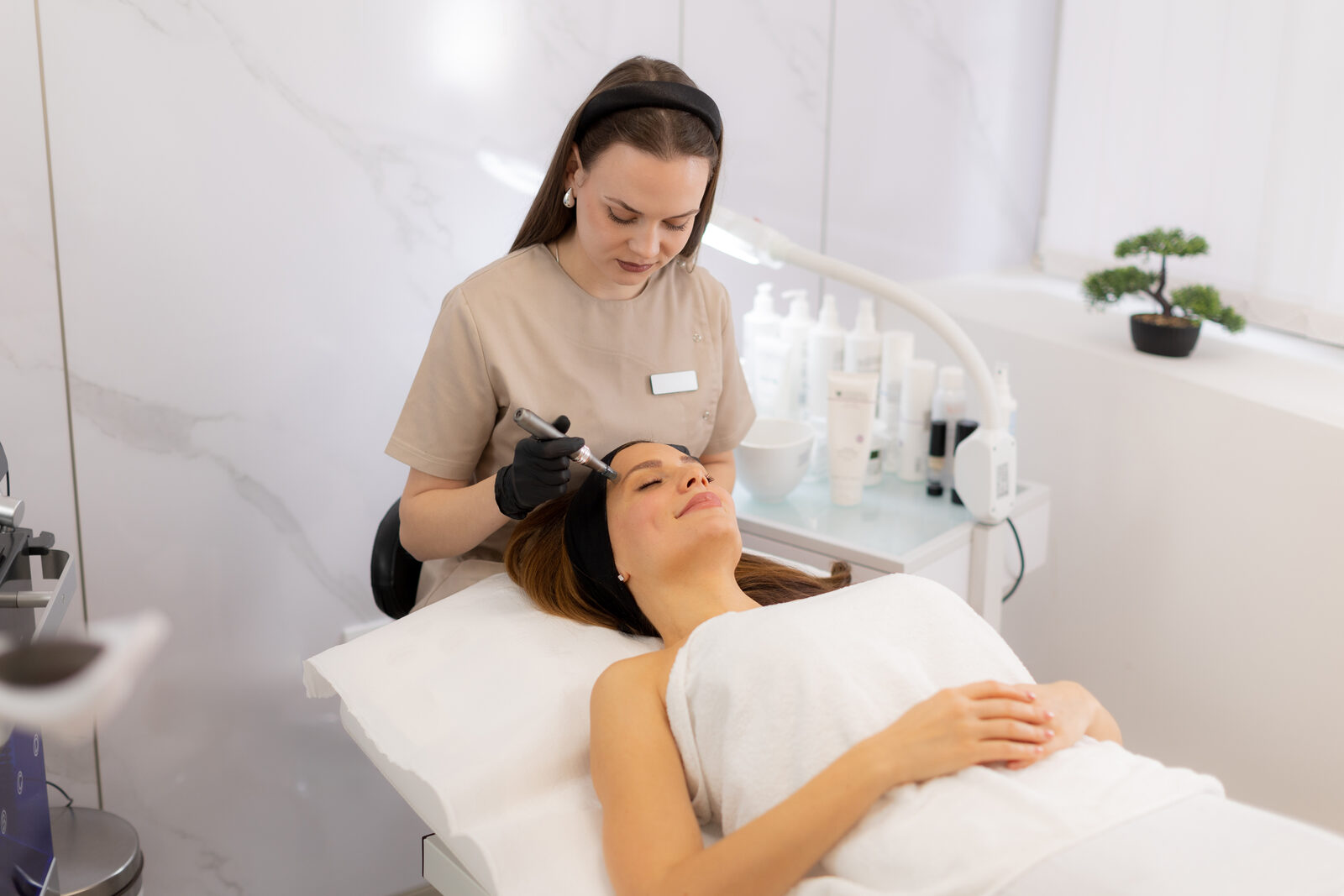
PDRN stands for polydeoxyribonucleotide. It is a set of small, purified DNA fragments taken from salmon, and when it is delivered into skin it appears to switch on the skin’s own repair and collagen-making machinery. Polynucleotides, often shortened to PN, are the longer-chain version of the same idea. Both belong to a category people now call regenerative aesthetics, and both are having a moment online under names like the salmon DNA facial or the fish sperm facial. At Bar Beauty Medical (46 Fort York Blvd, CityPlace, Toronto) we offer PDRN as part of a microneedling treatment, where the PDRN serum is driven into freshly micro-channeled skin. We want to be straight with you up front about two things, because most clinic pages will not. First, we do not offer injectable polynucleotides, the kind placed under the skin with a needle the way a filler is. Second, neither PDRN nor polynucleotides are approved by Health Canada or the FDA for cosmetic skin rejuvenation, so any honest clinic should frame the evidence carefully rather than promise miracles.
This guide is the long, honest version of the salmon DNA story. We will explain what PDRN is, where it comes from, the actual mechanism in skin, what the published research does and does not show, how our PDRN microneedling protocol runs at the clinic, how it compares to PRP and exosomes, and who it suits. If you came here because a video told you fish DNA will erase your wrinkles, read the evidence section carefully, because the reality is more interesting and more honest than the hype.
PDRN vs PN: Clearing Up the Terminology First
The names get used interchangeably online, but they are not quite the same thing, so it helps to sort them out.
PDRN (polydeoxyribonucleotide) is made of shorter DNA fragments, with molecular weights roughly in the range of 50 to 1,500 kilodaltons. It is best known for a signalling effect, meaning it talks to receptors on your cells and nudges them toward repair.
PN (polynucleotides) are longer chains of the same nucleotide building blocks. Because they are longer, they also form a gel-like scaffold in the skin that holds water and gives a light structural and hydrating effect on top of the signalling. This is the version most often used as an injectable in places like the under-eye.
Both are purified from the same kind of source, the DNA of salmon or trout, and both work through the same broad biology. When you see brand names floating around for the injectable version, they sit in the PN family. The treatment we run at Bar Beauty uses PDRN delivered topically through microneedling channels, not an injectable PN product. Keeping that distinction clear matters, because the depth of delivery and the regulatory picture are different.
Where Salmon DNA Comes From and Why Fish
The obvious question is why fish DNA would do anything for human skin. The answer is similarity. The DNA fragments used in PDRN are extracted and purified from the sperm cells and reproductive tissue of salmon or trout through a multi-step pharmaceutical process that strips out the proteins and leaves the nucleotide fragments. Those fragments have a high degree of structural similarity, called homology, to the same molecules in human cells. Because the body recognises them as familiar building blocks rather than foreign invaders, it can use them in its own repair pathways instead of attacking them. Salmon is used because it is an abundant, well-studied source that yields these fragments at the right size and purity. The purification is the important part. This is not raw fish material, it is a refined medical-grade ingredient, which is why the manufacturing standard of the specific product matters.
How PDRN Works in Skin: The Actual Mechanism
Here is where the science is genuinely interesting, and where we will keep it accurate rather than dressing it up. PDRN is thought to work through two main routes.
The first is receptor signalling. PDRN activates a receptor on your cells called the adenosine A2A receptor. Switching on that receptor sets off a chain of internal signals that calm inflammation, reduce cell death after injury, encourage blood vessel formation, and tell fibroblasts, the cells that build collagen and elastin, to get to work. In plain terms, PDRN seems to tell stressed or ageing skin cells to behave more like healthy, repairing ones.
The second is the salvage pathway. When cells are rebuilding, they need a supply of nucleotides, the raw material of DNA and RNA. PDRN provides a ready-made pool of these building blocks, so cells that are trying to repair and divide do not have to make everything from scratch. Think of it as delivering bricks to a construction site that is already trying to build.
Put together, the proposed result is reduced inflammation, better wound healing, more fibroblast activity, and over a course of treatment, gradual improvements in skin firmness, texture and tone. The honest caveat, which we get to next, is that the strength of the human evidence does not yet match the elegance of the mechanism.
What the Evidence Actually Says (The Honest Version)
This is the section most clinic pages skip, so we are going to spend real time on it, because you deserve to make an informed decision.
There is a real and growing body of research on PDRN and polynucleotides for skin. A 2024 systematic review pulled together nine clinical studies covering 219 patients who received PDRN or polynucleotide treatments for skin rejuvenation. Across those studies the pattern was consistent and encouraging: statistically significant reductions in wrinkles, improvements in skin texture within about three months, and measurable gains in elasticity. The laboratory science backing it, the A2A receptor and fibroblast effects, is well described in the literature. So this is not snake oil. There is a plausible mechanism and human data pointing the same direction.
Now the caveats, stated plainly. Most of the existing studies are small, short, and run at a single centre, often without proper blinding or a placebo group, which are exactly the design features that make results more reliable. The authors of that 2024 review described the overall quality of evidence as low to moderate and explicitly called for larger, more rigorous trials. And critically, neither PDRN nor polynucleotides have been approved by the FDA or Health Canada for cosmetic skin rejuvenation. That does not make them unsafe or illegitimate, plenty of legitimate aesthetic treatments sit in this regulatory grey zone, but it does mean any clinic promising guaranteed, dramatic, filler-level results from salmon DNA is overselling what the science currently supports.
Our honest position is this. PDRN is a promising regenerative tool with a sensible mechanism and early human evidence on its side, best understood as a skin-quality and healing treatment that builds gradually over a course, not a one-session miracle and not a replacement for filler, biostimulators or lasers. We would rather tell you that and have you trust the rest of what we say.
What PDRN Is Good For, and What It Will Not Do
Based on the mechanism and the evidence, here is where PDRN earns its place.
It is good for: accelerating healing and calming the skin after a procedure like microneedling or a laser, improving overall skin quality, texture and a tired, dull look, supporting skin that is inflamed or stressed, and as a regenerative layer in a longer skin-improvement plan. It pairs especially well with microneedling because the micro-channels give it a route in and the two effects reinforce each other.
It will not: fill a line, restore lost volume, lift a jowl, or sharpen a contour. Those are jobs for filler, biostimulators like Sculptra, or energy devices like Morpheus8. PDRN is a quality and repair treatment, not a structure treatment. Anyone selling it as a substitute for filler is selling you the wrong thing.
PDRN vs PRP vs Exosomes: The Regenerative Family Compared
PDRN sits in a family of regenerative skin treatments alongside PRP and exosomes, and we offer the comparison honestly because they overlap and people are rightly confused. Here is how they actually differ.
| Feature | PDRN (salmon DNA) | PRP (your own plasma) | Exosomes (lab-cultured) |
|---|---|---|---|
| Source | Purified salmon or trout DNA fragments | Your own blood, spun to concentrate platelets | Vesicles from cultured stem cells |
| Main action | Signals repair via the A2A receptor, supplies nucleotide building blocks | Releases your own growth factors | Delivers a concentrated package of signalling molecules |
| Best understood as | Regeneration and healing, skin quality | Natural, autologous regeneration | The most concentrated signalling option |
| From your own body? | No, it is a purified animal-derived ingredient | Yes, fully autologous | No, lab-cultured |
| Regulatory status for cosmetic use | Not Health Canada or FDA approved for cosmetic rejuvenation | Uses your own blood, a long-established approach | Evolving and not standardised, quality varies by source |
| How we deliver it | Topically into microneedling channels | Microneedling or as a facial, plus other protocols | Topically into microneedling channels |
None of these is universally best. PRP is the natural, from-your-own-body option and is a workhorse for skin quality and hair. Exosomes are the most concentrated signalling option and the newest, with the caveat that the category is not standardised so the specific product matters a lot. PDRN sits between them as a purified, consistent, repair-focused ingredient. We carry PDRN microneedling, exosome microneedling and PRP, and which one fits you is a consult decision based on your skin, your goals and your budget, not a default.
The Bar Beauty PDRN Microneedling Protocol, Step by Step
Here is exactly how we run it, so there are no surprises. It starts with a consult and a skin analysis, where we look at your skin properly, talk through what you are trying to improve, and decide whether PDRN microneedling, exosomes, PRP or something else fits. We also confirm you have no allergy concerns, which for a salmon-derived product means asking about fish allergy specifically.
On treatment day, a standard PDRN microneedling session runs about 75 minutes start to finish. We cleanse and apply numbing cream so you are comfortable. We then use microneedling to create thousands of controlled micro-channels in the skin. Those channels do two jobs: they trigger the skin’s own repair response, and they open a temporary route for the PDRN to reach the living layers instead of sitting on the surface. Immediately after the needle passes, we apply the PDRN serum to the freshly channeled skin so it goes in while the channels are open. The session finishes with soothing, barrier-supporting aftercare.
PDRN can also be added onto an existing microneedling course rather than booked as a standalone, which is a common way people layer it in. For most people we suggest thinking in terms of a short course to build the result, with maintenance roughly every six months depending on your skin and goals. We map your exact plan at consult and quote it before you book.
Injectable Polynucleotides: What They Are and Why We Do Not Offer Them
You will see Toronto clinics advertising injectable polynucleotides, often for the under-eye area, under various brand names. These are the longer-chain PN products placed under the skin with a needle, where they act as both a signal and a light hydrating, gel-like scaffold. They are a legitimate and interesting treatment.
We do not currently offer injectable polynucleotides at Bar Beauty. Our regenerative menu is PDRN delivered through microneedling, plus exosomes and PRP, and our injectable biostimulator menu is Sculptra and Radiesse. We would rather run a focused set of treatments we deliver consistently than add a product just because it is trending. If, after a proper assessment, we think an injectable polynucleotide is genuinely the best option for your specific concern, we will tell you that honestly and point you toward it, even though it means sending you elsewhere for that particular treatment. That is the same standard we hold across the clinic.
Downtime and Aftercare
Because PDRN here is delivered through microneedling, your downtime is mostly microneedling downtime. Expect redness that looks a bit like a sunburn for the first day, possibly some mild swelling, and skin that feels tight or sensitive for a day or two. Pinpoint dryness or light flaking can show up over the following few days as the skin turns over.
For the first 24 hours, keep the skin clean, skip makeup, and avoid heavy sweating, saunas, hot yoga and direct sun. For the first few days, stay away from active ingredients like retinoids and exfoliating acids, be gentle, and use the barrier-support and sunscreen we recommend. Sun protection is not optional after any micro-channeling treatment, because fresh skin is more vulnerable to pigment changes. Most people are presentable the next day and fully settled within three to five days.
Results: What to Expect and When
Set your expectations for a build, not a switch. In the first week the main thing you notice is the microneedling healing, the redness settling and the skin feeling fresher. Over the following few weeks, as the repair response and any PDRN signalling play out, skin tends to look smoother, more even and healthier. Because this is a regenerative, collagen-leaning process, the more meaningful gains in texture, tone and firmness accumulate across a course of sessions and the weeks after, rather than appearing overnight. Maintenance keeps it going. This is the same pattern you see with most regenerative treatments: real, gradual, and dependent on doing the course rather than a single visit.
What PDRN Microneedling Costs in Toronto
Pricing depends on whether you are doing a standalone PDRN microneedling session or adding PDRN onto a microneedling course, and on how many sessions your plan calls for. Rather than quote a number that might be out of date, we keep the current pricing on our price list, and we give you an exact figure for your specific plan at consult before anything is booked. As a general principle in this category, be cautious with prices that look unusually low, because the quality and concentration of the regenerative product, and the skill of the person doing the microneedling, are what determine whether you get a real result.
Safety, Risks and Who Should Skip It
PDRN has a reasonable safety profile, and because the microneedling side is well established, most of the risk picture is the familiar microneedling one: temporary redness, swelling, sensitivity, the small chance of bruising, and the always-present need for clean technique to avoid infection. The PDRN-specific consideration is the source. Because it is derived from salmon, anyone with a known fish or seafood allergy must tell us, and we will not proceed with a salmon-derived product if there is a genuine allergy risk. We also postpone elective regenerative treatments during pregnancy and breastfeeding, and we are careful with anyone who has an active skin infection, certain skin conditions, or a history of keloid scarring. This is a medical treatment and it belongs with trained professionals who take a proper history, not a walk-in add-on.
Is PDRN Microneedling Right for You?
You are likely a good fit if your main concern is overall skin quality, a dull or tired look, rough or uneven texture, or you want to support and speed up healing as part of a skin-improvement plan, and you understand this is a gradual, course-based regenerative treatment rather than an instant fix. You are not a fit if what you actually want is volume, a filled line, or a contour change, in which case we will steer you to the right treatment instead. And if you have a fish allergy, this particular treatment is not for you, and we will say so.
PDRN and Regenerative Skin Treatments Across the GTA
We are in CityPlace at 46 Fort York Blvd, easy to reach from downtown, Liberty Village, King West, the Financial District and the waterfront, and a straightforward trip from across the GTA, including Etobicoke, North York, Scarborough, Mississauga, Vaughan and Markham. Regenerative microneedling treatments are popular with people who want their own skin working better rather than a dramatic change, and we are happy to help you plan a course around your schedule.
The Salmon DNA Trend: Why It Blew Up and What to Ignore
If you found this treatment through a video, you are not alone. Salmon DNA went viral under a few attention-grabbing names, the salmon sperm facial and the fish sperm facial among them, helped along by celebrity mentions and dramatic before-and-after clips. The viral framing is great for views and terrible for understanding, so here is what to keep and what to ignore.
Keep this: there is a real ingredient, a real mechanism, and real early evidence. PDRN is a purified, medical-grade material with a sensible biological rationale, and people do see genuine improvements in skin quality over a course. That part is not a gimmick.
Ignore this: the implication that one session of fish DNA will transform your face, erase deep wrinkles, or replace filler. Ignore any clip that shows a dramatic volumizing change and credits it to a salmon facial, because that is either filler or editing. Ignore prices that seem too good to be true, because the purity and concentration of the product and the skill of the injector are what matter. And ignore the idea that because it is natural-sounding it must be risk-free, since it is a real medical treatment with a real history that needs to be taken, especially around fish allergy. The honest middle ground is the useful one. A promising regenerative treatment, worth considering for skin quality, judged on a realistic timeline.
How PDRN Fits Into a Longer Skin Plan
PDRN rarely works best as a one-off. It shines as a layer inside a broader plan, and sequencing it well is most of the value of going to a real clinic instead of chasing single treatments.
A common, sensible approach looks like this. You run a course of microneedling to remodel texture and stimulate collagen, with PDRN applied into the channels each time to support healing and add a regenerative push. Alongside that, if pigment, redness or rosacea is part of your picture, Aerolase handles the colour and vascular side that PDRN does not touch. If there is genuine laxity to tighten, Morpheus8 radiofrequency microneedling does the structural work. And underneath all of it, good medical skincare and daily sun protection protect the investment, because no in-clinic treatment survives bad habits at home.
The point is that PDRN is one instrument in the orchestra, not the whole band. It is a strong choice when the goal is skin quality, repair and a healthier-looking surface, and it is the wrong choice when the goal is volume or contour. A proper consult is where we figure out whether you need PDRN at all, where it should sit in the order of treatments, and what it should be paired with so your money goes toward results rather than toward whatever is trending that month.
Frequently Asked Questions
What is PDRN made from?
PDRN is made of purified DNA fragments extracted from salmon or trout through a pharmaceutical process. The fragments are structurally similar to human DNA, which is why the body can use them in its own repair pathways rather than rejecting them. It is a refined medical-grade ingredient, not raw fish material.
Is PDRN the same as polynucleotides?
They are closely related but not identical. PDRN is made of shorter DNA fragments and is known mainly for signalling repair. Polynucleotides, or PN, are longer chains that also form a light hydrating scaffold and are often used as an injectable. At Bar Beauty we offer PDRN through microneedling and do not currently offer injectable polynucleotides.
Does PDRN actually work?
The mechanism is well described and early human studies show real improvements in wrinkles, texture and elasticity within a few months. However, much of the evidence comes from small, short trials rated low to moderate quality, and PDRN is not Health Canada or FDA approved for cosmetic skin rejuvenation. We treat it as a promising, gradual skin-quality treatment, not a guaranteed dramatic fix.
Is PDRN approved by Health Canada?
PDRN and polynucleotides are not approved by Health Canada or the FDA for cosmetic skin rejuvenation. That does not make them unsafe, but it is an honest part of the picture, and any clinic promising approved, guaranteed results is overstating it.
How is PDRN different from PRP?
PRP uses your own blood, spun down to concentrate your own growth factors, so it is fully from your body. PDRN is a purified salmon-derived ingredient that signals repair through the A2A receptor and supplies nucleotide building blocks. Both are regenerative skin-quality treatments and both can be delivered with microneedling. Which suits you is a consult decision.
How many PDRN sessions will I need?
Think in terms of a short course to build the result, with maintenance roughly every six months depending on your skin and goals. We map your exact plan at consult. PDRN can be booked as a standalone microneedling session or added onto an existing microneedling course.
Is there downtime?
Because it is delivered through microneedling, expect sunburn-like redness for a day, possible mild swelling, and sensitivity for a day or two, with light flaking over the next few days. Most people are presentable the next day and fully settled within three to five days. Strict sun protection afterward is essential.
Can I have PDRN if I am allergic to fish?
If you have a known fish or seafood allergy, you must tell us, and we will not proceed with a salmon-derived product if there is a genuine allergy risk. We take a full history at consult specifically to catch this.
Will PDRN replace my filler?
No. PDRN improves skin quality and supports repair. It does not add volume, fill lines or change contour. If you want structure or volume, that is filler, a biostimulator or an energy device, and we will recommend the right one rather than misuse PDRN for a job it cannot do.
Book a Free Regenerative Skin Consultation
If you are curious whether PDRN microneedling, exosomes or PRP fits your skin, the honest answer depends on your skin, your goals and your history, and we will give you that answer straight. Come in for a complimentary consultation and skin analysis at Bar Beauty Medical, 46 Fort York Blvd in CityPlace, Toronto. We will assess your skin, explain what the evidence supports, and quote an exact plan with no pressure to book. Start on our PDRN microneedling page or book a skin analysis consult.
Sources and further reading
Mechanism and evidence reflect the published literature on polydeoxyribonucleotide and polynucleotides, including a 2024 systematic review of nine clinical studies (219 patients) reporting wrinkle, texture and elasticity improvements, with the body of evidence rated low to moderate quality and not approved by Health Canada or the FDA for cosmetic skin rejuvenation. PDRN acts via adenosine A2A receptor activation and nucleotide salvage pathways to support fibroblast activity and tissue repair. Treatment specifics, products and pricing reflect what is actually offered at Bar Beauty Medical and are confirmed at consultation.
Ready to look into it properly?
Our consultation is free. We will look at your skin, give you an honest recommendation, and say so if a different treatment would suit you better.
Or call 416 923 1200 · 46 Fort York Blvd, CityPlace, Toronto
Questions about this treatment?
Ask us anything before you book. Consultations are free, and we will tell you honestly if a treatment is not right for you.