


The Fitzpatrick scale classifies skin by how it responds to UV, not by ethnicity or how dark it looks, and that distinction matters clinically. It runs I through VI, and the higher the type the more melanin is present to compete with the laser for energy. That competition is the entire reason some devices are unsafe on deeper skin, and why we ask about your burning and tanning history rather than judging by eye.
- Types I and II: always or usually burns, rarely tans. Most laser devices are safe, and the main caution is sun damage history.
- Types III and IV: sometimes burns, tans gradually or easily. Post-inflammatory pigmentation becomes a genuine risk with aggressive settings.
- Types V and VI: rarely or never burns, tans deeply. High melanin means most conventional lasers and IPL carry meaningful burn and pigment risk.
- Why 1064 nm changes this: the Aerolase Neo Elite wavelength penetrates deeper and is far less absorbed by surface melanin, which is what makes it appropriate across all six types.
- IPL is the one to question. It emits a broad spectrum, much of it absorbed by surface pigment. On types IV to VI it is a poor choice, whatever the clinic calls it.
- What to ask anywhere you book: what wavelength, and how often they treat your skin type. Vague answers to either are your signal to keep looking.
Bar Beauty Medical, 46 Fort York Blvd, CityPlace, Toronto. Prices in Canadian dollars from our live booking system, verified 18 August 2026. Pricing is by treatment area rather than skin type. Skin typing is part of the free consult.
Aerolase Neo Elite Pricing in Toronto 2026
Below is our actual Aerolase Neo Elite pricing pulled directly from our Jane App booking system. We do not sell pre-packaged “Series of 4” or “Series of 6” bundles for Aerolase facials. Each session is booked individually so you only pay for what you need. Series discount eligibility is reviewed in-clinic after the first 2 to 3 sessions based on response.
Hair removal is priced separately by body area. See our full price list for every Aerolase hair removal area ($75 to $500 per session).
The Quick Answer: Why Most Lasers Fail on Darker Skin (And How Aerolase Doesn’t)
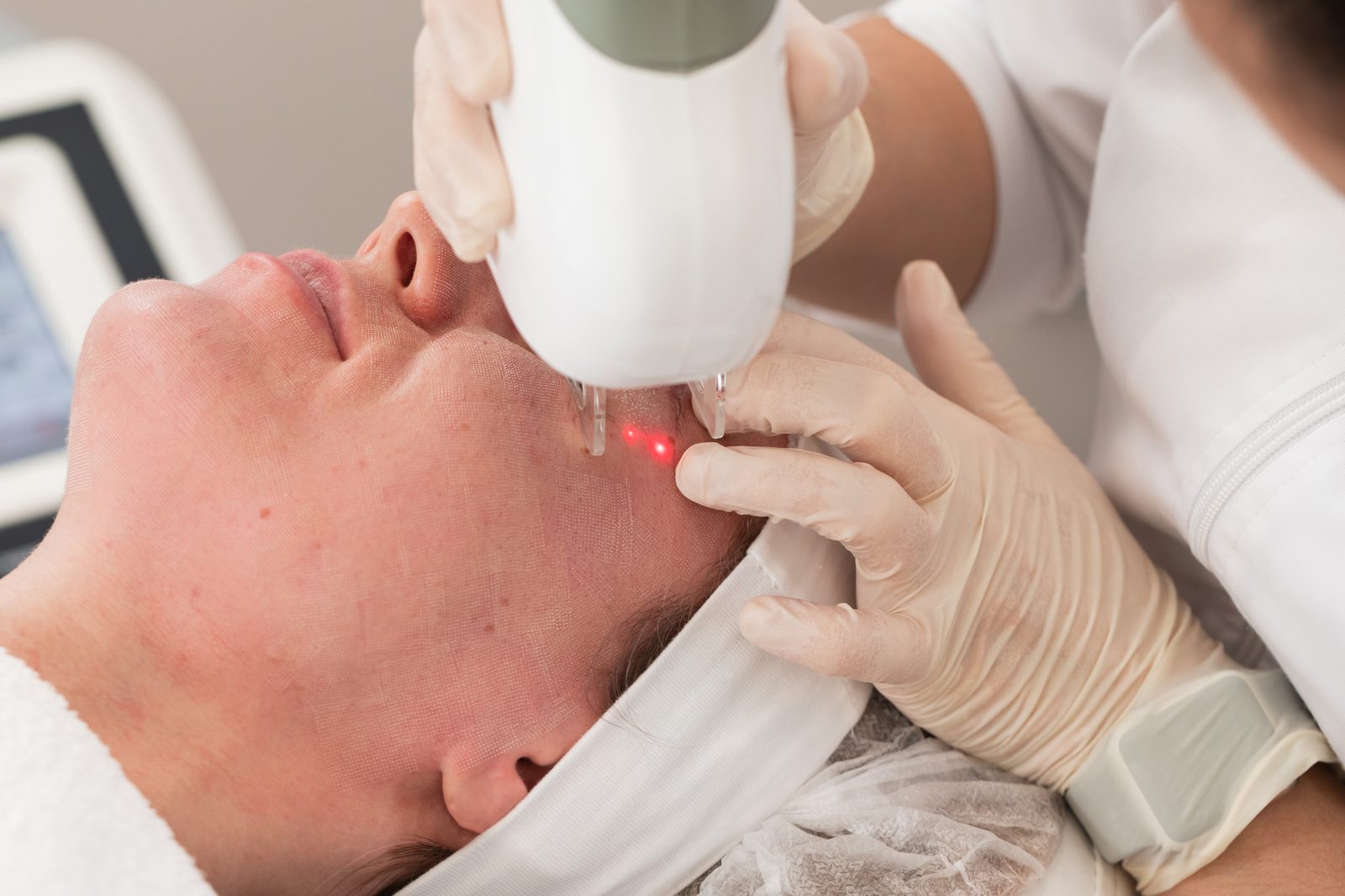
If you have brown or Black skin and have been told “you’re not a candidate for laser,” that’s true for most lasers and false for Aerolase Neo. Traditional pigment lasers (Q-switched 532 nm, Alexandrite 755 nm), broadband IPL, and ablative CO2 are unsafe at therapeutic settings on Fitzpatrick IV, V, and VI because they burn the surrounding pigmented skin while treating the target. Aerolase Neo’s 650-microsecond pulse at 1064 nm bypasses surface melanin entirely, making it the laser standard of care for darker complexions in 2026. At Bar Beauty Medical (46 Fort York Blvd, CityPlace), we treat patients across all six Fitzpatrick types for melasma, PIH, acne, rosacea, hyperpigmentation, and vascular lesions at $275-$285 per session or $1,295-$1,395 per package of 6. This page is a deep dive into Fitzpatrick safety: what the scale is, why darker skin reacts differently to laser energy, and how to spot a clinic that knows what it’s doing.
The Fitzpatrick Scale in Full
| Type | Description | Common Heritage | UV Burn Response | Tan Response |
|---|---|---|---|---|
| I | Very fair, ivory, freckles common | Northern European, Celtic, Irish | Always burns | Never tans |
| II | Fair, blonde or red hair, blue/green eyes | European, Scandinavian | Usually burns | Tans minimally |
| III | Medium, fair to olive | Mixed European, Mediterranean | Sometimes burns | Tans gradually |
| IV | Olive, light brown | Mediterranean, Middle Eastern, South Asian, Latin | Rarely burns | Tans easily |
| V | Brown, dark brown | South Asian, Filipino, Latin, North African, Mixed | Very rarely burns | Tans darkly |
| VI | Deeply pigmented, Black | Sub-Saharan African, Caribbean, Black diaspora | Never burns | Always dark |
The Fitzpatrick scale was developed in 1975 by Harvard dermatologist Thomas Fitzpatrick. It maps UV response, not strictly visual skin colour, though they correlate. Self-assessment is usually within one type of clinical assessment; a regulated provider will confirm at consult.
Why Most Lasers Are Unsafe on Fitzpatrick IV-VI
Laser energy is absorbed selectively by “chromophores”, molecules that absorb specific wavelengths. The three main chromophores in skin are: melanin (surface and deep), oxyhaemoglobin (blood), and water. Different wavelengths target different chromophores.
The problem: most cosmetic lasers use wavelengths in the 500-800 nm range, which are heavily absorbed by melanin. On Fitzpatrick I-III skin, that’s mostly fine, there’s little surface melanin to act as a thermal sink. On Fitzpatrick IV-VI, the surrounding skin contains so much melanin that the energy heats it directly, producing burns, blistering, hypopigmentation, hyperpigmentation, and scarring.
| Wavelength | Device Examples | Melanin Absorption | Safe on Fitz IV-VI? |
|---|---|---|---|
| 532 nm | Q-switched KTP, BBL | Very high | No |
| 585-595 nm | Pulsed-Dye (PDL) | High | No |
| 500-1200 nm broadband | IPL | High (surface) | No |
| 755 nm | Alexandrite | Moderate-high | Caution / No |
| 810 nm | Diode (for hair) | Moderate | Caution |
| 1064 nm | Nd:YAG (Aerolase, etc.) | Low | Yes |
| 10,600 nm | CO2 ablative | n/a (water-targeting) | Caution, high PIH risk |
The clinical implication: if your clinic is offering you laser treatment on Fitzpatrick IV-VI skin using any wavelength below ~900 nm, ask which specific device and what its safety data is on darker complexions.
Why Aerolase’s 1064 nm + 650-Microsecond Profile Works on All Six Types
Two design properties combine to make Aerolase safe across all Fitzpatrick types:
1. The Wavelength: 1064 nm
At 1064 nm, melanin absorption is roughly 10× lower than at 532 nm. The energy passes through surface melanin and is selectively absorbed by deeper targets: melanin clusters (melanosomes) at depth, oxyhaemoglobin in dermal vessels, water-containing structures like sebaceous glands. Surrounding pigmented skin barely registers the energy.
2. The Pulse Duration: 650 Microseconds
The shorter the pulse, the less time energy has to diffuse from the target into surrounding tissue. At 650 µs, the pulse is too fast for thermal diffusion, targets heat above their disruption threshold; surrounding cells stay cool. Traditional Nd:YAG lasers use millisecond pulses (1000-100,000 µs); Aerolase is 1.5 to 150× faster.
The combined effect: targeted disruption of pigment, vasculature, and sebaceous glands with virtually no thermal damage to surrounding melanin-rich skin. That’s the engineering basis for why Aerolase is safe across Fitzpatrick I-VI.
Treatment Indications by Fitzpatrick Type
| Indication | Fitz I-II | Fitz III | Fitz IV | Fitz V-VI |
|---|---|---|---|---|
| Active acne | Aerolase, IPL ok | Aerolase preferred | Aerolase only | Aerolase only |
| Melasma | Aerolase | Aerolase | Aerolase | Aerolase (conservative) |
| PIH | Aerolase, sometimes Q-switched | Aerolase | Aerolase only | Aerolase only |
| Rosacea / persistent redness | PDL or Aerolase | Aerolase or careful IPL | Aerolase | Aerolase |
| Sun spots / lentigines | IPL or Q-switched fastest | Aerolase preferred | Aerolase only | Aerolase only |
| Telangiectasia | PDL or Aerolase | Aerolase | Aerolase | Aerolase |
| Hair removal | Diode/Alex | Diode/Alex | Nd:YAG (Aerolase compatible) | Nd:YAG only |
What “Not a Candidate” Usually Means (And What to Ask)
If a clinic tells you “you’re not a candidate” for laser, that’s almost always shorthand for “our device isn’t safe on your skin.” Productive follow-up questions:
- “What device do you operate? Wavelength?”
- “Is the device Nd:YAG-based?”
- “What’s your safety experience on Fitzpatrick V-VI specifically?”
- “Can you show me before-and-after photos of patients with my Fitzpatrick type?”
If the answer is “we use IPL” or “Q-switched” only, they’re telling you the truth about their device’s limits, not yours. Look for a clinic with an Aerolase Neo, an Excel V (also has 1064 nm), a Cutera enlighten III, or a Picoway with appropriate 1064 nm settings.
How to Pay: HSA, CRA
Medical-indication treatment of PIH, melasma, and acne often qualifies under HSA / HCSA when delivered by a regulated health professional.
Affirm financing
For larger treatment plans, Affirm financing is available so you can split the cost into monthly payments. You can review your options at consultation; checking your rate does not affect your treatment plan.
Aerolase Across the GTA
Bar Beauty Medical serves the multi-ethnic GTA population from CityPlace, accessible to Toronto, Mississauga, Brampton, Vaughan, Markham, Richmond Hill, Oakville, and Etobicoke.
Frequently Asked Questions
Is Aerolase safe on Black skin?
Yes. Aerolase Neo is FDA-cleared for Fitzpatrick I-VI including type VI (deeply pigmented). The 1064 nm wavelength bypasses surface melanin.
What’s the difference between Fitzpatrick IV and V?
Fitzpatrick IV is olive skin that tans easily, rarely burns; common in Middle Eastern, South Asian, Latin populations. Type V is brown skin that very rarely burns; common in South Asian, Filipino, Latin, North African populations. The clinical implication: type V has even more surface melanin and reacts more to misapplied energy.
Can I get laser treatment if I’m tanned?
On Aerolase: yes, with adjusted settings. On IPL or 532 nm devices: no, unsafe. One of the practical advantages of Aerolase is year-round treatment.
What if I’ve had bad laser results elsewhere?
Many of our patients arrive after bad IPL or Q-switched experiences. We start at conservative settings and rebuild barrier with topicals first.
Will I still need SPF if I’m Fitzpatrick VI?
Yes, especially. Visible light triggers PIH in darker skin even when UV exposure feels mild. Mineral SPF 50 daily is non-negotiable during and after Aerolase courses.
How do I know my Fitzpatrick type?
Standard scale + provider confirmation. The 5-question Fitzpatrick questionnaire (sun reaction history, baseline colour, ancestry) is the most reliable self-assessment.
Can Aerolase make my hyperpigmentation worse?
Properly applied at correct settings: no. Misapplied at excessive fluence: rarely, mild rebound possible. Bar Beauty uses conservative settings on Fitzpatrick V-VI by default and ramps based on response.
What other lasers are safe on Fitzpatrick V-VI?
Long-pulse Nd:YAG (for hair), Q-switched 1064 with care, fractional non-ablative 1550 nm with caution. The wavelength to look for is 1064 nm. Aerolase is the safest within that class because of its 650-microsecond pulse.
How much does Aerolase cost on Fitzpatrick IV-VI?
Same price as Fitzpatrick I-III. $275-$285 single session, $1,295-$1,395 for a package of 6 at Bar Beauty.
How many sessions on darker skin?
Typically 6-8 for melasma and PIH on Fitzpatrick V-VI; 4-6 for acne and rosacea. Maintenance every 6-12 weeks.
Book a Free Consultation for Fitzpatrick IV-VI Skin
Free 20-minute consult including Fitzpatrick mapping, indication assessment, and an honest device recommendation. We treat darker skin every day, bring your previous laser history. Book at barbeauty.ca/book or call 416-923-1200.
The Fitzpatrick Scale: Why It Was Created and Why It Still Matters in 2026
The Fitzpatrick skin-type classification was developed by Harvard dermatologist Thomas Fitzpatrick in 1975 originally to predict UV-induced erythema and tanning response in patients receiving PUVA therapy for psoriasis. The scale assigns six categories based on constitutional skin colour and the response of unexposed skin to 45-60 minutes of sun: Type I always burns, never tans; Type VI deeply pigmented, never burns. The clinical relevance to laser medicine is that melanin in the epidermis competes with the intended chromophore (haemoglobin, water, or hair-shaft melanin) for laser energy. Higher Fitzpatrick types, especially IV, V, and VI, carry significantly elevated risk of post-inflammatory hyperpigmentation (PIH), depigmentation, and burns when treated with wavelengths poorly suited to deep melanin. Aerolase’s 1064 nm Nd:YAG at 650 microseconds was engineered specifically to bypass this problem.
Why 1064 nm Pulsed at 650 Microseconds Solves the Darker-Skin Laser Problem
Two physics decisions explain why Aerolase is safe across Fitzpatrick I-VI: wavelength choice and pulse duration. The 1064 nm wavelength sits in a portion of the electromagnetic spectrum where melanin absorption is roughly 25 times lower than at 532 or 595 nm (the wavelengths used by KTP and PDL devices). That means the same amount of energy delivered at 1064 nm passes through epidermal melanin with minimal heating. Pulse duration matters because melanin’s thermal relaxation time is approximately 50-500 nanoseconds, while haemoglobin and dermal targets have relaxation times in the millisecond range. By delivering energy in 650 microseconds, Aerolase exceeds the relaxation time of melanin (so heat dissipates before damage accumulates) while still being short enough to selectively heat the intended dermal target. The combined effect is selective photothermolysis without melanin collateral damage.
Aerolase vs Common Alternatives for Fitzpatrick IV-VI
- IPL: Broadband 500-1200 nm. High risk of PIH, blistering, and depigmentation in Fitzpatrick IV+. Not recommended.
- Q-switched ND:YAG (Pico/Nano): Same 1064 nm, but nanosecond pulses are designed for pigment removal; not interchangeable with vascular/inflammatory indications.
- Long-pulse Nd:YAG (millisecond): Safer than IPL but more thermal damage than Aerolase; higher risk of textural change in Fitzpatrick V-VI.
- Erbium & CO2 ablative lasers: Resurfacing devices, fundamentally different category; very high PIH risk in darker skin, usually contraindicated unless performed by deeply experienced ethnic-skin specialists.
- Aerolase Neo (1064 nm, 650 µs): Safe across I-VI; the most flexible single device for ethnically diverse Canadian patient populations.
Sticker Price vs True Cost of the Wrong Device on Darker Skin
The hidden cost of using the wrong wavelength on a Fitzpatrick V patient is not the original treatment fee, it is the cost of treating the PIH that results. Post-inflammatory hyperpigmentation from a botched IPL or PDL session typically requires 6-12 months of topical management with hydroquinone, kojic acid, azelaic acid, tretinoin, and strict mineral SPF, plus often 3-6 follow-up Aerolase or chemical peel sessions to clear the discolouration. Total all-in cost: $1,500-$3,500 plus a year of cover-up. Choosing the correct device the first time at $285-$1,395 is the only reasonable economic decision.
Pre-Treatment Preparation for Fitzpatrick IV-VI
Higher Fitzpatrick types benefit from a longer pre-conditioning protocol than lighter skin. Two weeks before treatment: begin nightly application of either azelaic acid 15% or low-dose tretinoin (0.025%) to suppress melanocyte activity. Apply mineral SPF 50 daily without exception. Stop self-tanner immediately. Avoid all glycolic and salicylic exfoliation. The day before treatment, skip retinoid to avoid barrier compromise. Arrive with a clean face, no makeup, and ideally a clear-shaded photo of the target area in good light for our before-after archive.
Common Mistakes Patients Make at Fitzpatrick IV-VI
- Believing the “no laser at all for my skin” myth. Decades-old advice from clinics that owned only IPL.
- Booking with clinics that don’t routinely treat your skin type. Experience pattern matters as much as the device.
- Skipping daily mineral SPF. Even short UV exposure between sessions reactivates melanocytes.
- Continuing self-tanner or sunless tan products. These create a chromophore that competes with the intended target.
- Ignoring the pre-conditioning protocol. Two weeks of melanocyte-suppression dramatically reduces PIH risk.
Decision Matrix: Is Your Skin Type Right for Aerolase?
- Fitzpatrick I-III: All standard indications, rosacea, acne, melasma, fine vessels, tone. Excellent fit.
- Fitzpatrick IV: Most indications safe at standard fluence; mild acne, PIH, melasma, vascular all responsive.
- Fitzpatrick V: Conservative fluence preferred; longer pre-conditioning. Aerolase is one of the few safe options.
- Fitzpatrick VI: Lowest-fluence protocols, ideally with a test patch before the first full session. Still safe; still effective. Experience of the operator is the single most important variable.
Deeper protocol breakdown for Aerolase across Fitzpatrick skin types at Bar Beauty Medical
Beyond the high-level overview most clinics publish, patients researching Aerolase across Fitzpatrick skin types in Toronto deserve to know what actually happens during a Aerolase 1064 nm safe-for-all-skin laser appointment, how decisions are made in real time, and what separates a competent technician from a clinician building a long-term aesthetic plan. At Bar Beauty Medical, every Aerolase across Fitzpatrick skin types appointment follows a six-stage protocol. Stage one is the seated visual assessment in neutral lighting with hair pulled back. Stage two is the dynamic assessment, where Jasmine asks the patient to smile, frown, pucker, and speak naturally to identify how the muscles of facial expression interact with whatever concern brought them in. Stage three is the photographic baseline using standardized angles (frontal, three-quarter left and right, profile, and submental) under fixed lighting. Stage four is treatment planning, where the proposed approach is sketched on a printed face diagram and reviewed with the patient before any product is opened. Stage five is consent, including a written explanation of risks specific to the planned anatomy. Stage six is the treatment itself, performed slowly and incrementally, with a hand mirror offered at natural pause points so the patient can confirm direction before more product is delivered.
This protocol exists because rushed appointments produce rushed outcomes. When a clinic books Aerolase across Fitzpatrick skin types every 15 minutes, the planning conversation gets compressed and the patient is more likely to leave with a generic result. Our Aerolase across Fitzpatrick skin types bookings are 60 to 90 minutes for new patients and 45 to 60 minutes for return visits, which is longer than the industry average but produces fewer revisions and more natural outcomes over time.
Year-one, year-two, and year-three cost framework
A realistic budget for Aerolase across Fitzpatrick skin types extends beyond the first appointment. Year one typically involves an initial treatment plus one or two refinement or maintenance visits, depending on the product half-life and the patient’s goals. Expect a year-one investment in the range of CAD 250-475 multiplied by 1.5 to 2.0. Year two usually settles into a maintenance rhythm where the patient has identified what works and is no longer building. Year-two costs typically drop 20 to 40 percent versus year one. Year three often introduces complementary treatments (skin quality work, biostimulator layering, or device-based collagen support) that reduce the dependency on the original Aerolase 1064 nm safe-for-all-skin laser alone. A patient who plans across a three-year horizon usually spends less per year by year three than they spent in year one, and the result looks more cohesive because each decision was made in the context of an overall plan rather than as a one-off purchase.
Common reversal and correction scenarios
Patients ask about reversibility for good reason. For hyaluronic acid filler, hyaluronidase dissolves product within 24 to 72 hours of injection, although some patients require a second dissolving session for stubborn deposits. For neuromodulators, there is no reversal agent; the only option is to wait for the protein to metabolize, which takes 8 to 12 weeks. For biostimulators (Sculptra, Radiesse) the product is not directly reversible, which is why these treatments demand experienced injectors and conservative starting volumes. For energy-based treatments, the question is less about reversal and more about whether a course can be paused and restarted, which is generally yes. Our clinic carries hyaluronidase on site, follows a same-day complication pathway, and has direct vascular-occlusion protocols posted in every treatment room. We have performed dissolving on patients who were originally treated elsewhere; we do not charge punitively for these corrections, because patient safety matters more than relationship politics.
Before-and-after photography expectations
Standardized photography is part of Aerolase across Fitzpatrick skin types planning at our clinic. We use a fixed camera distance, fixed focal length, fixed lighting, and identical patient positioning at every visit. This matters because non-standardized photos exaggerate or minimize change depending on angle and lighting, which makes it impossible to evaluate whether a treatment achieved its goal. Patients receive their before-and-after set after each appointment and can request a multi-year review at any time. We do not publish patient photos without explicit written, time-limited consent, and we do not pressure patients to grant photo permission as a condition of treatment.
Candidacy determinants we evaluate at consultation
Not every patient who requests Aerolase across Fitzpatrick skin types is an ideal candidate at the moment they ask. We evaluate eight candidacy determinants: realistic expectations, baseline anatomy, skin quality, medical history (autoimmune, anticoagulant, isotretinoin, immunosuppression, pregnancy or breastfeeding), psychological readiness, financial fit across a multi-visit plan, lifestyle factors (travel, sun exposure, planned events), and prior treatment history. A patient who scores poorly on three or more of these is asked to address the relevant factor before proceeding, even if it means losing the booking revenue. This is not gatekeeping for its own sake; it is how we maintain a low complication rate and high patient satisfaction across years rather than across single visits.
Advanced technique discussion
For patients who have done their own research, here is what differentiates a thoughtfully performed Aerolase across Fitzpatrick skin types session from a basic one. We use cannulas in anatomical zones where they reduce vascular risk and bruising (midface, jawline, tear-trough adjacent zones) and needles where precision and product placement demand it. Aspiration is performed where vascular density requires it. Product selection is matched to tissue plane: thinner, more cohesive gels for superficial work; more robust, higher-G’ products for structural support. Layering across multiple sessions is preferred over single-session high-volume work because tissue accommodates change more gracefully over time. These specifics are why two clinics can quote a similar dollar figure for Aerolase across Fitzpatrick skin types and produce visibly different outcomes.
See also: our full guide to Aerolase at Bar Beauty Medical.
Melasma is where Fitzpatrick type matters most, because the wrong laser worsens it. Our Aerolase melasma guide covers the safe route for IV to VI.
Questions about this treatment?
Ask us anything before you book. Consultations are free, and we will tell you honestly if a treatment is not right for you.