


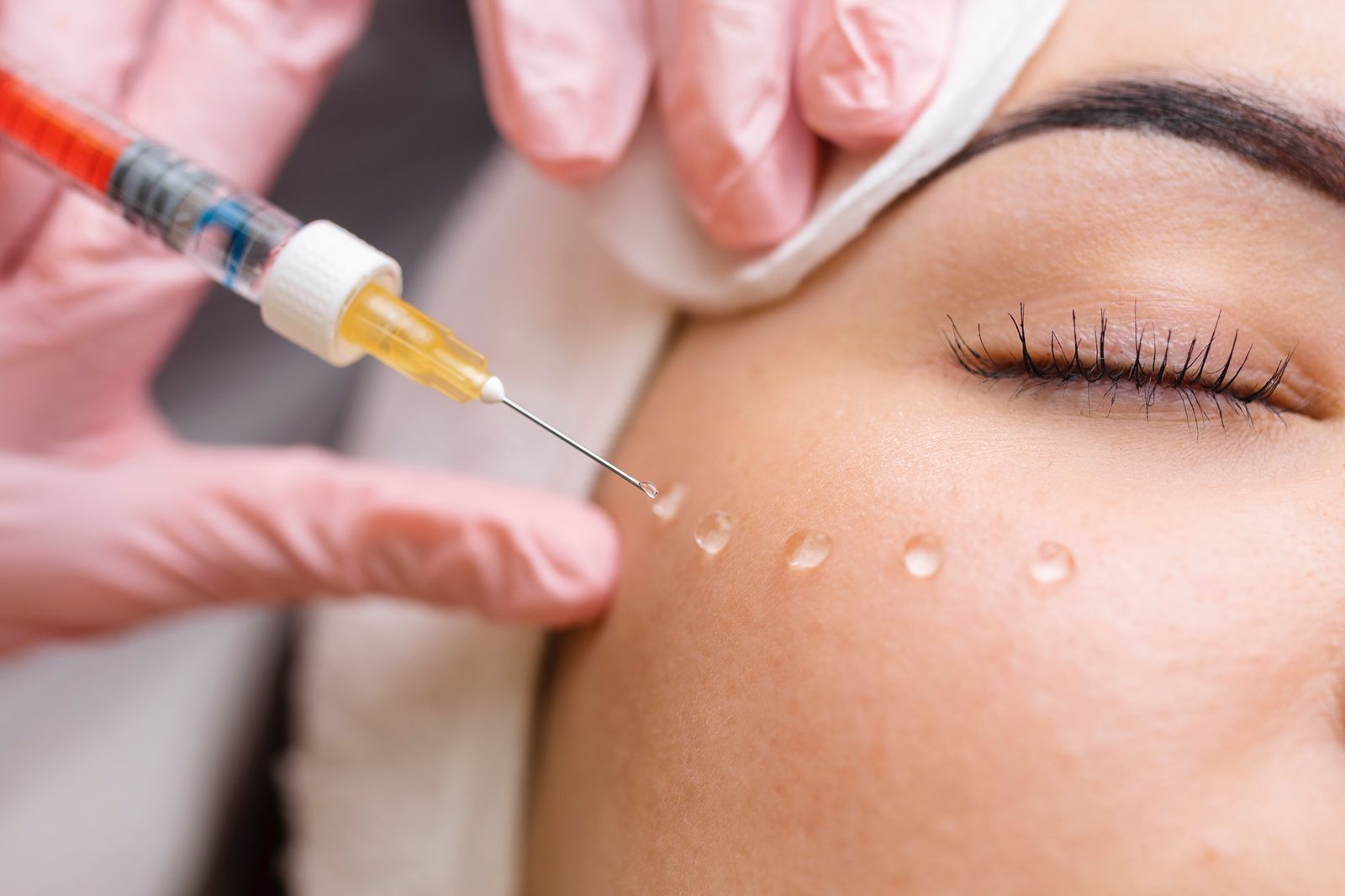
The practical difference is when you see it. Radiesse gives immediate volume because the product itself is a filler, then stimulates collagen over months. Sculptra gives almost nothing on the day, because it is not a filler at all, it is a collagen stimulant that builds gradually over eight to twelve weeks. If you have an event in three weeks, that difference decides your answer.
| Treatment | Price (CAD) | Onset and character |
|---|---|---|
| Radiesse Rejuvenation, 1 syringe | $900 | Immediate lift plus collagen stimulation over 6 to 9 months. |
| Sculptra, one vial | $900 | Gradual. Little visible change on the day, builds over 8 to 12 weeks. |
| Radiesse Hand Rejuvenation, 2 syringes | $1,500 | Both hands. Immediate improvement in the hollowing. |
| Sculptra, two vials | $1,700 | The usual first session for general facial volume loss. |
| Consultation | Free | Which one fits your timeline and your face. |
Bar Beauty Medical, 46 Fort York Blvd, CityPlace, Toronto. Prices in Canadian dollars from our live booking system, verified 18 August 2026. Sculptra usually needs two to four vials across two sessions to reach the endpoint. Neither is dissolvable with hyaluronidase, which is worth knowing before you commit.
Sculptra vs Radiesse for Cheek Volume: Which Is Right for You?
In short: Sculptra (poly-L-lactic acid) gradually builds collagen over 3-6 months for a slow, natural lift, best for full-face restoration. Radiesse (calcium hydroxylapatite) gives immediate volume PLUS collagen stimulation over 3-12 months, best when you want visible improvement immediately. Both last longer than hyaluronic acid filler.
Bar Beauty Medical’s licensed RNs offer both. Here’s how to choose.
The fundamental difference
Sculptra and Radiesse are both biostimulators, meaning they don’t just fill, they trigger your body to produce new collagen. Different from traditional hyaluronic acid fillers (Stylage) which sit in place and slowly dissolve.
- Sculptra: Poly-L-lactic acid (PLLA). Stimulates collagen over 3-6 months. Results build gradually. Lasts 2+ years.
- Radiesse: Calcium hydroxylapatite (CaHA). Immediate volume from carrier gel + collagen stimulation over 3-12 months. Lasts 12-18 months.
Sculptra: The gradual transformation
The go-to biostimulator when you want subtle, natural-looking results that no one suspects are filler.
Best for:
- Patients in their 40s, 50s, 60s with full-face volume loss
- Anyone who wants to look refreshed without “filler face”
- Patients hesitant about immediate visible changes
- Long-term collagen-building strategy
Typical protocol: 2-3 sessions, 4-6 weeks apart. Each session uses 1-2 vials.
Timeline:
- Immediate: Mild swelling that subsides in 1-3 days. NOT your final result.
- Weeks 4-8: Subtle improvements start.
- Months 3-6: Full collagen response. People ask what you’ve done.
Radiesse: The immediate-yet-natural option
Visible volume the day you walk out of the clinic, then continues working as it stimulates collagen for months.
Best for:
- Mid-face contouring (cheekbones, hollows)
- Jawline definition
- Patients who want immediate improvement
- Treating hand volume loss (FDA approved for hands)
Typical protocol: 1-2 syringes per session, spaced as needed. Annual touch-ups for some patients.
Timeline:
- Day 1: Immediate visible volume from carrier gel.
- Months 1-3: Carrier gel absorbs while collagen production ramps.
- Months 3-12: Collagen continues building. Result remains stable.
- Months 12-18: Gradual fade.
Cost in Toronto
Pricing in downtown Toronto is similar:
- Sculptra: Typically $900-$1,200 per vial. Most full-face protocols use 2-3 vials total.
- Radiesse: Typically $900-$1,100 per syringe. Most cheek treatments use 1-2 syringes.
Bar Beauty Medical’s licensed RNs do a consultation first to determine product, dose, and total plan.
Which one should YOU pick?
Quick decision tree:
- “Immediate visible cheekbones for an event in 3 weeks” → Radiesse
- “Gradually more refreshed over a year, with no one noticing” → Sculptra
- “60s with full-face volume loss” → Sculptra
- “30s-40s with mild flattening” → Either works
- “Strong jawline definition” → Radiesse
- “Concerned about looking ‘filled’” → Sculptra
- “One syringe and out, not a series” → Radiesse
Why pick Bar Beauty Medical for biostimulators
Both Sculptra and Radiesse are technique-sensitive. Improper placement causes lumps or nodules. Bar Beauty Medical’s licensed RNs are trained in advanced biostimulator placement including cannula technique that reduces bruising and improves outcomes. Performed at our downtown Toronto clinic at CityPlace Fort York.
FAQ
Is Sculptra or Radiesse better for cheeks? Sculptra is better for gradual full-face restoration. Radiesse is better when you want immediate visible cheek volume plus long-term collagen stimulation.
How long does Sculptra last vs Radiesse? Sculptra lasts approximately 2+ years. Radiesse lasts 12-18 months. Both are longer than hyaluronic acid filler (6-12 months).
Can I do Sculptra and Radiesse together? Yes, but not at the same session. Some Toronto patients use Sculptra for full-face foundation and Radiesse for spot contouring later.
Which has more downtime? Both have similar downtime: mild swelling 24-48 hours. Bruising is typically minimal with cannula technique.
Ready to book? Schedule a biostimulator consultation with a licensed RN at Bar Beauty Medical, downtown Toronto.
,
What biostimulators actually do for the cheeks
Biostimulators are a category of injectable that does not primarily add volume in the way hyaluronic acid fillers do. Instead, they signal the body to produce new collagen over weeks to months. The visible result is gradual restoration of cheek contour, midface support, and overall facial fullness through the patient own collagen rather than through an inert gel. The two dominant biostimulators in Canada are Sculptra (poly-L-lactic acid, manufactured by Galderma) and Radiesse (calcium hydroxylapatite, manufactured by Merz). Both are Health Canada approved. Both stimulate collagen. They do this through different mechanisms, with different onset profiles, different ideal indications, and different cost structures.
Sculptra in detail
Composition and mechanism
Sculptra contains poly-L-lactic acid (PLLA) microparticles suspended in a reconstituted sterile water solution. The PLLA particles trigger a controlled subclinical inflammatory response that fibroblasts respond to by producing new type I collagen over 6 to 12 weeks following each session. The PLLA particles themselves are gradually metabolized by the body across approximately 18 months.
Ideal indications
Sculptra is ideal for diffuse facial volume loss, overall midface and temple wasting, gradual rejuvenation in patients who want a natural-looking restoration without immediate dramatic change, patients with HIV-associated facial lipoatrophy (its original FDA approval indication), and patients in their 40s, 50s, and 60s with progressive volume loss. It is excellent for global rejuvenation rather than discrete contour shaping.
Onset and longevity
Visible result emerges gradually over 6 to 12 weeks following each session. Final result typically requires 2 to 3 sessions spaced 4 to 6 weeks apart. Longevity is up to 24 months.
Cost at Bar Beauty Medical
$900 per vial, or $1,700 for the two-vial protocol. Most patients need 2 to 3 vials across a series. Total investment: $1,700 to $2,600.
Aftercare specifics
The Sculptra five-five-five rule: massage the treated area firmly for 5 minutes, 5 times per day, for 5 days post-treatment. This helps even distribution of the PLLA particles and reduces the very rare risk of palpable nodule formation.
Radiesse in detail
Composition and mechanism
Radiesse contains calcium hydroxylapatite (CaHA) microspheres suspended in a carboxymethylcellulose gel carrier. The CaHA microspheres provide immediate volumetric correction while also stimulating gradual collagen production around the microspheres over 6 to 9 months. The gel carrier is absorbed first; the microspheres remain longer and continue to stimulate collagen.
Ideal indications
Radiesse is ideal for defined cheekbone contour, jawline structuring, immediate volumetric result, hand rejuvenation, and patients who want both same-day visible change and ongoing collagen stimulation. It is excellent for sculpting rather than diffuse rejuvenation.
Onset and longevity
Result is visible immediately after injection due to the gel carrier volume. Collagen stimulation builds over 3 to 6 months. Total longevity is typically 12 to 18 months, sometimes longer in certain areas.
Cost at Bar Beauty Medical
$900 per syringe. Most patients use 1 to 2 syringes per cheek treatment. Total investment: $900 to $1,800 per session.
Aftercare specifics
Standard injectable aftercare. No specific massage protocol like Sculptra.
Side-by-side comparison table
| Factor | Sculptra | Radiesse |
|---|---|---|
| Active ingredient | Poly-L-lactic acid | Calcium hydroxylapatite in gel carrier |
| Onset of visible result | Gradual over 6 to 12 weeks | Immediate volumetric, plus gradual collagen |
| Number of sessions | 2 to 3, spaced 4 to 6 weeks apart | Often 1 to 2 |
| Longevity | Up to 24 months | 12 to 18 months |
| Best for | Diffuse volume loss, gradual natural rejuvenation | Defined cheek contour, immediate result, jawline sculpting |
| Reversibility | Not actively reversible; metabolizes naturally | Not reversible with hyaluronidase |
| Bruising risk | Low to moderate | Low to moderate |
| Special aftercare | 5-5-5 massage rule for 5 days | Standard injectable aftercare |
Which is right for you
Choose Sculptra if
You want a gradual natural-looking rejuvenation, you are comfortable waiting weeks to see results, you have diffuse rather than localized volume loss, you want the longest-lasting biostimulator effect, you are okay committing to a 2 to 3 session series.
Choose Radiesse if
You want immediate visible result alongside collagen stimulation, your primary concern is cheek contour or jawline sculpting rather than diffuse volume, you want to do fewer sessions, you are willing to accept somewhat shorter overall longevity than Sculptra.
Choose HA filler (Stylage L or Stylage XL) if
You want reversibility with hyaluronidase, you want a definable contour you can predict on the same day, you prefer the safety net of a fully dissolvable product, you are doing your first volumizing treatment and want a try-it-out option.
The hybrid approach
Many patients in 2026 do a hybrid protocol combining HA filler in the cheekbone for immediate defined contour with a Sculptra series for gradual diffuse volume restoration in the surrounding midface. This gives both immediate result and long-term collagen building.
Red flags: cheap biostimulator pricing
Sculptra under $800 per vial or Radiesse under $700 per syringe in Toronto in 2026 are red flags. Real wholesale cost plus appropriate margin requires Sculptra at $900+ per vial and Radiesse at $800+ per syringe at any reputable clinic. Steep discounts often indicate diluted product, expired product nearing best-before, or grey-market sourcing.
Paying for biostimulators in Toronto
Biostimulators for cosmetic purposes are not HSA-eligible (Sun Life, Manulife, Canada Life, Green Shield personal HSAs do not reimburse cosmetic procedures). Not a CRA medical expense. Not OHIP-covered. Sculptra for HIV-associated facial lipoatrophy has historically been covered through select compassionate programs with infectious disease specialist documentation.
Affirm financing
For larger treatment plans, Affirm financing is available so you can split the cost into monthly payments. You can review your options at consultation; checking your rate does not affect your treatment plan.
Frequently asked questions about Sculptra vs Radiesse
Which lasts longer?
Sculptra lasts up to 24 months. Radiesse lasts 12 to 18 months. Both significantly outlast HA fillers in equivalent areas.
Which has faster onset?
Radiesse gives immediate visible result; Sculptra builds over 6 to 12 weeks.
Are biostimulators reversible?
Neither is actively reversible with hyaluronidase the way HA fillers are. Sculptra metabolizes naturally over 18 months; Radiesse over 12 to 18 months.
Does it hurt?
Topical numbing is applied 30 minutes pre-treatment. Sensation during injection is moderate but tolerable.
What is the downtime?
Minimal. Mild swelling for 24-48 hours, possible bruising. Most patients return to work the next day.
Can I combine biostimulators with HA filler?
Yes, the hybrid approach is increasingly common. Different products address different aspects of the same goal.
What is the 5-5-5 rule?
Sculptra-specific aftercare: massage treated areas for 5 minutes, 5 times per day, for 5 days. Helps even distribution.
Will my face look the same as before?
Goal is gradual restoration to a refreshed version of your face. Not transformation.
Can biostimulators replace facelift?
No. Biostimulators address volume and collagen quality, not the structural laxity that surgical lift corrects. For appropriate candidates, they can defer the need for surgical intervention.
Are they safe?
Yes when injected by qualified practitioners using Health Canada approved products. Rare nodule formation with Sculptra is the most-discussed risk, mitigated by appropriate dilution and the 5-5-5 massage rule.
Which is better for the under-eye area?
Neither. Biostimulators are not appropriate for the under-eye tear trough due to the risk of visible nodules in thin skin. HA filler is the appropriate choice for tear troughs.
How do I know I need a biostimulator versus filler?
Consultation. We assess facial proportions, areas of volume loss, your goals and timeline, your reversibility preferences, your budget. The right answer differs by patient.
Detailed Sculptra and Radiesse comparison for cheek rejuvenation
| Factor | Sculptra | Radiesse |
|---|---|---|
| Active ingredient | Poly-L-lactic acid | Calcium hydroxylapatite microspheres in gel carrier |
| Onset of visible result | Gradual over 6 to 12 weeks | Immediate volumetric result plus gradual collagen induction |
| Sessions | Typically 2 to 3 spaced 4 to 6 weeks apart | Often single session or 2 sessions |
| Longevity | Up to 24 months | 12 to 18 months |
| Best for | Diffuse volume loss, overall facial wasting, gradual rejuvenation | Defined cheekbone contour, immediate result desired |
| Reversibility | Not reversible; metabolizes naturally | Not reversible with hyaluronidase |
The right choice depends on your goals, your timeline, and your tolerance for irreversibility. We discuss both options in detail at consultation and sometimes recommend a hybrid approach using HA filler for immediate contour with a Sculptra series for gradual volume restoration.
The biology of collagen induction in plain language
When a biostimulator microparticle is placed in the deep dermis or subcutaneous tissue, the body recognizes it as a foreign body and mounts a controlled wound-healing response. Fibroblasts (the collagen-producing cells in the dermis) are recruited to the area, activate, and lay down new type I and type III collagen fibers around the microparticles. This is not the same kind of acute inflammation as an infection; it is a slow, regulated tissue remodeling that the body manages without symptoms in most patients. The new collagen creates structural support that persists long after the microparticles themselves have been metabolized. The patient does not get their visible result from the product per se; they get it from their own newly-produced collagen.
Why some patients respond better than others
Younger patients with active fibroblasts and good baseline collagen quality generally respond more robustly than older patients with depleted fibroblast populations. Smokers respond poorly; nicotine impairs collagen synthesis. Patients on systemic corticosteroids respond suboptimally. Patients with autoimmune fibrotic conditions are not appropriate candidates. Patients with excellent nutrition, particularly adequate vitamin C and protein, generally respond well. This biology matters for setting realistic expectations at consultation.
The Bar Beauty consultation protocol for biostimulators
Initial consultation: facial proportion analysis, photographic baseline from five angles, discussion of goals and timeline, screening for contraindications (active autoimmune disease, current corticosteroid use, recent infection, pregnancy, breastfeeding, recent isotretinoin within 6 months), product recommendation with rationale, written treatment plan with clear pricing across the full series, and informed consent walkthrough. We do not perform biostimulator injection at the consultation visit; you go home with the plan and book the first session separately. This intentional cooling-off period reduces impulse decisions and gives patients time to review the plan against their own goals.
What top Toronto biostimulator clinics do differently in 2026
Three things separate top-tier biostimulator clinics from average ones in 2026. First, dilution technique. Sculptra reconstituted at higher dilutions (8 to 10 mL per vial) with adequate sit time (at least 24 hours of reconstitution before injection at conservative practices) gives lower nodule risk and smoother distribution than older 5 mL protocols injected the same day. Second, cannula use. 25-gauge blunt cannulas for cheek and midface placement reduce vascular event risk and bruising. Third, conservative volume per session with multiple sessions rather than over-treating in a single visit. Patients who get aggressively volumized in one biostimulator session often look strange for weeks; patients who get a measured series across 6 to 8 weeks look like a refreshed version of themselves. We follow current best-practice protocols and update them as published evidence and manufacturer guidance evolves.
Book a cheek rejuvenation consultation at Bar Beauty Medical
Bar Beauty Medical is at 46 Fort York Blvd in downtown Toronto. Biostimulator consultations include facial analysis, product recommendation discussion, a written multi-session plan, and the chance to ask every question without pressure to book on the day. Book online or call 416-923-1200.
The Bar Beauty biostimulator consultation walkthrough
A biostimulator consultation at Bar Beauty Medical runs 30 to 45 minutes. The RN performs a facial proportion analysis, takes baseline photography from five standardized angles under consistent lighting, conducts a detailed history including prior aesthetic treatments, smoking status, autoimmune history, current medications including any corticosteroid use, and screens for contraindications. The RN then discusses Sculptra versus Radiesse versus HA filler versus combination protocols in detail, explains the expected timeline and number of sessions for each option, provides a written treatment plan with transparent pricing for the full series, and reviews the consent documents covering rare risks including nodule formation, vascular event, infection, and asymmetry. Patients leave with a printed plan and at least 24 hours to decide before booking. This intentional pause reduces impulse decisions and improves long-term satisfaction.
Deeper protocol breakdown for Sculptra vs Radiesse for cheeks at Bar Beauty Medical
Beyond the high-level overview most clinics publish, patients researching Sculptra vs Radiesse for cheeks in Toronto deserve to know what actually happens during a biostimulator cheek treatment appointment, how decisions are made in real time, and what separates a competent technician from a clinician building a long-term aesthetic plan. At Bar Beauty Medical, every Sculptra vs Radiesse for cheeks appointment follows a six-stage protocol. Stage one is the seated visual assessment in neutral lighting with hair pulled back. Stage two is the dynamic assessment, where Jasmine asks the patient to smile, frown, pucker, and speak naturally to identify how the muscles of facial expression interact with whatever concern brought them in. Stage three is the photographic baseline using standardized angles (frontal, three-quarter left and right, profile, and submental) under fixed lighting. Stage four is treatment planning, where the proposed approach is sketched on a printed face diagram and reviewed with the patient before any product is opened. Stage five is consent, including a written explanation of risks specific to the planned anatomy. Stage six is the treatment itself, performed slowly and incrementally, with a hand mirror offered at natural pause points so the patient can confirm direction before more product is delivered.
This protocol exists because rushed appointments produce rushed outcomes. When a clinic books Sculptra vs Radiesse for cheeks every 15 minutes, the planning conversation gets compressed and the patient is more likely to leave with a generic result. Our Sculptra vs Radiesse for cheeks bookings are 60 to 90 minutes for new patients and 45 to 60 minutes for return visits, which is longer than the industry average but produces fewer revisions and more natural outcomes over time.
Year-one, year-two, and year-three cost framework
A realistic budget for Sculptra vs Radiesse for cheeks extends beyond the first appointment. Year one typically involves an initial treatment plus one or two refinement or maintenance visits, depending on the product half-life and the patient’s goals. Expect a year-one investment in the range of CAD 900-1800 multiplied by 1.5 to 2.0. Year two usually settles into a maintenance rhythm where the patient has identified what works and is no longer building. Year-two costs typically drop 20 to 40 percent versus year one. Year three often introduces complementary treatments (skin quality work, biostimulator layering, or device-based collagen support) that reduce the dependency on the original biostimulator cheek treatment alone. A patient who plans across a three-year horizon usually spends less per year by year three than they spent in year one, and the result looks more cohesive because each decision was made in the context of an overall plan rather than as a one-off purchase.
Common reversal and correction scenarios
Patients ask about reversibility for good reason. For hyaluronic acid filler, hyaluronidase dissolves product within 24 to 72 hours of injection, although some patients require a second dissolving session for stubborn deposits. For neuromodulators, there is no reversal agent; the only option is to wait for the protein to metabolize, which takes 8 to 12 weeks. For biostimulators (Sculptra, Radiesse) the product is not directly reversible, which is why these treatments demand experienced injectors and conservative starting volumes. For energy-based treatments, the question is less about reversal and more about whether a course can be paused and restarted, which is generally yes. Our clinic carries hyaluronidase on site, follows a same-day complication pathway, and has direct vascular-occlusion protocols posted in every treatment room. We have performed dissolving on patients who were originally treated elsewhere; we do not charge punitively for these corrections, because patient safety matters more than relationship politics.
Before-and-after photography expectations
Standardized photography is part of Sculptra vs Radiesse for cheeks planning at our clinic. We use a fixed camera distance, fixed focal length, fixed lighting, and identical patient positioning at every visit. This matters because non-standardized photos exaggerate or minimize change depending on angle and lighting, which makes it impossible to evaluate whether a treatment achieved its goal. Patients receive their before-and-after set after each appointment and can request a multi-year review at any time. We do not publish patient photos without explicit written, time-limited consent, and we do not pressure patients to grant photo permission as a condition of treatment.
Candidacy determinants we evaluate at consultation
Not every patient who requests Sculptra vs Radiesse for cheeks is an ideal candidate at the moment they ask. We evaluate eight candidacy determinants: realistic expectations, baseline anatomy, skin quality, medical history (autoimmune, anticoagulant, isotretinoin, immunosuppression, pregnancy or breastfeeding), psychological readiness, financial fit across a multi-visit plan, lifestyle factors (travel, sun exposure, planned events), and prior treatment history. A patient who scores poorly on three or more of these is asked to address the relevant factor before proceeding, even if it means losing the booking revenue. This is not gatekeeping for its own sake; it is how we maintain a low complication rate and high patient satisfaction across years rather than across single visits.
Advanced technique discussion
For patients who have done their own research, here is what differentiates a thoughtfully performed Sculptra vs Radiesse for cheeks session from a basic one. We use cannulas in anatomical zones where they reduce vascular risk and bruising (midface, jawline, tear-trough adjacent zones) and needles where precision and product placement demand it. Aspiration is performed where vascular density requires it. Product selection is matched to tissue plane: thinner, more cohesive gels for superficial work; more robust, higher-G’ products for structural support. Layering across multiple sessions is preferred over single-session high-volume work because tissue accommodates change more gracefully over time. These specifics are why two clinics can quote a similar dollar figure for Sculptra vs Radiesse for cheeks and produce visibly different outcomes.
Deeper protocol breakdown for Sculptra vs Radiesse for cheeks at Bar Beauty Medical
Beyond the high-level overview most clinics publish, patients researching Sculptra vs Radiesse for cheeks in Toronto deserve to know what actually happens during a biostimulator cheek treatment appointment, how decisions are made in real time, and what separates a competent technician from a clinician building a long-term aesthetic plan. At Bar Beauty Medical, every Sculptra vs Radiesse for cheeks appointment follows a six-stage protocol. Stage one is the seated visual assessment in neutral lighting with hair pulled back. Stage two is the dynamic assessment, where Jasmine asks the patient to smile, frown, pucker, and speak naturally to identify how the muscles of facial expression interact with whatever concern brought them in. Stage three is the photographic baseline using standardized angles (frontal, three-quarter left and right, profile, and submental) under fixed lighting. Stage four is treatment planning, where the proposed approach is sketched on a printed face diagram and reviewed with the patient before any product is opened. Stage five is consent, including a written explanation of risks specific to the planned anatomy. Stage six is the treatment itself, performed slowly and incrementally, with a hand mirror offered at natural pause points so the patient can confirm direction before more product is delivered.
This protocol exists because rushed appointments produce rushed outcomes. When a clinic books Sculptra vs Radiesse for cheeks every 15 minutes, the planning conversation gets compressed and the patient is more likely to leave with a generic result. Our Sculptra vs Radiesse for cheeks bookings are 60 to 90 minutes for new patients and 45 to 60 minutes for return visits, which is longer than the industry average but produces fewer revisions and more natural outcomes over time.
Year-one, year-two, and year-three cost framework
A realistic budget for Sculptra vs Radiesse for cheeks extends beyond the first appointment. Year one typically involves an initial treatment plus one or two refinement or maintenance visits, depending on the product half-life and the patient’s goals. Expect a year-one investment in the range of CAD 900-1800 multiplied by 1.5 to 2.0. Year two usually settles into a maintenance rhythm where the patient has identified what works and is no longer building. Year-two costs typically drop 20 to 40 percent versus year one. Year three often introduces complementary treatments (skin quality work, biostimulator layering, or device-based collagen support) that reduce the dependency on the original biostimulator cheek treatment alone. A patient who plans across a three-year horizon usually spends less per year by year three than they spent in year one, and the result looks more cohesive because each decision was made in the context of an overall plan rather than as a one-off purchase.
Common reversal and correction scenarios
Patients ask about reversibility for good reason. For hyaluronic acid filler, hyaluronidase dissolves product within 24 to 72 hours of injection, although some patients require a second dissolving session for stubborn deposits. For neuromodulators, there is no reversal agent; the only option is to wait for the protein to metabolize, which takes 8 to 12 weeks. For biostimulators (Sculptra, Radiesse) the product is not directly reversible, which is why these treatments demand experienced injectors and conservative starting volumes. For energy-based treatments, the question is less about reversal and more about whether a course can be paused and restarted, which is generally yes. Our clinic carries hyaluronidase on site, follows a same-day complication pathway, and has direct vascular-occlusion protocols posted in every treatment room. We have performed dissolving on patients who were originally treated elsewhere; we do not charge punitively for these corrections, because patient safety matters more than relationship politics.
Before-and-after photography expectations
Standardized photography is part of Sculptra vs Radiesse for cheeks planning at our clinic. We use a fixed camera distance, fixed focal length, fixed lighting, and identical patient positioning at every visit. This matters because non-standardized photos exaggerate or minimize change depending on angle and lighting, which makes it impossible to evaluate whether a treatment achieved its goal. Patients receive their before-and-after set after each appointment and can request a multi-year review at any time. We do not publish patient photos without explicit written, time-limited consent, and we do not pressure patients to grant photo permission as a condition of treatment.
Candidacy determinants we evaluate at consultation
Not every patient who requests Sculptra vs Radiesse for cheeks is an ideal candidate at the moment they ask. We evaluate eight candidacy determinants: realistic expectations, baseline anatomy, skin quality, medical history (autoimmune, anticoagulant, isotretinoin, immunosuppression, pregnancy or breastfeeding), psychological readiness, financial fit across a multi-visit plan, lifestyle factors (travel, sun exposure, planned events), and prior treatment history. A patient who scores poorly on three or more of these is asked to address the relevant factor before proceeding, even if it means losing the booking revenue. This is not gatekeeping for its own sake; it is how we maintain a low complication rate and high patient satisfaction across years rather than across single visits.
Advanced technique discussion
For patients who have done their own research, here is what differentiates a thoughtfully performed Sculptra vs Radiesse for cheeks session from a basic one. We use cannulas in anatomical zones where they reduce vascular risk and bruising (midface, jawline, tear-trough adjacent zones) and needles where precision and product placement demand it. Aspiration is performed where vascular density requires it. Product selection is matched to tissue plane: thinner, more cohesive gels for superficial work; more robust, higher-G’ products for structural support. Layering across multiple sessions is preferred over single-session high-volume work because tissue accommodates change more gracefully over time. These specifics are why two clinics can quote a similar dollar figure for Sculptra vs Radiesse for cheeks and produce visibly different outcomes.
Related at Bar Beauty: What Sculptra Actually Costs in Toronto.
Ready to look into it properly?
Our consultation is free. We will look at your skin, give you an honest recommendation, and say so if a different treatment would suit you better.
Or call 416 923 1200 · 46 Fort York Blvd, CityPlace, Toronto
Questions about this treatment?
Ask us anything before you book. Consultations are free, and we will tell you honestly if a treatment is not right for you.