


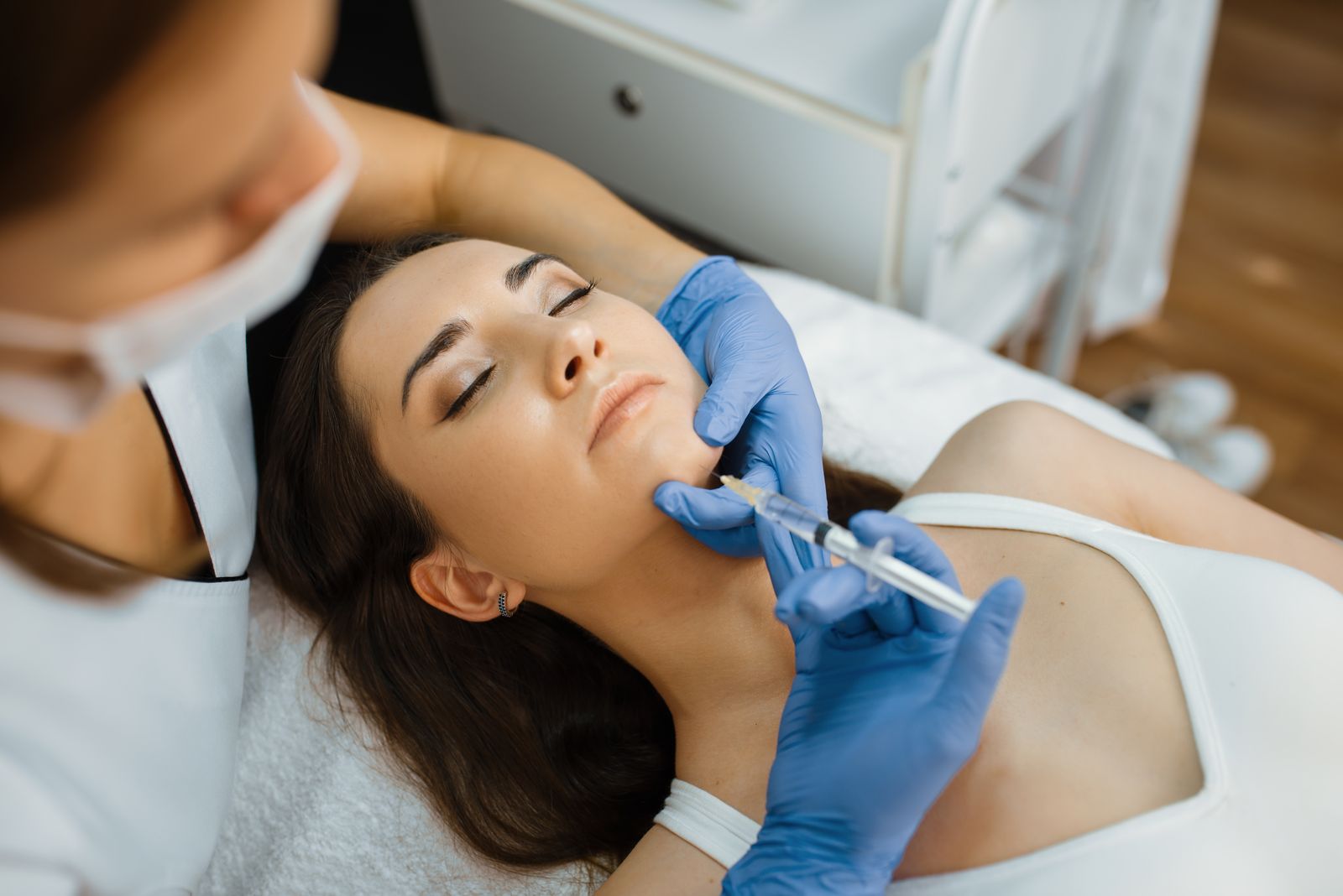
Walking into any Toronto coffee shop these days, you'll overhear conversations that would've seemed impossible ten years ago: twenty-somethings casually discussing their preventative Botox appointments between sips of oat milk lattes. Preventative Botox in Toronto has become as routine as getting your brows done or booking a facial, and there's solid science backing up why millennials are making this choice. Instead of waiting until wrinkles settle into your skin like permanent creases, more young professionals across the city are stopping them before they start. This isn't about chasing some unrealistic beauty standard it's about understanding how your skin ages and taking control of the process early. Below is a clear look at why preventative Botox is gaining traction in Toronto and whether starting in your twenties or early thirties actually makes sense for your skin.
Preventative Botox works on lines that have not etched in yet. The honest test for whether you are ready is simple: relax your face. If you can see a faint line when your face is completely still, that line is starting to set and treating it now genuinely helps. If your skin is smooth at rest, you are treating a line that may never have formed, and you are paying for it.
- The actual criterion is not age. It is whether a line persists at rest. Some people meet that at 24, others not until 38.
- Smaller doses, longer intervals. Preventative treatment usually uses fewer units than corrective work, often two or three times a year rather than four.
- What it genuinely prevents: the deep etched line that eventually needs both Botox and filler to soften. Stopping the fold early is easier than filling the crease later.
- What it does not prevent: volume loss, sun damage, pigment or skin laxity. Those are different problems with different treatments, and Botox does nothing for any of them.
- The cost reality: at $10 per unit, a light preventative treatment of 20 to 30 units is $200 to $300, two or three times a year.
- We will tell you to wait. If your face is smooth at rest we will say so rather than book you. That conversation is free.
Bar Beauty Medical, 46 Fort York Blvd, CityPlace, Toronto. Prices in Canadian dollars from our live booking system, verified 18 August 2026.
What Actually Happens When You Get Preventative Botox
What most people don't realize about wrinkles until it's too late is that they’re essentially training your face to hold certain patterns. Every time you squint at your phone, furrow your brow during a stressful work call, or raise your eyebrows in surprise, you're creating tiny folds in your skin. When you're 22 with plenty of collagen, your skin bounces back immediately. But by your late twenties, those repeated expressions start leaving marks that stick around even when your face is relaxed. Preventative Botox works by temporarily relaxing the specific muscles responsible for these repetitive movements. When you get preventative treatments in Toronto, your injector isn't trying to freeze your face or make you look expressionless they're strategically targeting the muscles that cause forehead lines, crow's feet, and those vertical lines between your eyebrows (the dreaded "elevens"). The goal is softening these movements just enough to prevent deep wrinkles from etching into your skin permanently. Think about it like this: if you fold a piece of paper in the same spot repeatedly, eventually you'll create a crease that won't smooth out. Preventative Botox treatment stops you from folding that paper in the same place over and over. Your skin stays smoother because it's not constantly being compressed into the same patterns day after day. Most Toronto millennials getting preventative injections report that people can't tell they've had anything done they just look consistently well-rested and fresh. The treatment itself takes maybe fifteen minutes, involves a series of tiny injections that feel like quick pinches, and you can literally go back to work immediately after. Results typically show up within a few days and last about three to four months. Over time, many people notice they actually need less product and fewer appointments because their facial muscles have been trained to contract less aggressively.
The Science Behind Starting Botox in Your Twenties
There is published research that points to preventative Botox influencing how wrinkles develop over time. A well-known identical-twin case report followed two sisters over many years, where one received regular Botox injections and the other did not, and reported fewer visible lines in the treated twin. It is a single case rather than a large trial, so treat it as suggestive rather than proof. Your skin's aging process accelerates in your mid-to-late twenties when collagen production starts declining. By the time you hit thirty, you're producing about 1% less collagen each year. That's when those expression lines you've been making since your teens start becoming permanent fixtures. Preventative Botox in Toronto clinics addresses this by reducing the mechanical stress on your skin during these critical years when your collagen is already decreasing.
What's happening at the cellular level is that repeated muscle contractions break down collagen and elastin fibers faster. When you limit these contractions early through preventative treatments, you're giving your skin a break from constant folding and stretching. This preservation approach means the collagen you still have isn't being destroyed as quickly by repetitive facial movements.
Toronto dermatologists and medical aesthetic professionals have noticed something interesting: millennials who start preventative Botox in their late twenties often need significantly less intervention in their forties and fifties compared to people who wait until wrinkles are already established. It's easier and cheaper to prevent a wrinkle than to treat one that's been carved into your face for years. Once those deep lines set in, you're looking at combination treatments involving fillers, lasers, and more aggressive approaches that cost substantially more.
How Toronto Millennials Are Actually Using Preventative Botox
The typical Toronto millennial getting preventative Botox treatments isn't walking around with a frozen forehead or an inability to show emotion. Most are strategic about which areas they treat based on their personal expression patterns and where they're starting to notice movement lines. The most common areas for preventative treatment in your twenties and early thirties include the forehead, between the eyebrows, and around the eyes.
What sets preventative injections apart from corrective treatments is the dosage and frequency. When you're preventing wrinkles rather than treating existing ones, you need smaller amounts of product placed more conservatively. A preventative forehead treatment might use 10-20 units total, whereas someone correcting deep-set wrinkles might need 25-30 units or more. This means preventative Botox costs less per session and the results look more natural because you're not trying to reverse years of damage.
Many Toronto clinics recommend starting preventative treatments when you first notice that lines from facial expressions aren't disappearing immediately when your face relaxes. If you can see faint lines on your forehead or between your brows even when you're not making any expression, that's your skin telling you it's time to consider prevention. Some people start as early as 25, while others wait until their early thirties it really depends on your genetics, sun exposure history, and how animated your expressions are.
The maintenance schedule for preventative Botox typically involves treatments every three to four months initially. After about a year of consistent appointments, some people find they can stretch it to four or five months because their muscles have adapted. Toronto millennials often schedule their injections seasonally booking appointments before big life events, during slower work periods, or when they notice movement starting to return.
What's crucial is finding an experienced injector who understands the difference between preventative and corrective approaches. At Bar Beauty Medical, the focus is on maintaining your natural expressions while gently reducing the movements that lead to permanent wrinkles. You should still be able to show surprise, laugh genuinely, and express yourself fully just without the excessive muscle contractions that eventually damage your skin.
The Real Cost Breakdown: Prevention vs. Correction
Cost is obviously a factor when you're considering adding regular Botox appointments to your budget. Botox at Bar Beauty Medical is $10 per unit, and a preventative session usually uses fewer units than a corrective one because you are softening movement rather than reversing set-in lines. The number of units depends on which areas you treat and how strong those muscles are. For session and annual pricing, see our price list.
That might sound like a lot until you compare it to what corrective treatments cost down the line. Once deep wrinkles are established, you're no longer just getting Botox you need combination approaches. Dermal fillers to soften set-in wrinkles are priced per syringe and you may need more than one, and laser resurfacing is usually sold as a series. For current pricing on those treatments, see our price list. Chemical peels, micro needling, and other skin rejuvenation treatments add up quickly when you're trying to reverse years of sun damage and expression lines.
The economic argument for preventative Botox is that you're spending less consistently rather than facing larger expenses later. Think of it like maintaining your car with regular oil changes versus waiting until the engine fails and needs a complete rebuild. Many people find that consistent, lower-cost prevention in their twenties and thirties works out cheaper over time than the more intensive treatments needed once deep lines have set in.
Another financial benefit: preventative treatments typically require less product over time. Your facial muscles literally train themselves to contract less forcefully when they're regularly relaxed with Botox. This phenomenon, called "muscle atrophy," means long-term preventative users often need fewer units per session as years go by. Someone who started preventative treatments at twenty-eight might be using 30% less product by thirty-five compared to their initial sessions.
Many Toronto clinics, including Bar Beauty Medical, offer membership programs or package deals that make preventative treatments more affordable. Booking multiple sessions upfront often comes with a discount, and loyalty programs can reduce per-unit costs for regular clients. When you frame it as part of your overall wellness and self-care budget alongside gym memberships, quality skincare, and regular haircuts preventative Botox becomes a manageable investment rather than a luxury splurge.
What Your Preventative Botox Consultation Should Cover
If you're considering preventative Botox in Toronto, your first appointment should be thorough, educational, and focused on your specific needs not just a quick injection session. A quality consultation involves analyzing your facial anatomy, discussing your concerns, and creating a customized treatment plan that makes sense for your age and skin condition.
Your injector should examine your face both at rest and while making various expressions to identify which muscles are contributing most to potential wrinkle formation. They'll look at your forehead mobility, how deeply you furrow your brow, whether you have significant crow's feet when smiling, and any asymmetries in your facial movements. This assessment determines which areas would benefit most from preventative treatment and how much product you'll need.
Expect questions about your medical history, current medications, and any previous cosmetic treatments. Certain medications and supplements can increase bruising, and some medical conditions make Botox treatments inadvisable. Your injector should also ask about your goals and expectations what you're hoping to prevent, whether you have any upcoming events or photos, and how natural you want your results to look.
A good Toronto injector will be honest about what preventative Botox can and cannot do. It's excellent for preventing dynamic wrinkles caused by facial expressions, but it won't address concerns like enlarged pores, sun damage, uneven skin texture, or volume loss. If you have multiple concerns, your consultation should include discussion of complementary treatments that work alongside preventative Botox, such as medical-grade skincare, chemical peels, or laser treatments.
The consultation is also your opportunity to evaluate whether you feel comfortable with the injector and the clinic. You want someone with extensive experience, proper medical credentials, and a conservative approach to preventative treatments. At Bar Beauty Medical, the philosophy is that less is often more when you're in your twenties and thirties the goal is subtle prevention, not dramatic transformation. Your injector should show you before-and-after photos of previous patients with similar concerns and be transparent about pricing, expected results, and maintenance requirements.
Building Your Complete Wrinkle Prevention Strategy
While preventative Botox is highly effective at stopping expression lines, it works best as part of a comprehensive approach to skin health. Toronto millennials seeing the best long-term results are combining their injections with smart skincare habits and lifestyle choices that support overall skin quality.
Sun protection is non-negotiable. UV damage breaks down collagen and elastin faster than anything else, creating wrinkles, age spots, and rough texture that Botox alone can't prevent. Daily sunscreen with at least SPF 30 even in winter, even on cloudy days protects your skin from the photodamage that ages you prematurely. Toronto's summers might be short, but UV rays penetrate clouds year-round and reflect off snow in winter, making consistent sun protection essential regardless of season.
Medical-grade skincare with proven anti-aging ingredients amplifies your preventative Botox results. Retinoids (prescription tretinoin or over-the-counter retinol) increase cell turnover and boost collagen production, essentially working from the inside while Botox relaxes muscles from the outside. Vitamin C serums protect against free radical damage and brighten skin tone. Hyaluronic acid keeps skin hydrated and plump. A simple routine with these key ingredients, combined with preventative injections every few months, gives you a two-pronged approach to maintaining youthful skin.
Your lifestyle habits matter more than most people realize. Chronic sleep deprivation accelerates skin aging by increasing cortisol levels and reducing your body's ability to repair cellular damage overnight. Smoking is basically poison for your skin it constricts blood vessels, reduces oxygen flow, and breaks down collagen at an accelerated rate. High sugar consumption causes glycation, a process where sugar molecules attach to collagen fibers and make them stiff and brittle. Even chronic stress shows up on your face through increased inflammation and repetitive tension patterns.
Many Toronto millennials also incorporate professional treatments like medical-grade facials, chemical peels, or laser treatments into their prevention strategy. These treatments address concerns that Botox doesn't target things like skin texture, pigmentation, enlarged pores, and overall radiance. At Bar Beauty Medical, the approach is integrative, combining preventative Botox with complementary treatments tailored to each person's unique skin needs and concerns.
Book preventative Botox
Free consultation, transparent pricing, licensed medical staff. Book online or call 416-923-1200.
What Preventative Botox Actually Does (And What It Does Not)
Most patients walk into a consultation with a mental picture of preventative botox borrowed from TikTok, an Instagram reel, or a friend’s before-and-after grid. Before we cover anything else in this guide, let us be specific about what preventative Botox / baby Botox mechanically does inside the skin, the muscle, or the bloodstream, and where the realistic ceiling sits. This is the difference between a result you are thrilled with for 12 months and a result you feel you were sold rather than informed about.
At Bar Beauty Toronto the clinical protocol we follow for preventative botox is straightforward and we will say it in one line: Botox 10-30 units micro-dosed, 16-week cadence. That sentence covers the device or product, the dose range, the cadence, and the realistic series length. Everything else, the marketing copy, the influencer testimonials, the one-and-done promises, is noise wrapped around that protocol. When you read the rest of this guide, anchor back to that line.
What preventative botox does not do: it does not replace surgical correction in patients who genuinely need a surgical solution, it does not stop the underlying aging cascade (collagen loss, bone resorption, fat pad descent, hormonal shifts in perimenopause), and it does not work identically on every Fitzpatrick skin type. Anyone who tells you otherwise is selling, not assessing. For the device-level detail, pricing, and current promotional pricing, read the full treatment page on our site.
Who This Treatment Is For, And Who It Is Not For
The honest list of ideal candidates for preventative botox includes: women 25-35, dynamic line prevention, pre-wedding, screen-heavy professionals. Outside of those profiles, results drop noticeably, the risk profile climbs, or both. We routinely turn patients away in consultation when the clinical math does not work, and we will explain to you in writing exactly why. This is not a sales meeting. It is a medical assessment.
How we screen during consultation
Every consult begins with a full medical history covering current medications (particularly blood thinners, immunosuppressants, isotretinoin within the last six months), allergies, autoimmune diagnoses, pregnancy or breastfeeding status, prior cosmetic treatments with photos when available, recent dental procedures or planned surgeries, and a detailed goals conversation in your own words. We document baseline standardised photography under controlled lighting so we can measure change objectively rather than relying on memory.
Red Flags: When to Walk Out of a Consultation
These are not opinions. These are the things that should make you cancel the appointment, forfeit the deposit if you have to, and leave. Aesthetic medicine in Ontario is loosely regulated compared to surgery, which means consumer vigilance is part of the job.
Red flag #1: No real medical intake
If the consult is the injector glancing at your face for ninety seconds and quoting a price, leave. A real consult covers medications (especially blood thinners, isotretinoin history within six months, recent or planned dental work, autoimmune flares), pregnancy and breastfeeding status, allergies, prior cosmetic history with photos if you have them, and your goals articulated in your own words rather than ticked off a checklist.
Red flag #2: Pressure to book today
Today-only pricing on injectables or device treatments is a sales tactic, not clinical urgency. Real medical pricing does not expire at midnight. If you feel rushed, you are being rushed for a reason that benefits the clinic, not you.
Red flag #3: No written aftercare and no emergency line
You should leave the clinic with a phone number that reaches an actual clinician, not a receptionist or an answering service, if something looks wrong at nine p.m. on a Sunday. Vascular occlusion from filler, for example, has roughly a ninety-minute window where intervention is most effective. Ask before you book: who do I call after hours, and what is the typical response time?
Red flag #4: Device or product they will not name
If they cannot or will not tell you the device model, the product brand, the lot number, and where it was sourced from before you sit down in the treatment chair, that is a Health Canada problem waiting to happen and you should not be the case study.
Red flag #5: The everything-bagel upsell
A good injector solves one concern at a time, validates the result at follow-up, and only then discusses adjuncts. A bad one tries to sell you the entire menu on day one because the financial incentive runs the other way.
Red flag #6: Before-and-after photos that all look the same
If every before photo is a glum, downcast, harsh-lit shot and every after is a smiling, well-lit, professionally-edited image, you are looking at photography tricks, not clinical results. Ask to see standardised photo pairs taken under identical conditions.
Frequently Asked Questions
How soon will I see results?
Initial change is usually visible within the timeline described on our treatment page, with peak results typically eight to twelve weeks later depending on the protocol and your individual response. Photo-document at baseline, week four, week eight, and week twelve so you can compare objectively rather than relying on memory or the mirror.
How long do results last?
Duration depends on your metabolism, hormonal status, sun exposure, sleep quality, lifestyle factors, and whether you commit to a maintenance plan. A patient in perimenopause will not get the same duration as a twenty-eight-year-old on the same protocol, and that is normal physiology, not a failure of treatment. We discuss your realistic duration in the consult, including the range we have observed across our patient panel.
Does it hurt?
Discomfort varies significantly by treatment and personal pain threshold. We use topical anaesthetic, ice, vibration distraction, or nerve blocks where appropriate. Most patients rate discomfort two to four on a ten-point scale. We will never minimise a patient’s experience of pain, if something hurts more than expected we stop and reassess.
Is there downtime?
Downtime ranges from zero (walk in, walk out, go straight back to work or a meeting) to a few days of visible redness, swelling, or pinpoint bruising depending on the protocol. Detailed downtime is documented on the treatment page and we will confirm in your consult so you can plan around social and work commitments.
What are the real risks?
Every medical treatment has risk. Common: bruising, swelling, tenderness at the treatment site. Uncommon: asymmetry that may require a touch-up, prolonged redness, post-inflammatory hyperpigmentation in darker skin types if device settings are wrong. Rare but serious: vascular events with fillers, infection, allergic reaction. We disclose all of these in writing on a consent form before treatment, and we go through them verbally too.
Can I combine this with other treatments?
Often yes, but sequencing matters and timing matters. Some treatments need two to six weeks between them, some can be stacked the same day. We build a twelve-month plan in your first consult, not just a single appointment, so the sequencing is intentional.
Is this safe in pregnancy or breastfeeding?
Most cosmetic medical treatments are deferred during pregnancy and breastfeeding out of an abundance of caution given the limited safety data in these populations. Specifics depend on the treatment, but we will not treat in these windows without obstetric clearance, and for most aesthetic treatments we recommend waiting.
What if I do not like the result?
For reversible treatments (HA fillers can be dissolved with hyaluronidase, for example) we have an explicit reversal protocol documented in your file. For non-reversible treatments, we under-treat first by design and add more at follow-up. The goal is never to need a reversal.
How is Bar Beauty different from a med-spa chain?
Physician oversight, registered nurse injectors with named credentials, and transparent product sourcing with lot numbers documented in your chart. You can read our team page and book a consult before committing to anything.
Do you treat all skin types safely?
Yes. Our device parameters are adjusted for Fitzpatrick types I through VI and we have specific protocols for melanin-rich skin to avoid post-inflammatory hyperpigmentation. Ask to see our before-and-after gallery in your specific skin tone before you book, if we cannot show you, that itself is information.
Where are you located and which areas do you serve?
Bar Beauty Medical is located at 46 Fort York Blvd in CityPlace, downtown Toronto, and serves patients from across the Greater Toronto Area including Mississauga, Vaughan, Markham, Richmond Hill, Oakville, Burlington, and Etobicoke. We are close to Fort York and the waterfront, a short streetcar ride from Union Station.
How do I book a consult?
Book a consultation through our treatment page or call the clinic directly. Your first consult is dedicated clinical time with a registered nurse or physician, not a sales rep.
Will you refuse to treat me if I am not a good candidate?
Yes, and we have done so many times. If your concern is better addressed by a different modality, a different clinic, or a surgical referral, we will tell you and where appropriate we will refer you out with our notes attached.
Booking Your Consult at Bar Beauty Toronto
The consultation is the most important appointment in this entire process. It is where we decide together whether preventative botox is the right tool for the concern you brought in, whether you are a good candidate medically, what the realistic twelve-month plan looks like, and what it will actually cost you all-in. We do not book treatments without a consult first, and we will tell you honestly if you should see a different provider or pursue a different modality. Start with the treatment page or call us directly to set up a time that works for your schedule.
Ready to look into it properly?
Our consultation is free. We will look at your skin, give you an honest recommendation, and say so if a different treatment would suit you better.
Or call 416 923 1200 · 46 Fort York Blvd, CityPlace, Toronto
Questions about this treatment?
Ask us anything before you book. Consultations are free, and we will tell you honestly if a treatment is not right for you.