


Melasma behaves differently from every other pigment problem: heat and inflammation feed it, which is why aggressive lasers and IPL so often make it rebound darker. Our approach pairs the gentle 1064 nm Aerolase pulse with strict sun protection and, where appropriate, topical therapy — fading the pigment without lighting the fire that brings it back.
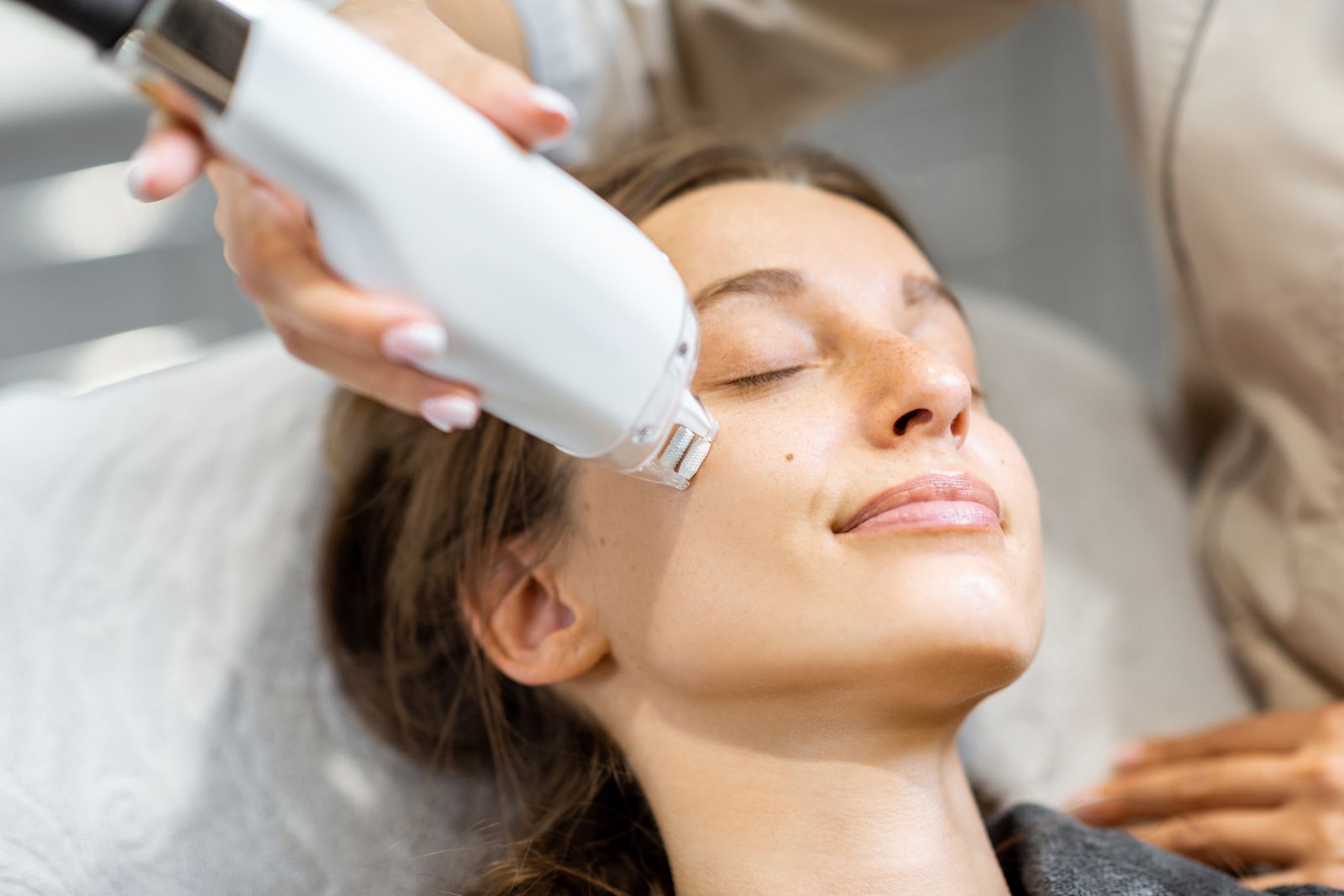
The Aerolase Neo Elite runs 1064 nm at 650 microseconds, fast enough to break up pigment clusters without bulk-heating the skin around them, and it coagulates the dermal vessels feeding the patch in the same pass. Heat is what flares melasma, so the appointment is built to keep the skin cool and to leave no visible sign that you had anything done.
| Stage | What happens | Time |
|---|---|---|
| Cleanse | Double cleanse. No anaesthetic, the pulse is too short to need numbing. | 2 min |
| Mapping | Standardised lighting photographs so patch borders can be compared session to session. | 2 min |
| First pass | Broad coverage of every affected zone at low-fluence melasma settings. | 5 to 7 min |
| Second pass | Stacked pulses on the densest patches only. | 4 to 6 min |
| Cooling and SPF | Cool mist, then mineral SPF 50 before you leave. | 2 min |
About 20 minutes in total, with no bleeding, scabbing or peeling, so makeup goes back on the same day. Mild warmth or pinkness settles within the hour. The laser is half the treatment: daily mineral SPF and a tyrosinase inhibitor at home are the other half, and melasma relapses without them. Session and package pricing is set out further down this page.
Aerolase Neo Elite Pricing in Toronto 2026
Below is our actual Aerolase Neo Elite pricing pulled directly from our Jane App booking system. We do not sell pre-packaged “Series of 4” or “Series of 6” bundles for Aerolase facials. Each session is booked individually so you only pay for what you need. Series discount eligibility is reviewed in-clinic after the first 2 to 3 sessions based on response.
Hair removal is priced separately by body area. See our full price list for every Aerolase hair removal area ($75 to $500 per session).
Bottom line: Aerolase for Melasma in Toronto, May 2026
Melasma is the laser category most providers fail at, not because the technology can’t help, but because the wrong technology makes it worse. Aerolase Neo’s 650-microsecond, 1064 nm Nd:YAG pulse is one of the few laser approaches that can fade melasma without triggering the post-inflammatory rebound that ruins IPL and ablative outcomes on Fitzpatrick III-VI skin. At Bar Beauty Medical (46 Fort York Blvd, CityPlace) melasma sessions are $285 single / $1,395 for a package of 6 in 2026. Most patients need 6-8 sessions spaced 3-4 weeks apart, paired with daily SPF 50 and a tyrosinase-inhibitor topical. We turn away patients we can’t help, this page tells you when Aerolase is the right tool and when it isn’t.
Why Melasma Is Harder Than Other Hyperpigmentation
Melasma is not a sun spot. It is a dynamic, hormonally-driven, vascular-plus-pigmentary condition that lives in both the epidermis and dermis, fed by abnormal melanocyte signalling, dermal vessels, and a damaged skin barrier. Treat it with surface-only tools (IPL, glycolic peels, hydroquinone alone) and you’ll see it lighten then come back darker. Treat it with aggressive ablative lasers (CO2, traditional Q-switched Nd:YAG at high fluences) and you’ll trigger post-inflammatory hyperpigmentation that is functionally identical to the melasma you came in to fix.
The therapeutic window for melasma is narrow. Aerolase Neo sits inside that window because of two properties: an ultra-short pulse that doesn’t deposit bulk heat into surrounding tissue, and a 1064 nm wavelength that bypasses surface melanin and addresses the dermal vascular component most other devices ignore.
How Aerolase Treats Melasma (The Mechanism)
Aerolase targets melasma on three fronts at once:
- Selective melanosome disruption. The 1064 nm wavelength is preferentially absorbed by melanin clusters (melanosomes) without bulk-heating surrounding skin. At 650 microseconds, energy delivery is too fast for thermal diffusion, melanosomes shatter; nearby cells stay cool.
- Vascular reduction. Melasma is fed by abnormal dermal vessels. Aerolase coagulates these vessels in the same pass that targets pigment, reducing the inflammatory signalling that drives melanocyte hyperactivity. This is what most other lasers miss.
- Sub-clinical inflammation cool-down. Patients with melasma have chronic, low-grade dermal inflammation. Aerolase’s wavelength and pulse profile downregulate this background state, the change you can’t see in a photo, but that determines whether your melasma stays away.
No bleeding, no scabbing, no peeling. You can apply makeup the same day. The treatment leaves no visible signal that you had it, which matters more in melasma than any other indication, because flare triggers (heat, friction, inflammation) include the recovery period of the wrong laser.
Why Aerolase Works on Melasma Where IPL Fails
| Factor | IPL | Aerolase Neo |
|---|---|---|
| Wavelength | 500-1200 nm broadband | 1064 nm single |
| Pulse duration | 10-50 milliseconds | 650 microseconds (100× shorter) |
| Heat in surrounding tissue | High | Negligible |
| Vascular targeting | Surface only | Dermal & superficial |
| Safe on Fitzpatrick IV-VI | No | Yes |
| Melasma response rate (typical) | 20-30%, often worsens | 60-80%, sustained with maintenance |
| Risk of post-inflammatory rebound | High | Low |
| Downtime | 1-3 days | None |
Fitzpatrick Safety Across All Six Skin Types
| Fitzpatrick Type | Common Heritage | IPL Safe? | Aerolase Safe? |
|---|---|---|---|
| I, Very fair | Northern European | Yes | Yes |
| II, Fair | European, Scandinavian | Yes | Yes |
| III, Medium | Mediterranean | Caution | Yes |
| IV, Olive | Middle Eastern, South Asian, Latin | Not advised | Yes |
| V, Brown | South Asian, Filipino, Latin, North African | Not safe | Yes |
| VI, Deeply pigmented | African, Caribbean | Not safe | Yes |
Melasma disproportionately affects Fitzpatrick III-VI patients. The clinical irony is that the patients most affected are the ones who have historically had the fewest safe laser options. Aerolase changes that math.
What an Aerolase Melasma Session Looks Like
- Cleanse (2 min). Double-cleanse, no anaesthetic. The pulse is too short to require numbing.
- Mapping (2 min). Standardised lighting photos to track patch borders across sessions. Without before/after photos, you can’t tell whether you’re improving.
- Aerolase pass 1 (5-7 min). Broad treatment across all melasma-affected zones at low-fluence melasma settings, warmer than the acne protocol, gentler than vascular settings.
- Aerolase pass 2, targeted patches (4-6 min). Stacked pulses on the densest patches.
- Cooling and SPF (2 min). Cool mist, mineral SPF 50.
Total: 20 minutes. You leave looking the same as you walked in. Mild warmth or pinkness in the next 30 minutes is normal; both fade within an hour.
The Topical Stack: Aerolase Is Half the Treatment
Anyone selling Aerolase as a standalone melasma cure is overselling. The other half is at-home pigment management. Our standard protocol pairs Aerolase with:
- SPF 50+ mineral, daily, indoor included. Visible light triggers melasma in Fitzpatrick IV-VI. Chemical SPF alone is not enough, mineral (zinc/titanium) tinted SPF is non-negotiable.
- Tyrosinase inhibitor (cysteamine, tranexamic acid, or kojic acid, sometimes alternating). Replaces hydroquinone for most patients; lower rebound risk.
- Niacinamide 5-10%. Reduces pigment transfer from melanocytes to keratinocytes.
- Optional oral tranexamic acid (prescription, vascular-driven cases). Off-label for melasma; effective in ~70% of responders. Reviewed case-by-case.
- Avoid retinoids and exfoliants during active treatment. They thin the barrier and worsen flares.
HSA, CRA
Melasma is a recognised dermatological condition; many private health plans reimburse a portion of treatment under a Health Spending Account when provided by a regulated health professional. We issue CRA-compliant receipts. Always confirm coverage with your plan administrator.
Melasma Treatment Across the GTA
Bar Beauty Medical’s CityPlace location serves patients commuting from Toronto, Mississauga, Brampton, Vaughan, Markham, Richmond Hill, Oakville, and Etobicoke. Our intake screen specifically flags previous IPL exposure, if you’ve been treated unsuccessfully elsewhere, your protocol needs to start conservatively and that’s a conversation we have at consult.
Frequently Asked Questions
How many Aerolase sessions for melasma?
Most patients need 6-8 sessions spaced 3-4 weeks apart, then maintenance every 6-12 weeks. Mixed dermal-epidermal cases may need a full course of 8 plus combined modalities.
Is Aerolase safe for melasma on dark skin?
Yes, Aerolase is one of the few lasers with strong safety data across Fitzpatrick IV-VI for melasma. Its 1064 nm wavelength bypasses surface melanin and its 650-microsecond pulse avoids the bulk heating that triggers post-inflammatory rebound.
Will my melasma come back after Aerolase?
Without maintenance and strict SPF compliance, yes. Melasma is a chronic, hormonally-driven condition. With quarterly maintenance and consistent mineral SPF 50, most patients hold their improvement for years.
Can I do Aerolase if I’ve had bad IPL results?
Yes, and many of our patients have. We start at conservative settings and rebuild your skin barrier with topicals before increasing energy.
Aerolase vs hydroquinone for melasma?
They work differently and are often combined. Hydroquinone (or cysteamine, the modern alternative) inhibits pigment production at the cellular level; Aerolase disrupts existing pigment clusters and addresses dermal vasculature. Used together they outperform either alone in most patients.
Does Aerolase hurt on melasma settings?
Less than on acne settings, you’ll feel a gentle, repeated warm tap. No anaesthetic needed.
Can I do Aerolase while pregnant?
Most providers defer elective laser during pregnancy. Aerolase has no systemic absorption, but melasma triggered by pregnancy is often best addressed post-partum once hormones settle.
What about combining with microneedling or PRP?
Microneedling with tranexamic acid is a well-supported add-on for resistant melasma. PRP alone has weaker evidence for melasma specifically; we don’t pair it routinely for this indication.
How long until I see results?
First visible reduction at session 2-3 in responders. Full course assessment at session 6. Maintenance defines whether your result holds.
What if Aerolase doesn’t work for me?
We re-assess at session 4. If response is below expected, we add or substitute, oral tranexamic acid, microneedling-RF with TXA, or referral to a dermatologist for refractory cases. We do not run a 6-session course on a non-responder; that’s a financial and a clinical mistake.
Book a Free Melasma Consultation
Free 20-minute consult includes Fitzpatrick mapping, an honest melasma assessment (epidermal vs dermal vs mixed), and a written treatment plan with realistic outcomes. Book online at barbeauty.ca/book or call 416-923-1200.
Melasma Pathophysiology: Why It’s Hormonal, Not Just “Pigment”
Melasma is a chronic, acquired hyperpigmentation driven by oestrogen-progesterone signalling that upregulates melanocyte activity in genetically susceptible individuals. The pigment sits at three depths simultaneously: epidermal (responsive to topicals), dermal (responsive to laser and chemical depth therapies), and mixed. Pregnancy, oral contraceptives, hormonal IUDs, thyroid disease, and even chronic stress (cortisol-mediated) can all trigger flares. UV exposure is the universal aggravator. This is why melasma is described as a chronic, manageable disease, not a curable one. Aerolase’s 1064 nm Nd:YAG at 650 microseconds reduces both the visible pigment and the inflammatory vascular component that drives recurrent flare cycles.
Aerolase vs Tri-Luma vs Cosmelan vs Pico vs IPL for Melasma
- Tri-Luma (hydroquinone 4% + tretinoin + steroid): Gold-standard topical; cycled 8-16 weeks. Cost ~$60-$100/month. Rebound common.
- Cosmelan peel: In-clinic intensive depigmentation. ~$700-$1,200; 4 months active phase; high adherence required.
- Picosecond laser (Picoway, Picosure): Approved for melasma; works but high relapse rate. ~$400-$650/session.
- IPL: Not recommended for melasma, can trigger flares. Particularly unsafe for Fitzpatrick IV+.
- Aerolase Neo: Safe on Fitzpatrick I-VI; addresses pigment + vascular component; lower flare-trigger risk than IPL or aggressive pico. $285/session or $1,395 package of 6 at Bar Beauty.
Sticker Price vs True Cost of Melasma Management
A 6-session Aerolase package at Bar Beauty is $1,395, plus topical Tri-Luma (~$240 over 3 months) and mineral SPF (~$150/year). Total year-one cost ~$1,800. Compare to indefinite cover-up routine: tinted concealer + colour-corrector + foundation specifically chosen for pigment camouflage, ~$60-$120/month or $720-$1,440/year. Cover-up never improves the underlying pigment; the laser pathway does. Within 18-24 months, laser + topical maintenance beats cover-up on both economics and visible outcome.
Pre-Treatment Preparation: The 14-Day Melasma Protocol
Two weeks: nightly low-dose tretinoin (0.025%) or azelaic acid 15% to suppress melanocyte activity. Mineral SPF 50 daily, reapplied every 2-3 hours of outdoor exposure. Discontinue self-tanner. Stop glycolic, salicylic, mandelic exfoliation. Wide-brim hat outdoors. The day before: pause retinoid; arrive with clean skin, no makeup. Critically: disclose any new hormonal therapy (HRT, OCP changes, fertility treatment), we may delay until your hormonal pattern is stable.
Common Mistakes in Melasma Treatment
- Treating with IPL. Almost guaranteed to trigger a flare. Avoid this device for melasma.
- Aggressive resurfacing. Heat triggers melanocyte upregulation; melasma worsens, doesn’t improve.
- Stopping daily mineral SPF in winter. Even brief UV maintains the melanocyte stimulus.
- Chasing the cure. Melasma is managed, not cured. Realistic goal: 60-80% reduction with maintenance.
- Ignoring the hormonal driver. If OCP or HRT is amplifying the pigment, discuss with your physician.
Decision Matrix: Which Melasma Pathway Is Right for You?
- Mild epidermal melasma: Tri-Luma or Cosmelan + mineral SPF + Aerolase x 4-6 for clearance.
- Mixed dermal-epidermal: Aerolase x 6-8 + topical maintenance + quarterly touch-ups.
- Hormonally driven, refractory: Address hormonal driver first; topical management; Aerolase x 6 once hormonal pattern stable.
- Fitzpatrick V-VI: Aerolase is the safest device choice; avoid IPL, aggressive pico, resurfacing.
Why Melasma Is Misdiagnosed: The Three Confusables
Patients arrive at our consult having been told they have melasma when they actually have post-inflammatory hyperpigmentation, solar lentigines, or Riehl’s melanosis, three conditions that look superficially similar but require completely different treatment protocols. PIH responds to topical hydroquinone or azelaic acid plus careful Aerolase; solar lentigines respond best to Q-switched lasers; Riehl’s melanosis is a pigmented contact dermatitis that requires identifying and removing the trigger. We perform Wood’s light examination and clinical history at every consult to ensure we’re treating the actual diagnosis. Patients who have been on Tri-Luma for months without improvement often turn out to have one of the look-alikes.
HSA, & for Melasma Treatment
Melasma is a recognised dermatological condition; some Health Spending Accounts reimburse laser treatment when documented by a regulated health professional. We provide itemised receipts at every appointment.
Maintenance: The Year-Round Discipline That Holds Results
Patients who experience melasma flares in summer often skip maintenance in winter, then return in spring frustrated. The reality: melanocytes remain primed year-round. Winter UVA exposure (which is roughly constant despite shorter daylight hours) maintains the melanocyte stimulus enough that flares re-emerge by April-May without continuous SPF and topical maintenance. Bar Beauty’s maintenance protocol: nightly azelaic acid or rotated tretinoin year-round; mineral SPF 50 every morning regardless of weather; one Aerolase touch-up every 8-12 weeks October through March, dropping to every 6 weeks April through September. Patients who follow this rhythm see flare-free years; patients who skip winter maintenance see predictable spring rebounds.
Deeper protocol breakdown for Aerolase for melasma at Bar Beauty Medical
Beyond the high-level overview most clinics publish, patients researching Aerolase for melasma in Toronto deserve to know what actually happens during a Aerolase Neo 1064 nm laser appointment, how decisions are made in real time, and what separates a competent technician from a clinician building a long-term aesthetic plan. At Bar Beauty Medical, every Aerolase for melasma appointment follows a six-stage protocol. Stage one is the seated visual assessment in neutral lighting with hair pulled back. Stage two is the dynamic assessment, where Jasmine asks the patient to smile, frown, pucker, and speak naturally to identify how the muscles of facial expression interact with whatever concern brought them in. Stage three is the photographic baseline using standardized angles (frontal, three-quarter left and right, profile, and submental) under fixed lighting. Stage four is treatment planning, where the proposed approach is sketched on a printed face diagram and reviewed with the patient before any product is opened. Stage five is consent, including a written explanation of risks specific to the planned anatomy. Stage six is the treatment itself, performed slowly and incrementally, with a hand mirror offered at natural pause points so the patient can confirm direction before more product is delivered.
This protocol exists because rushed appointments produce rushed outcomes. When a clinic books Aerolase for melasma every 15 minutes, the planning conversation gets compressed and the patient is more likely to leave with a generic result. Our Aerolase for melasma bookings are 60 to 90 minutes for new patients and 45 to 60 minutes for return visits, which is longer than the industry average but produces fewer revisions and more natural outcomes over time.
Year-one, year-two, and year-three cost framework
A realistic budget for Aerolase for melasma extends beyond the first appointment. Year one typically involves an initial treatment plus one or two refinement or maintenance visits, depending on the product half-life and the patient’s goals. Expect a year-one investment in the range of CAD 250-475 multiplied by 1.5 to 2.0. Year two usually settles into a maintenance rhythm where the patient has identified what works and is no longer building. Year-two costs typically drop 20 to 40 percent versus year one. Year three often introduces complementary treatments (skin quality work, biostimulator layering, or device-based collagen support) that reduce the dependency on the original Aerolase Neo 1064 nm laser alone. A patient who plans across a three-year horizon usually spends less per year by year three than they spent in year one, and the result looks more cohesive because each decision was made in the context of an overall plan rather than as a one-off purchase.
Common reversal and correction scenarios
Patients ask about reversibility for good reason. For hyaluronic acid filler, hyaluronidase dissolves product within 24 to 72 hours of injection, although some patients require a second dissolving session for stubborn deposits. For neuromodulators, there is no reversal agent; the only option is to wait for the protein to metabolize, which takes 8 to 12 weeks. For biostimulators (Sculptra, Radiesse) the product is not directly reversible, which is why these treatments demand experienced injectors and conservative starting volumes. For energy-based treatments, the question is less about reversal and more about whether a course can be paused and restarted, which is generally yes. Our clinic carries hyaluronidase on site, follows a same-day complication pathway, and has direct vascular-occlusion protocols posted in every treatment room. We have performed dissolving on patients who were originally treated elsewhere; we do not charge punitively for these corrections, because patient safety matters more than relationship politics.
Before-and-after photography expectations
Standardized photography is part of Aerolase for melasma planning at our clinic. We use a fixed camera distance, fixed focal length, fixed lighting, and identical patient positioning at every visit. This matters because non-standardized photos exaggerate or minimize change depending on angle and lighting, which makes it impossible to evaluate whether a treatment achieved its goal. Patients receive their before-and-after set after each appointment and can request a multi-year review at any time. We do not publish patient photos without explicit written, time-limited consent, and we do not pressure patients to grant photo permission as a condition of treatment.
Candidacy determinants we evaluate at consultation
Not every patient who requests Aerolase for melasma is an ideal candidate at the moment they ask. We evaluate eight candidacy determinants: realistic expectations, baseline anatomy, skin quality, medical history (autoimmune, anticoagulant, isotretinoin, immunosuppression, pregnancy or breastfeeding), psychological readiness, financial fit across a multi-visit plan, lifestyle factors (travel, sun exposure, planned events), and prior treatment history. A patient who scores poorly on three or more of these is asked to address the relevant factor before proceeding, even if it means losing the booking revenue. This is not gatekeeping for its own sake; it is how we maintain a low complication rate and high patient satisfaction across years rather than across single visits.
Advanced technique discussion
For patients who have done their own research, here is what differentiates a thoughtfully performed Aerolase for melasma session from a basic one. We use cannulas in anatomical zones where they reduce vascular risk and bruising (midface, jawline, tear-trough adjacent zones) and needles where precision and product placement demand it. Aspiration is performed where vascular density requires it. Product selection is matched to tissue plane: thinner, more cohesive gels for superficial work; more robust, higher-G’ products for structural support. Layering across multiple sessions is preferred over single-session high-volume work because tissue accommodates change more gracefully over time. These specifics are why two clinics can quote a similar dollar figure for Aerolase for melasma and produce visibly different outcomes.
See also: our full guide to our main Aerolase treatment page.
Related at Bar Beauty: Melasma Treatment Options That Actually Work.
Ready to treat it at the clinic? Explore our melasma treatment in Toronto options with Aerolase NeoSkin, peels, and medical-grade topicals.
Ready to look into it properly?
Our consultation is free. We will look at your skin, give you an honest recommendation, and say so if a different treatment would suit you better.
Or call 416 923 1200 · 46 Fort York Blvd, CityPlace, Toronto
Questions about this treatment?
Ask us anything before you book. Consultations are free, and we will tell you honestly if a treatment is not right for you.