


Sunscreen is the single highest return product in skincare, and it is also the one most people get wrong. They buy the wrong type, use a fraction of the right amount, skip reapplying, and then wonder why their pigment will not budge. This is a clinic owner’s honest guide to choosing and using a sunscreen, including the part most articles skip, which is what to do if mineral formulas leave a grey cast on deeper skin.
We run a medical aesthetics clinic, Bar Beauty Medical in Toronto, and a large share of our clients come to us for pigment, melasma, and uneven tone. Almost all of it traces back to sun, and almost all of it is preventable with one habit done properly.
Book a free skin analysis if you want us to look at your skin and tell you exactly what to use.
A morning layer of sunscreen is not a day of protection. How far it gets you depends on how much went on, where you spend the day, and what your face has been doing since. Roughly two finger lengths for the face is the amount most people are short of, and short application means a fraction of the number on the bottle.
| The kind of day | What the morning layer is worth by mid-afternoon | What to do about it |
|---|---|---|
| Indoors all day, including beside a window | Most of it is still doing its job, though UV comes through glass regardless of season | One proper application in the morning, treated as a habit rather than a weather decision |
| Commute plus a walk at lunch | Thinning, and you have touched your face more than you think | One reapplication in the early afternoon. An SPF powder or a tinted mineral makes that realistic over makeup |
| Outdoors for a few hours | Mostly gone | Reapply every couple of hours, and add shade, a hat and sensible timing rather than leaning on the bottle |
| Sweating or swimming | Gone sooner than that | Reapply as soon as you are dry, not on the two hour clock |
| The fortnight after a laser, peel or microneedling | Whatever is left is not enough | Strict daily SPF, reapplied. Freshly treated skin pigments readily and that is the side effect worth going out of your way to avoid |
The SPF in a foundation does not count, because nobody applies makeup thickly enough to reach the rated number. A moderate SPF used properly beats a high one used thinly, and for melasma or deeper skin a tinted mineral is usually the answer, since the tint solves the grey cast and the iron oxides also block visible light.
Why SPF is the highest return habit you have
UV is the biggest driver of visible aging and the biggest driver of pigment. Fine lines, sunspots, melasma, and that crepey look all accelerate with unprotected sun, and they come through windows and clouds, not just beach days. If you do one thing for your skin, it is daily sunscreen. It protects every other product and treatment you invest in, from your retinoid to your laser results.
Mineral versus chemical, in plain terms
Mineral sunscreens use zinc oxide or titanium dioxide and sit on top of the skin to reflect and absorb UV. They are gentle, good for reactive or post treatment skin, and start working right away. The downside is the white or grey cast they can leave, which is worst on deeper skin tones.
Chemical sunscreens absorb UV through filters in the formula. They tend to feel lighter and blend clear, which makes them easier to actually wear every day. Modern filters are well tolerated by most people. The honest answer is that the best sunscreen is the one you will reapply, so the type matters less than the habit.
For sensitive, rosacea prone, melasma prone, or freshly treated skin, we usually steer clients toward a tinted mineral, because the tint solves the cast problem and the iron oxides in tinted formulas also help block the visible light that drives melasma.
The white cast problem on deeper skin, and the fix
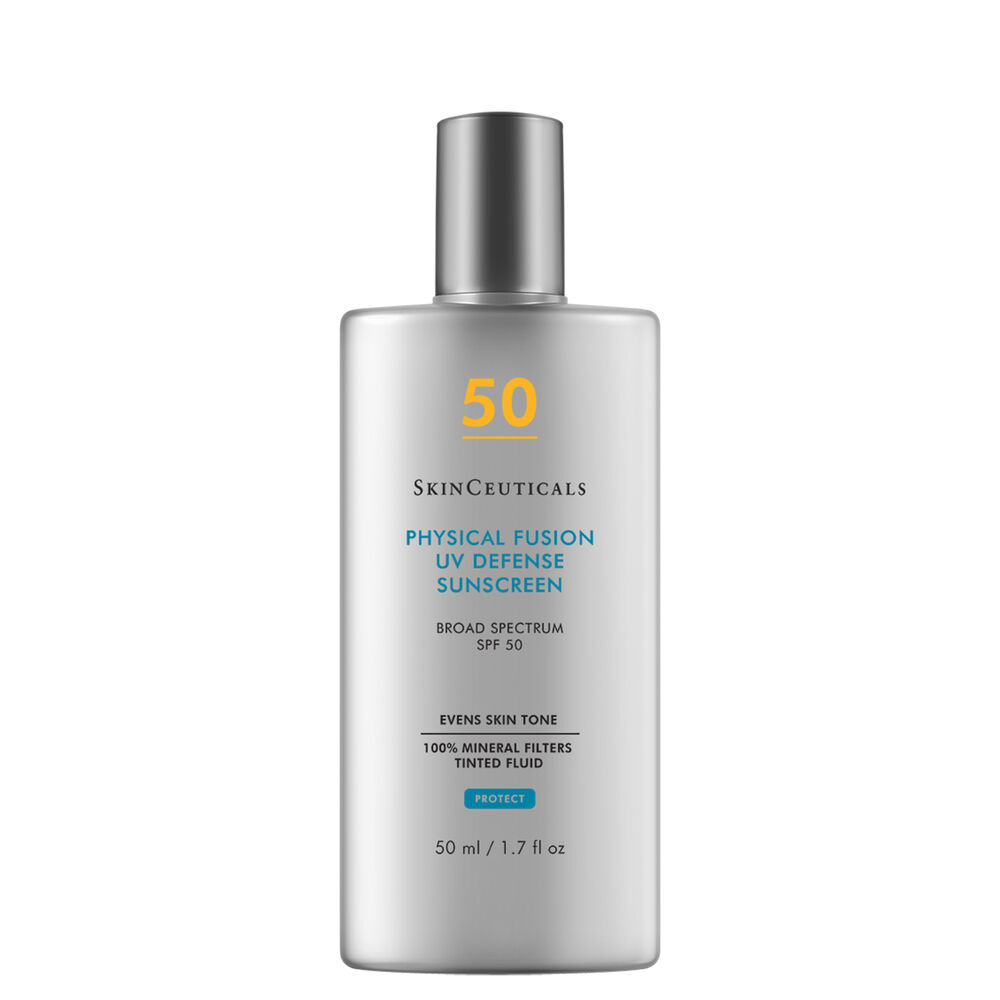
This is where most sunscreen advice fails people with medium to deep skin. Plain zinc and titanium formulas go ashy, so people stop wearing them, and then the pigment they were trying to prevent gets worse. The fix is a tinted mineral sunscreen that blends into a range of skin tones instead of leaving a film. The one we reach for most is SkinCeuticals Physical Fusion UV Defense SPF 50, because the universal tint disappears rather than sitting grey on the skin. Sheer Physical SPF 50 is the backup. The point is simple. A sunscreen you will actually wear beats a higher number you abandon.
How much, and how often, the part everyone gets wrong
Two things sink most sunscreen routines. The first is amount. Most people use a fraction of what is needed, which means they get a fraction of the SPF on the label. For the face, think roughly two finger lengths of product, and do not forget the ears, hairline, and neck. The second is reapplication. A morning layer is mostly gone by the afternoon, especially if you have been outside, sweating, or touching your face. If you are out in the day, reapply every couple of hours. A tinted mineral or an SPF powder over makeup makes midday reapplication realistic.
Sunscreen and pigment, where treatment comes in
SPF prevents pigment far more effectively than anything erases it. If you already have melasma, post inflammatory hyperpigmentation, or sunspots, daily sunscreen is what stops it getting worse, and it is non negotiable before any pigment treatment. For the pigment that is already there, we use Aerolase Neo, a 1064nm laser that treats melasma and dark spots and is safe on every skin tone because it does not overheat the surface the way older lasers do. Pairing daily SPF with the right treatment is how pigment actually improves. The fuller picture is in our melasma guide and our Aerolase for hyperpigmentation guide.
What sunscreen will not do
Sunscreen is protection, not permission. It is not a reason to chase the sun, and it does not replace shade, a hat, and sensible timing in peak hours. It also does not treat existing pigment on its own, which is the misconception that sends people in circles for years. Prevent with SPF, treat the existing pigment properly, and protect the result.
Who needs to be most careful
If you have melasma, a history of dark marks after breakouts, deeper skin that pigments easily, or you have just had a laser, peel, or microneedling, sun protection moves from important to essential. Freshly treated skin pigments more readily, so we send every client home with strict SPF instructions after a treatment. If any of this is you, a tinted mineral and daily reapplication are worth building into your routine now.
Marketing traps to ignore
The SPF in your makeup is not enough on its own, because you do not apply foundation in a thick enough layer to hit the rated protection. Claims of all day protection from a single morning application are misleading, because no sunscreen lasts a full active day without reapplying. And a sky high SPF number used in a thin layer still underperforms a moderate SPF used properly. Application beats the number on the bottle every time.
Frequently Asked Questions
Is mineral or chemical sunscreen better?
Neither is universally better. Mineral is gentler and good for reactive, rosacea prone, or freshly treated skin, while chemical tends to feel lighter and blend clearer. For melasma or deeper skin we usually choose a tinted mineral, because the tint solves the cast and helps block visible light. The best sunscreen is the one you will reapply.
How do I avoid the grey cast from mineral sunscreen on deep skin?
Use a tinted mineral that is built to blend across skin tones. We reach for SkinCeuticals Physical Fusion UV Defense SPF 50 most often because the universal tint disappears instead of leaving a film. The tint also adds protection against the visible light that worsens melasma.
What SPF number should I use?
SPF 30 is a sensible daily minimum and SPF 50 is better if you pigment easily or have melasma. More important than the number is using enough, roughly two finger lengths for the face, and reapplying through the day.
Do I need sunscreen indoors and in winter?
Yes. UV comes through windows and clouds year round, and it drives the pigment and lines that show up later. Daily sunscreen is the highest return habit in skincare regardless of season.
Is the SPF in my makeup enough?
No. You do not apply foundation thickly enough to reach the rated SPF, so treat makeup SPF as a small bonus, not your protection. Use a dedicated sunscreen underneath.
How often do I really need to reapply?
Every couple of hours when you are out and about, and sooner if you are sweating or swimming. A tinted mineral or an SPF powder makes reapplying over makeup realistic.
Will sunscreen fix my existing dark spots?
It prevents them from getting worse, which is essential, but it does not erase what is already there. For existing melasma or dark spots we use Aerolase Neo Elite, a laser that is safe on every skin tone. Sunscreen protects the result so it lasts.
Can I wear sunscreen after a laser or peel?
Not only can you, you must. Freshly treated skin pigments more easily, so strict daily SPF is part of every aftercare plan we give. A gentle tinted mineral is usually the most comfortable choice in the days after a treatment.
How do I book a skin check?
You can book a free skin analysis online. We will look at your skin and pigment, tell you which sunscreen fits, and build a plan if you want to treat what is already there.
Booking your skin analysis at Bar Beauty
If pigment is your concern, the fastest fix is the right sunscreen used properly plus a plan for what is already there. Book a free skin analysis and we will give you the honest version, including exactly what to use and whether a treatment makes sense.
More from the journal
Melasma treatment options that actually work
Aerolase for hyperpigmentation
Why vitamin C belongs in your routine
How to protect your skin barrier
Ready to look into it properly?
Our consultation is free. We will look at your skin, give you an honest recommendation, and say so if a different treatment would suit you better.
Or call 416 923 1200 · 46 Fort York Blvd, CityPlace, Toronto
Questions about this treatment?
Ask us anything before you book. Consultations are free, and we will tell you honestly if a treatment is not right for you.