Hip dip filler in Toronto, also called violin hip correction or trochanteric depression correction, is a non-surgical body contouring treatment that uses Revanesse Contour XL to add volume to the natural indentation between the hip bone and the outer thigh. Contour XL is a hyaluronic acid body filler made in Aurora, Ontario by Prollenium, the only dermal filler manufacturer in Canada, and it comes in large 10 mL syringes built for body work rather than the small syringes used on faces. At Bar Beauty in downtown Toronto, hip dip correction is $2,500 for 150 ml and $5,000 for 300 ml. To book a no-pressure consultation, call 416-923-1200 or message us through the contact page.
Two things make Contour XL our choice for this area. You see the change the day you have it, because hyaluronic acid adds volume immediately rather than building slowly over months. And if you ever want it adjusted or removed, it can be dissolved with hyaluronidase, which is not true of the biostimulators some clinics use on the body.
Hip dips are a normal anatomical feature, not a flaw. They exist in most women regardless of weight or fitness level. The correction we offer is for people who understand that and still want the option to add volume for a smoother lateral silhouette. This page is the long-form clinical guide.
Hip dips are skeletal. The indentation between your hip bone and thigh exists because of where your greater trochanter sits relative to your iliac crest, and that is bone structure you were born with. No amount of diet, glute training or fat loss removes them, and anyone selling an exercise programme for hip dips is selling you something that cannot work.
- Why exercise does not fix them: you can build the gluteus medius above the dip, which softens the visual slightly, but the underlying skeletal relationship does not change. Getting leaner usually makes them more visible, not less.
- What filler actually does: places volume in the depression so the silhouette reads as a smoother curve. It camouflages the shape rather than altering the bone.
- Volume is substantial. This is a body area, so the amounts are far larger than facial work. 150 ml is $2,500 and 300 ml is $5,000.
- It is not permanent. Hyaluronic acid in body areas lasts longer than in the face, but it does break down. Plan on top-ups rather than a one-time fix.
- Recovery: expect swelling and tenderness for several days and avoid heavy lower body training for about two weeks.
- The honest framing: hip dips are a normal anatomical variation, not a defect. We treat them because people want a different silhouette, not because anything is wrong.
Bar Beauty Medical, 46 Fort York Blvd, CityPlace, Toronto. Prices in Canadian dollars from our live booking system, verified 18 August 2026.
What is Revanesse Contour XL?
Revanesse Contour XL is a hyaluronic acid dermal filler made specifically for large-volume body contouring. It is manufactured by Prollenium Medical Technologies in Aurora, Ontario, the first and only company producing dermal filler in Canada, and it is supplied in a 10 mL syringe rather than the roughly 1 mL syringes used for facial filler. It contains lidocaine, so the injection itself is more comfortable, and like all hyaluronic acid fillers it can be dissolved with the enzyme hyaluronidase if reversal is ever needed.
Hyaluronic acid is a sugar molecule your body already produces. In filler form it is cross-linked into a gel that holds its shape under the skin and draws in a small amount of water, adding soft volume where it is placed. That is a different mechanism from a biostimulator such as poly-L-lactic acid, which adds little volume on the day and instead prompts your body to lay down collagen over several months. The practical difference for a patient is simple: filler is immediate and reversible, a biostimulator is gradual and permanent until it metabolises.
Because it is a Canadian-made product bought through the regulated domestic supply chain, the Contour XL used at Bar Beauty arrives in sealed, labelled manufacturer syringes. That matters more than it sounds, because grey-market body filler bought outside that chain is one of the main safety problems in this corner of the industry.
What hip dip correction actually does, and what it cannot do
The hip dip is the depression on the outer hip where the iliac crest, greater trochanter of the femur, and tensor fasciae latae muscle meet. It is a skeletal feature, not a fat or muscle deficiency. The skin and subcutaneous tissue in this area sit directly over bone with very little fat pad in between, which is why diet and exercise rarely change the appearance.
Revanesse Contour XL does three things:
- Adds volume directly in the subcutaneous tissue over the depressed area, so the indentation fills the same day rather than over months.
- Smooths the lateral hip-to-thigh transition so the line from above the hip to the mid-thigh reads as a continuous curve rather than a step or notch.
- Adds modest projection, usually all the visual change a person needs to see the silhouette improvement they were after.
What it cannot do: dramatically reshape skeletal structure, replicate the visual effect of fat grafting or implants, or work on every body type equally. What it can do, that biostimulators cannot, is come back out. Because it is hyaluronic acid, an injection of hyaluronidase dissolves it if you change your mind. We cover all of this at the consultation, before pricing comes up.
Understanding hip dips: why you have them
Hip dips, sometimes called violin hips, are the inward curves along the side of the body just below the hip bone. They come from the shape of your skeleton, specifically where the top of the thigh bone (the greater trochanter) sits in relation to the hip bone and pelvis. When there is space between the bone and the soft tissue over it, the skin follows the underlying shape and you see an indent. It is structural, which is why hip dips show up on lean and athletic people just as often as anyone else.
Can you get rid of hip dips with exercise?
Not really, and it is worth saying plainly. Exercises that build the gluteus medius, the muscle at the side of the hip, can add a little shape and soften a mild dip for some people. But you cannot exercise away a skeletal feature, and for many people the dip barely changes no matter how much side-glute work they do. If a trainer promises to erase your hip dips with a workout plan, they are overselling.
Hip dips vs love handles
They are not the same thing and they respond to completely different treatments. Love handles are soft fat that sits higher, around the waist and above the hip bone, and they respond to fat reduction and lifestyle change. Hip dips are lower, are about skeletal shape rather than fat, and do not respond to fat loss. Filler adds volume to a hip dip; it does nothing for a love handle. Getting this distinction right at consultation is half the job.
Why we use Revanesse Contour XL
Contour XL is a hyaluronic acid filler made specifically for large-volume body contouring. Three things make it the right tool for hip dips.
- It works immediately. Hyaluronic acid adds volume the moment it is placed, so you leave the appointment able to see the change rather than waiting weeks for it to build.
- It is reversible. If the result is ever too much, uneven, or simply not what you wanted, hyaluronidase dissolves it. Very little else in body contouring gives you that.
- It is built for volume. Facial fillers come in roughly 1 mL syringes at facial-filler prices, which is what used to make hyaluronic acid impractical for an area this size. Contour XL comes in 10 mL syringes priced for body work, so the math that once pushed clinics toward other products no longer applies.
How hip dip filler is injected, and why technique matters
Hip dip correction is a deep-tissue body injection, not a surface treatment, and the anatomy underneath is the reason technique is not a detail you should ignore. The gluteal and lateral hip region contains large blood vessels, including the superior and inferior gluteal arteries and perforating branches of the profunda femoris. Filler placed into or around one of those vessels is the source of the rare but serious complications you read about in body filler, which is why where and how the product goes in matters as much as which product it is.
Done properly, hyaluronic acid is placed in the superficial subcutaneous plane using a blunt-tipped cannula rather than a sharp needle. A cannula pushes vessels aside instead of piercing them, and a retrograde technique, laying product down as the cannula is drawn back, keeps deposition even and controlled. The deeper medial zone where the major vessels converge is deliberately avoided. This is an established, published technique in the dermatology literature for filling lateral hip depressions, not something improvised.
At Bar Beauty the injection is performed by a nurse injector, hyaluronidase for reversal is kept on premises, and the treatment plan and consent are confirmed before anything is placed. If a clinic cannot tell you what plane they inject in, whether they use a cannula, or whether they keep reversal agent on hand, that tells you something.
How much filler you need, and how long it lasts
The amount of filler is not fixed, because a mild dip and a deep one are different jobs, and many people treat both sides plus a little upper-glute blending for a smoother overall line. That is exactly why we quote at consultation after looking at the area rather than selling a set number in advance. Hip and gluteal work uses considerably more product than a facial treatment, which is the whole reason a body filler in a 10 mL syringe exists.
Hyaluronic acid body filler generally lasts about a year, sometimes longer, before your body gradually breaks it down. Larger deposits in a lower-movement area like the hip tend to sit toward the longer end of that range. Most people come back for a top-up around the twelve-month mark to maintain the result. How long it lasts for you depends on your metabolism, how much was placed, and your activity level.
Revanesse Contour XL vs fat grafting vs biostimulator
| Revanesse Contour XL (HA filler) | Fat grafting (surgical BBL) | Biostimulator | |
|---|---|---|---|
| Result shows | Immediately | After swelling settles, weeks | Gradually, over months |
| Reversible | Yes, with hyaluronidase | No, needs revision surgery | No |
| Anaesthesia | Topical numbing only | General or heavy sedation | Topical numbing only |
| Downtime | Little to none | 2 to 6 weeks | Minimal |
| Lasts | About a year, top-up to maintain | Long-term, some fat reabsorbs | Around 2 years |
| Where it is done | In-clinic, nurse injector | Operating room, plastic surgeon | In-clinic |
We use Revanesse Contour XL, an HA filler. We do not perform fat grafting, which is surgery, and we refer to Toronto plastic surgeons we trust when that is the better fit.
Risks, and who should not have it
Hip dip filler is low-risk in trained hands, but no injection is risk-free and you deserve the honest list. Common and temporary: swelling, bruising, tenderness, and small lumps that settle as the product integrates. Uncommon: asymmetry that needs a correction visit, or infection. Rare and serious: a vascular occlusion, where product affects a blood vessel, which is the reason cannula technique, correct depth, and on-site hyaluronidase matter.
We will not treat you if you are pregnant or breastfeeding, have an active skin infection over the area, have a known allergy to hyaluronic acid or lidocaine, or have a condition or medication that makes injectables unsafe. We also turn people away when the honest answer is that filler will not give them what they are picturing, which happens more than you would expect and is a normal part of a good consultation.
Red flags, when to walk out of a hip dip clinic
- The injector promises to eliminate your hip dips. Filler softens the appearance, it does not remove a skeletal feature.
- No honest conversation about whether you need it. Ethical practice includes discussing whether treatment is actually the right answer for you.
- Same-day deep discount pressure. Body filler is a real commitment, and flash discounts are a red flag.
- Unbranded or grey-market filler. Ask to see the packaging. It should be a Health Canada licensed filler in a sealed manufacturer syringe, not decanted from an unmarked container.
- Sharp needles into deep tissue with no cannula. For an area with large vessels, technique is a safety issue, not a preference.
- No formal consent form. Body filler carries real risks including vascular events, and a clinic that skips consent is skipping safety.
Recovery timeline, realistic week by week
Day 0, treatment day
You see volume immediately. Expect some swelling, tenderness, and possible bruising at the injection points. Avoid strenuous exercise and long walks for 24 hours.
Days 1 to 5
Swelling and bruising settle. Avoid hot baths, saunas, and hot yoga for 48 hours. Light activity like walking is fine after a day. Try not to sit for long unbroken stretches directly on the treated area in the first couple of days.
Week 1 to 2
Early swelling resolves and the result settles into its final shape. What you see at two weeks is close to what you keep.
Around 12 months
Hyaluronic acid is gradually broken down by the body. Most people come back for a top-up around the one-year mark to maintain the result.
HSA, insurance, and financing
Health spending accounts
Hip dip correction is cosmetic and not OHIP-covered. Some Group HSAs with flexible cosmetic eligibility (commonly Sun Life, Manulife, Canada Life flex plans) reimburse partially. We provide itemized receipts on request.
Tax considerations
Pure cosmetic hip dip correction is not tax-deductible. If documented as reconstructive (post-trauma volume restoration), it may qualify. Discuss with your accountant.
Affirm financing
For larger treatment plans, Affirm financing is available so you can split the cost into monthly payments. You can review your options at consultation, and checking your rate does not affect your treatment plan.
Combining hip dip correction with other treatments
With glute filler
The most requested combination. The same Revanesse Contour XL used for the hip dips can add roundness to the upper glute for a smoother overall silhouette, planned together at your consultation. This is the non-surgical version of what people mean by a liquid BBL.
With body contouring radiofrequency
Radiofrequency treatments like Morpheus8 Body or Venus Bliss improve skin quality alongside filler. Best done at least a few weeks apart from your filler appointment.
What hip dip correction will not do
- Eliminate the skeletal feature. It softens the appearance, it does not change your bone structure.
- Match the visual effect of fat grafting or implants. Those are surgical, with different risks and benefits.
- Work the same on every body type. Very lean patients see less dramatic results than mid-range BMI patients.
- Last forever. Hyaluronic acid is gradually absorbed, so a top-up roughly once a year keeps the result.
Why Bar Beauty for hip dip correction
We are a nurse-led, physician-supervised injectable clinic in downtown Toronto serving patients across the GTA, Mississauga, Etobicoke, North York, Scarborough, Vaughan, Markham, Richmond Hill, and Oakville. Our nurse injectors average nine years of facial and body injectable experience. We hold a 5.0 Google rating across 222+ reviews. Body filler is a meaningful commitment, and we believe patients deserve a clinic that will tell them when not to proceed.
Frequently asked questions
How much does hip dip filler cost in Toronto?
Hip dip correction with Revanesse Contour XL is $2,500 for 150 ml and $5,000 for 300 ml. Which volume you need is decided at your free consultation, and the exact plan and total are quoted in writing before anything is booked.
What filler do you use for hip dips?
Revanesse Contour XL, a hyaluronic acid body filler made by Prollenium in Aurora, Ontario. It is designed for large-volume body contouring and comes in 10 mL syringes.
How long does hip dip filler last?
Generally about a year, sometimes longer, before it is gradually absorbed. A top-up around the twelve-month mark maintains the result.
Is hip dip filler safe?
In trained hands, yes. The main serious risk is a vascular event, which is why it should be placed with a blunt cannula in the correct plane, by an injector who keeps hyaluronidase on hand. Ask any clinic how they manage that before you book.
Is hip dip filler reversible?
Yes. Because it is hyaluronic acid, it can be dissolved with hyaluronidase if you want it adjusted or removed. This is a major advantage over biostimulators and surgery, and one of the main reasons we chose it.
How many appointments will I need?
Most people are treated in a single appointment. Occasionally a small top-up is added a few weeks later to refine the result.
Is it painful?
Moderate. Contour XL contains lidocaine, and we use topical numbing as well. Most people describe firm pressure rather than sharp pain.
Can I exercise after?
Wait 24 hours for any exercise, and hold off on heavy lower-body workouts like squats and lunges for about a week.
Will it eliminate my hip dips?
No. It softens the appearance. Hip dips are a skeletal feature that cannot be eliminated by filler.
How soon will I see results?
Immediately. Hyaluronic acid adds volume as it is placed, though it takes a week or two for swelling to settle into the final shape.
Can hip dip filler be combined with a non-surgical BBL?
Yes. The same product can add roundness to the upper glute at the same visit, which is what most people mean by a liquid BBL. We plan the two together at consultation.
Are hip dips normal?
Completely. They are a normal part of human anatomy and appear on a large share of women regardless of weight or fitness. Treating them is a personal preference, not a fix for a problem.
Why do I have hip dips if I am not overweight?
Because they come from skeletal shape, not fat. The distance between your hip bone and the top of your thigh bone, and how the muscle sits over it, is what creates the indent. That is why lean and athletic people have them too.
Is hip dip filler worth it?
That depends on how much the appearance bothers you and whether you are comfortable maintaining it about once a year. It suits people who want a smoother lateral line and like that filler is immediate and reversible. It is not the right call if you are expecting a dramatic, permanent change, which is what surgery offers.
What is the recovery time for hip dip filler?
Most people return to work the same day. Swelling and any bruising settle over one to two weeks, and heavy lower-body workouts should wait about a week.
Book your hip dip correction consultation
Call 416-923-1200, text the same number, or book via the contact page. Consultations are complimentary, take 45 minutes for body work, and include an honest conversation about whether treatment is right for you.
Protocol Deep-Dive: Step-by-Step Technique
Most pages describe what a treatment accomplishes; this section describes exactly how we perform the hip dip correction with hyaluronic acid body filler so that prospective clients understand the rigour behind the price. Bar Beauty operates under a written clinical protocol that every nurse on our team follows identically.
Stage One: Consultation and Photographic Baseline
Every hip dip correction client begins with a consultation that includes medical history review, medication reconciliation (with particular attention to blood thinners, isotretinoin exposure within the past six months, recent dental work, and immunomodulators), and goal articulation. Photographic baselines are captured on the Salient Skin Analyzer using the same lighting, positioning, and lens distance every visit. This standardised imaging is what makes meaningful before-and-after comparison possible.
Stage Two: Pre-Treatment Preparation
Skin is double-cleansed with a low-pH gentle cleanser followed by a chlorhexidine or alcohol-based antiseptic. A compounded lidocaine-tetracaine topical anaesthetic is applied under occlusion for added comfort. Vitals are taken and consent is reconfirmed. The treatment plan is reviewed verbally one final time and the client is given the option to modify or cancel without penalty.
Stage Three: The Hip Dip Correction Procedure Itself
Filler is delivered into anatomically mapped zones in the superficial subcutaneous plane, using a blunt-tipped cannula and a retrograde technique to lay product down evenly while pushing vessels aside rather than piercing them. The deeper medial zone where the large gluteal vessels converge is deliberately avoided. Throughout the procedure the injector monitors for any sign of adverse reaction, with hyaluronidase and emergency protocols on premises. Typical sessions run 30 to 75 minutes depending on the scope of treatment.
Stage Four: Immediate Post-Treatment Assessment
Before the client leaves we capture post-treatment photography, review written aftercare instructions, confirm any follow-up, and provide direct text-message access to the nurse for any concerns in the first 72 hours.
Three Illustrative Treatment Scenarios
Illustrative composite scenarios based on typical treatment patterns at our clinic. These are not individual patients.
Scenario 1: A 38-year-old from Liberty Village
Concern: Came in for a hip dip correction consultation after researching options.
Plan: RN-led treatment plan customized at intake with photo documentation.
Outcome: Result documented at the standard follow-up interval matched to this treatment.
Maintenance: Top-up scheduled around the twelve-month mark.
Scenario 2: A 33-year-old from the Annex
Concern: Came in for a hip dip correction consultation after researching options.
Plan: RN-led treatment plan customized at intake with photo documentation.
Outcome: Result documented at the standard follow-up interval matched to this treatment.
Maintenance: Top-up scheduled around the twelve-month mark.
How Hip Dip Correction Compares Against the Surgical Alternative
For clients researching whether a non-surgical treatment can achieve what surgery achieves, the honest answer is: sometimes yes, often partially, occasionally no. The surgical alternative most commonly considered for this indication is fat grafting to the hips (BBL-style autologous transfer) or hip silicone implant surgery. Understanding the comparison is essential before deciding which path is right.
Time, Recovery, and Lifestyle Impact
Hip dip correction with filler requires little to no recovery, with most clients returning to work the same day or the following morning. The surgical alternative typically requires 2 to 6 weeks of meaningful recovery, including time off work, restrictions on exercise, swelling and bruising that resolves over 3 to 8 weeks, and in some cases overnight or extended care. Clients who cannot take significant time off, who travel frequently, or who are not comfortable with general anaesthesia are not good candidates for the surgical path.
Result Durability and Longitudinal Cost
Surgical results typically last several years before any meaningful revision is considered. Filler results last about a year per treatment, with a top-up to maintain the outcome. When projected across a long horizon the cumulative cost of maintenance can approach the upfront surgical cost, and the calculus shifts toward filler when the goal is reversibility, adjustability over time, or avoidance of anaesthesia.
Reversibility and Adjustability
This is the single most consistent reason clients choose filler over surgery: the result can be modified, reduced, or dissolved entirely without permanent consequence. Surgical results cannot be undone without a second surgery. For clients early in their aesthetic journey we routinely recommend the reversible path first specifically because it preserves optionality.
Toronto vs Other Canadian and US Market Pricing
Bar Beauty is frequently asked how Toronto pricing for hip dip correction compares to other major markets. The notes below reflect publicly listed pricing from established medical clinics as of 2026, normalised to Canadian dollars at prevailing exchange rates.
Within Canada
Toronto and Vancouver track within roughly five to ten percent of each other for most aesthetic procedures. Calgary and Edmonton pricing tends to run 8 to 15 percent below Toronto. Montreal is typically 5 to 12 percent below Toronto, partly due to lower commercial rents and a denser provider market. Ottawa tracks within a few percent of Toronto pricing.
Why You Should Be Cautious of Below-Market Pricing
If you are seeing prices far below the Toronto median, the saving is almost always coming from one or more of: counterfeit or grey-market product sourced outside the regulated Canadian supply chain, dilution of authentic product, an unregulated injector operating without nursing or medical credentials, or single-use disposables being reused across patients. The Canadian medical aesthetics market has documented examples of all four failure modes causing patient harm.
Hyaluronidase Reversal When Required
One of the genuine safety advantages of hyaluronic acid filler is enzymatic reversal with hyaluronidase, and it is a large part of why we chose Revanesse Contour XL for the body. We stock hyaluronidase on premises for same-day dissolution. Situations it covers include a change of mind, asymmetry that does not settle on its own, product placed too superficially, and the rare vascular event that needs immediate treatment. The ability to undo the result is something biostimulators and surgery simply do not offer.
Before-and-After Photography: What to Expect and How to Read It
The single most common mistake clients make when reviewing other clinics’ before-and-afters is not accounting for lighting, head position, and lens distortion. A photo taken under overhead fluorescent lighting compared against ring-light photography can produce a dramatic apparent change driven entirely by photographic technique.
What Genuine Standardised Photography Shows
At Bar Beauty all outcome photography uses identical lighting, identical lens, identical distance, identical background, and identical positioning aided by the Salient imaging system. This lets us measure actual tissue change rather than photographic artefact. Clients are provided with their full photographic series on request.
What Determines Best Candidacy
Not every prospective client is a strong candidate for hip dip correction. The factors below most reliably predict a good outcome.
Realistic and Specific Goals
Clients who can articulate a specific, realistic goal consistently report higher satisfaction than clients with vague goals. During consultation we work explicitly on goal specification because it improves the outcome.
Baseline Tissue Quality and Health Factors
Non-smokers, clients with stable weight, and clients who sleep well consistently achieve better and more durable outcomes. Lifestyle recommendations are part of every consultation because they multiply treatment efficacy.
Honest Medical and Medication History
Undisclosed isotretinoin use, anticoagulant therapy, recent dental work, immunosuppression, autoimmune flares, and pregnancy or breastfeeding plans all change the risk profile. Complete honesty during consultation is the single most important safety factor.
Willingness to Maintain the Result
Hyaluronic acid is gradually absorbed, so the people happiest with this treatment are the ones comfortable coming back for a top-up roughly once a year. If you want a one-time permanent change, filler is not the right path and we will tell you so.
A Realistic Budget
Body filler uses much more product than a facial treatment, so it is a larger investment than most injectables, with maintenance to keep the result. The people most satisfied long-term are those who understood the ongoing cost going in rather than budgeting only for the first visit.
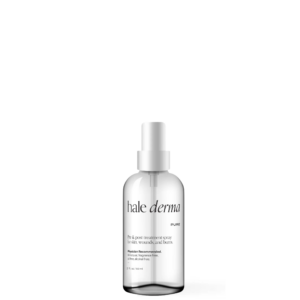
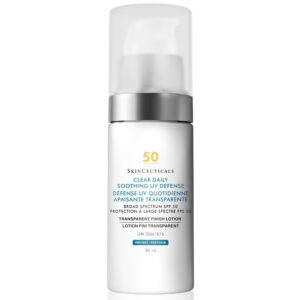
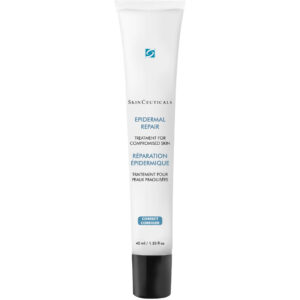
Recommended aftercare and skincare
The medical grade products our team uses to protect and extend your results. Shipped express across Canada, free over 150 dollars.
Ready to look into it properly?
Our consultation is free. We will look at your skin, give you an honest recommendation, and say so if a different treatment would suit you better.
Or call 416 923 1200 · 46 Fort York Blvd, CityPlace, Toronto
Questions about this treatment?
Ask us anything before you book. Consultations are free, and we will tell you honestly if a treatment is not right for you.