


Cheek augmentation with Stylage or biostimulators, the structural backbone of a balanced face.
Cheek filler has more effect on how the whole face reads than any other single area, because the midface supports everything below it. Restore cheek volume and the nasolabial folds soften, the jawline looks cleaner and the eyes look less tired, without touching any of those areas. It is also the area most commonly overdone, and overfilled cheeks are what people are describing when they say someone looks worked on.
- Why it lifts everything: the midface holds up the lower face. When it deflates, tissue descends and folds form. Restoring support above the fold does more than filling the fold itself.
- Cost: cheek contour, 1 cc, is $750. Most faces need one to two syringes per side over time rather than everything in one visit.
- The overfilling trap: cheeks are treated repeatedly over years without accounting for what is already there. Product accumulates and the face widens across the midface. We assess what is present before adding.
- Placement depth matters. Deep placement on bone creates structure. Superficial placement creates fullness. Confusing the two is what produces the round, shiny look.
- Age changes the goal. In your thirties this is usually about restoring a small deficit. In your fifties it is about supporting descent, and filler alone may not be the whole answer.
- If your cheeks are already full, the answer to a fold or a jowl is not more cheek filler. We will say so, even when it is the easier sale.
Bar Beauty Medical, 46 Fort York Blvd, CityPlace, Toronto. Prices in Canadian dollars from our live booking system, verified 18 August 2026.
Why cheek fillers matter
Cheek volume holds up the entire mid-face. As we age, that volume drops, cheeks descend, nasolabial folds deepen, the under-eye area hollows. Restoring cheek volume lifts everything above and below it. It’s the most important structural injectable for a refreshed look.
What we use
Stylage, high-cohesivity HA fillers from Vivacy that lift and structure the cheek, typically lasting 12 to 18 months.
Sculptra, for patients wanting gradual full-face volume rebuild from your own collagen.
What to expect
30 minute appointment. Topical numbing. Immediate result with subtle ongoing softening over 2 weeks. Most patients book 1 to 2mL across both cheeks; some go to 4mL for significant volume loss.
Book your free consultation
Speak with a licensed Bar Beauty injector or laser tech. We will review your goals and give you a clear plan, zero pressure.
46 Fort York Blvd, Toronto · 416-923-1200 · Open 7 days
Related reading: Sculptra vs Radiesse for Cheek Volume · Tear Trough Filler Cost in Toronto 2026
Cheek filler in Toronto uses hyaluronic acid (Stylage, Revanesse) or a biostimulator (Sculptra, Radiesse) placed deep on the zygomatic bone to restore midface projection, lift the nasolabial fold, support the under-eye, and rebalance the lateral facial frame. At Bar Beauty in downtown Toronto we approach cheek augmentation anatomically, anterior medial cheek for lift, lateral cheek for contour, sub-orbital cheek for under-eye support. 2026 pricing is $750 per syringe; most patients require 1.5 to 3 mL split across one or two sessions.
To book a no-pressure consultation, call (416) 923-1200 or use the contact page.
What cheek filler actually does
The midface ages in three predictable patterns and cheek filler addresses each one. First, the zygomatic fat pad atrophies and the bone resorbs, causing the apex of the cheek to descend. Second, the malar septum becomes more prominent because there is less overlying fat to disguise it, creating the visible “tear trough” and lid-cheek junction. Third, the lateral cheek loses projection, flattening the side profile and exposing the bony zygomatic arch. Filler placed thoughtfully along the zygomatic bone restores all three:
- Anterior medial cheek (Ristow’s point). Deep supra-periosteal placement here lifts the entire midface and softens the nasolabial fold without injecting into the fold itself.
- Lateral cheek (zygomatic apex). Placement here restores the high-point shadow that makes a face read youthful.
- Sub-orbital cheek (sub-malar). Subtle volume here supports the under-eye without filling the tear trough directly.
- Pre-auricular cheek. Volume here softens the descending jowl line and rebalances the lateral face.
Cheek augmentation is the most structural injectable in facial aesthetics. Done well it lifts everything above and below the cheek itself; done poorly it produces the puffy, top-heavy “filler face” that is hard to undo without dissolving and starting over.
2026 cheek filler pricing in Toronto
| Treatment | Volume | Typical Duration |
|---|---|---|
| Cheek filler (HA) per syringe | 1 mL | 15 to 24 months |
| Light correction (1 syringe) | 1 mL | 15 to 24 months |
| Standard correction (2 syringes) | 2 mL | 18 to 24 months |
| Full correction (3 syringes) | 3 mL | 18 to 24 months |
| Major restoration (4 syringes, staged) | 4 mL | 18 to 24 months |
| Sculptra full face protocol (3 vials) | 3 vials, 3 sessions | up to 24 months |
| Radiesse cheek (per syringe) | 1.5 mL | 12 to 18 months + collagen |
How our cheek pricing compares in Toronto
2026 Toronto cheek filler pricing ranges from $625 to $950 per HA syringe. We sit mid-market at $750. A full correction of three syringes is $2,250.
HA vs Sculptra vs Radiesse for cheeks, how we decide
When we choose HA filler (Stylage, Lyft)
Default for patients under 50, first-time filler patients, and anyone who wants immediate visible change with the option to dissolve. Stylage is our default because of its high lift and 15 to 24 month duration.
When we choose Sculptra
For patients 50+ wanting gradual full-face collagen rebuild. Drawback: not reversible and results develop over 12 to 16 weeks. Cannot be combined with HA in the same zone same session.
When we choose Radiesse
For patients wanting immediate volume plus collagen stimulation. Lasts 12 to 18 months and continues to build collagen for 9 to 12 months after placement. Drawback: not reversible.
Red flags, when to walk out of a cheek filler consultation
- More than 3 mL per session recommended for cheek augmentation alone. Overcorrection looks heavy and may take 18+ months to resolve.
- Sub-malar filling proposed without indication. Often produces the “chipmunk” look.
- “Premium” unbranded filler. Health Canada licensed products only.
- Per-area pricing without volume specified. Insist on per-syringe pricing.
- No photo documentation. Standardized 3-angle photos should be standard.
- No discussion of the facial artery or infraorbital vessels. Anatomic awareness should be evident.
- “Same-day result is the final result” claims. Cheek filler integrates and settles over 2 to 3 weeks.
Recovery, realistic week-by-week timeline
Day 0
Mild swelling at injection zones. Possible pinpoint bruising at the injection points. No exercise, sauna, hot yoga for 24 hours.
Days 1 to 3
Most swelling resolves. Bruising peaks day 2 to 3 if any.
Week 1
Filler integrating. Cheeks look slightly fuller than final result. Avoid pressure on the cheeks (sleeping face-down).
Week 2 to 3
Final result visible. 3-week assessment booked.
Months 3 to 24
HA integrates and gradually metabolizes. Maintenance typically at month 18.
HSA, financing, OHIP, and tax considerations
Health spending accounts
Cheek filler is cosmetic, not OHIP-covered. Some Group HSAs reimburse. Itemized receipts available.
OHIP coverage
OHIP does not cover cosmetic cheek augmentation.
CRA tax considerations
Pure cosmetic cheek work is not tax-deductible. Reconstructive cheek volume (post-trauma, post-illness) may qualify for the medical expense tax credit.
Affirm financing
For larger treatment plans, Affirm financing is available so you can split the cost into monthly payments. You can review your options at consultation; checking your rate does not affect your treatment plan.
Combining cheek filler with other treatments
With jawline filler
Most common companion. Cheek first, jaw second, 4 to 6 weeks apart for very lean patients.
With Botox
Standard same-day combination.
With temple filler
Upper-face balance. Often staged across 2 sessions.
With Morpheus 8 RF
For patients needing skin tightening alongside volume restoration. Sequenced separately.
What cheek filler will not do
- Replace surgical midface lift for severe descent.
- Fix tear troughs alone. Tear troughs often need dedicated under-eye filler in a separate session.
- Permanently change facial structure. HA filler metabolizes over 18 to 24 months.
- Look perfect on day one for everyone. Some patients need a small touch-up at week 3.
- Fix sagging skin. Volume helps but does not replace tightening.
Why Bar Beauty for cheek augmentation
We are a nurse-led, physician-supervised injectable clinic in downtown Toronto serving patients across the GTA, Mississauga, Etobicoke, North York, Scarborough, Vaughan, Markham, Richmond Hill, and Oakville. We hold a 5.0 Google rating across 222+ reviews.
Frequently asked questions
How much does cheek filler cost in Toronto in 2026?
$750 per syringe. Typical full corrections run $1,500 to $2,250.
How long does it last?
HA: 15 to 24 months. Radiesse: 12 to 18 months. Sculptra: up to 24 months.
Does it hurt?
Mild. Topical numbing plus lidocaine in the filler. Pain rating 3 out of 10.
Can I exercise after?
24 hours for moderate exercise; 48 hours for hot yoga and sauna.
Is it safe?
Yes, with an experienced injector and branded products. Facial artery and infraorbital vessels are the main anatomic concerns.
How soon will I see results?
HA: immediate, settled at week 2 to 3. Sculptra: gradual 12 to 16 weeks. Radiesse: immediate plus continued collagen build.
Can I dissolve it?
HA yes. Sculptra and Radiesse no.
How much filler do I need?
Most patients require 2 to 3 mL for full correction. We map this at consultation.
Will it make me look “done”?
Not with appropriate volume and placement. Overcorrection is what produces the “done” look.
Stylage vs Restylane Lyft vs Sculptra for cheeks?
Stylage (Vivacy) and Restylane Lyft (Galderma) are both hyaluronic acid gels used for cheek lift and projection, and both are reversible with hyaluronidase. Sculptra (Galderma) is not a filler at all: it is poly-L-lactic acid, a collagen biostimulator that builds volume gradually over 12 to 16 weeks and is not reversible. Which of the three suits you is decided at your consultation.
Will cheek filler help my nasolabial folds?
Yes, indirectly. Restoring midface volume lifts the cheek and softens the fold without injecting into the fold itself.
Will cheek filler help my under-eye hollow?
Partially. Subtle sub-orbital cheek volume supports the under-eye. Direct tear-trough filler is a separate, more technically demanding treatment.
Book your cheek filler consultation
Call (416) 923-1200, message via WhatsApp, or book via the contact page.
Cheek filler in Toronto uses hyaluronic acid (Stylage, Revanesse) or a biostimulator (Sculptra, Radiesse) placed deep on the zygomatic bone to restore midface projection, lift the nasolabial fold, support the under-eye, and rebalance the lateral facial frame. At Bar Beauty in downtown Toronto we approach cheek augmentation anatomically, anterior medial cheek for lift, lateral cheek for contour, sub-orbital cheek for under-eye support. 2026 pricing is $750 per syringe; most patients require 1.5 to 3 mL split across one or two sessions.
To book a no-pressure consultation, call (416) 923-1200 or use the contact page.
Anatomical mapping, why injector knowledge of facial layers matters
The midface has five tissue layers from skin down to bone: epidermis, dermis, superficial fat, SMAS (superficial musculoaponeurotic system), deep fat, and periosteum. Cheek filler placement varies by goal, supra-periosteal placement (deep on bone) gives structural lift; placement in the SMAS or superficial fat creates surface contour but risks visibility and lumpiness. The facial artery runs from the inferior mandibular border up to the medial canthus, with the angular artery as its terminal branch, a continuous vascular structure that crosses the entire cheek. Cannula technique allows the injector to navigate around major vessels rather than puncturing them, which is the principal safety advantage over needle technique. The infraorbital nerve and vessels exit the infraorbital foramen approximately 1 cm below the orbital rim along the mid-pupillary line, a landmark every injector should mark before cheek work begins.
Choosing a product family for your specific midface anatomy
Vivacy Stylage
Vivacy IPN-Like technology HA. The range runs from soft gels through to firm volumisers. The firmer grades give high lift and are our default for projection and structural midface restoration, typically 15 to 24 months. Grade is selected at your appointment.
Revanesse
Prollenium HA. The range includes firm grades that hold projection when placed deep on the bone. Reversible with hyaluronidase. Grade is selected at your appointment.
Sculptra
Galderma poly-L-lactic acid. Not a filler, a biostimulator that triggers collagen growth. 3-vial full-face protocol over 3 sessions, results develop 12 to 16 weeks.
Radiesse
Merz calcium hydroxylapatite microspheres. Hybrid biostimulator with immediate volume plus 9 to 12 months of collagen build. 12 to 18 months duration.
Pre-treatment and aftercare checklist
One week before: avoid fish oil, vitamin E, aspirin, ibuprofen unless medically required. Avoid alcohol 48 hours before.
Day of: arrive without makeup. Eat normally. Bring written list of current medications and supplements.
First 24 hours after: no exercise, sauna, hot yoga, alcohol, or pressure on the treated area.
First 2 weeks: sleep on your back or non-treated side if possible. Avoid facial massage, microneedling, laser, peels, or microdermabrasion in the treated area.
Week 3: attend the complimentary assessment appointment for touch-up consideration.
Recommended aftercare and skincare
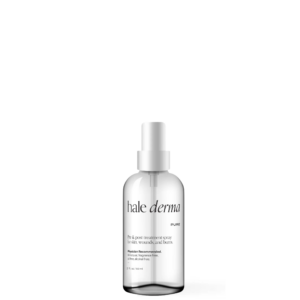
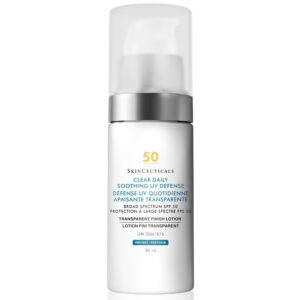
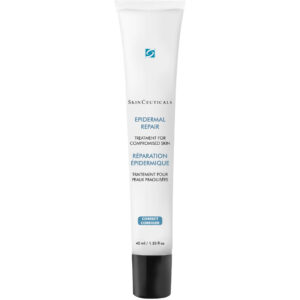
The medical grade products our team uses to protect and extend your results. Shipped express across Canada, free over 150 dollars.
Ready to look into it properly?
Our consultation is free. We will look at your skin, give you an honest recommendation, and say so if a different treatment would suit you better.
Or call 416 923 1200 · 46 Fort York Blvd, CityPlace, Toronto
Questions about this treatment?
Ask us anything before you book. Consultations are free, and we will tell you honestly if a treatment is not right for you.