


, Last updated: August 19, 2026 · Reading time: 13 minutes · Book consultation →
Under-eye bags are not one condition. Four separate problems (a true fat-pad bulge, a tear-trough hollow, crepey skin, and pigment) all photograph the same way, and each one needs a different treatment. The table below sets out the order treatment usually runs in at our CityPlace clinic and when each step shows a change.
| Stage | What it corrects | When you see it |
|---|---|---|
| Skincare and lifestyle groundwork | Morning puffiness and thin under-eye skin. Allergy management, side-sleeping, late-afternoon sodium, and a retinoid plus caffeine peptide serum. | Reassessed at about 6 weeks. Skin thickening builds over 12 weeks. |
| Tear trough filler | The hollow between cheek and lower lid that casts the shadow. Conservative dosing of 0.5 to 1.0 mL per side, placed deep. | Visible immediately, lasts 12 to 18 months. |
| Under-eye Botox, 1 to 3 units per side | The bulge that appears only when you smile, caused by orbicularis muscle hypertrophy. | Lasts about 3 months. |
| Aerolase Neo Elite, 3 to 4 low-fluence sessions | Brown pigment and skin quality, including Fitzpatrick III to VI skin where IPL causes rebound. | Builds across the series, holds 12 to 18 months. |
| PRP, 3 sessions | Crepey skin and vascular dark circles, using your own blood rather than a product. | Holds about 12 months. |
| Oculoplastic referral for lower blepharoplasty | True fat-pad herniation, which no injectable corrects. We do not perform surgery. | Surgical and permanent. |
Not everyone needs every stage. Which ones apply, and in what order, comes out of the four-photo assessment at consultation, and a bulge that turns out to be true fat-pad herniation is referred to a surgeon rather than filled.
Under Eye Bags Treatment in Toronto: The Complete 2026 Encyclopedia
Under-eye bags are the single most common cosmetic concern we see at Bar Beauty Medical, and they are also the most commonly mis-treated, because “under eye bags” is a wastebasket term for four different conditions that share a single appearance: tired, hollow, shadowed, or puffy eyes. Treat the wrong condition and you get a worse-looking result and a $1,200 bill. This 3,000-word guide walks you through the diagnostic ladder, the treatment hierarchy from skincare to surgery, and the protocols our team uses at our CityPlace clinic.
Quick navigation: 4-photo identification (bags vs hollows vs wrinkles vs dark circles) · Why your under-eye area changed · Treatment hierarchy · Why Aerolase + tear trough is different · Cost & payment · What does NOT work · Prevention · FAQ
Photo Identification: Which “Under-Eye Bag” Do You Actually Have?
Before any needle, laser, or device touches your face, you need an accurate diagnosis. The single most common reason patients come to us already frustrated is that they paid for filler when they needed surface treatment, or paid for laser when they needed structural support. Below are the four conditions that all photograph as “under-eye bags.”
| Condition | What it looks like | Cause | Correct treatment |
|---|---|---|---|
| True fat-pad herniation (the actual “bag”) | 3-D bulge under lash line, worse in morning, worse looking up | Orbital septum weakening; orbital fat protrudes forward | Conservative: skin tightening (Morpheus 8). Definitive: lower-lid blepharoplasty referral |
| Tear trough hollow | Sunken groove between cheek and lower lid; casts a shadow | Volume loss + ligament retention + bone resorption (mid-30s+) | Tear trough filler (hyaluronic acid) |
| Crepey wrinkles / loose skin | Fine vertical and horizontal lines, “crepe paper” texture | Sun damage + collagen loss | Aerolase Neo for collagen, RF microneedling |
| True dark circles (pigment or vascular) | Brown or blue-purple discolouration without volume change | Hyperpigmentation (Fitzpatrick III-VI), or thin skin showing underlying vasculature | Aerolase Neo for pigment; PRP and topicals for vascular |
Most patients arriving at our clinic have two or three of these conditions at once. The job of the first 30-minute consultation is to rank them by visible contribution and treat in order, not all at once.
The 30-second self-test
Stand in front of a mirror in bright neutral light. (1) Tip your chin slightly down and look at the area, if the bag remains, it is likely structural (fat). (2) Smile broadly, if the area inflates more, it is partly structural. (3) Pull the skin gently outward toward the temple, if the “bag” lessens, it’s a tear trough hollow, not a bag. (4) Look at the colour with the bulge isolated, brown is pigment, blue-purple is vascular.
Why YOUR Under-Eye Area Changed: The 5 Drivers
| Driver | Mechanism | Typical age range | Reversible? |
|---|---|---|---|
| Bone resorption | Orbital rim recedes with age; tear trough deepens automatically | Begins early 30s, accelerates 40s+ | No, volume replacement only |
| Mid-face fat-pad migration | Malar fat descends; tear trough appears longer/deeper | 35+ | Partial, mid-face filler restores |
| Orbital fat herniation | Septum weakening; fat bulges forward | 40+, but genetic at any age | Surgical only for definitive correction |
| Skin laxity + sun damage | Collagen and elastin loss; thinning skin shows vasculature | 30s+ (UV-driven) | Yes, RF microneedling, Aerolase |
| Hyperpigmentation | Melanocyte over-activity; often genetic + UV | Any, common in Fitzpatrick III-VI | Yes, see hyperpigmentation Toronto |
“Bags” are almost never one of these in isolation past age 35. The art of treatment is sequencing.
Treatment Hierarchy: First → Last
Step 1, Skincare and lifestyle foundation
Side-sleeping, allergy management (one of the most under-recognised drivers of morning puffiness), salt-sodium reduction in late-afternoon meals, caffeine consumption pattern review, alcohol minimisation, and a targeted under-eye topical. We dispense peptide-rich, caffeine + vitamin K under-eye serums and dermal-grade retinoids that thicken under-eye skin over 12 weeks. Spend before this is wasted.
Step 2, Tear trough filler (the most common correct first treatment)
For the hollow-component, hyaluronic acid filler placed deep on the orbital rim restores the optical shadow that makes the area look “tired.” Conservative dosing (0.5-1.0 mL per side) prevents the “filler eyes” look. The result is visible immediately and lasts 12-18 months. See tear trough filler Toronto for the full protocol, and what tear trough filler costs in Toronto for the numbers.
Step 3, Under-eye Botox (for hypertrophic orbicularis “jellyroll”)
If the bulge appears only when you smile, the cause is orbicularis muscle hypertrophy, correctable with 1-3 units of Botox per side, placed superficially. Lasts 3 months. Far cheaper than filler ($45-$135) and the right answer for many patients who were quoted $1,200 of filler elsewhere.
Step 4, Aerolase Neo Elite for pigment and skin quality
For the pigmented (brown) component, 3-4 Aerolase sessions on low fluence remove melanin without the heat-shock-driven rebound that IPL causes in Fitzpatrick III-VI skin. Adds bonus collagen stimulation that thickens the area. See our Aerolase Neo Elite Toronto page.
Step 5, Under-eye PRF instead of polynucleotides (PN/PDRN)
Injectable polynucleotides get a lot of attention for the under-eye area right now. The published evidence is still early, and no polynucleotide injectable appears in Health Canada’s medical device licence listing, so we do not offer them. For thin, crepey under-eye skin we use under-eye PRF, made from your own blood, or the PRP protocol below.
Step 6, PRP (platelet-rich plasma)
Drawn from your own blood, spun, and injected superficially in the under-eye. Excellent for vascular dark circles and crepey skin. Our PRP face Toronto page covers protocol.
Step 7, Surgical referral (lower blepharoplasty)
For true fat-pad herniation that no injectable can correct, we refer to one of three trusted Toronto oculoplastic surgeons. This is honesty, we do not perform surgery and we will tell you when filler is the wrong answer.
Bar Beauty Toronto vs alternative under-eye treatments
| Treatment | Best for | Sessions | Duration |
|---|---|---|---|
| Tear trough filler (Bar Beauty) | Hollows | 1 + 12mo refresh | 12-18 months |
| Under-eye Botox | “Jellyroll” smile bulge | 1 every 3mo | 3 months |
| Aerolase Neo Elite | Pigment + texture | 3-4 | 12-18 months |
| PRP under-eye | Crepey skin, vascular darks | 3 | 12 months |
| Lower blepharoplasty (referred out) | True fat-pad herniation | 1 surgical | Permanent |
Why Bar Beauty’s Combined Approach Is Different
The reason most patients are unhappy with under-eye treatment is that the clinic they visited only sold what they had. A filler-only clinic fills hollows and tells you the dark circles are “skin tone.” A laser-only clinic Aerolases the pigment and tells you the hollows are “genetic.” Both are right about half the problem.
At our CityPlace clinic, we run every under-eye consultation through the 4-photo identification framework above and build a sequenced plan. For most patients that is: skincare + 6 weeks → assessment → tear trough filler for the hollow → Aerolase for the pigment. The total spend over 6 months runs $1,600-$2,400, substantially less than the $4,800 a single inappropriately-prescribed surgical alternative would cost.
The other Bar Beauty differentiator is conservative dosing. The tear-trough region is the single most over-filled area in cosmetic medicine. Our protocol uses low-G-prime filler (Teosyal Redensity 2) at 0.5-1.0 mL per side, never 2 mL in one visit. This avoids the puffy “Tyndall blue” filler look that gives the industry a bad name.
Hidden costs, the single-session trap
Many Toronto clinics offer “under-eye PRP” as one session for $500. Three sessions is the published protocol, one session is mostly cosmetic theatre. Our recommendation is always to package or skip.
HSA, insurance, and tax
Cosmetic injectables and laser are not OHIP-covered. HSA and extended health may cover prescription retinoids for diagnosed photoaging. The portion of any care that addresses functional vision (eyelid surgery for true ptosis affecting vision) may be partly covered by OHIP, ask your referred surgeon.
What Does NOT Work for Under-Eye Bags, Save Your Money
1. “Miracle” eye creams claiming to remove bags
No topical reduces orbital fat-pad herniation. Some legitimately reduce morning puffiness and improve crepey texture. Anything promising “instant bag removal” is at best a temporary tightening agent.
2. High-volume filler placed superficially
The Tyndall effect (visible blue tint from HA filler placed too superficially) is one of the most common cosmetic complaints in Toronto. Filler in the tear trough belongs deep on bone, in conservative volumes, by an experienced injector. Walk away from anyone proposing more than 1.0 mL per side at a single visit.
3. IPL or BBL for under-eye pigment in Fitzpatrick III-VI
Same problem as on the cheeks: in darker skin, IPL drives more pigment, not less. Aerolase 1064 nm at low fluence is the correct laser. See our melasma treatment Toronto for the full physics explanation.
4. “Plasma pen” / “fibroblast” non-medical treatments
Marketed to tighten under-eye skin. Unregulated, operator-dependent, and reports of scarring and pigment damage are well documented. We do not offer this and recommend against it.
5. Single-session $500 under-eye PRP
See hidden-costs section above. Three is the protocol; one is undertreatment.
6. Lower blepharoplasty as first-line
Definitive for fat-pad herniation, but irreversible. The 30-something patient with mild hollows and pigment does not need surgery, she needs the conservative ladder.
7. Cold spoons, hemorrhoid creams, and TikTok hacks
Cold reduces morning puffiness briefly. Hemorrhoid cream vasoconstricts briefly. Neither addresses any underlying cause and chronic use risks skin barrier damage.
Lifelong Under-Eye Prevention
Under-Eye FAQ, 16 Questions Toronto Patients Ask
What is the best treatment for under-eye bags in Toronto?
“Best” depends entirely on which of the four under-eye conditions you have. Tear-trough hollows respond to filler. Pigment responds to Aerolase. Crepey skin responds to PRP or PRF. True fat-pad herniation responds only to surgery. The first step is the 4-photo diagnostic.
How much does tear-trough filler cost in Toronto?
At Bar Beauty, tear trough filler is $850 for the under-eye treatment. That is the price listed in our online booking system.
How many Aerolase sessions for under-eye dark circles?
For the pigment component, 3-4 sessions at 4-week intervals. For vascular darks, PRP or PRF is more effective.
Can under-eye bags be removed without surgery?
If the “bag” is hollow-driven or pigment-driven, yes, injectables and laser solve it. If the bag is true fat-pad herniation, conservative measures may improve appearance 20-30% but cannot eliminate it, surgery is the only definitive option.
Is tear-trough filler safe?
In experienced hands, yes, complications under 1%. The under-eye area is unforgiving, so injector experience matters enormously.
How long does tear-trough filler last?
12-18 months for hyaluronic acid filler in this region.
What is the “Tyndall effect”?
A visible blue tint from HA filler placed too superficially in thin skin. Caused by light scattering through the filler. Fully reversible with hyaluronidase. We avoid it with deep placement and conservative volumes.
Does PRP really work for dark circles?
For vascular dark circles (blue-purple underlying vasculature visible through thin skin), yes, three-session published response rates are 50-60%. For pigment dark circles, Aerolase outperforms PRP.
What are polynucleotides and how do they differ from filler?
Polynucleotides (PN/PDRN) are purified DNA fragments, usually from salmon, used to improve skin quality rather than add volume, which is why they get grouped with biostimulators. Early studies report better texture and elasticity, but the evidence is still limited. Filler restores volume, which polynucleotides do not. No polynucleotide injectable appears in Health Canada’s medical device licence listing, so we do not inject them. The PDRN we use is a topical product applied during microneedling.
Will under-eye Botox give me droopy eyes?
Not if dosed correctly. We use 1-3 units per side, placed superficially and at least 3 mm below the lash line, only for jellyroll bulge cases. Higher doses or wrong placement can cause ectropion or droop, which is why we under-dose first time.
Why are my eyes more puffy in the morning?
Lymphatic drainage is gravity-dependent. Overnight horizontal positioning + late-evening sodium + alcohol = morning puffiness. Sleep with the head of the bed elevated 10°, minimise late sodium and alcohol, and the morning baseline improves substantially.
Can I do under-eye filler while pregnant or breastfeeding?
We defer injectables in pregnancy and breastfeeding by default. No published harm but no published safety data either, we wait.
Is allergy making my under-eyes worse?
Often. Chronic allergic rhinitis causes lower-lid venous congestion (“allergic shiners”) that look like dark circles. We screen for this and refer to your GP for management when allergy is the dominant driver.
What about under-eye laser like Fraxel or PicoSure?
Effective in some hands but PIH risk in Fitzpatrick III-VI is non-trivial. We default to Aerolase Neo Elite for the under-eye area because the safety profile is materially better.
Does Bar Beauty Medical see patients from across the GTA?
Yes, Toronto, Mississauga, Etobicoke, Vaughan, Markham, North York, Scarborough, Brampton, Richmond Hill, and out-of-province visitors. CityPlace location at 46 Fort York Blvd.
How do I book an under-eye consultation at Bar Beauty?
Via our contact page or online booking. Initial 30-minute under-eye consultations are complimentary and include the 4-photo diagnostic, written plan, and pricing.
Book Your Under-Eye Consultation in Toronto
Bar Beauty Medical · 46 Fort York Blvd, CityPlace, Toronto · serving Toronto, Mississauga, Etobicoke, Vaughan, Markham, North York, Scarborough, and Brampton. Complimentary 30-minute consultation with full diagnostic and sequenced treatment plan. Book your consultation →
5.0 average rating from 222+ verified Google reviews. Last updated August 19, 2026.
Protocol Deep-Dive: Step-by-Step Technique
Most pages describe what a treatment accomplishes; this section describes exactly how we perform the under eye bag correction with tear trough filler and biostimulators so that prospective clients understand the rigour behind the price. Bar Beauty operates under a written clinical protocol that every nurse on our team follows identically.
Stage One: Consultation and Photographic Baseline
Every Under Eye Bags client begins with a 20-minute consultation that includes medical history review, medication reconciliation (with particular attention to blood thinners, isotretinoin exposure within the past six months, recent dental work, and immunomodulators), Fitzpatrick skin typing, and goal articulation. Photographic baselines are captured on the Salient Skin Analyzer using the same lighting, head positioning, and lens distance every visit. This standardised imaging is what makes meaningful before-and-after comparison possible at three, six, and twelve months.
Stage Two: Pre-Treatment Preparation
Skin is double-cleansed with a low-pH gentle cleanser followed by a chlorhexidine or alcohol-based antiseptic depending on the indication. For sensitive areas, a compounded 23/7 lidocaine-tetracaine topical anaesthetic is applied for 25-30 minutes under occlusion. Vitals are taken and consent is reconfirmed. The treatment plan is reviewed verbally one final time and the client is given the option to modify or cancel without penalty.
Stage Three: The Under Eye Bags Procedure Itself
Treatment is delivered in anatomically mapped zones using parameters titrated to the client’s tissue characteristics and goals. Throughout the procedure the injector or operator monitors for any signs of adverse reaction. Procedure time varies by indication but typical sessions run 30-75 minutes depending on the scope of treatment requested.
Stage Four: Immediate Post-Treatment Assessment
Before the client leaves we capture post-treatment photography, review written aftercare instructions, confirm the next appointment, and provide direct text-message access to the nurse for any concerns in the first 72 hours.
Current pricing for every treatment is published on our (see current price list).
How Under Eye Bags Compares Against the Surgical Alternative
For clients researching whether a non-surgical treatment can achieve what surgery achieves, the honest answer is: sometimes yes, often partially, occasionally no. The surgical alternative most commonly considered for this indication is lower blepharoplasty (surgical eyelid lift) with fat repositioning. Understanding the comparison is essential before deciding which path is right.
Time, Recovery, and Lifestyle Impact
Non-surgical treatment for under eye bags is done in office. Most clients return to work the same day or the following morning, though swelling and inflammation are still settling through the first week. Lower blepharoplasty is surgery, with a meaningfully longer recovery and time away from work, so clients who cannot take that time, or who would rather not have surgery, usually start with the non-surgical assessment.
Result Durability
There is no single duration, because there is no single cause. Filler for hollowing lasts 9 to 18 months. True fat-pad herniation is a surgical problem and lower blepharoplasty results last many years. We assess which one you have before recommending anything.
Reversibility and Adjustability
This is the single most consistent reason clients choose non-surgical: results can be modified, reduced, or stopped entirely without permanent consequence. Surgical results cannot be undone without a second surgery. For clients in their first decade of aesthetic engagement we routinely recommend the non-surgical path first specifically because it preserves optionality.
Year 1, Year 2, and Year 3 Maintenance Cost Framework
Most prospective clients only consider the first-treatment cost. A more useful planning lens is the three-year total cost of ownership, which reflects how aesthetic outcomes actually behave over time.
Year 1: Initiation and Optimisation
The first year for Under Eye Bags typically requires the largest investment as the initial result is built and refined. Expect the bulk of treatments to happen in the first 6-9 months as we titrate to your optimal outcome. Year 1 budget envelope for most clients on this protocol falls in the $1,800-4,800 range depending on starting baseline, treatment area, and combination protocols selected.
Year 2: Maintenance and Refinement
Year 2 cost typically drops to 40-60 percent of Year 1 as the focus shifts from building the result to maintaining it. Most clients on this protocol budget $900-2,400 for Year 2, with the variability driven by individual metabolism, lifestyle factors (sun exposure, smoking, sleep, stress), and the addition or removal of adjunctive treatments.
Year 3 and Beyond: Steady-State
By Year 3 most clients have settled into a predictable maintenance cadence that delivers consistent outcomes at a predictable annual budget. Year 3+ typical budget is $800-2,200 annually. We can map out a multi-year plan with you during your consultation.
Hyaluronidase Reversal When Required
One of the genuine safety advantages of hyaluronic acid filler is enzymatic reversal with hyaluronidase. We stock hyaluronidase on premises for same-day dissolution. Reversal scenarios we have managed for under eye bags cases include: client preference change within 14 days of treatment, asymmetry that does not resolve with massage by week two, Tyndall effect (bluish shadow when product is placed too superficially), and the rare vascular event requiring immediate flooding of the affected territory. Reversal cost is $250-450 depending on the volume of hyaluronidase required. Biostimulator and neuromodulator effects cannot be enzymatically reversed but resolve naturally over 3-6 months for toxin and 12-24 months for biostimulator.
Before-and-After Photography: What to Expect and How to Read It
Photographic outcomes for Under Eye Bags are documented at standardised intervals: immediately pre-treatment, immediately post-treatment, 2-week follow-up, 6-week follow-up, 3-month, 6-month, and 12-month. The single most common mistake clients make when reviewing other clinics’ before-and-afters is not accounting for lighting, head position, and lens distortion. A photo taken under overhead fluorescent lighting at week zero compared against ring-light frontal photography at week eight can produce a dramatic apparent change driven entirely by photographic technique.
What Genuine Standardised Photography Shows
At Bar Beauty all outcome photography uses identical lighting (5500K balanced LED panels at fixed angles), identical lens (50mm equivalent), identical distance (90 cm), identical background, and identical head positioning aided by the Salient imaging system. This allows us to measure actual tissue and pigment changes rather than photographic artefact. Clients are provided with their full photographic series on request.
Realistic Visible Change Timelines
The first visible change for most Under Eye Bags protocols appears between 2 weeks and 6 weeks post-treatment. Peak visible change typically lands at the 8-16 week mark, with continued subtle remodelling for several months thereafter. Clients who evaluate their outcome at week one are evaluating swelling and inflammation rather than the actual treatment result.
What Determines Best Candidacy
Not every prospective client is a strong candidate for Under Eye Bags. The factors that most reliably predict an excellent outcome are listed below, ranked in approximate order of importance.
Realistic and Specific Goals
Clients who can articulate a specific, realistic goal (“I want to look refreshed and less tired in 3D headshots for my professional profile”) consistently report higher satisfaction than clients with vague goals (“I just want to look better”). During consultation we work explicitly on goal specification because it improves the outcome.
Baseline Tissue Quality and Health Factors
Non-smokers, clients with consistent sun protection habits, clients with stable weight, and clients who sleep 7+ hours nightly consistently achieve better and more durable outcomes than clients with the opposite profile. Lifestyle modification recommendations are part of every consultation because they multiply treatment efficacy.
Willingness to Commit to the Full Protocol
Clients who complete the full recommended protocol (including take-home regimens, attendance at follow-ups, and adherence to aftercare) tend to get better outcomes than clients who treat the recommended plan as optional.
Realistic Budget Across the Three-Year Horizon
Clients who budget only for Year 1 are often disappointed when the maintenance phase begins. The candidates who report the highest long-term satisfaction are those who entered with a three-year budget envelope already understood and accepted.
Honest Medical and Medication History
Undisclosed isotretinoin use, anticoagulant therapy, recent dental work, immunosuppression, autoimmune flares, pregnancy or breastfeeding plans, and certain supplements all materially change the risk profile of Under Eye Bags. Complete honesty during consultation is the single most important safety factor.
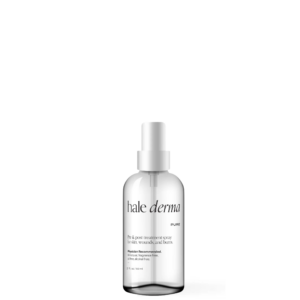
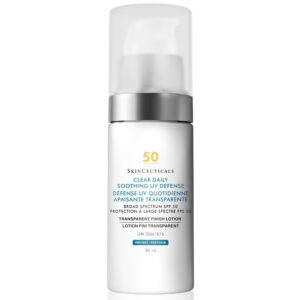
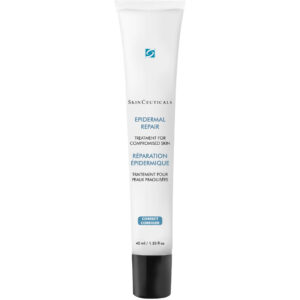
Recommended aftercare and skincare
The medical grade products our team uses to protect and extend your results. Shipped express across Canada, free over 150 dollars.
Ready to look into it properly?
Our consultation is free. We will look at your skin, give you an honest recommendation, and say so if a different treatment would suit you better.
Or call 416 923 1200 · 46 Fort York Blvd, CityPlace, Toronto
Questions about this treatment?
Ask us anything before you book. Consultations are free, and we will tell you honestly if a treatment is not right for you.