


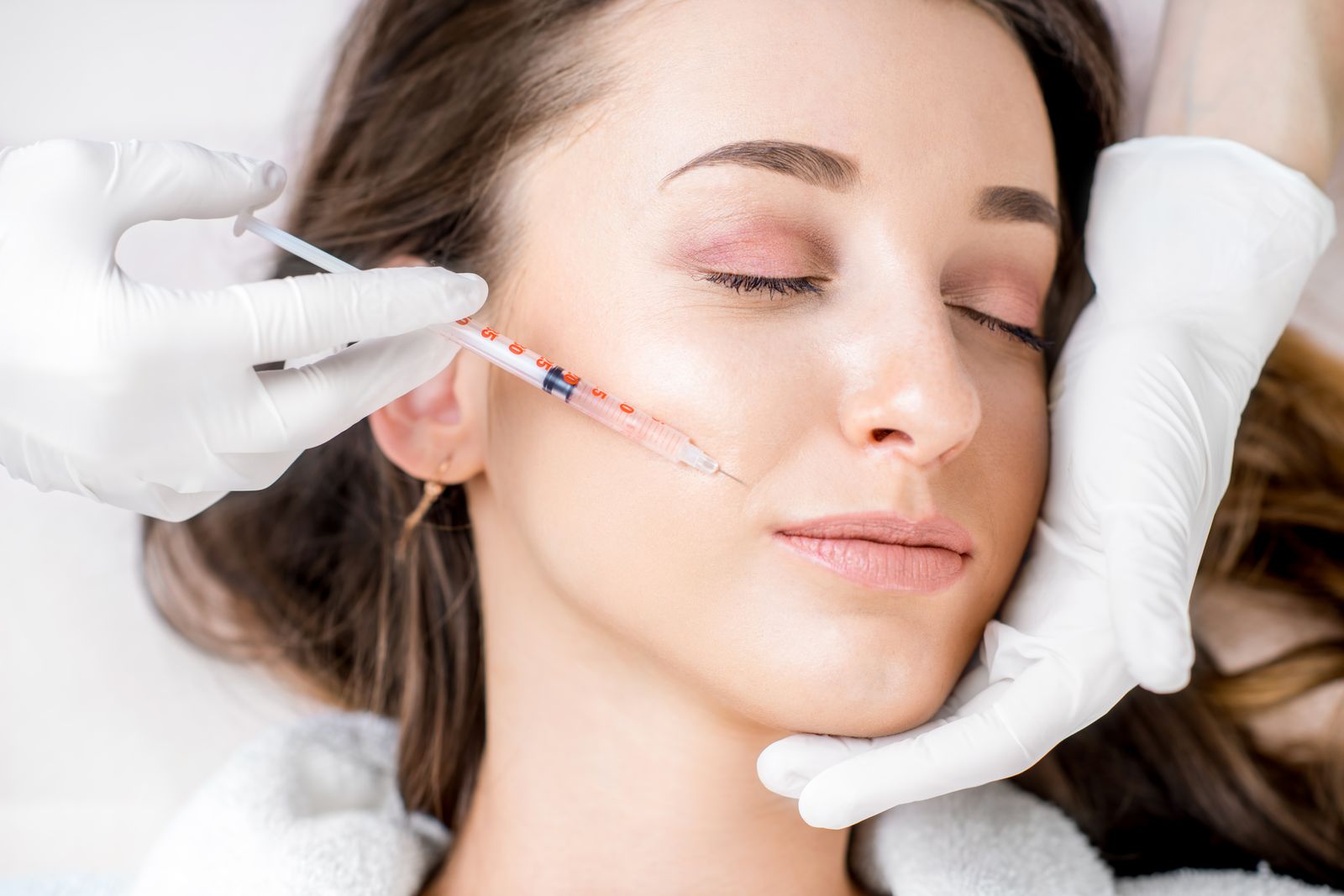
Botox vs. Dermal fillers represents one of the most common decisions I see in aesthetic medicine. Both offer effective injectable solutions when rejuvenating your appearance. When looking for a treatment understanding the difference between the two is essential for achieving your desired results. At Bar Beauty Medical we will help you make the choice between these two popular cosmetic procedures. We will help you align with your aesthetic goals. The comparison between facial fillers and Botox injections goes beyond wrinkle reduction with each treatment targeting different aging concerns. The results vary in duration and appearance. This guide will help you make an informed decision about which cosmetic injectable is right for you.
Understanding Botox: How Neuromodulators Work
Botox is scientifically known as botulinum toxin type A, which functions as a neuromodulator that temporarily relaxes the facial muscles to reduce the appearance of wrinkles. Botox is a FDA approved injectable treatment that works by blocking nerve signals to specific muscles at the injection site. Botox injections are precisely targeted. When injected Botox interrupts communication between nerves and muscles. The muscle is relaxed therefore softening dynamic wrinkles, those caused when you smile, frown, or squint. Botox is an effective treatment for those addressing forehead lines, crows feet around the eyes, the vertical “11” lines between the eyebrows. Results are seen 1-2 weeks after your appointment. Results can be seen for three to six months. Many patients who repeat their treatments over time may see longer lasting results as the muscle adapts and may become less active over time. Botox is also used beyond cosmetic applications as it has many medical uses. Healthcare providers will use Botox to manage chronic migraines, treat excessive sweating (hyperhidrosis), alleviate symptoms of temporomandibular joint (TMJ) disorders, and addressing overactive bladder conditions.
Understanding Dermal Fillers: Volume Restoration and Facial Contouring
Dermal fillers, also known as soft tissue fillers or facial fillers, represent a distinct category of injectable treatments designed to restore volume, smooth wrinkles, and enhance facial contours. Unlike Botox, which relaxes the muscle, dermal fillers work by physically adding substance beneath the skin to fill in areas that have lost volume due to aging, sun damage, or genetics. The composition may vary depending on the product and treatment area. The most commonly used are hyaluronic acid a naturally occurring substance in the body that attracts and retains moisture, providing plumpness and hydration to the skin. Popular brands include Juvéderm, Stylage, and Teosyal Redensity 2, each formulated with different particle sizes and cross-linking technologies to suit various treatment areas. Other options approved by the FDA include hydroxylapatite( found in Radiesse) which stimulates natural collagen production while providing immediate volume, poly-L-lactic acid (Sculptra), which works gradually to stimulate collagen synthesis; and polymethylmethacrylate (PMMA) microspheres (Bellafill), a semi-permanent option for long-lasting correction. Facial fillers excel at treating static wrinkles. Those are the wrinkles visible when your face is at rest. Common areas include nasolabial folds, marionette lines, vertical lip lines, under eye hollows, and areas requiring volume restoration such as cheeks, lips, temples, and jawline. The duration of dermal filler results depends on the specific product and the treatment area. Thinner fillers are designed for fine lines and typically last six to twelve months, while deeper injections can maintain results for up to two years. Some newer more structural formulas support areas like cheeks and chin.
Botox vs Fillers: Key Differences in Treatment Applications
Understanding the difference between dynamic wrinkles or static wrinkles is crucial for selecting appropriate treatment.
Dynamic wrinkles result from repeated muscle movements over time. Every time you smile, frown, or squint, the underlying facial muscles contract, creating creases in the skin above them. Years of these repetitive movements eventually cause permanent lines to form, even when your face is relaxed. Botox specifically targets these expression lines by relaxing the muscles responsible for creating them. The most effective areas for Botox treatment include the upper forehead lines, crow's feet, and frown lines between the eyebrows.
Static wrinkles, in contrast, remain visible regardless of facial movement. These lines and folds develop as skin loses elasticity, collagen production decreases, and facial fat pads diminish with age. Gravity compounds these effects, causing skin to sag and creating deeper creases. Dermal fillers address static wrinkles by replacing lost volume and providing structural support to sagging tissues. Treatment areas typically include the mid-to-lower face, such as nasolabial folds, marionette lines, lip lines, and areas requiring volume enhancement.
A combination of both treatments during a single session is common in many patients. You might receive Botox and dermal fillers during one session. You can treat forehead lines and crows feet while at the same time having nasolabial folds and lips filled. This approach addresses multiple concerns and signs of aging creating natural looking results.
Comparing Costs, Side Effects, and Safety Considerations
When evaluating Botox versus fillers, understanding the financial investment and potential side effects helps you make an informed decision aligned with your budget and risk tolerance.
Cost Comparison
At Bar Beauty Medical, Botox is priced per unit at $10/unit, so the total depends on how many units your treatment area needs. As a rough guide, crow’s feet often take 15 to 30 units per side and the forehead 20 to 40 units, but your injector confirms the exact plan at consultation. For the full breakdown, see our price list.
Dermal fillers are usually priced per syringe and generally cost more per session than Botox, because each syringe of product is more expensive than a single unit. The total depends on the product and how many syringes your goal needs. Because fillers often last longer than Botox (roughly nine months to two years versus three to six months), the cost spread over a year can land closer together than it first appears. For current per-syringe pricing, see our price list.
Side Effects and Safety Profile
When administered by a qualified medical professional both Botox and dermal fillers carry low risks. Common side effects can include temporary bruising, swelling, or redness at the injection site. More species and rare side effects include eyelid drooping and weakness in nearby muscles. Dermal filler side effects often include bruising, swelling, tenderness, and temporary lumps or bumps at injection site. More serious but rare complications include skin cell death due to vascular occlusion, allergic reaction, and asymmetry. Hyaluronic acid fillers are reversible giving you the advantage if you are dissatisfied with your results. Botox cannot be reversed but naturally wear off over several months.
When seeking both treatments look for a licensed professional with specific training in facial anatomy and injectable techniques. Aesthetic practitioners possess the expertise to minimize risks and handle potential complications.
You should avoid treatments if you are pregnant or breastfeeding. Postpone filler and Botox injections until it is safe to resume. If you are someone with specific allergies to the ingredients or have an active skin infection.
Choosing Between Botox and Fillers: What's Right for Your Goals?
Selecting between Botox and dermal fillers ultimately depends on your specific aesthetic concerns, desired outcomes, timeline expectations, and budget considerations. Many patients discover that a combination approach delivers the most comprehensive anti-aging results.
You may be an ideal candidate for Botox if:
- Your primary concerns are expression lines that appear when you make facial movements
- You want to prevent wrinkles from deepening or forming in the first place
- You're targeting areas in the upper face, particularly forehead lines, crow's feet, or frown lines
- You prefer gradual results that appear over one to two weeks
- You're comfortable with treatments every three to six months
- You're interested in additional medical benefits such as migraine relief or excessive sweating treatment
You may be a better candidate for dermal fillers if:
- Your concerns involve volume loss, hollow areas, or lines visible at rest
- You want immediate enhancement of facial contours or lip volume
- You're targeting the mid-to-lower face, including nasolabial folds, marionette lines, or thin lips
- You desire longer-lasting results (six months to two years)
- You want reversible treatments (when using hyaluronic acid fillers)
- You're looking to address under-eye hollows, acne scars, or age-related volume depletion
Consider combination treatments if:
- You have both dynamic and static wrinkles affecting different facial areas
- You want comprehensive facial rejuvenation addressing multiple aging concerns
- Your provider recommends a head-to-toe approach to achieve balanced, natural-looking results
- You're working toward long-term maintenance of a youthful appearance
The consultation process with an experienced aesthetic provider is crucial for determining the optimal treatment plan. During your assessment at Bar Beauty Medical, your practitioner will evaluate your facial anatomy, discuss your aesthetic goals, review your medical history, and recommend a customized approach that may incorporate Botox, fillers, or a strategic combination of both treatments.
Age also plays a role in treatment selection. Younger patients in their twenties and thirties often start with "preventative Botox"using smaller doses to delay wrinkle formation. Patients in their forties and beyond typically benefit from both Botox for dynamic wrinkles and fillers to restore lost facial volume, creating a comprehensive anti-aging strategy.
Conclusion
The decision between Botox vs dermal fillers isn't about determining which treatment is universally superior it's about identifying which injectable or combination of injectables best addresses your unique aesthetic concerns. Botox excels at relaxing muscles and smoothing dynamic wrinkles caused by facial expressions, making it ideal for forehead lines, crow's feet, and frown lines. Dermal fillers restore volume, smooth static wrinkles, and enhance facial contours, particularly in the mid-to-lower face where age related volume loss is most apparent.
Both cosmetic injectables offer safe, effective, minimally invasive alternatives to surgical procedures, with relatively short treatment times and minimal downtime. Whether you choose Botox, fillers, or a strategic combination of both, selecting a qualified, experienced provider is paramount to achieving natural-looking results while minimizing potential risks.
At Bar Beauty Medical, our team of aesthetic experts specializes in both Botox and dermal filler treatments, helping patients achieve their cosmetic goals through personalized treatment plans. We invite you to schedule a consultation where we can assess your individual concerns, discuss your desired outcomes, and recommend the most effective approach for enhancing your natural beauty.
Ready to discover whether Botox or fillers is right for you? Contact Bar Beauty Medical today to book your personalized consultation and take the first step toward refreshed, rejuvenated skin that reflects how you feel inside.
Ready when you are
Book Botox in Toronto
Free consultation, transparent pricing, licensed medical staff. Book online or call 416-923-1200.
The quickest way to know which one you need: relax your face completely and look in the mirror. If the line disappears, it is a movement line and Botox is the answer. If it is still there, it is a volume or structural line and Botox will not touch it. That single test settles most of the confusion, and it is the thing people most often get wrong before booking.
- Botox treats movement. Frown lines, forehead lines and crow’s feet, all caused by repeated muscle contraction. $10 per unit, so a typical upper face treatment is $400 to $600.
- Filler replaces volume. Cheek flattening, tear trough hollows, thin lips, weak chin and jaw definition. Most single areas are $750, tear trough $850, chin $950.
- Etched lines need both. A frown line that stays visible at rest usually needs Botox to stop the folding plus a small amount of filler in the crease itself.
- Timing differs completely. Botox takes three to five days to start and about two weeks to finish. Filler is visible immediately, though swelling means you judge it at two weeks.
- So does duration. Botox lasts three to four months. Most hyaluronic acid filler lasts nine to eighteen months depending on the area and how much it moves.
- If you are still unsure, the consult is free and we will tell you if you need neither. Not every concern is an injectable problem.
Bar Beauty Medical, 46 Fort York Blvd, CityPlace, Toronto. Prices in Canadian dollars from our live booking system, verified 18 August 2026.
What Botox and Fillers Actually Do (Plain-Language Explainer)
Patients often arrive in our Toronto clinic with the right goal but the wrong vocabulary, usually borrowed from TikTok or from a friend who had something done in Miami. The first job of any responsible consultation is to make sure the treatment we are talking about is actually the treatment that solves the concern. Botox and fillers are two different injectable approaches that solve different problems in the skin, soft tissue, or underlying support structure. Neither is magic, neither is permanent, and neither works in isolation. Each works inside a broader plan that includes consultation, mapping, in-clinic treatment, an at-home regimen, and structured follow-up. The honest version is that the right choice between them, performed by the right clinician, produces results that look like a better version of you on your best day. Anything else is marketing.
The Bar Beauty Toronto Protocol: How We Run Botox and Filler Appointments
Every clinic handles injectables a little differently. Here is exactly how Bar Beauty Medical handles Botox and filler treatments from the moment you book to the 12-week follow-up. We publish this so you can compare it to other Toronto and GTA clinics, if their protocol skips three of these five steps, you have your answer.
Step 1: Complimentary 30-Minute Consultation
Performed by the same clinician who would perform your treatment, never a coordinator. We take medical history, current medications, allergies, prior aesthetic work, and your specific goals in your own words. Standardized clinical photography is taken under controlled lighting and stored in your encrypted patient record. We discuss realistic outcomes, alternatives, costs, and risks before any treatment is booked.
Step 2: Pre-Treatment Plan and 14-Day Runway
You leave the consultation with a written plan: number of sessions, intervals, products to start, products to pause, and a printed pre-care checklist. For both Botox and fillers we typically recommend pausing retinoids and exfoliating acids for 5 to 7 days pre-treatment, escalating SPF50+ daily, and stopping fish oil, vitamin E, and non-essential NSAIDs 72 hours before to minimize bruising (always in consultation with your physician).
Step 3: The Treatment Session
Treatment rooms are private, climate controlled, and sanitized between patients to medical-clinic standard. We use sterile, single-use materials wherever possible. Topical or local anesthesia is offered when appropriate. The procedure itself is performed by a licensed clinician under direct medical oversight; physician backup is on-site or immediately reachable for any reaction or complication. Time in the chair varies by indication but for most patients the appointment runs 45 to 90 minutes door-to-door.
Step 4: Same-Day Aftercare Kit and Written Instructions
You leave with a small kit appropriate to your treatment (mineral SPF, gentle cleanser, occlusive, cold pack if applicable), and your aftercare instructions are emailed to you after your treatment.
Step 5: Structured Follow-Up
Follow-up is included in the price of treatment, not billed separately. We re-photograph under the same lighting conditions and review your progress on a 0 to 10 outcome scale against your stated goals. If a touch-up is clinically indicated, we discuss it at follow-up; if results are tracking on plan, we set the next milestone date.
Red Flags: When to Walk Out of a Toronto Med Spa
Most Toronto med spas are excellent. A small number are not. These are the red flags that should end your consultation immediately, no matter how good the promotional pricing looks. We see the consequences of ignoring these flags every month in our corrective-treatment chair.
Red Flag 1: No physician medical director on the premises or reachable
Every medical aesthetics clinic in Ontario must have a physician medical director responsible for the medical practice. If reception cannot tell you who the medical director is, that is a structural problem.
Red Flag 2: Pressure to book today for a “today-only” price
Pricing pressure is a sales tactic, not a medical practice. Real medical consultations end with you leaving to think it over.
Red Flag 3: No written treatment plan, no written aftercare, no follow-up included
If you cannot leave with a printed plan and a phone number to call after hours, the clinic is not running to medical standard.
Red Flag 4: Reused or unclear product packaging
Every injectable session should involve sealed, dated, lot-numbered packaging opened in front of you. If you cannot see the box, ask to see it. If the clinic refuses, leave.
Red Flag 5: A consultation that is really a sales pitch for a package
A consultation should be diagnostic. If you are being walked through a tiered package menu before anyone has assessed your skin, you are in a retail environment, not a medical one.
Financing options for Toronto patients
Botox and fillers are, in almost all cases, elective cosmetic procedures not covered by OHIP. There are several legitimate ways to manage the out-of-pocket cost.
Health Spending Accounts (HSA)
If you hold an HSA through your employer or your own corporation, the consultation portion and any medically-indicated component of treatment may be eligible. We provide itemized HSA-formatted receipts on request.
Affirm financing
For larger treatment plans, Affirm financing is available so you can split the cost into monthly payments. You can review your options at consultation; checking your rate does not affect your treatment plan.
Medical Expense Tax Credit (METC)
Discuss with your accountant. The federal METC may apply to documented medical (non-cosmetic) portions of a treatment plan. We provide line-itemized receipts to support this.
Pre-Treatment 14-Day Runway Protocol
What you do in the two weeks before a Botox or filler appointment has a real effect on comfort and result. Our standard 14-day pre-care.
Days 14 to 8
Continue your normal routine. Escalate mineral SPF50+ daily. Increase water to 2 to 3 litres per day. Do not introduce any new product.
Days 7 to 3
Pause retinoids and exfoliating acids unless instructed otherwise. Avoid waxing, threading, and depilatory creams in the treatment area. Begin oral arnica and bromelain if you bruise easily. Limit alcohol.
Days 2 to 0
Eat a full meal within 2 hours of your appointment. Arrive on clean, makeup-free skin. Wear a button-front or zip-front top. Hydrate aggressively.
Post-Treatment Care: First 72 Hours and Beyond
The first 72 hours are when the most common avoidable problems happen. Follow this and you will be in the safe lane.
Hours 0 to 24
No strenuous exercise, no saunas, no hot yoga, no extreme heat, no alcohol. Sleep elevated. Use the cold compresses we send home with you in 10-minute on, 10-minute off cycles for the first evening.
Hours 24 to 72
Resume gentle cleansing and moisturizing. Mineral SPF50+ during all daylight hours. No active acids, no retinoids, no scrubs. No facials elsewhere for 14 days.
Week 2 onward
Gradual reintroduction of your normal regimen. Photograph yourself weekly using the protocol below. Return for the included 2-week and 6-week follow-up.
At-Home Photography: How to Track Your Real Result
Memory is unreliable; photos are not. Patients who photograph themselves weekly are dramatically more satisfied because they can see the change rather than guess at it.
Use one consistent light source
North-facing window or one overhead light, never mixed. Same time of day each time.
Three standard angles, same foot position
Front, left 45, right 45. Mark a tape spot on the floor.
Weekly cadence, not daily
Daily photos magnify normal day-to-day fluctuation. Weekly tracking reveals real trends.
Cost Comparison Table: Bar Beauty vs Typical Toronto Pricing
| Tier | Typical Toronto Range (2026) | What You Usually Get |
|---|---|---|
| Discount / Groupon clinics | $$, below median | Junior provider, diluted or off-brand product, no medical director on site, no follow-up included. |
| Mid-market chains | $$$, median | Mixed experience providers, varied product sourcing, follow-up may be billed separately. |
| Physician-led medical clinics (Bar Beauty tier) | $$$$, above median | Senior clinician, named medical director, sealed, Health Canada-authorized product, written plan, included follow-up. |
| Luxury concierge | $$$$$, premium | Comparable medical standard to physician-led, additional concierge amenities, longer appointment times, premium location. |
Comparison Table: Injectables vs Common Alternatives
| Modality | Best For | Downtime | Typical Cadence |
|---|---|---|---|
| Botox or fillers | Expression lines (Botox) or volume loss (fillers) | Minimal to short | Series, then maintenance |
| Topical-only regimen | Mild concerns, prevention | None | Daily, long-term |
| Energy-based devices | Texture, tone, laxity | Variable | 3 to 6 sessions, then annual |
| Injectable alternatives | Volume, motion, structure | 24 to 72 hours | 3 to 12 month maintenance |
| Surgical alternatives | Advanced concerns, maximal change | 1 to 6 weeks | Years of result |
Who Should Not Have Botox or Fillers: Contraindications
Botox and fillers are well-tolerated by most healthy adults, but there are conditions that warrant either delay or alternative planning. The conversation about contraindications is part of every Bar Beauty consultation.
Absolute contraindications
Active skin infection in the treatment area, known allergy to any component of the planned product, pregnancy or breastfeeding (for most aesthetic treatments, we err on the side of caution and defer), active autoimmune flare, and any uncontrolled medical condition that compromises healing.
Relative contraindications (proceed with planning)
History of keloid or hypertrophic scarring, recent isotretinoin use (typically defer 6 months), recent or planned dental work (defer for injectables, 2 weeks each side), upcoming travel within 14 days, and use of certain medications that affect bleeding or healing. We discuss each on a case-by-case basis.
Combination Treatments: What Pairs Well With Botox and Fillers
Aesthetic medicine rarely lives alone. Most of our best outcomes come from intelligently sequenced combination plans.
Common pairings
Botox and fillers both pair well with a structured at-home regimen (cleanser, antioxidant serum, retinoid, mineral SPF), with periodic professional resurfacing or hydration treatments, and with maintenance protocols on a 3 to 6 month cadence. The exact pairing depends on your concern, your skin, and your timeline, we map it during consultation.
What not to combine
We do not stack injectables with aggressive resurfacing in the same week. We do not combine multiple new actives at once. We do not chase a new treatment every month, the skin needs time to express the result of the last intervention before you layer another on top.
Frequently Asked Questions About Botox vs Fillers in Toronto
How much do Botox and fillers cost in Toronto?
Pricing in the Toronto GTA in 2026 varies meaningfully by provider tier, area treated, and product used. Discount clinics may quote below-median pricing; physician-led medical clinics like Bar Beauty quote at the upper-median to premium range. The all-in cost (including consultation, treatment and follow-up) is the only fair comparison. We publish a transparent quote in writing at your consultation.
How long does a Botox or filler appointment take?
Door-to-door, expect 45 to 90 minutes for most Botox and filler appointments at Bar Beauty. The treatment itself is shorter; the surrounding consultation, photography, and aftercare briefing make up the balance.
Do Botox and fillers hurt?
Most patients describe the discomfort as 2 to 4 out of 10. We offer topical anesthesia and ice to keep you comfortable. If you have a history of vasovagal reactions, tell us in advance, we will treat you reclined and with cool compresses ready.
How long until I see results?
Initial results vary by treatment. Botox softens lines over 1 to 2 weeks, while filler volume is visible right away and settles over 1 to 2 weeks. Some treatments show change within 48 to 72 hours; regenerative protocols typically express their best result between weeks 6 and 12 as the underlying biology completes. We photograph at 2, 6, and 12 weeks so the change is documented.
How long do Botox and filler results last?
Duration varies. Injectable results are typically maintained on a 4 to 12 month cadence depending on product, area, and patient metabolism. Regenerative and resurfacing protocols typically deliver results that are maintained with annual or semi-annual touch-ups. Your written plan will include the expected maintenance schedule for your specific protocol.
Are Botox and fillers safe?
When performed by a licensed clinician with a named physician medical director, using sealed Canadian-DIN product where applicable, with a written aftercare protocol, both Botox and fillers have an excellent safety profile. The most serious complications are rare and almost always recoverable when caught early.
What are the side effects of Botox and fillers?
Common, expected side effects include short-lived pinkness, mild swelling, and pinpoint bruising in the treatment area for 24 to 72 hours. Less common effects vary by modality and are reviewed in detail during your consultation and on your written consent form. Serious adverse events are rare.
Can I have Botox or fillers if I am pregnant or breastfeeding?
For most aesthetic treatments we defer during pregnancy and breastfeeding even where strong evidence of harm is absent, we err on the conservative side. Discuss your specific situation during consultation.
Can I combine Botox and fillers with other treatments?
Often yes, with appropriate sequencing. We design combination plans where they produce better outcomes than any single treatment in isolation. We do not combine treatments where the combination is gratuitous or where the evidence for the combination is thin.
How do I prepare for a Botox or filler appointment?
Follow the 14-day runway protocol described above. The short version: hydrate, escalate SPF, pause retinoids and exfoliating acids 5 to 7 days before, avoid blood-thinning supplements 72 hours before (with your physician’s clearance), and arrive on a full meal with clean, makeup-free skin.
What is the difference between Bar Beauty and a discount clinic?
Three differences. First, who performs it (senior clinician under physician medical director vs junior provider unsupervised). Second, what is being injected, applied, or used (sealed, Health Canada-authorized product vs unclear provenance). Third, what happens after (included follow-up and structured photo review vs none of the above). Sometimes the lower-priced clinic produces a good result. Often it does not. The corrective work we perform every month tells the real story.
How do I choose between Bar Beauty’s Toronto location and other GTA clinics?
Bar Beauty Medical is conveniently located for patients across the GTA including Toronto, Mississauga, Brampton, Markham, Vaughan, Richmond Hill, Oakville, Burlington. We see patients who drive in from across the region because of our consultation depth, our medical-clinic-grade standards, and the consistency of our outcomes. If location is the primary factor for you, ask the clinic closer to home the screening questions on this page and compare honestly.
What if I am not happy with my result?
Bring it to the 2-week or 6-week follow-up. The vast majority of “I am not sure I love it” conversations resolve with a small clinically-indicated adjustment performed at follow-up at no additional charge. If the result is materially off-plan we have an internal review process and, where indicated, we partner with you on the correction.
How to Book Botox or Fillers at Bar Beauty Medical
Booking takes about 90 seconds. You can request a complimentary 30-minute consultation through the booking widget on the page, by phone, or by email. We confirm same business day and offer evening and Saturday appointments for working professionals. We see patients from across the Toronto GTA including Toronto, Mississauga, Brampton, Markham, Vaughan, Richmond Hill, Oakville, Burlington, with convenient TTC access for downtown patients and nearby parking for drivers.
This page was reviewed by our clinical team. We update our clinical content every quarter or when a meaningful change to product availability, Health Canada guidance, or Bar Beauty protocol occurs. If you spot a factual error please email info@barbeauty.ca and we will fix it within 24 hours.
Ready to look into it properly?
Our consultation is free. We will look at your skin, give you an honest recommendation, and say so if a different treatment would suit you better.
Or call 416 923 1200 · 46 Fort York Blvd, CityPlace, Toronto
Questions about this treatment?
Ask us anything before you book. Consultations are free, and we will tell you honestly if a treatment is not right for you.