


- Lip skin is thinner than the rest of your skin and has no oil glands, so it dries out fast (Cleveland Clinic). In one winter study, lips lost water almost three times faster than cheek skin (Kobayashi 2004).
- The best balms for chapped lips are plain and fragrance-free. Look for petrolatum, white petroleum jelly, dimethicone, shea butter, ceramides or mineral oil (AAD).
- While your lips are chapped, skip balms with menthol, camphor, phenol, fragrance, or cinnamon, citrus or mint flavours (AAD).
- Wear SPF 30 or higher on your lips outdoors, winter included. Snow can reflect up to 80% of UV (Canadian Dermatology Association).
- Not better after two to three weeks, or a sore that won’t heal? See a doctor (AAD, Mayo Clinic).
What causes chapped lips?
Chapped lips happen when the thin skin on your lips loses water faster than it can hold on to it. Lip skin is thinner than the skin on the rest of your body, and it has no oil glands (Cleveland Clinic). In a winter study of 303 Japanese women, lips lost water almost three times faster than cheek skin and held about a third as much moisture at the surface (Kobayashi 2004).
A Canadian winter piles on the usual triggers:
- Cold, dry outdoor air and wind (AAD, Cleveland Clinic).
- Dry indoor air. Central heating, space heaters, wood stoves and fireplaces all pull humidity out of a room (Mayo Clinic).
- Licking your lips. Saliva evaporates fast and leaves lips drier than before (AAD).
- Breathing through your mouth at night, which the AAD singles out.
- Sun. UV still reaches you in winter, and snow bounces a lot of it back up (Canadian Dermatology Association).
What are chapped lips a sign of?
Most of the time, dry air and habits like licking. Cleveland Clinic lists other causes too: sunburn, dehydration, low iron or B vitamins, allergies, thyroid or autoimmune conditions, and some medicines, retinoids among them. The AAD notes that the acne pill isotretinoin commonly chaps lips. If your lips stay chapped whatever you do, that is worth a visit to your doctor.
How to fix chapped lips: 7 remedies that work
- Use a balm with the right ingredients. The AAD’s list of ones to look for: castor seed oil, ceramides, dimethicone, hemp seed oil, mineral oil, petrolatum, shea butter and white petroleum jelly. Fragrance-free and hypoallergenic is best.
- Apply it often. The AAD says several times a day and before bed. Cleveland Clinic adds that you should reapply after eating and drinking.
- Go thicker when lips are cracked. For cracked lips the AAD suggests a thick ointment such as white petroleum jelly, which holds water in longer than waxes or oils.
- Wear SPF on your lips outdoors, all year. The AAD recommends SPF 30 or higher with zinc oxide or titanium dioxide, reapplied every two hours. The Canadian Dermatology Association goes further and says every hour.
- Add moisture to the air. The AAD recommends a humidifier. Health Canada’s advice is to keep indoor humidity around 30% in winter to prevent mould. Using a cool-mist humidifier? Health Canada says to empty it after each use and to clean and disinfect it regularly. It also says to keep it in a central spot rather than your bedroom at night.
- Drink plenty of water. Both the AAD and Cleveland Clinic include it in their tips.
- Cover up in the cold. A scarf over your mouth on windy days helps (Cleveland Clinic).
Keep at it every day. Lips that have been chapped for weeks take time to heal.
How to heal chapped lips overnight
A single night won’t heal lips that are badly cracked, but bedtime is when a balm can do the most. Put on a thick layer of white petroleum jelly or another plain, fragrance-free ointment before you go to sleep (AAD, Cleveland Clinic). It does a lot of the work while you sleep, and you wake up with softer lips to build on.
How to fix chapped lips fast
There is no instant cure, but you can stop making them worse today. Stop licking, biting and picking (AAD). Switch to a plain, fragrance-free ointment. Stop any balm that stings or tingles, because that means irritation, not healing (AAD). With steady care, the AAD says most people notice an improvement within two to three weeks.
The best lip balm for chapped lips: what to look for
You don’t need an expensive balm. You need one with the right ingredients and none of the wrong ones.
| Look for (AAD) | Avoid while lips are chapped (AAD) |
|---|---|
| Petrolatum or white petroleum jelly | Camphor, eucalyptus and menthol |
| Dimethicone | Fragrance |
| Ceramides | Flavours such as cinnamon, citrus, mint and peppermint |
| Shea butter | Lanolin |
| Mineral oil | Octinoxate or oxybenzone |
| Castor seed oil or hemp seed oil | Phenol (or phenyl) and propyl gallate |
| Zinc oxide or titanium dioxide, for sun protection | Salicylic acid |
One caution on castor oil: DermNet reports it as one of the more common causes of lip-product allergies. If a castor oil balm seems to make things worse, switch to plain petroleum jelly.
Is Vaseline good for chapped lips?
Yes. Vaseline is a brand of petroleum jelly, and white petroleum jelly is on the AAD’s list of ingredients that help. For cracked lips, the AAD suggests a thick ointment like it because it holds water in longer than waxes or oils.
Does lip oil help chapped lips?
Some oils are on the AAD’s list, including castor seed oil and hemp seed oil. But many lip oils contain fragrance or flavour, which the AAD says to avoid while lips are chapped. For lips that are already cracked, the AAD’s pick is a thick ointment, since it holds water in longer than oils do.
What makes chapped lips worse
Irritating ingredients. While your lips are chapped, the AAD says to avoid balms with camphor, eucalyptus, menthol, fragrance, lanolin, octinoxate or oxybenzone, phenol (or phenyl), propyl gallate or salicylic acid. Flavours like cinnamon, citrus, mint and peppermint are on the list too. If a balm stings or tingles, that is irritation. Stop using it.
The reapply trap. A Cleveland Clinic dermatologist explains that phenol, menthol and salicylic acid can dry lips out further, so you keep reaching for more balm.
Licking, biting and picking. All three stop lips from healing (AAD). The AAD also says not to hold metal things like paperclips or jewellery between your lips.
Lip scrubs. A Cleveland Clinic dermatologist advises skipping them because they strip the protective top layer of skin. Let flakes come off on their own.
Allergies. DermNet says lip cosmetics, lip sunscreens included, are the most common source of lip allergies in women, and toothpaste is the most common in men. Fragrances and flavourings are frequent culprits.
Chapped lips vs cold sore (and other look-alikes)
Not everything on your lips in winter is chapping. Here is how the common look-alikes differ.
| What you have | What it looks like | What to do |
|---|---|---|
| Chapped lips | Dry, rough or flaking lips, sometimes with small cracks | The steps above. Expect improvement in two to three weeks (AAD). |
| Cold sore | Tingling, itching or burning for a day or so, then small fluid-filled blisters, often in a cluster on the border of the lip, that break and crust (Mayo Clinic) | Caused by the herpes simplex virus. Usually heals in two to three weeks. See a provider if it hasn’t healed within two weeks (Mayo Clinic). |
| Angular cheilitis | Cracks or soreness at the corners of your mouth | Saliva is usually the main cause, sometimes with an infection involved (DermNet). See a doctor if it doesn’t settle. |
| Actinic cheilitis | A rough, scaly patch, usually on the lower lip, that always feels chapped | Precancerous sun damage (Cleveland Clinic). See a doctor. |
| Allergic contact cheilitis | Lips that flare after a new balm, lipstick or toothpaste | A dermatologist can patch test, including your own products (DermNet). |
Can chapped lips look like a cold sore?
They can be confused, but they behave differently. A cold sore usually starts with tingling or burning, then forms small blisters that ooze and crust (Mayo Clinic). Chapped lips are dry and flaky without blisters. Cold sores spread through close contact, so while blisters are present, don’t kiss anyone or share lip balm, towels or utensils (Mayo Clinic). Sun and wind can trigger them too, and Mayo Clinic suggests sunblock on the spot where your cold sores tend to form.
Chapped lips not healing? When to see a doctor
If your lips are always chapped, or chapped lips are not healing after a few weeks of good care, something else may be going on. See a doctor or dermatologist if any of these sound familiar:
- No better after two to three weeks of the steps above. The AAD says an allergy, a yeast infection or something more serious may be behind it.
- Lips that bleed often or keep getting worse (Cleveland Clinic). Cleveland Clinic adds that chapping that won’t go away can point to a vitamin deficiency, an allergy or an autoimmune condition.
- Cracks at the corners of your mouth that won’t settle. This is often angular cheilitis. DermNet says licking makes it worse.
- A rough, scaly patch that always feels chapped. This can be actinic cheilitis, and DermNet says about 90% of cases are on the lower lip. It is more common in men, in fair skin and in people who work outdoors (Cleveland Clinic).
- A sore that won’t heal, a red or whitish patch, or tingling, pain or numbness in the lip. Mayo Clinic lists these as signs to get checked.
If an allergy is the likely cause, a dermatologist can patch test you, including with your own products (DermNet).
Lip care around lip filler
If you have lip filler, your injector’s aftercare instructions come first. A few product notes from the brands we carry:
- Vivier’s directions say to wait 48 hours after lip filler before using its HA Peptides Lip Enhancer.
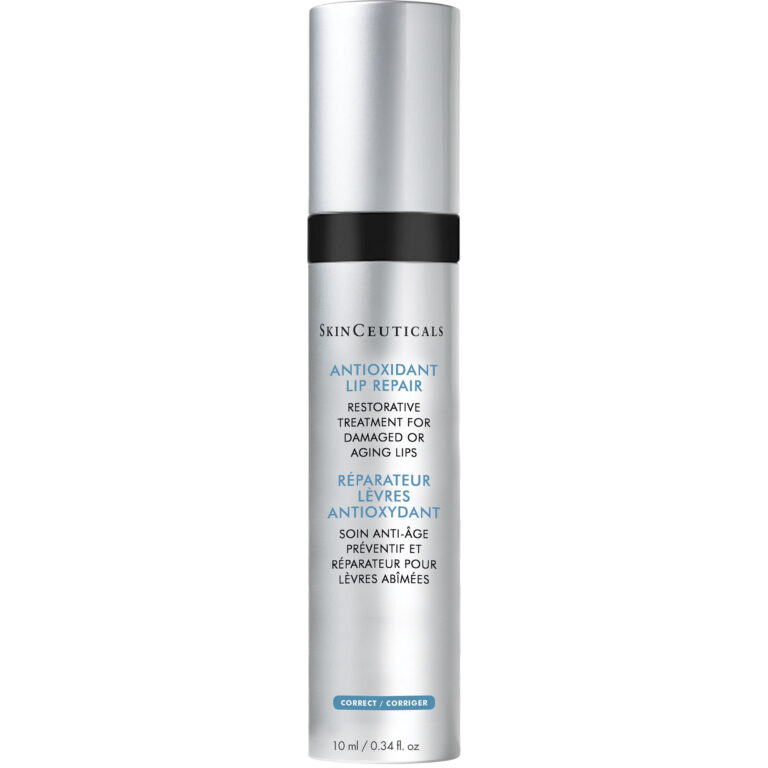
- SkinCeuticals says its Antioxidant Lip Repair was tested as safe to use alongside hyaluronic acid lip filler.
- DermNet’s list of ways to prevent angular cheilitis includes filler at the corners of the mouth.
For the full list of do’s and don’ts, see our lip filler aftercare guide, or read about lip filler at our Toronto clinic.
Lip products we carry
We stock two lip products. Neither one has SPF, so wear an SPF 30 lip balm when you’re outdoors.
- SkinCeuticals Antioxidant Lip Repair. SkinCeuticals says it eases dryness and tightness, including from the acne pill isotretinoin. Its ingredient list has no fragrance, flavouring, menthol, camphor or salicylic acid, all on the AAD’s avoid list for chapped lips, and it contains dimethicone and glycerin. SkinCeuticals’ directions are a thin layer once or twice a day, followed by sunscreen.
- Vivier HA Peptides Lip Enhancer. A hydrating, plumping lip treatment with petrolatum, hyaluronic acid and peptides. It’s lightly scented with orange peel oil, and the AAD lists citrus flavours among the things to avoid on chapped lips. We’d save it for lips that have already healed, not ones that are cracked right now.
Have a question about your lips, or about lip treatments? Book a free consultation at our Toronto clinic. For the rest of your face in the cold months, see our guide to winter skin and how to choose a sunscreen.
Frequently asked questions
How do I heal chapped lips fast?
Use a thick ointment like white petroleum jelly several times a day and at bedtime. Stop licking your lips, and wear SPF 30 outside. The AAD says most people notice an improvement within two to three weeks.
Does Vaseline help chapped lips?
Yes. Vaseline is a brand of petroleum jelly, and white petroleum jelly is on the AAD’s list of ingredients that help. The AAD suggests a thick ointment like it for cracked lips.
Why do my lips feel worse when I use lip balm?
Some balms contain irritants like menthol, camphor, phenol, salicylic acid, fragrance or flavouring. They can sting and dry lips further, so you keep reapplying. Switch to a plain, fragrance-free ointment.
Should I exfoliate chapped lips?
No. A Cleveland Clinic dermatologist advises skipping lip scrubs because they strip the protective top layer of skin. Let flakes shed on their own.
Do I need SPF on my lips in winter?
Yes. Snow can reflect up to 80% of UV, according to the Canadian Dermatology Association, and the AAD recommends SPF 30 or higher on your lips outdoors all year.
Does drinking water help chapped lips?
The AAD and Cleveland Clinic both include drinking plenty of water in their advice, alongside a good balm and the other steps above.
What causes cracks at the corners of my mouth?
Often a condition called angular cheilitis. DermNet says saliva is usually the main cause, sometimes with an infection involved, and that licking makes it worse. See a doctor if it doesn’t clear up.
How can I tell a cold sore from chapped lips?
A cold sore usually starts with tingling or burning and then forms small blisters that break and crust (Mayo Clinic). Chapped lips are dry and flaky without blisters.
What vitamin deficiency causes chapped lips?
Cleveland Clinic lists low iron and low B vitamins among the causes of chapped lips. If your lips stay chapped despite good care, ask your doctor whether a blood test makes sense.
Is lip oil good for chapped lips?
Plain oils such as castor seed oil and hemp seed oil are on the AAD’s list. Many lip oils add fragrance or flavour, which the AAD says to avoid while lips are chapped. A thick ointment holds water in longer.
When should I see a doctor about chapped lips?
If they aren’t better after two to three weeks of care, bleed often, or have a rough patch or a sore that won’t heal.
Can lip balm cause an allergy?
Yes. DermNet says lip cosmetics, including lip sunscreens, are the most common source of lip allergies in women. A dermatologist can patch test to find the cause.
Last updated November 2026. This guide is general information, not medical advice.
Sources
- American Academy of Dermatology. 9 ways to heal dry, chapped lips (dermatologists’ tips). aad.org/public/everyday-care/skin-care-basics/dry/heal-dry-chapped-lips
- American Academy of Dermatology. Isotretinoin: side effects. aad.org/public/diseases/acne/derm-treat/isotretinoin/side-effects
- Cleveland Clinic. Chapped lips. my.clevelandclinic.org/health/diseases/22005-chapped-lips
- Cleveland Clinic Health Essentials. How to get rid of chapped lips. health.clevelandclinic.org/how-to-get-rid-of-chapped-lips
- Cleveland Clinic Health Essentials. 6 signs your lip balm use is just a bad habit. health.clevelandclinic.org/6-signs-your-lip-balm-use-is-just-a-bad-habit
- Cleveland Clinic. Actinic cheilitis. my.clevelandclinic.org/health/diseases/23007-actinic-cheilitis
- Mayo Clinic. Dry skin: symptoms and causes. mayoclinic.org/diseases-conditions/dry-skin/symptoms-causes/syc-20353885
- Mayo Clinic. Lip cancer. mayoclinic.org/diseases-conditions/lip-cancer/symptoms-causes/syc-20355079
- Mayo Clinic. Cold sore: symptoms and causes. mayoclinic.org/diseases-conditions/cold-sore/symptoms-causes/syc-20371017
- DermNet. Allergic contact cheilitis. dermnetnz.org/topics/allergic-contact-cheilitis
- DermNet. Contact reactions to lipsticks and other lip care products. dermnetnz.org/topics/contact-reactions-to-lipsticks-and-other-lipcare-products
- DermNet. Angular cheilitis. dermnetnz.org/topics/angular-cheilitis
- DermNet. Actinic cheilitis. dermnetnz.org/topics/actinic-cheilitis
- Health Canada. Improve indoor air quality in your home. canada.ca/en/health-canada/services/air-quality/improve-indoor-air-quality-in-your-home.html
- Health Canada. Cool-mist humidifiers. canada.ca/en/health-canada/services/household-products/cool-mist-humidifiers.html
- Canadian Dermatology Association. Sunscreen FAQ. dermatology.ca/public-patients/sun-protection/sunscreen-faq/
- SkinCeuticals Canada. Antioxidant Lip Repair. skinceuticals.ca
- Vivier. HA Peptides Lip Enhancer. vivierskin.ca/products/ha-peptides-lip-enhancer
- Kobayashi H, Tagami H. Br J Dermatol 2004, 150:563-7. PMID 15030342. doi:10.1046/j.1365-2133.2003.05741.x
Questions about this treatment?
Ask us anything before you book. Consultations are free, and we will tell you honestly if a treatment is not right for you.